
Custom Latex Balloons: Print Quality and Material Choices Explained

Custom latex balloons may look simple, but print quality and material selection can significantly affect branding impact, durability, and compliance. For buyers researching event, retail, or promotional sourcing options, understanding how latex grade, ink adhesion, and production methods influence results is essential. This guide explains the key factors behind custom latex balloons to help you compare suppliers and make more informed purchasing decisions.
Why do custom latex balloons matter more than many buyers expect?
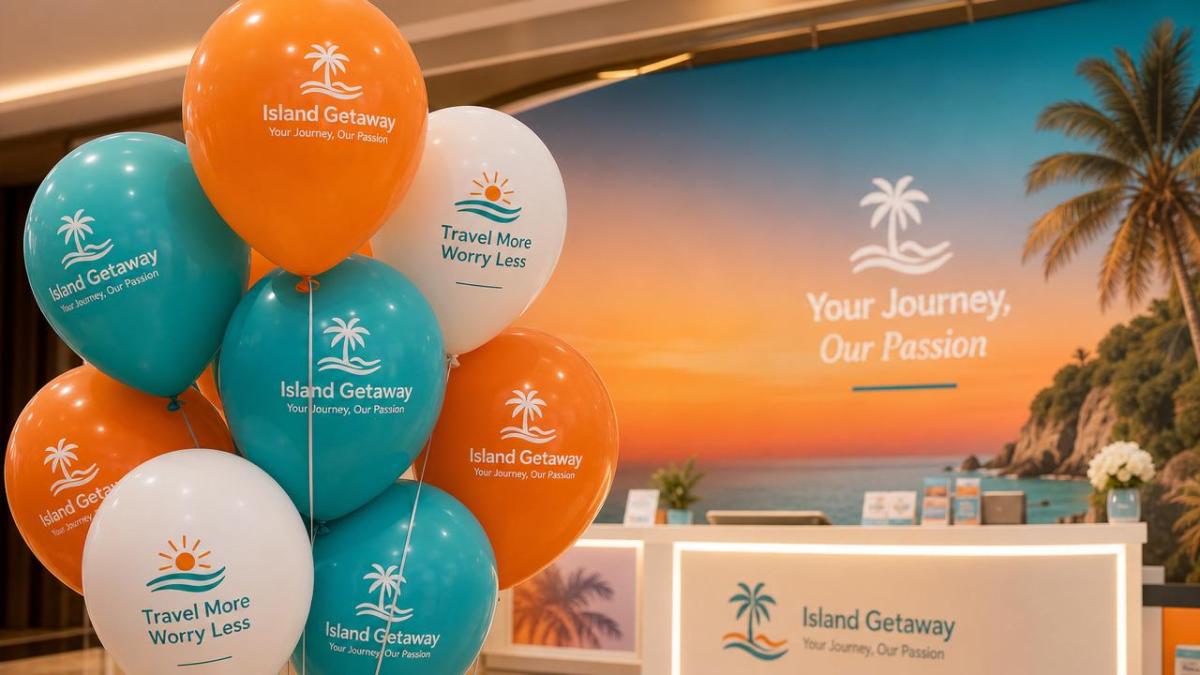
For travel services, destination events, hospitality campaigns, resort openings, seasonal tours, and tourism brand activations, custom latex balloons are not just decorative items. They act as visual brand carriers in airports, hotel lobbies, cruise terminals, travel fairs, tour launches, and pop-up retail counters. A balloon that looks vivid in a product photo but prints poorly in reality can weaken the perceived quality of the entire campaign.
This is why sourcing teams often look beyond color and size. They want to know whether the balloon surface accepts ink cleanly, whether the logo remains legible after inflation, whether the material holds shape during an event, and whether the supplier can meet compliance expectations for different markets. In practical terms, a low-cost option may become expensive if print registration is unstable, if balloons oxidize too quickly in warm outdoor tourism settings, or if late production affects event setup schedules.
For information-stage buyers, the key takeaway is simple: custom latex balloons should be evaluated as a combination of material, printing process, use environment, and supplier reliability, not as a commodity purchase based only on unit price.
What material choices affect the performance of custom latex balloons?
Latex quality is one of the biggest variables in balloon performance. Not all latex compounds behave the same way, even when balloons appear visually similar before inflation. Buyers comparing custom latex balloons should ask about the latex grade, wall thickness consistency, elasticity, pigment loading, and whether the material blend is optimized for printing.
Higher-grade natural latex generally offers better stretch, more even inflation, and a smoother print surface. This matters because printing occurs on an uninflated balloon that later expands. If the latex thickness is inconsistent, printed logos can distort unevenly. For travel promotions held outdoors, this can become very visible under bright sunlight or in photo-heavy tourist environments.
Color also plays a role. Dark balloons may require stronger contrast inks, while pearl, metallic-look, or heavily pigmented balloons can create different adhesion and opacity challenges. A supplier may produce excellent white or pastel balloons but weaker results on navy, red, or black stock. Buyers should therefore evaluate custom latex balloons by specific colorway, not by generic factory capability claims.
Another important factor is whether the balloons are intended for air fill or helium fill. Helium use for hotel atriums, tourism expos, and grand-opening arches often raises the importance of wall consistency and float performance. Air-filled balloons for in-store travel agency displays may prioritize print sharpness and cost efficiency instead.
How does print quality on custom latex balloons actually get judged?
Print quality is usually judged on several practical dimensions: logo sharpness, color accuracy, ink coverage, registration alignment, surface cleanliness, and durability after inflation. In sourcing discussions, “good print” is not a vague aesthetic term. It means the artwork remains recognizable and attractive when the balloon is fully inflated and displayed under real event conditions.
Screen printing is still common for custom latex balloons because it supports bold single-color or limited-color branding at scale. However, printing on curved elastic surfaces is technically demanding. Fine lines, small text, and complex gradients may not reproduce well, especially on smaller balloon sizes. Buyers in tourism marketing should consider where the balloons will be seen. If they are viewed from a distance at a travel fair booth, a simple bold logo may outperform a detailed graphic.
Ink adhesion is another major issue. If the latex surface has release agents, inconsistent curing, or excessive powder residue, ink may rub off, crack, or appear patchy. This becomes especially relevant in hot, humid, or high-touch venues such as beach resorts, family attractions, airport promo zones, or outdoor festival tourism events. Good suppliers test ink compatibility with both substrate and environmental exposure.
Buyers should also ask whether the artwork proof is based on an inflated sample. A flat sample can be misleading. On custom latex balloons, the true test is how the print looks after expansion. Distortion around the balloon shoulder or neck area is common if the design area is not properly planned.
Quick evaluation table for buyers
The table below summarizes what to check when comparing custom latex balloons from multiple suppliers.
Which printing and design choices work best for tourism and travel promotions?
In travel services, the best design is often not the most complex one. Balloons used at tour operator booths, hotel brand events, tourism board promotions, or holiday booking campaigns need instant readability. Large logos, short slogans, destination names, and strong contrast tend to work better than crowded artwork.
Single-sided printing may be enough for wall displays or photo corners, but double-sided printing is usually more practical for open venues where guests approach from multiple directions. Balloon size also affects visibility. Smaller balloons can be cost-efficient for giveaways, while larger custom latex balloons are better for entry points, family attraction events, or resort celebrations where visibility from a distance matters.
If balloons will be used in premium hospitality settings, matte finishes and cleaner print edges often feel more upscale than overly glossy, low-contrast combinations. For children’s tourism, theme parks, or family package promotions, brighter balloon colors may be more effective, but the artwork still needs to account for expansion and viewing distance.
A useful sourcing question is whether the supplier can recommend design adjustments before mass production. Experienced manufacturers of custom latex balloons often advise on minimum line thickness, spacing around text, optimal print position, and color combinations that maintain visibility after inflation.
What are the most common sourcing mistakes when buying custom latex balloons?
One frequent mistake is approving artwork based only on digital mockups. Mockups can hide problems with stretching, ink opacity, or registration. A second mistake is assuming all balloon colors behave the same during printing. In reality, white ink on a dark balloon, or metallic ink on a powdery latex surface, may require extra process control.
Another mistake is ignoring event conditions. Custom latex balloons used in an air-conditioned hotel ballroom have very different performance demands from those used at a sunny beach event, mountain tour launch, or outdoor travel market. Heat, UV exposure, humidity, and handling frequency all affect appearance. Buyers should match balloon specifications to actual use rather than rely on standard stock.
Procurement teams also sometimes focus too heavily on ex-factory price while overlooking setup losses, rejects, delayed delivery, or inconsistent branding. If 10% of printed balloons are unusable because of weak print registration, the low quote may no longer be competitive. For travel campaigns tied to fixed departure dates or event openings, reliability can be more valuable than the cheapest offer.
Finally, some buyers forget to verify documentation. Depending on market and application, retailers and tourism-facing brands may request declarations on material safety, packaging suitability, or applicable testing. Asking for this early prevents last-minute sourcing disruption.
How should buyers compare suppliers for quality, lead time, and compliance?
The best supplier comparison process combines technical review and operational review. On the technical side, ask for balloon specifications, print method details, inflated sample images, ink performance information, and recommended artwork limitations. On the operational side, ask about minimum order quantity, standard lead time, rush capacity, defect handling, packaging options, and export experience.
For travel service businesses, scheduling is especially important. Hotel chains, tourism boards, cruise operators, and seasonal tour promoters often work with fixed launch dates. A supplier that offers strong print quality but unreliable shipment timing may still be the wrong fit. Similarly, if custom latex balloons are part of a wider destination branding campaign, consistency across repeat orders matters as much as first-order performance.
Compliance should not be treated as a secondary issue. If the balloons are distributed through retail channels, family event spaces, or child-oriented tourism programs, buyers may need stronger documentation than they would for simple internal decor use. A qualified supplier should be able to explain what documentation is available, what testing has been done, and what claims should or should not be made in product marketing.
It is also useful to evaluate communication quality. Suppliers that answer clearly on material composition, print limitations, and sampling procedures are often easier to work with than those who only promise “high quality” without evidence. In custom latex balloons, good pre-production communication is often a strong predictor of final order satisfaction.
Supplier comparison checklist
- Can they provide inflated production samples for the exact size and color requested?
- Do they explain print limitations for fine text, gradients, or multi-color artwork?
- What is the normal lead time and what happens if artwork is revised mid-process?
- Do they support destination events, resort openings, exhibitions, or other travel-related campaigns with time-sensitive delivery?
- What compliance records, declarations, or test references are available for the target market?
What should buyers confirm before placing an order for custom latex balloons?
Before approval, buyers should confirm six essentials: balloon size, balloon color, print color, print position, intended inflation method, and expected use environment. These basic details affect almost every quality outcome. A balloon designed for indoor air fill in a travel agency branch may not perform the same way when repurposed for a helium-filled outdoor tourism event.
It is equally important to review the proofing process. Ask whether the final approval is based on digital artwork, a flat pre-production sample, or a fully inflated physical sample. The closer the proof is to real use, the fewer surprises there will be. For branded campaigns, also confirm acceptable print variation, color tolerance, and defect policy in writing.
Packaging and logistics should be discussed early as well. Tourism promotions often run across multiple cities, hotel properties, or travel agency branches. That means carton labeling, quantity segmentation, and delivery timing can matter almost as much as print quality. A well-organized shipment reduces setup time and helps local teams execute displays consistently.
In short, successful sourcing of custom latex balloons comes from aligning design goals with material choice, print method, environmental conditions, and supplier capability. When buyers ask better questions upfront, they usually avoid the most costly disappointments later.
What are the key takeaways for informed sourcing decisions?
For research-stage buyers, the most important lesson is that custom latex balloons should be assessed as a printed product, a material product, and an event-use product at the same time. Quality depends on latex consistency, ink compatibility, artwork simplicity, inflation conditions, and production discipline. This is particularly relevant in travel services, where brand presentation often happens in public, photo-rich, deadline-driven environments.
If you need to move from research to supplier evaluation, prioritize a few practical questions first: What latex grade is being used? Can the supplier show inflated samples? Which print method is recommended for your design? How will the balloons perform in indoor versus outdoor tourism settings? What lead time and compliance support can be confirmed in writing? Starting with these questions makes it much easier to compare offers, estimate risk, and narrow down the right custom latex balloons solution for your campaign or product plan.
Related Intelligence
 Skincare OEMAug 16, 2026Amazon Enforces AI Human Metadata Rule for Beauty and Personal Care SellersAmazon now enforces AI human metadata rules for beauty sellers. Learn how to protect listings, traffic, and compliance in skincare, cosmetics, and beauty devices.
 Beauty DevicesAug 15, 2026China to Roll Out Nationwide Cross-Border Cash Pooling for MultinationalsChina to roll out nationwide cross-border cash pooling for multinationals from Sept. 14. Discover how this policy could improve treasury efficiency, liquidity management, and China-linked supply chains.
 Beauty DevicesAug 14, 2026China Imposes Temporary Export Ban on Helium, Affecting Cooling Supply ChainsChina's temporary helium export ban may disrupt cooling supply chains for beauty RF devices and laser systems. Learn what ODMs, buyers, and procurement teams should check now.
![]() Cosmetics & PkgAug 13, 2026PPWR becomes mandatory: Beauty and personal care packaging materials usher in new EPR and PFAS compliance requirementsPPWR takes effect for cosmetics packaging in the EU, bringing EPR registration and PFAS limits. Learn what brands, importers, and suppliers must do now.
Cosmetics & PkgAug 13, 2026PPWR becomes mandatory: Beauty and personal care packaging materials usher in new EPR and PFAS compliance requirementsPPWR takes effect for cosmetics packaging in the EU, bringing EPR registration and PFAS limits. Learn what brands, importers, and suppliers must do now. Cosmetics & PkgAug 12, 2026EU PPWR Now Enforced for Beauty Packaging ComplianceEU PPWR now enforced for beauty packaging compliance: learn how EPR, ERN, heavy metals and PFAS rules affect EU exports, customs clearance and platform sales.
 Cosmetics & PkgAug 11, 2026EU PPWR Rules Take Effect on Aug. 12 for Beauty PackagingEU PPWR rules for beauty packaging take effect on Aug. 12, 2026. Learn key compliance steps, EPR, labeling, PFAS limits, and how to avoid customs delays and fines.
 Smart Pet DevicesAug 10, 2026EU EPR Rules to Cover Smart Pet Devices on Aug. 15EU EPR Rules will cover smart pet devices from Aug. 15, 2026. Learn how smart collars, feeders, and monitoring devices can avoid delisting, customs delays, and compliance risks in the EU.
 Infant Feeding & CareAug 09, 2026CPSC Recalls Baby Sleep Sacks Over Undeclared TDCPPCPSC Recalls Baby Sleep Sacks Over Undeclared TDCPP: learn how this 2026 recall impacts CPC documents, third-party testing, and U.S. baby product compliance for exporters.
 Infant Feeding & CareAug 08, 2026ECHA Adds 5 SVHCs, Importer Notices Due From Oct 2026ECHA adds 5 SVHCs to the Candidate List, with importer notices due from October 2026. Learn how REACH affects exporters, supply chains, and documentation readiness.
 Baby Gear & StrollersAug 07, 2026CPSC Revises Crib Rail Standard for November 2026CPSC revises crib rail standard for November 2026, adding dynamic impact tests and mandatory third-party lab testing. Learn how the new rule affects U.S. market access, compliance, and shipments.
 Electronic & RC ToysAug 06, 2026EU to Require EN IEC 62115:2025 for Electronic ToysEU to Require EN IEC 62115:2025 for Electronic Toys from Oct 1, 2026. Learn scope, battery and AI safety updates, CE compliance risks, and how exporters can avoid customs delays.
 Baby Gear & StrollersAug 05, 2026US Stroller Stability Rule Takes Effect Aug. 15US Stroller Stability Rule Takes Effect Aug. 15: learn how new U.S. stroller compliance, ASTM F833-26a, and CPSC testing rules may affect imports, certification, and shipment readiness.
 Infant Feeding & CareAug 04, 2026ECHA Adds 5 SVHCs, Triggering Baby Care Export ReviewECHA adds 5 SVHCs, prompting an urgent baby care export review for EU-bound products. Learn the 0.1% threshold risks, compliance steps, and how to avoid customs delays and fines.












