
Acrylic Award Trophies: When They Make More Sense Than Crystal or Metal
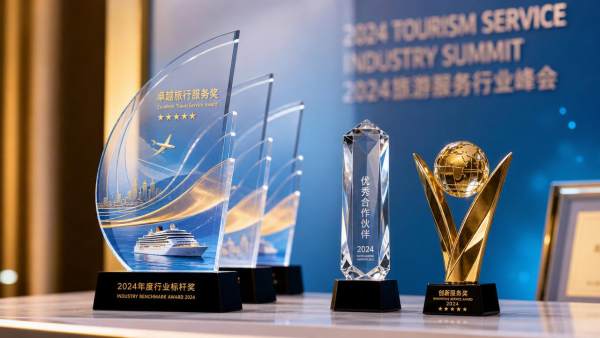
Choosing the right recognition piece is not just about appearance—it is also about budget, durability, branding, and event context. For buyers comparing acrylic award trophies with crystal or metal options, the smartest choice often depends on function rather than prestige alone. This guide explores when acrylic delivers better value, easier customization, and stronger practicality for modern award programs.
Understanding the role of acrylic in modern recognition programs
In business events, travel service award ceremonies, supplier conferences, retail partner summits, and employee recognition programs, the award itself does more than mark achievement. It reflects the organizer’s brand standards, budget discipline, and understanding of audience expectations. That is why acrylic award trophies have become a serious option rather than a lower-tier substitute. They combine design flexibility, visual clarity, and efficient production in ways that fit today’s fast-moving event environment.
Traditionally, crystal awards have represented prestige and formality, while metal trophies have been associated with durability and weight. Yet many organizations now need awards that can be customized quickly, shipped safely, aligned with campaign branding, and produced at scale for regional or global events. In these cases, acrylic award trophies often make more operational sense. For information researchers, procurement teams, and event planners, the key question is not whether acrylic looks expensive enough in every case, but whether it matches the business purpose of the program.
This shift matters in sectors connected to tourism services and global consumer sourcing. Travel networks, destination brands, retail-facing service providers, and international event organizers increasingly run recognition programs across multiple markets. They need awards that support branding consistency, protect budgets, and reduce logistics risk. Acrylic meets those demands surprisingly well.
Why the market pays attention to acrylic award trophies
The growing attention around acrylic award trophies is tied to broader sourcing and event trends. Organizations now expect suppliers to deliver more than a generic plaque. They want low minimum order flexibility, fast prototyping, color accuracy, eco-conscious packaging options, and dependable lead times. These expectations mirror the same supply chain logic seen across retail and travel-adjacent promotional categories: speed, customization, compliance, and brand fit matter as much as material tradition.
For example, a tourism board recognizing top-performing travel agencies may need an award that includes destination colors, campaign imagery, multilingual engraving, and safe international shipping. A hotel group honoring internal sales teams may require a clean, modern design for dozens of annual events across regions. A global sourcing platform or B2B network may host supplier excellence awards where visual consistency and turnaround time matter more than the symbolic heaviness of crystal. In these situations, acrylic award trophies offer practical advantages that align with contemporary program management.
A quick industry overview by event need
Different award materials perform differently depending on event goals. The table below gives a practical overview for information-stage decision makers.
This comparison shows why acrylic award trophies continue to gain relevance. They are not universally superior, but they solve multiple operational challenges at once. That makes them especially appealing for recurring programs, distributed events, and branded recognition campaigns.
When acrylic makes more sense than crystal
Crystal remains a strong choice for executive-level honors, formal gala settings, and legacy institutions that prioritize classic luxury cues. However, acrylic award trophies make more sense than crystal in several common situations.
Large-scale recognition programs
If an organization needs 50, 100, or 500 awards, cost differences become significant. Acrylic allows buyers to maintain a polished appearance without overextending event budgets. This is valuable for annual travel sales awards, franchise recognition events, supplier achievement programs, and customer loyalty ceremonies.
Events with strong visual branding
Crystal is elegant but often visually restrained. Acrylic can support layered shapes, vivid printed graphics, frosted effects, transparent color accents, and destination-themed silhouettes. For tourism campaigns or branded retail events, that creative range often produces a more memorable result.
Programs with shipping complexity
Crystal’s fragility creates risk in cross-border transport, multi-city event distribution, and direct-to-recipient delivery. Acrylic award trophies are generally lighter and less breakable, which lowers damage risk and can reduce packaging and freight concerns.
Faster turnaround requirements
Some event programs face late nominee changes, revised branding, or compressed production schedules. Acrylic can often move from design adjustment to final output more efficiently than crystal, especially when the decoration method involves digital printing, laser engraving, or layered assembly.
When acrylic makes more sense than metal
Metal awards offer strength, weight, and a premium industrial look. They work well for heritage brands, sports recognition, and highly tactile trophy designs. Still, acrylic award trophies may be the better fit when communication and presentation need to be more dynamic.
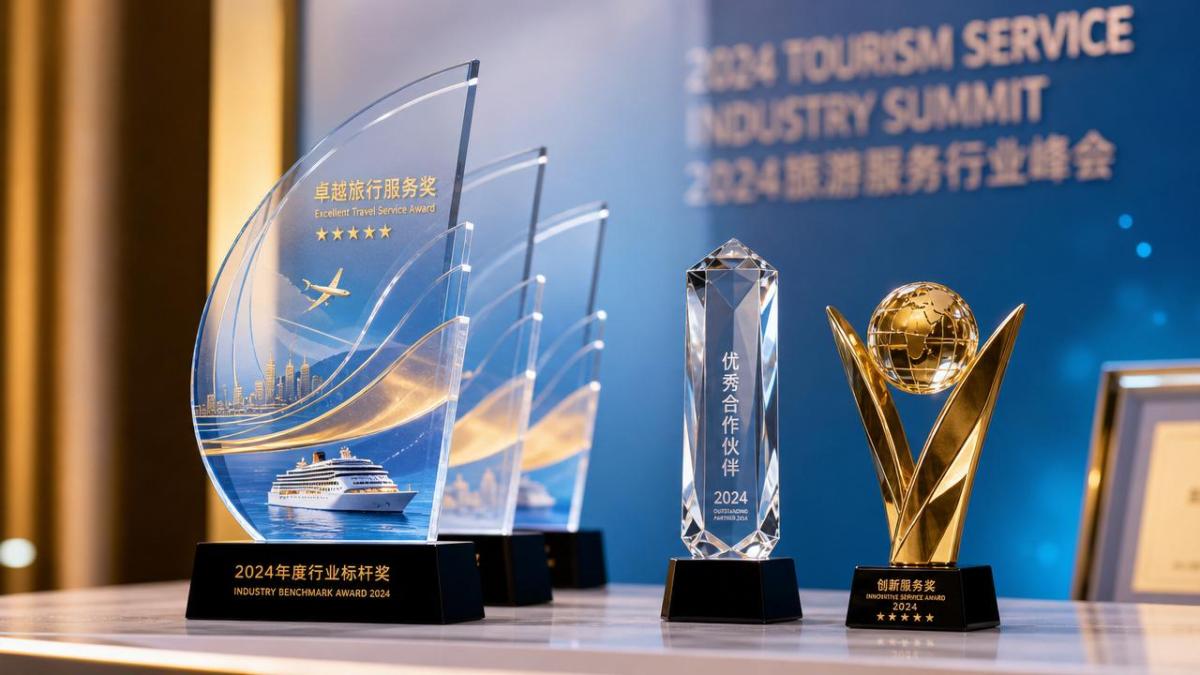
One major advantage is design freedom. Metal often performs best in sculptural or plated forms, but acrylic can combine transparency, color, printed messaging, and layered dimensional effects in one piece. This is especially useful for tourism service organizations that want awards shaped like landmarks, routes, aircraft silhouettes, maps, or campaign icons.
Another advantage is readability. Acrylic award trophies can integrate logos, category names, sponsor details, and event themes more clearly than many metal formats. For awards that serve not only as keepsakes but also as visible brand artifacts in offices, reception desks, and social media posts, clarity matters.
In addition, metal can increase freight costs because of weight. For organizations shipping awards to hotels, travel partners, overseas exhibitors, or remote event venues, lighter materials can simplify execution. The savings may not come only from the unit price, but from the full landed cost of the program.
Where acrylic award trophies create practical business value
The value of acrylic award trophies becomes clearer when viewed through business use cases rather than material preference alone. In travel services and related B2B event environments, they are especially effective in the following categories.
From a sourcing intelligence perspective, these applications also reflect the broader trend toward adaptable, brand-driven product solutions. Buyers increasingly evaluate awards as part of the event supply chain, not just as decorative items. That means supplier responsiveness, decoration options, packaging quality, and consistency all matter.
What to evaluate before selecting acrylic
Although acrylic award trophies offer strong advantages, not all acrylic products are equal. Decision makers should look beyond surface appearance and assess a few practical factors.
Material quality and finish
High-quality acrylic should have good clarity, smooth edges, stable color application, and a sturdy feel. Poorly finished pieces can look thin or overly promotional. For premium programs, ask about thickness, polishing method, and scratch resistance.
Customization method
Laser engraving, UV printing, layered assembly, and embedded graphics each create a different effect. Buyers should choose based on brand style, readability needs, and expected shelf presence. A minimalist executive award may need frosted engraving, while a tourism campaign trophy may benefit from color printing and custom shapes.
Packaging and logistics
Even durable materials require thoughtful packaging. If awards are shipped internationally or distributed to multiple recipients, inner protection, carton strength, and labeling standards should be reviewed early. This is especially important for event timelines with little room for replacement.
Brand appropriateness
Not every recognition program should look the same. Acrylic award trophies are ideal for modern, creative, scalable, and campaign-led events. If the event is highly ceremonial or tied to a long-standing executive tradition, crystal or metal may still communicate the intended tone better.
A balanced decision framework for information-stage buyers
For researchers comparing options, a useful framework is to rank material choice against five priorities: audience impression, customization needs, shipping conditions, timeline, and total cost. Acrylic award trophies score particularly well when organizations need strong branding, safe logistics, and scalable production. Crystal leads where classic prestige is the main objective. Metal performs well where weight, durability, and tactile authority matter most.
In practice, many organizations benefit from using more than one material strategy. A company may choose crystal for one top lifetime achievement award, metal for sports-related recognition, and acrylic for broader category winners or partner awards. This mixed approach often aligns budget with ceremony hierarchy while preserving visual quality.
Conclusion and next-step guidance
Acrylic award trophies make the most sense when recognition programs need flexibility, branding impact, efficient scaling, and practical logistics. They are especially relevant for modern travel service events, global partner recognition, supplier programs, and multi-location ceremonies where speed and consistency matter. Compared with crystal, acrylic often wins on customization and transport. Compared with metal, it often wins on visual communication and total program efficiency.
For information researchers and sourcing-focused decision makers, the smartest next step is to evaluate award materials through the full event context: not just how the trophy looks on stage, but how it is designed, produced, shipped, received, and remembered. If your program needs modern branding, dependable execution, and better value at scale, acrylic award trophies deserve a place at the top of the shortlist.
Related Intelligence
 Skincare OEMAug 16, 2026Amazon Enforces AI Human Metadata Rule for Beauty and Personal Care SellersAmazon now enforces AI human metadata rules for beauty sellers. Learn how to protect listings, traffic, and compliance in skincare, cosmetics, and beauty devices.
 Beauty DevicesAug 15, 2026China to Roll Out Nationwide Cross-Border Cash Pooling for MultinationalsChina to roll out nationwide cross-border cash pooling for multinationals from Sept. 14. Discover how this policy could improve treasury efficiency, liquidity management, and China-linked supply chains.
 Beauty DevicesAug 14, 2026China Imposes Temporary Export Ban on Helium, Affecting Cooling Supply ChainsChina's temporary helium export ban may disrupt cooling supply chains for beauty RF devices and laser systems. Learn what ODMs, buyers, and procurement teams should check now.
![]() Cosmetics & PkgAug 13, 2026PPWR becomes mandatory: Beauty and personal care packaging materials usher in new EPR and PFAS compliance requirementsPPWR takes effect for cosmetics packaging in the EU, bringing EPR registration and PFAS limits. Learn what brands, importers, and suppliers must do now.
Cosmetics & PkgAug 13, 2026PPWR becomes mandatory: Beauty and personal care packaging materials usher in new EPR and PFAS compliance requirementsPPWR takes effect for cosmetics packaging in the EU, bringing EPR registration and PFAS limits. Learn what brands, importers, and suppliers must do now. Cosmetics & PkgAug 12, 2026EU PPWR Now Enforced for Beauty Packaging ComplianceEU PPWR now enforced for beauty packaging compliance: learn how EPR, ERN, heavy metals and PFAS rules affect EU exports, customs clearance and platform sales.
 Cosmetics & PkgAug 11, 2026EU PPWR Rules Take Effect on Aug. 12 for Beauty PackagingEU PPWR rules for beauty packaging take effect on Aug. 12, 2026. Learn key compliance steps, EPR, labeling, PFAS limits, and how to avoid customs delays and fines.
 Smart Pet DevicesAug 10, 2026EU EPR Rules to Cover Smart Pet Devices on Aug. 15EU EPR Rules will cover smart pet devices from Aug. 15, 2026. Learn how smart collars, feeders, and monitoring devices can avoid delisting, customs delays, and compliance risks in the EU.
 Infant Feeding & CareAug 09, 2026CPSC Recalls Baby Sleep Sacks Over Undeclared TDCPPCPSC Recalls Baby Sleep Sacks Over Undeclared TDCPP: learn how this 2026 recall impacts CPC documents, third-party testing, and U.S. baby product compliance for exporters.
 Infant Feeding & CareAug 08, 2026ECHA Adds 5 SVHCs, Importer Notices Due From Oct 2026ECHA adds 5 SVHCs to the Candidate List, with importer notices due from October 2026. Learn how REACH affects exporters, supply chains, and documentation readiness.
 Baby Gear & StrollersAug 07, 2026CPSC Revises Crib Rail Standard for November 2026CPSC revises crib rail standard for November 2026, adding dynamic impact tests and mandatory third-party lab testing. Learn how the new rule affects U.S. market access, compliance, and shipments.
 Electronic & RC ToysAug 06, 2026EU to Require EN IEC 62115:2025 for Electronic ToysEU to Require EN IEC 62115:2025 for Electronic Toys from Oct 1, 2026. Learn scope, battery and AI safety updates, CE compliance risks, and how exporters can avoid customs delays.
 Baby Gear & StrollersAug 05, 2026US Stroller Stability Rule Takes Effect Aug. 15US Stroller Stability Rule Takes Effect Aug. 15: learn how new U.S. stroller compliance, ASTM F833-26a, and CPSC testing rules may affect imports, certification, and shipment readiness.
 Infant Feeding & CareAug 04, 2026ECHA Adds 5 SVHCs, Triggering Baby Care Export ReviewECHA adds 5 SVHCs, prompting an urgent baby care export review for EU-bound products. Learn the 0.1% threshold risks, compliance steps, and how to avoid customs delays and fines.












