
Global Retail Shifts Reshaping Travel Gift Demand in 2026
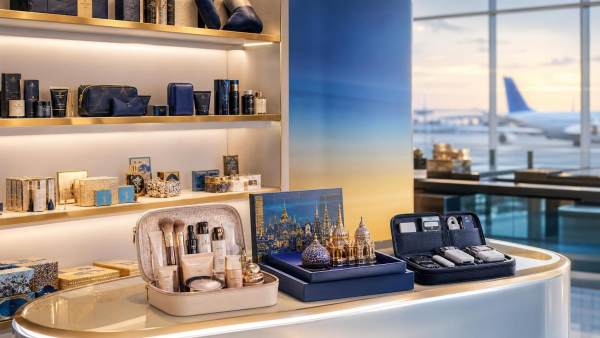
Global retail is entering 2026 with a different travel economy than the one many sourcing teams planned for two years ago.
Travel has recovered, but spending patterns have become more selective, more regional, and more experience-led.
That shift is changing how travel gifts are designed, sourced, packaged, and sold across airports, hotels, attractions, cruise channels, and destination retail.
For brands and supply-side partners, the opportunity is no longer just about stocking souvenirs.
It is about aligning product decisions with new traveler intent, tighter compliance needs, and faster retail response cycles.
Why travel gift demand looks different in 2026
The old assumption was simple: more travelers meant more impulse gift sales.
That still matters, but global retail now has to work with a more fragmented demand base.
Some travelers are spending more on premium keepsakes.
Others are choosing compact, practical, low-risk purchases that fit carry-on rules and shorter trips.
Destination spending is also becoming more uneven.
Major gateway cities still attract volume, but secondary destinations are capturing more curated local spending.
That affects the mix of travel gifts moving through tourism service ecosystems.
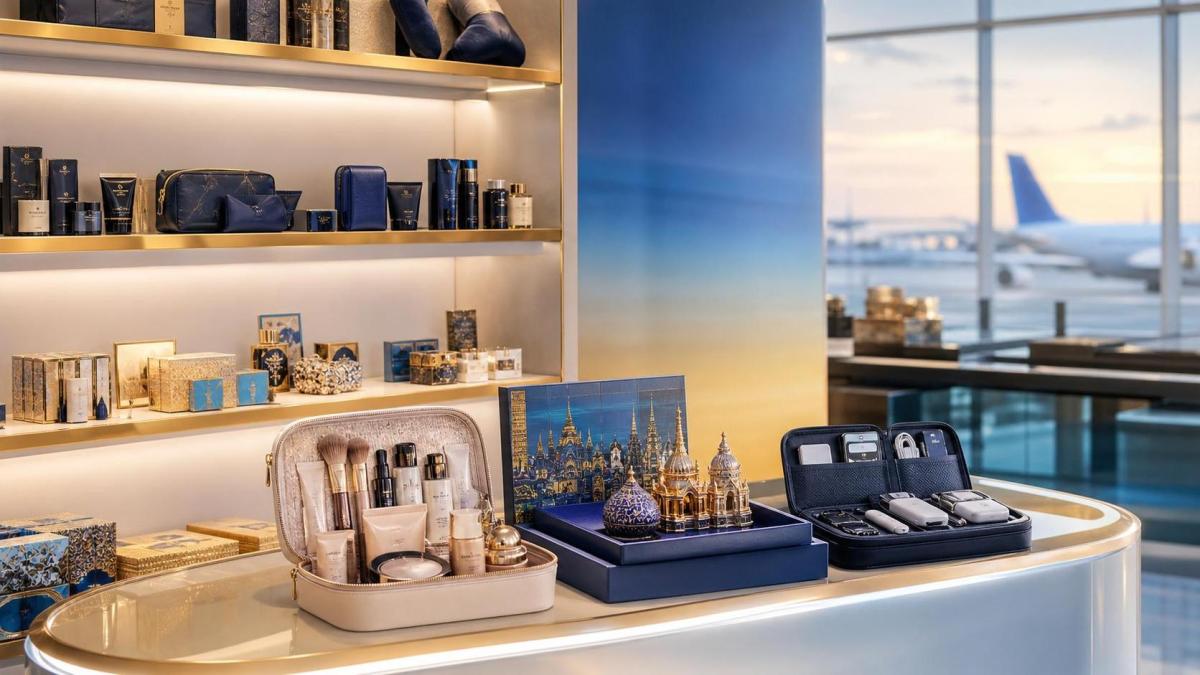
A hotel gift corner, an airport concept store, and a museum retail space now need different assortments, price points, and packaging logic.
At the same time, e-commerce has raised expectations.
Travel shoppers compare in-person gifts with online alternatives instantly, even while standing in the aisle.
That puts pressure on global retail operators to offer products that feel destination-specific, giftable, and worth carrying home.
What counts as a travel gift now
The category has widened well beyond classic souvenir merchandise.
In practical terms, travel gifts now sit across several overlapping purchase motivations.
Memory-driven purchases
These remain important, especially in cultural destinations and family travel settings.
Consumers still want a visible link to place, story, or experience.
Functional gifting
Travel-size beauty items, wellness kits, outdoor accessories, and packable lifestyle goods are gaining share.
They serve both immediate use and post-trip gifting.
Premium local discovery
This includes elevated food-adjacent gifts, design-led toys, destination beauty products, and limited-edition collaborations.
These products perform well when travel retail feels curated rather than generic.
This broader definition matters because global retail planning often fails when the category is treated too narrowly.
A stronger view connects gifting behavior with tourism context, product safety, and replenishment speed.
The supply chain signals behind the category shift
Travel gift demand in 2026 is being shaped as much by sourcing realities as by consumer taste.
Lead times, certification needs, packaging rules, and regional manufacturing options now directly influence what reaches the shelf.
This is where Global Consumer Sourcing brings useful context.
Its coverage of Gifts & Toys, Beauty & Personal Care, Sports & Outdoors, Baby & Maternity, and the Pet Economy reflects how mixed the travel gifting market has become.
A destination retailer may now source a child-friendly travel toy, a TSA-conscious beauty set, and a small-format outdoor accessory within one seasonal plan.
That raises the importance of supplier agility.
Private-label programs need faster concept validation, while compliance standards such as FDA, CE, and CPC remain non-negotiable in many categories.
Global retail buyers are also under pressure to prove sustainability claims more clearly.
In travel gifting, packaging weight, recyclability, and material traceability influence both margin and customer trust.
Where demand is concentrating
Not every product type is benefiting equally from the current travel rebound.
The strongest areas usually combine portability, emotional relevance, and clear use value.
The pattern is clear.
Travel gifts sell better when they balance memory, function, and destination identity.
What global retail decision-making should focus on
The key question is not simply which products are trending.
It is whether the assortment can perform across margin, compliance, demand volatility, and brand relevance.
Assortment logic must match the travel context
High-volume airport retail needs compact packaging, fast recognition, and minimal friction.
Boutique destination retail can support slower discovery and higher average transaction value.
Supplier evaluation needs more depth
Price remains important, but it should not outweigh audit readiness, documentation quality, and repeat production consistency.
In global retail, unreliable replenishment often destroys category momentum faster than weak initial sell-through.
Data should shape buying windows
Travel demand responds to seasonality, route recovery, events, and regional tourism campaigns.
Product timing should be tied to these signals, not only to annual buying calendars.
Practical risks that are easy to underestimate
Several common mistakes still appear across travel-linked retail programs.
- Overbuilding generic souvenir inventory with weak destination relevance.
- Choosing suppliers that cannot support certification or labeling requirements.
- Ignoring travel-specific constraints such as weight, leak risk, breakage, or cabin restrictions.
- Treating sustainability claims as packaging language rather than a verified sourcing standard.
- Missing cross-category opportunities between gifts, toys, beauty, and utility products.
These issues matter because travel gift demand is often compressed into shorter, higher-pressure selling windows.
When global retail execution slips, there is less time to correct it on-site.
A more useful way to prepare for 2026
The most effective response is to treat travel gifting as a connected sourcing and retail strategy, not an isolated product category.
That means mapping destination demand, validating compliance early, and building assortments around realistic traveler behavior.
It also means using stronger market intelligence.
Platforms such as GCS are valuable here because they translate broad global retail shifts into category-level sourcing signals.
That is especially relevant for mixed travel gift portfolios, where product quality, certification, manufacturing flexibility, and trend timing all interact.
The next step is not to chase every travel retail trend.
It is to review where current assortments depend on outdated demand assumptions, then compare those gaps against destination behavior, supplier readiness, and category-level growth signals.
In 2026, the winners in global retail travel gifting will likely be the ones that plan with sharper evidence, tighter sourcing discipline, and a clearer view of what travelers actually choose to take home.
Related Intelligence
 Skincare OEMAug 16, 2026Amazon Enforces AI Human Metadata Rule for Beauty and Personal Care SellersAmazon now enforces AI human metadata rules for beauty sellers. Learn how to protect listings, traffic, and compliance in skincare, cosmetics, and beauty devices.
 Beauty DevicesAug 15, 2026China to Roll Out Nationwide Cross-Border Cash Pooling for MultinationalsChina to roll out nationwide cross-border cash pooling for multinationals from Sept. 14. Discover how this policy could improve treasury efficiency, liquidity management, and China-linked supply chains.
 Beauty DevicesAug 14, 2026China Imposes Temporary Export Ban on Helium, Affecting Cooling Supply ChainsChina's temporary helium export ban may disrupt cooling supply chains for beauty RF devices and laser systems. Learn what ODMs, buyers, and procurement teams should check now.
![]() Cosmetics & PkgAug 13, 2026PPWR becomes mandatory: Beauty and personal care packaging materials usher in new EPR and PFAS compliance requirementsPPWR takes effect for cosmetics packaging in the EU, bringing EPR registration and PFAS limits. Learn what brands, importers, and suppliers must do now.
Cosmetics & PkgAug 13, 2026PPWR becomes mandatory: Beauty and personal care packaging materials usher in new EPR and PFAS compliance requirementsPPWR takes effect for cosmetics packaging in the EU, bringing EPR registration and PFAS limits. Learn what brands, importers, and suppliers must do now. Cosmetics & PkgAug 12, 2026EU PPWR Now Enforced for Beauty Packaging ComplianceEU PPWR now enforced for beauty packaging compliance: learn how EPR, ERN, heavy metals and PFAS rules affect EU exports, customs clearance and platform sales.
 Cosmetics & PkgAug 11, 2026EU PPWR Rules Take Effect on Aug. 12 for Beauty PackagingEU PPWR rules for beauty packaging take effect on Aug. 12, 2026. Learn key compliance steps, EPR, labeling, PFAS limits, and how to avoid customs delays and fines.
 Smart Pet DevicesAug 10, 2026EU EPR Rules to Cover Smart Pet Devices on Aug. 15EU EPR Rules will cover smart pet devices from Aug. 15, 2026. Learn how smart collars, feeders, and monitoring devices can avoid delisting, customs delays, and compliance risks in the EU.
 Infant Feeding & CareAug 09, 2026CPSC Recalls Baby Sleep Sacks Over Undeclared TDCPPCPSC Recalls Baby Sleep Sacks Over Undeclared TDCPP: learn how this 2026 recall impacts CPC documents, third-party testing, and U.S. baby product compliance for exporters.
 Infant Feeding & CareAug 08, 2026ECHA Adds 5 SVHCs, Importer Notices Due From Oct 2026ECHA adds 5 SVHCs to the Candidate List, with importer notices due from October 2026. Learn how REACH affects exporters, supply chains, and documentation readiness.
 Baby Gear & StrollersAug 07, 2026CPSC Revises Crib Rail Standard for November 2026CPSC revises crib rail standard for November 2026, adding dynamic impact tests and mandatory third-party lab testing. Learn how the new rule affects U.S. market access, compliance, and shipments.
 Electronic & RC ToysAug 06, 2026EU to Require EN IEC 62115:2025 for Electronic ToysEU to Require EN IEC 62115:2025 for Electronic Toys from Oct 1, 2026. Learn scope, battery and AI safety updates, CE compliance risks, and how exporters can avoid customs delays.
 Baby Gear & StrollersAug 05, 2026US Stroller Stability Rule Takes Effect Aug. 15US Stroller Stability Rule Takes Effect Aug. 15: learn how new U.S. stroller compliance, ASTM F833-26a, and CPSC testing rules may affect imports, certification, and shipment readiness.
 Infant Feeding & CareAug 04, 2026ECHA Adds 5 SVHCs, Triggering Baby Care Export ReviewECHA adds 5 SVHCs, prompting an urgent baby care export review for EU-bound products. Learn the 0.1% threshold risks, compliance steps, and how to avoid customs delays and fines.












