How to Evaluate Custom Toys for Brand Fit and Safety
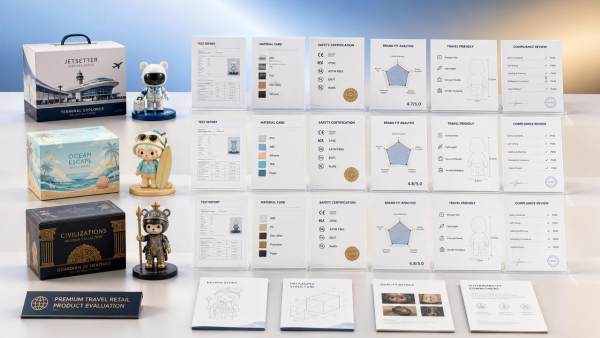
In travel retail, custom toys are rarely impulse add-ons alone. They often carry destination identity, family appeal, and brand memory in one product, which makes evaluation more demanding than a simple style review.
A toy sold in an airport, resort boutique, museum shop, or cruise program has to look right, feel safe, survive handling, and satisfy rules across markets. That balance is where many sourcing decisions succeed or fail.
For teams comparing suppliers, the most useful approach is practical: test whether custom toys fit the brand story, meet relevant safety standards, and hold up commercially under real retail conditions.
Why brand fit matters before anything else
Not every attractive toy belongs in a travel retail assortment. A good concept still fails if it feels disconnected from the guest journey or the location it represents.
Brand fit starts with context. A heritage rail tour may need nostalgic textures and classic colors. A beach resort may lean toward playful, lightweight, easy-pack items. An aviation gift shop may prefer collectible precision.
Custom toys should also match the emotional role of the purchase. Some are souvenirs. Some are gifts for children during transit. Others support premium loyalty, seasonal campaigns, or destination storytelling.
The strongest options usually reflect three things at once: visual consistency, audience relevance, and price-position alignment. If one of those breaks, the product starts to feel forced.
Questions that clarify brand alignment
- Does the toy express the destination, service theme, or travel experience clearly?
- Is the design appropriate for the expected customer mix, including family, gift, and collector demand?
- Will packaging, color, and material quality match surrounding merchandise?
- Can the concept support repeat programs, seasonal refreshes, or multiple regions?
Safety is a commercial issue, not a technical detail
With custom toys, safety affects far more than product approval. It shapes insurance exposure, import clearance, marketplace trust, and long-term brand credibility.
Travel retail adds complexity because goods often move across several jurisdictions. A toy suitable for one market may require extra labeling, testing scope, or age grading in another.
That is why experienced sourcing decisions begin with intended sales geography, not only with supplier claims. Compliance has to be mapped to where the toy will be sold, displayed, and shipped.
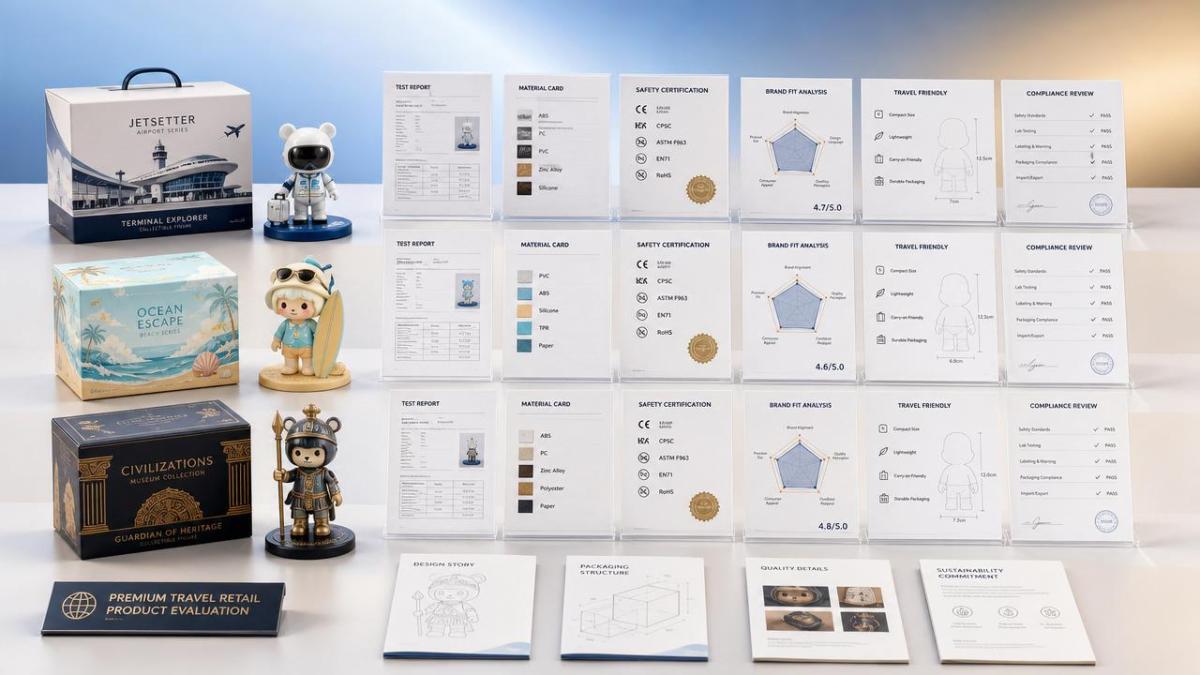
For many programs, relevant checkpoints may include CE, CPC, ASTM F963, EN71, REACH, phthalates limits, small-parts rules, flammability, and correct warning statements. The exact mix depends on the product type.
What to verify in documents
A certificate alone is never enough. Reports must correspond to the actual custom toys under review, including materials, dimensions, accessories, and packaging format.
Materials tell you how the product will behave
Material choice affects both perception and risk. In travel retail, toys are handled in high-traffic environments, packed into luggage, exposed to temperature changes, and judged quickly at shelf level.
Soft plush items need attention to seam strength, fiber shedding, embroidery detail, and cleaning tolerance. Molded plastic toys need close review of odor, edge finish, colorfastness, and break resistance.
Wood-based custom toys can support a more premium or sustainable positioning, but coatings, splinter control, moisture behavior, and consistency across batches become critical.
Packaging deserves the same scrutiny. Window boxes, hanging cards, and compact travel packs each influence damage risk, shelf presentation, and baggage convenience.
Material review in real use
- Check whether surfaces scratch, peel, or fade after repeated handling.
- Assess if trim parts loosen during drop, twist, or pull tests.
- Review how the item performs after compression inside luggage.
- Confirm that packaging protects the toy without inflating shipping volume.
Supplier credibility becomes visible in small details
Many suppliers can produce samples that photograph well. Fewer can maintain stable quality, document control, and timing across a full production cycle.
A credible partner explains tolerances clearly, flags safety limitations early, and shows how artwork changes affect tooling, compliance, or lead times. That transparency often matters more than a low quote.
This is where intelligence-led sourcing platforms such as Global Consumer Sourcing become useful. The value is not promotion alone, but structured insight into manufacturing capability, compliance readiness, and category movement across gifts and toys.
In a market shaped by private-label growth, regulatory scrutiny, and faster product cycles, verified supplier context reduces decision noise. It helps separate factories that can scale responsibly from those that only perform well during sampling.
Signals worth paying attention to
- Consistent documentation version control across artwork, BOM, and tests
- Willingness to discuss failure modes before production begins
- Clear sampling process for color, trim, packaging, and performance approval
- Evidence of experience with destination retail, licensing, or multi-market shipping
Where travel retail puts extra pressure on custom toys
The travel channel has practical constraints that ordinary retail may not face. Shelf space is tighter, customer decisions are faster, and portability matters more.
A custom toy for an airport shop may need compact packaging and easy language-neutral appeal. A cruise retail program may need humidity tolerance and stronger replenishment planning. A theme attraction may prioritize collectible series and repeat visits.
These differences affect product scoring. The same toy can be commercially strong in one venue and weak in another because the journey, dwell time, and purchase intent are different.
Common travel retail scenarios
A workable evaluation framework
An efficient review process keeps subjective taste from dominating the final decision. Custom toys should be scored across a small set of weighted business factors.
A practical framework often includes brand fit, age appropriateness, safety documentation, material performance, packaging efficiency, landed cost, supplier reliability, and replenishment flexibility.
Sample testing should mirror actual use. That means unpacking, shelf display, repeated handling, drop exposure, and packaging stress, not only a visual meeting-room review.
If the item involves licensed artwork or destination branding, approval timing should be built into the sourcing calendar. Delays often start in artwork control, not factory output.
Helpful checkpoints before commitment
- Request final-material samples, not only concept prototypes.
- Match every report to the exact SKU configuration.
- Review packaging dimensions against freight and shelf requirements.
- Document acceptance standards for color, stitching, print, and defects.
- Plan reorders around seasonal peaks and route-specific demand.
Turning evaluation into a better sourcing decision
The best custom toys are not only creative products. They are well-matched retail tools that support memory, margin, and trust at the same time.
In travel services, where product choices reflect the experience itself, the strongest decisions come from linking design review with compliance evidence and real operating conditions.
A sensible next step is to build a short evaluation scorecard, compare two or three supplier options, and test each concept against actual channel needs rather than generic catalog appeal.
That process makes custom toys easier to judge, easier to defend internally, and more likely to perform well once they reach the shelf.
Related Intelligence
 STEM & Educational ToysOct 25, 2026Malaysia’s KPDN Seizes 5,801 Non-Compliant Squishy Toys in Nationwide ActionMalaysia’s KPDN reportedly seized 5,801 squishy toys lacking safety compliance marks. Discover key checks to help toy suppliers assess stock and verify compliance before distribution.
 Infant Feeding & CareOct 24, 2026FDA Issues Draft Guidance on Cadmium Action Levels in Baby FoodsFDA draft guidance on cadmium action levels in baby foods proposes category-specific targets. Explore potential impacts on sourcing, testing and compliance planning—and how to prepare.
 STEM & Educational ToysOct 23, 20262026 China Toy Expo Gives AI Toys a Dedicated Hall as Practical Features Take Priority2026 China Toy Expo spotlights AI toys with a dedicated hall. Explore how practical features and everyday play experiences are reshaping manufacturers’ product priorities.
 STEM & Educational ToysOct 22, 2026Blokees Showcases Over 900 Products at the 2026 China International Toy FairBlokees showcases over 900 products at the 2026 China International Toy Fair. Explore Model Kits, BLOKEES WHEELS and key sourcing checks to guide your next purchase.
 Cosmetics & PkgOct 21, 2026BASF Plans Beauty Innovation Showcase at in-cosmetics Asia 2026Explore BASF’s planned beauty innovations at in-cosmetics Asia 2026 in Bangkok, with a focus on skin protection, repair and sustainable solutions for personal care formulators.
 Cosmetics & PkgOct 20, 2026Beauty Tops Amazon’s 2026 Prime Big Deal Days Shopping CategoriesBeauty tops Amazon’s 2026 Prime Big Deal Days at 32% of shoppers, according to Market Defense. Explore what the findings could mean for product selection, inventory and promotional planning.
 Pet Grooming & TravelOct 14, 2026Which Pet Grooming Tools Have the Lowest Return Risk?Which pet grooming tools have the lowest return risk? Explore manual combs, rubber brushes, and sourcing tips to reduce avoidable returns and build a smarter, customer-friendly assortment.
 Pet Grooming & TravelOct 14, 2026How Should Buyers Assess a Pet Grooming Supplier Before Ordering?How do I assess a pet grooming supplier before ordering? Discover practical checks for quality, compliance, capacity, and contracts to reduce sourcing risks and buy with confidence.
 Corporate & Seasonal GiftsOct 14, 2026How Can Retailers Check Plush Toy Stuffing Quality?How do retailers check plush toy stuffing quality? Discover practical inspections, supplier checks, and testing tips to reduce defects and make smarter pet toy sourcing decisions.
 Corporate & Seasonal GiftsOct 14, 2026Are Embroidered Eyes Safer Than Plastic Eyes on Plush Toys?Are plush toys with embroidered eyes safer than plastic eyes? Discover key pet-toy risks, quality checks, and sourcing tips to make smarter buying decisions.
 Infant Feeding & CareOct 14, 2026What Documents Are Required to Import Baby Formula?What import documents are needed for baby formula? Explore shipment paperwork, health certificates, and market-specific requirements to avoid costly delays and prepare for compliant imports.
 Infant Feeding & CareOct 14, 2026Which Baby Formula Packaging Formats Reduce Shipping Damage?Which baby formula packaging formats reduce shipping damage? Compare metal cans, rigid tubs, and supported pouches to choose better protection and reduce costly transit losses.
 Baby Gear & StrollersOct 14, 2026How Long Does Custom Diaper Bag Production Usually Take?How long does custom diaper bag production usually take? Plan for 30–60 days after sample approval. Discover key lead-time factors and practical tips to avoid delays and launch on schedule.