
ODM Manufacturing Unit Cost: What Really Drives Price Per Piece
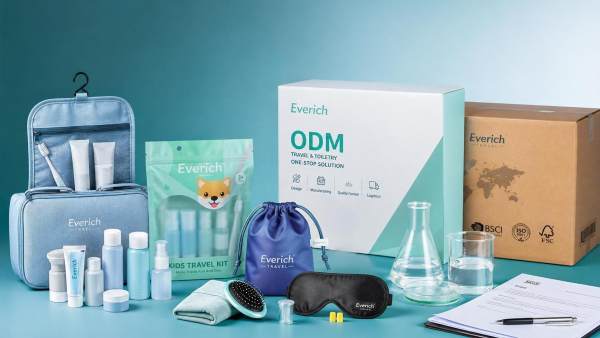
ODM manufacturing unit cost rarely comes down to a single quoted number. For travel service brands, tour operators, resort groups, and destination retailers, price per piece affects margin, inventory risk, and guest-facing product quality at the same time.
That matters more now because travel demand is recovering unevenly, while private-label merchandise, amenity kits, outdoor travel accessories, and promotional goods face tighter compliance and faster replenishment cycles.
A useful cost review looks beyond factory rates. It needs to account for design ownership, tooling, packaging, certification, minimum order quantities, logistics, and the supplier’s ability to execute consistently.
Why unit cost matters in travel-related sourcing
Travel services increasingly rely on physical products to support customer experience and ancillary revenue. These include branded toiletries, travel-size personal care, gift items, children’s kits, outdoor accessories, and seasonal merchandise.
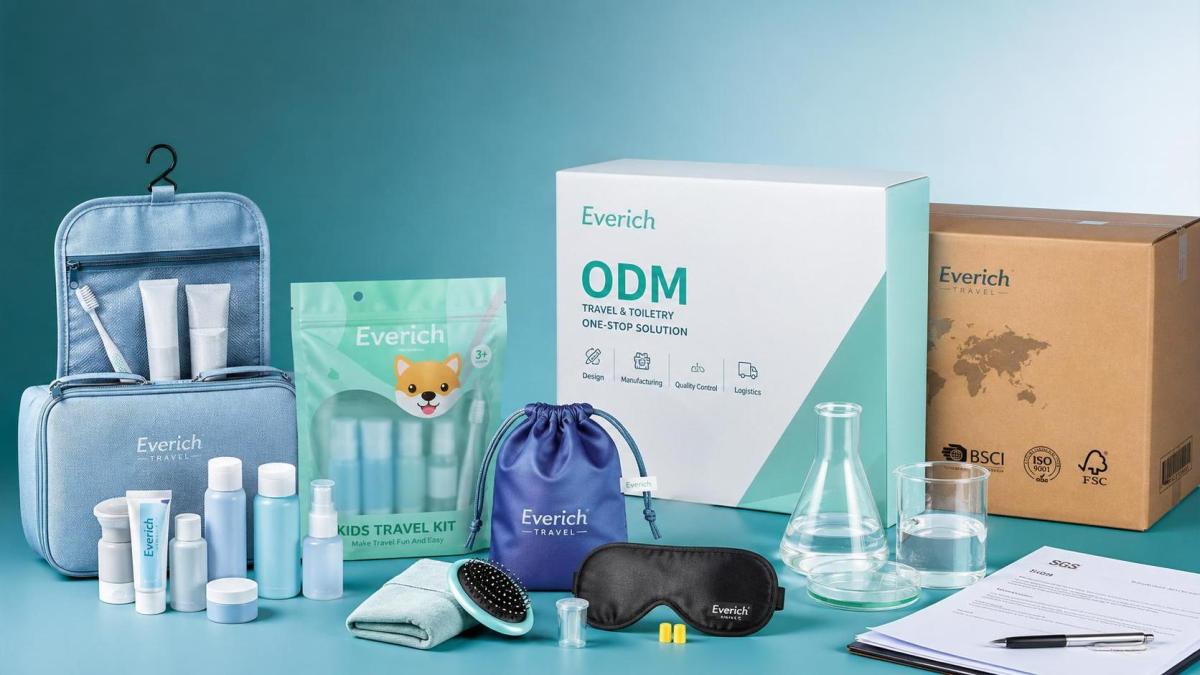
When those items are sourced through ODM, the supplier contributes product development, not just manufacturing. That changes the cost structure, because design engineering and production readiness are built into the offer.
For a hotel chain, cruise partner, airport retailer, or adventure travel brand, an underestimated ODM manufacturing unit cost can distort budget assumptions across several markets.
The issue is not only whether the price is low. The real question is whether the final landed cost still works after compliance, packaging, shipping, and defect exposure are included.
What ODM manufacturing unit cost actually includes
ODM manufacturing unit cost refers to the per-piece cost of products developed and produced by a manufacturer using its own design base, adjusted to a buyer’s branding, specifications, or market needs.
Compared with OEM sourcing, ODM often shortens product development time. But that convenience can hide cost drivers that are easy to miss during approval reviews.
In practical terms, the quoted cost may reflect only ex-factory production. It may exclude one-time engineering charges, mold amortization, lab tests, specialized inserts, and destination-specific labeling requirements.
That is why two offers with similar per-piece numbers can produce very different final commercial outcomes.
The most common cost layers
The price-per-piece drivers that change quotes fast
Materials usually move first. In travel-related products, small specification changes can reshape ODM manufacturing unit cost more than expected.
A toiletry pouch may shift from standard polyester to recycled fabric. A children’s travel toy may need safer inks, stronger stitching, and additional test documentation. Each adjustment changes both direct cost and rejection risk.
Order volume and amortization
Unit pricing improves when fixed costs are spread across more pieces. Tooling, artwork setup, carton design, and test fees can look expensive on a pilot run but reasonable at scale.
This is especially relevant in travel services, where demand may be seasonal or route-specific. Low-volume destination programs often carry higher ODM manufacturing unit cost because the supplier cannot absorb setup over a large batch.
Complexity and customization
ODM becomes more expensive when the base design needs meaningful modification. New inserts, custom closures, multilingual instructions, gift-ready packaging, or exclusive color matching all add process steps.
Simple branding changes are one thing. Structural changes are another. Approval decisions should separate cosmetic customization from engineering customization.
Yield loss and quality thresholds
A low quote can depend on optimistic assumptions about scrap rate, pass rate, and rework. If the product requires precise finishing or premium presentation, actual unit cost may rise after production begins.
This is one reason why supplier capability matters as much as nominal price.
Where finance reviews often miss risk
Many sourcing approvals compare only the quoted piece price. That can be misleading when two factories structure costs differently.
One supplier may keep tooling outside the quote. Another may embed it. One may assume basic export packaging. Another may include retail-ready sets with barcodes and destination labeling.
The more reliable comparison uses a normalized cost sheet. It aligns unit price, one-time charges, payment terms, lead time exposure, freight assumptions, and probable quality loss.
- Check whether the quote is ex works, FOB, or includes delivered elements.
- Confirm if molds, plates, or development samples are refundable or amortized.
- Review testing frequency, not only certification names.
- Map packaging assumptions against actual sales channels and guest use.
- Estimate stock risk if minimum order quantities exceed realistic consumption.
How GCS context sharpens cost evaluation
Global Consumer Sourcing operates in categories where ODM decisions are heavily shaped by speed, compliance, and trend response. That perspective is useful for travel service businesses entering consumer-product sourcing with limited margin for error.
Beauty and personal care are relevant for hotel amenities and travel kits. Sports and outdoors matter for excursion brands and active tourism programs. Gifts and toys connect directly to family travel retail.
Across these segments, the same lesson appears repeatedly. ODM manufacturing unit cost should be judged in relation to compliance depth, replenishment speed, and sell-through confidence, not in isolation.
GCS also reflects a wider market shift. Buyers increasingly need verified intelligence, not just supplier claims. In categories with safety and sustainability requirements, editorially grounded market analysis helps explain why certain quotes are structurally higher.
Practical scenarios in travel service sourcing
The same supplier economics can look very different depending on the use case. A quick scenario review makes that easier to see.
A better way to compare supplier offers
A disciplined review of ODM manufacturing unit cost usually starts with three questions.
Is the quote commercially complete?
Look for hidden exclusions. Samples, tooling maintenance, compliance renewals, and carton upgrades often appear later if they are not defined upfront.
Can the supplier support the operating model?
A lower unit cost loses value when lead times are unstable or when the factory struggles with multi-market labeling, rush replenishment, or quality consistency.
What is the real landed margin?
The best quote is the one that still protects margin after freight, duties, warehousing, markdown exposure, and likely defect cost are modeled.
That approach usually produces cleaner approvals than headline unit-price comparisons alone.
What to do next
ODM manufacturing unit cost becomes easier to manage when cost review follows operational reality. Start with the intended sales or usage setting, then trace every element that turns a design into a landed, usable product.
For travel service programs, that means aligning product design, seasonal demand, compliance needs, and replenishment timing before approving a quote.
The next useful step is to build a comparison sheet that standardizes tooling, testing, packaging, freight assumptions, and minimum order volume across suppliers. That reveals whether a low piece price is truly efficient or simply incomplete.
With the right sourcing intelligence, including category-level insight from platforms such as GCS, cost decisions become less reactive and more defensible.
Related Intelligence
 Skincare OEMAug 16, 2026Amazon Enforces AI Human Metadata Rule for Beauty and Personal Care SellersAmazon now enforces AI human metadata rules for beauty sellers. Learn how to protect listings, traffic, and compliance in skincare, cosmetics, and beauty devices.
 Beauty DevicesAug 15, 2026China to Roll Out Nationwide Cross-Border Cash Pooling for MultinationalsChina to roll out nationwide cross-border cash pooling for multinationals from Sept. 14. Discover how this policy could improve treasury efficiency, liquidity management, and China-linked supply chains.
 Beauty DevicesAug 14, 2026China Imposes Temporary Export Ban on Helium, Affecting Cooling Supply ChainsChina's temporary helium export ban may disrupt cooling supply chains for beauty RF devices and laser systems. Learn what ODMs, buyers, and procurement teams should check now.
![]() Cosmetics & PkgAug 13, 2026PPWR becomes mandatory: Beauty and personal care packaging materials usher in new EPR and PFAS compliance requirementsPPWR takes effect for cosmetics packaging in the EU, bringing EPR registration and PFAS limits. Learn what brands, importers, and suppliers must do now.
Cosmetics & PkgAug 13, 2026PPWR becomes mandatory: Beauty and personal care packaging materials usher in new EPR and PFAS compliance requirementsPPWR takes effect for cosmetics packaging in the EU, bringing EPR registration and PFAS limits. Learn what brands, importers, and suppliers must do now. Cosmetics & PkgAug 12, 2026EU PPWR Now Enforced for Beauty Packaging ComplianceEU PPWR now enforced for beauty packaging compliance: learn how EPR, ERN, heavy metals and PFAS rules affect EU exports, customs clearance and platform sales.
 Cosmetics & PkgAug 11, 2026EU PPWR Rules Take Effect on Aug. 12 for Beauty PackagingEU PPWR rules for beauty packaging take effect on Aug. 12, 2026. Learn key compliance steps, EPR, labeling, PFAS limits, and how to avoid customs delays and fines.
 Smart Pet DevicesAug 10, 2026EU EPR Rules to Cover Smart Pet Devices on Aug. 15EU EPR Rules will cover smart pet devices from Aug. 15, 2026. Learn how smart collars, feeders, and monitoring devices can avoid delisting, customs delays, and compliance risks in the EU.
 Infant Feeding & CareAug 09, 2026CPSC Recalls Baby Sleep Sacks Over Undeclared TDCPPCPSC Recalls Baby Sleep Sacks Over Undeclared TDCPP: learn how this 2026 recall impacts CPC documents, third-party testing, and U.S. baby product compliance for exporters.
 Infant Feeding & CareAug 08, 2026ECHA Adds 5 SVHCs, Importer Notices Due From Oct 2026ECHA adds 5 SVHCs to the Candidate List, with importer notices due from October 2026. Learn how REACH affects exporters, supply chains, and documentation readiness.
 Baby Gear & StrollersAug 07, 2026CPSC Revises Crib Rail Standard for November 2026CPSC revises crib rail standard for November 2026, adding dynamic impact tests and mandatory third-party lab testing. Learn how the new rule affects U.S. market access, compliance, and shipments.
 Electronic & RC ToysAug 06, 2026EU to Require EN IEC 62115:2025 for Electronic ToysEU to Require EN IEC 62115:2025 for Electronic Toys from Oct 1, 2026. Learn scope, battery and AI safety updates, CE compliance risks, and how exporters can avoid customs delays.
 Baby Gear & StrollersAug 05, 2026US Stroller Stability Rule Takes Effect Aug. 15US Stroller Stability Rule Takes Effect Aug. 15: learn how new U.S. stroller compliance, ASTM F833-26a, and CPSC testing rules may affect imports, certification, and shipment readiness.
 Infant Feeding & CareAug 04, 2026ECHA Adds 5 SVHCs, Triggering Baby Care Export ReviewECHA adds 5 SVHCs, prompting an urgent baby care export review for EU-bound products. Learn the 0.1% threshold risks, compliance steps, and how to avoid customs delays and fines.












