
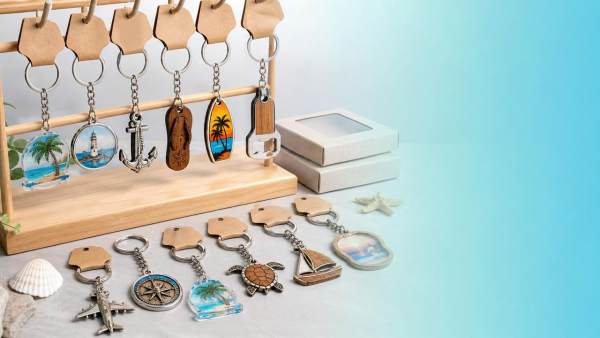
Personalized Keychains Bulk: MOQ and Quality Tips
For distributors and travel retail suppliers, sourcing personalized keychains bulk can be a profitable way to serve souvenir shops, destination brands, hotels, and tour operators—but only when MOQ, material quality, and customization standards are clearly managed.
From metal and acrylic options to logo durability, packaging, and compliance expectations, the right sourcing strategy helps reduce risk while improving margins.
This guide explores practical MOQ considerations and quality tips to help buyers select reliable manufacturers and build keychain programs that meet market demand.
Why bulk personalized keychains still work for travel retail
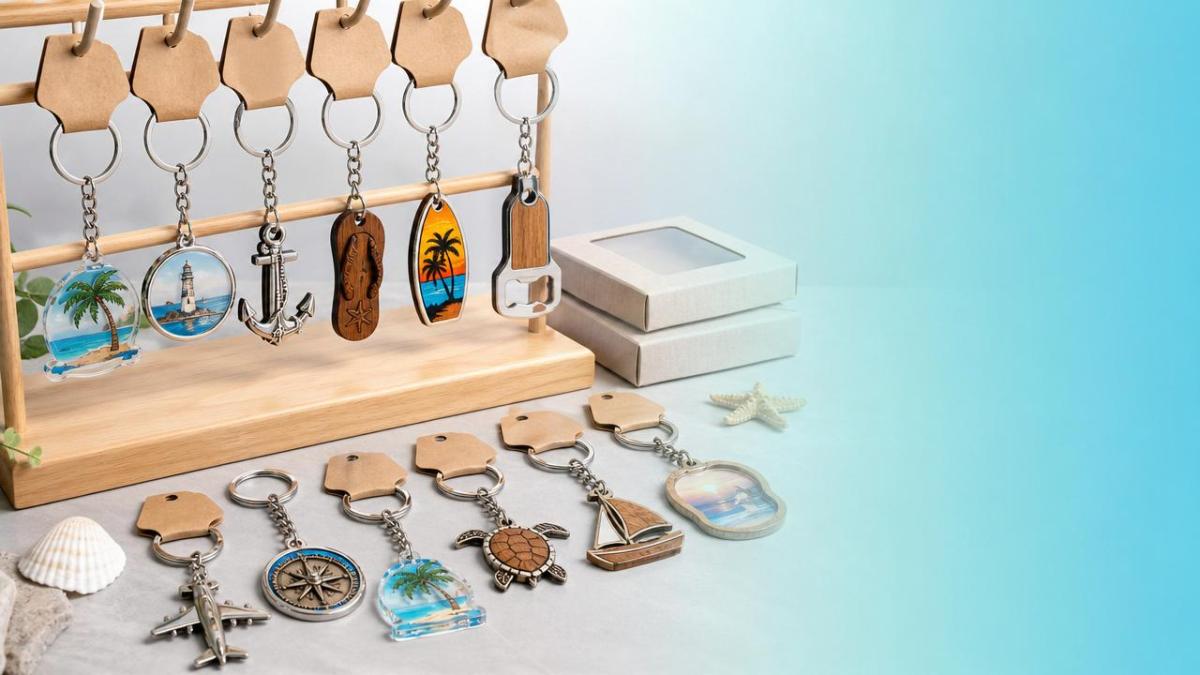
Personalized keychains remain strong sellers because they are compact, affordable, easy to display, and strongly connected to destination memories.
For distributors, the appeal is not only the low unit price, but also the repeatability across cities, resorts, museums, and events.
A single product framework can support dozens of designs, allowing buyers to build localized programs without redesigning the entire supply chain.
In travel retail, keychains serve several channels, including souvenir stores, airport gift shops, hotel boutiques, attraction exits, and tour operator merchandise packs.
The best programs usually combine familiar destination symbols with reliable materials, consistent packaging, and replenishment planning based on seasonal traffic.
Buyers searching for personalized keychains bulk are usually not looking for a generic craft item; they need scalable commercial merchandise.
That means MOQ, customization cost, defect rate, delivery time, and sell-through potential matter more than the cheapest quoted price.
How to think about MOQ before choosing a supplier
MOQ is often the first negotiation point, but distributors should treat it as a cost and risk planning tool.
A low MOQ may help test a new destination design, yet it can increase unit cost, tooling fees, or packaging limitations.
A high MOQ may reduce price, but it also creates inventory risk if demand forecasting is weak or designs are too specific.
For simple printed acrylic keychains, MOQ can be relatively flexible because production setup is faster and tooling is usually limited.
For die-cast metal, enamel, PVC, or multifunctional keychains, MOQ is often higher because molds and finishing steps require more preparation.
Distributors should ask suppliers to separate the MOQ for each design, each colorway, and each packaging option.
This prevents a common misunderstanding where a factory quotes one total MOQ, then later applies minimums to every SKU variation.
A practical approach is to start with fewer core designs, then expand after confirming sales data from retail partners.
For destination merchandise, evergreen designs usually justify higher MOQ, while event-specific or seasonal artwork should remain more conservative.
Material selection: matching price point with retail expectations
Material choice affects not only appearance, but also weight, perceived value, durability, freight cost, and the final retail price.
Acrylic keychains are popular for colorful tourist artwork, cartoon-style icons, and lightweight promotional programs with many design variations.
Metal keychains, including zinc alloy or stainless steel options, usually feel more premium and suit hotels, museums, and branded destinations.
Soft PVC works well for playful shapes, outdoor attractions, sports events, and family-oriented travel souvenirs that need a dimensional look.
Wooden keychains can support eco-themed destinations, national parks, cultural sites, and brands wanting a warmer handcrafted impression.
Leather or PU keychains may fit boutique hotels, travel clubs, and premium gifting, but buyers must confirm colorfastness and stitching quality.
The right choice depends on target margin, expected retail shelf, destination positioning, and the buyer’s tolerance for production complexity.
Distributors should avoid choosing material based only on the sample photo, because lighting and retouching can hide finishing weaknesses.
Request physical samples, compare weight and surface finish, and test how the product looks under normal shop lighting.
Customization methods that affect durability and cost
Personalization is the value driver, but every method has trade-offs in setup time, color accuracy, texture, and long-term durability.
Screen printing is cost-effective for simple logos and flat designs, but fine details may blur if artwork preparation is poor.
UV printing supports full-color images and gradients, making it useful for landmarks, maps, mascots, and photographic destination themes.
Laser engraving offers a clean and durable result for metal, wood, and leather-style materials, but color expression is limited.
Enamel filling creates a premium collectible look, especially for metal keychains, though mold cost and color separation require careful review.
Embossed or debossed designs can improve perceived value, but shallow details may disappear after plating or polishing.
Before confirming production, buyers should ask for artwork proof, material sample, logo placement drawing, and color reference codes.
For distributors handling multiple clients, standardized artwork approval steps reduce disputes and protect margins when reorders are placed.
Quality checks distributors should not skip
Quality control should focus on the issues that cause customer complaints, returns, or poor shelf presentation in retail environments.
Check the attachment strength first, because a weak jump ring, chain, clasp, or split ring can make the product unusable.
Surface finish should be inspected for scratches, bubbles, uneven plating, rough edges, ink bleeding, and inconsistent color density.
Logo durability matters strongly in travel retail, where products are handled frequently before purchase and carried daily after purchase.
Basic rub tests, tape tests, and light scratch checks can reveal whether printed or coated surfaces are suitable for sale.
For metal keychains, confirm plating consistency and corrosion resistance expectations, especially for coastal destinations with humid conditions.
For acrylic products, inspect edge smoothness, print alignment, protective film removal, and whether parts crack near the drilled hole.
For PVC items, review odor, flexibility, color separation, and whether the material attracts dust during packaging or transport.
A final random inspection before shipment is usually cheaper than resolving damaged reputation with retailers after delivery.
Packaging decisions that influence margins and shelf performance
Packaging can look secondary, but it affects perceived value, barcode management, retail display, and the distributor’s operational efficiency.
Simple polybags are low cost and useful for wholesale packs, but they may not support premium presentation in gift shops.
Backer cards improve branding, storytelling, and pegboard display, especially when each destination design needs a retail-ready appearance.
Gift boxes or kraft envelopes can raise the retail price, though they increase freight volume and require stronger inventory planning.
Distributors should decide whether packaging is standardized across designs or customized for each location, hotel, or attraction.
Standard packaging lowers MOQ pressure and simplifies reorders, while custom packaging creates stronger brand identity for key accounts.
Barcode, SKU code, country of origin marking, and warning labels should be confirmed early, not after production is finished.
For travel retail chains, compliance with their receiving and labeling rules can determine whether the product enters shelves smoothly.
Compliance and safety considerations for global buyers
Keychains may look simple, but distributors still need to consider market regulations, material restrictions, and age-related safety requirements.
If products may be sold to children, buyers should be especially cautious about small parts, sharp edges, and chemical compliance.
For the United States, children’s products may require CPC documentation and relevant testing depending on design and intended use.
For European markets, buyers should ask about REACH, nickel release, phthalates, and other applicable material safety expectations.
For metal accessories, lead and cadmium content can become important, especially when products are marketed as gifts for families.
Distributors should not rely only on a supplier’s verbal statement; request recent test reports from recognized laboratories when needed.
Compliance requirements vary by country and retail channel, so large accounts may demand stricter documentation than independent souvenir shops.
A supplier familiar with export markets can help buyers avoid delays, rejected shipments, and reputational risk with retail partners.
How to evaluate a manufacturer beyond the quote
The lowest quote often hides weak communication, unstable lead times, limited quality control, or inflexible after-sales support.
Distributors should evaluate whether the supplier understands OEM and ODM workflows, artwork revision, sampling, production tracking, and packaging requirements.
Ask how many similar destination, hotel, event, or retail keychain programs the factory has completed in recent years.
Review sample consistency across several pieces, because one perfect sample does not always reflect mass production quality.
Check whether the supplier can provide realistic lead times for sampling, mold creation, bulk production, inspection, and shipping.
Clear communication is also part of quality, because delayed answers often become bigger problems once production pressure increases.
For distributors serving multiple retailers, a reliable supplier should support repeat orders, archived artwork files, and consistent color management.
Strong manufacturers will also explain risks honestly, rather than accepting every request without discussing technical limits or cost impact.
Cost structure: what buyers should calculate before ordering
Unit price is only one part of the landed cost, and distributors should calculate the full commercial picture.
Important cost items include tooling, sampling, artwork setup, packaging, inspection, inland freight, international shipping, duties, and warehousing.
A product with a slightly higher factory price may deliver better profit if defect rates are lower and packaging is retail-ready.
Buyers should also estimate shrinkage, unsold seasonal inventory, and markdown risk when deciding MOQ for new designs.
For travel destinations with predictable annual traffic, replenishment-based ordering can protect cash flow better than overbuying one large batch.
When negotiating, ask suppliers for price breaks at different quantities, such as 500, 1,000, 3,000, and 5,000 units.
This helps distributors create tiered offers for retailers and understand how volume commitments improve gross margin.
However, volume discounts should never replace quality verification, because a low-cost failure can damage several retail accounts at once.
Building a stronger keychain program for retailers
Successful distributors do not sell only a product; they sell a complete, easy-to-buy retail program.
A stronger assortment may include entry-level acrylic items, premium metal designs, eco-style wood options, and limited seasonal editions.
Retailers appreciate clear assortment planning because it helps them manage shelf space, price ladders, and customer choice.
Destination storytelling can also improve sell-through, especially when designs connect to landmarks, local culture, wildlife, or memorable travel experiences.
Distributors can offer sample boards, display recommendations, reorder sheets, and sales data reviews to support retail partners.
For hotels and tour operators, personalization may focus more on brand identity, guest experience, and loyalty gift value.
For souvenir shops, variety, impulse appeal, and competitive retail pricing usually matter more than heavy premium packaging.
Understanding these channel differences helps buyers choose suitable MOQ, materials, and customization methods for each customer segment.
Practical sourcing checklist before placing a bulk order
Before ordering personalized keychains bulk, distributors should confirm product specifications in writing, including size, material, finish, color, and attachment type.
Artwork files should be approved with clear dimensions, Pantone references when relevant, and notes about acceptable color tolerance.
MOQ should be confirmed by design, not only by total order quantity, to avoid unexpected production restrictions.
Packaging details should include bag type, card size, barcode placement, carton quantity, and any retailer-specific labeling requirements.
Ask for pre-production samples whenever the order involves new tooling, new artwork, premium finishes, or strict brand colors.
Set an inspection standard covering visual defects, functional performance, logo accuracy, packing correctness, and acceptable quality limits.
Payment terms, delivery schedule, shipping method, and responsibility for defects should be agreed before the deposit is paid.
Keeping this checklist consistent allows distributors to compare suppliers fairly and reduce repeated mistakes across future sourcing projects.
Conclusion: the best bulk keychain orders balance MOQ, quality, and channel fit
Personalized keychains can deliver dependable profit for distributors when sourcing decisions match real travel retail demand.
The strongest programs are not built around the lowest MOQ alone, but around repeatable designs, reliable materials, and controlled quality.
Buyers should compare suppliers by production capability, compliance readiness, packaging support, communication quality, and consistency across repeat orders.
For destination brands, hotels, souvenir retailers, and tour operators, keychains work best when they feel relevant, durable, and easy to merchandise.
By treating MOQ as a planning decision and quality as a margin protector, distributors can build stronger bulk programs with lower sourcing risk.












