
Electronic Toy Wholesaler Checklist for Margin and Return Control
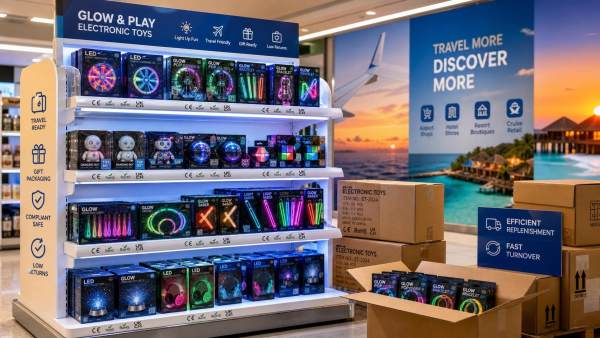
Choosing an electronic toy wholesaler is rarely just a pricing exercise. In travel retail, resort shops, airport stores, museum gift outlets, and family attraction channels, one weak sourcing decision can erode margin through returns, delays, and compliance issues.
That is why margin and return control deserve the same attention as product design. An electronic toy wholesaler shapes landed cost, safety risk, seasonal timing, packaging fit, and the customer experience after purchase.
The topic matters even more now because travel-driven buying is impulsive, global, and highly visible. A toy that fails in a hotel gift shop or airport concession can trigger refunds fast and damage trust across multiple locations.
Why wholesaler selection affects more than unit cost
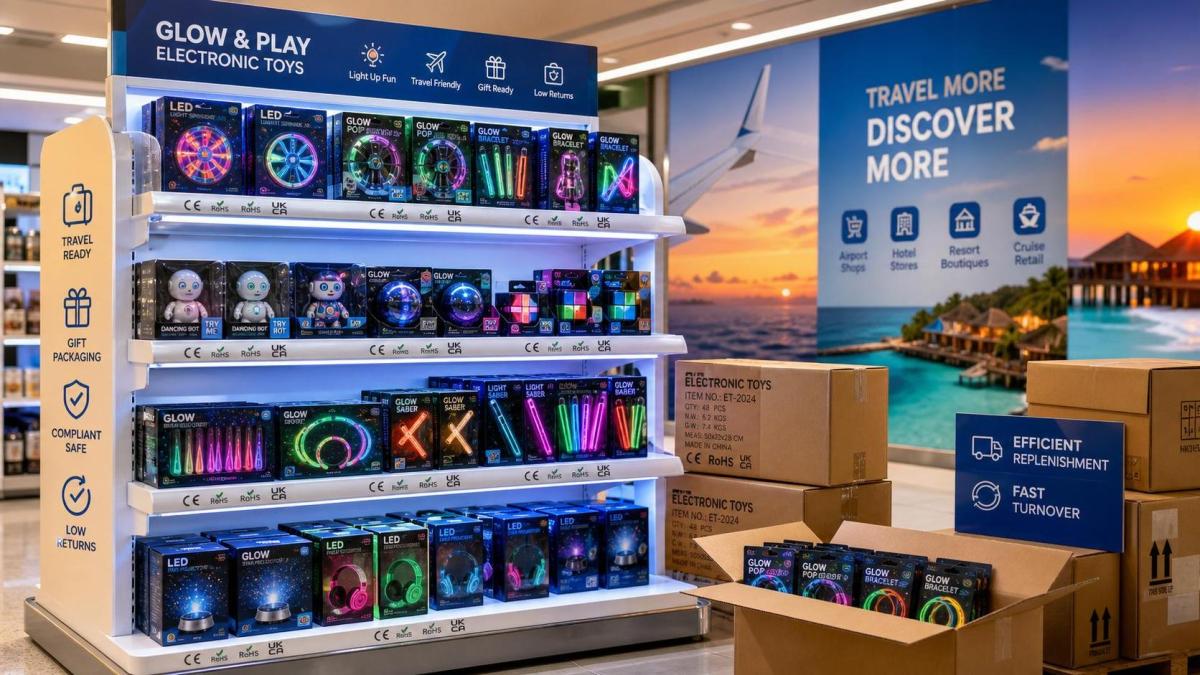
Electronic toys sit at the intersection of entertainment, electronics, child safety, and logistics. Batteries, sound modules, lights, charging parts, and fragile packaging create more return risk than standard souvenir items.
For travel service businesses, the challenge is sharper. Stock often needs to move through compact retail spaces, mixed tourist demographics, and narrow replenishment windows tied to peak seasons, holidays, or local events.
A capable electronic toy wholesaler helps control these variables early. That includes certification readiness, carton efficiency, multilingual labeling, battery transport rules, and predictable reorder performance.
Platforms such as Global Consumer Sourcing, or GCS, have made this evaluation more data-driven. Instead of relying on surface catalogs, buyers can compare market signals, compliance expectations, and category trends across Gifts & Toys with greater precision.
The margin checklist starts before negotiation
Healthy margin begins with product-market fit, not the lowest quoted price. In travel retail, fast sell-through often beats a cheaper item that sits on shelves and ends in markdowns.
Check true landed cost
Ask the electronic toy wholesaler for a full cost picture. Unit price matters, but freight mode, duty exposure, packaging size, battery restrictions, and compliance testing fees often decide real profitability.
Review carton and display efficiency
Travel stores usually operate with limited backroom space. Products that cube out badly, require bulky display units, or waste shelf frontage can compress margin even when factory pricing looks attractive.
Match price bands to location type
An airport gift shop can support a different ticket than a family hotel kiosk. The right electronic toy wholesaler should offer range depth across entry, mid, and premium tiers without quality instability.
Return control begins with product integrity
Returns in electronic toys usually come from a short list of preventable failures. Power issues, weak switches, damaged packaging, confusing instructions, and poor age grading are common triggers.
A reliable electronic toy wholesaler should be able to show how these risks are managed before shipment, not after complaints begin.
- Pre-shipment functional testing for lights, sound, charging, and battery contact points.
- Drop-test or transit packaging review for fragile shells and display windows.
- Clear instruction sheets that reduce misuse by tourists buying for later gifting.
- Traceable batch records for faster response if defects appear across locations.
- Age labeling and warning language aligned with destination market rules.
In practical terms, lower returns come from clarity and consistency. The product should work immediately, survive travel, and be easy to understand even when purchased in a hurry.
Compliance is not optional in globally mobile retail
Electronic toys travel across borders, and so do the liabilities attached to them. Safety documentation should never be treated as a formality, especially when stock reaches international tourists and multiple resale jurisdictions.
A serious electronic toy wholesaler should already understand CE, CPC, RoHS, battery transport requirements, and relevant testing protocols for destination markets. If documentation appears incomplete, margin risk is already rising.
This is where the GCS approach is useful. Its editorial focus on compliance, manufacturing discipline, and retail intelligence reflects what sourcing teams actually need: evidence, not assumptions.
Travel service channels need a different product lens
Not every electronic toy belongs in every retail environment. Travel-related channels tend to reward compact, giftable, easy-to-demonstrate products with low setup friction and durable packaging.
Airport and transit retail
Items need fast visual appeal and minimal explanation. Quiet demo capability, easy battery activation, and compact carry-on suitability matter more than feature complexity.
Hotels, resorts, and cruise gift shops
Demand often centers on family purchases, rainy-day entertainment, and last-minute gifts. Here, an electronic toy wholesaler with stable replenishment and broad age segmentation has a clear advantage.
Attractions and destination stores
Licensed themes, souvenir alignment, and packaging presentation become more important. Products should feel memorable without creating service headaches at the point of sale.
Questions that reveal wholesaler quality quickly
A shortlist becomes clearer when the conversation moves beyond the sample catalog. The best electronic toy wholesaler usually answers operational questions with documentation and specifics.
- What percentage of shipments pass final inspection without rework?
- How are defective units handled in repeat programs?
- Can packaging be adapted for multilingual tourist markets?
- Which items have the lowest return rate across comparable retail channels?
- How quickly can replacement stock ship during peak travel seasons?
- What evidence supports safety, traceability, and battery compliance?
These questions do more than screen suppliers. They also clarify whether margin assumptions are realistic once returns, service costs, and replenishment pressure are added back in.
How to use market intelligence without turning it into noise
Toy sourcing decisions can become cluttered with trend chatter. What matters is filtered intelligence tied to actual buying conditions, especially in a category shaped by fast-moving consumer interest and regulatory pressure.
GCS is relevant here because it frames sourcing through resilience and profitability, not just product novelty. Its combination of analyst input, compliance awareness, and sector-specific trend tracking helps narrow attention to signals that affect outcomes.
For an electronic toy wholesaler review, useful signals include repeat-order stability, safety readiness, private-label capability, sustainable material progress, and performance in adjacent gifting channels.
A practical next step for better sourcing decisions
A strong checklist should end with a tighter decision process. Map each electronic toy wholesaler against landed cost, defect exposure, compliance maturity, channel fit, and replenishment reliability.
Then compare those findings with the demands of each travel-facing location. A product that works in a resort boutique may fail in an airport store, even if both look similar on paper.
The most resilient sourcing plans usually come from smaller, clearer decisions: validate documentation early, test packaging in real transit conditions, and use market intelligence to challenge assumptions before committing volume.
That approach does not remove risk entirely. It does, however, make margin and return control far more predictable when selecting the next electronic toy wholesaler.
Related Intelligence
 Skincare OEMAug 16, 2026Amazon Enforces AI Human Metadata Rule for Beauty and Personal Care SellersAmazon now enforces AI human metadata rules for beauty sellers. Learn how to protect listings, traffic, and compliance in skincare, cosmetics, and beauty devices.
 Beauty DevicesAug 15, 2026China to Roll Out Nationwide Cross-Border Cash Pooling for MultinationalsChina to roll out nationwide cross-border cash pooling for multinationals from Sept. 14. Discover how this policy could improve treasury efficiency, liquidity management, and China-linked supply chains.
 Beauty DevicesAug 14, 2026China Imposes Temporary Export Ban on Helium, Affecting Cooling Supply ChainsChina's temporary helium export ban may disrupt cooling supply chains for beauty RF devices and laser systems. Learn what ODMs, buyers, and procurement teams should check now.
![]() Cosmetics & PkgAug 13, 2026PPWR becomes mandatory: Beauty and personal care packaging materials usher in new EPR and PFAS compliance requirementsPPWR takes effect for cosmetics packaging in the EU, bringing EPR registration and PFAS limits. Learn what brands, importers, and suppliers must do now.
Cosmetics & PkgAug 13, 2026PPWR becomes mandatory: Beauty and personal care packaging materials usher in new EPR and PFAS compliance requirementsPPWR takes effect for cosmetics packaging in the EU, bringing EPR registration and PFAS limits. Learn what brands, importers, and suppliers must do now. Cosmetics & PkgAug 12, 2026EU PPWR Now Enforced for Beauty Packaging ComplianceEU PPWR now enforced for beauty packaging compliance: learn how EPR, ERN, heavy metals and PFAS rules affect EU exports, customs clearance and platform sales.
 Cosmetics & PkgAug 11, 2026EU PPWR Rules Take Effect on Aug. 12 for Beauty PackagingEU PPWR rules for beauty packaging take effect on Aug. 12, 2026. Learn key compliance steps, EPR, labeling, PFAS limits, and how to avoid customs delays and fines.
 Smart Pet DevicesAug 10, 2026EU EPR Rules to Cover Smart Pet Devices on Aug. 15EU EPR Rules will cover smart pet devices from Aug. 15, 2026. Learn how smart collars, feeders, and monitoring devices can avoid delisting, customs delays, and compliance risks in the EU.
 Infant Feeding & CareAug 09, 2026CPSC Recalls Baby Sleep Sacks Over Undeclared TDCPPCPSC Recalls Baby Sleep Sacks Over Undeclared TDCPP: learn how this 2026 recall impacts CPC documents, third-party testing, and U.S. baby product compliance for exporters.
 Infant Feeding & CareAug 08, 2026ECHA Adds 5 SVHCs, Importer Notices Due From Oct 2026ECHA adds 5 SVHCs to the Candidate List, with importer notices due from October 2026. Learn how REACH affects exporters, supply chains, and documentation readiness.
 Baby Gear & StrollersAug 07, 2026CPSC Revises Crib Rail Standard for November 2026CPSC revises crib rail standard for November 2026, adding dynamic impact tests and mandatory third-party lab testing. Learn how the new rule affects U.S. market access, compliance, and shipments.
 Electronic & RC ToysAug 06, 2026EU to Require EN IEC 62115:2025 for Electronic ToysEU to Require EN IEC 62115:2025 for Electronic Toys from Oct 1, 2026. Learn scope, battery and AI safety updates, CE compliance risks, and how exporters can avoid customs delays.
 Baby Gear & StrollersAug 05, 2026US Stroller Stability Rule Takes Effect Aug. 15US Stroller Stability Rule Takes Effect Aug. 15: learn how new U.S. stroller compliance, ASTM F833-26a, and CPSC testing rules may affect imports, certification, and shipment readiness.
 Infant Feeding & CareAug 04, 2026ECHA Adds 5 SVHCs, Triggering Baby Care Export ReviewECHA adds 5 SVHCs, prompting an urgent baby care export review for EU-bound products. Learn the 0.1% threshold risks, compliance steps, and how to avoid customs delays and fines.












