
CE Certified Toys Technical File: What Must Be Included
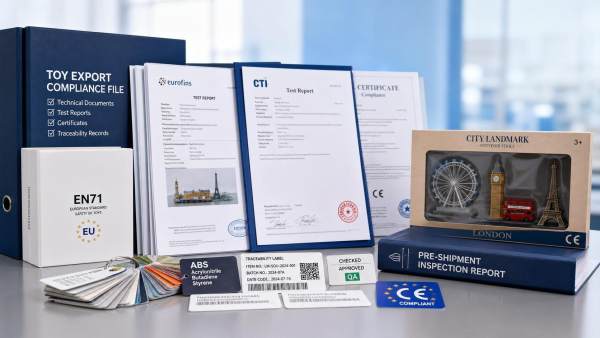
Why does a CE certified toys technical file matter so much?
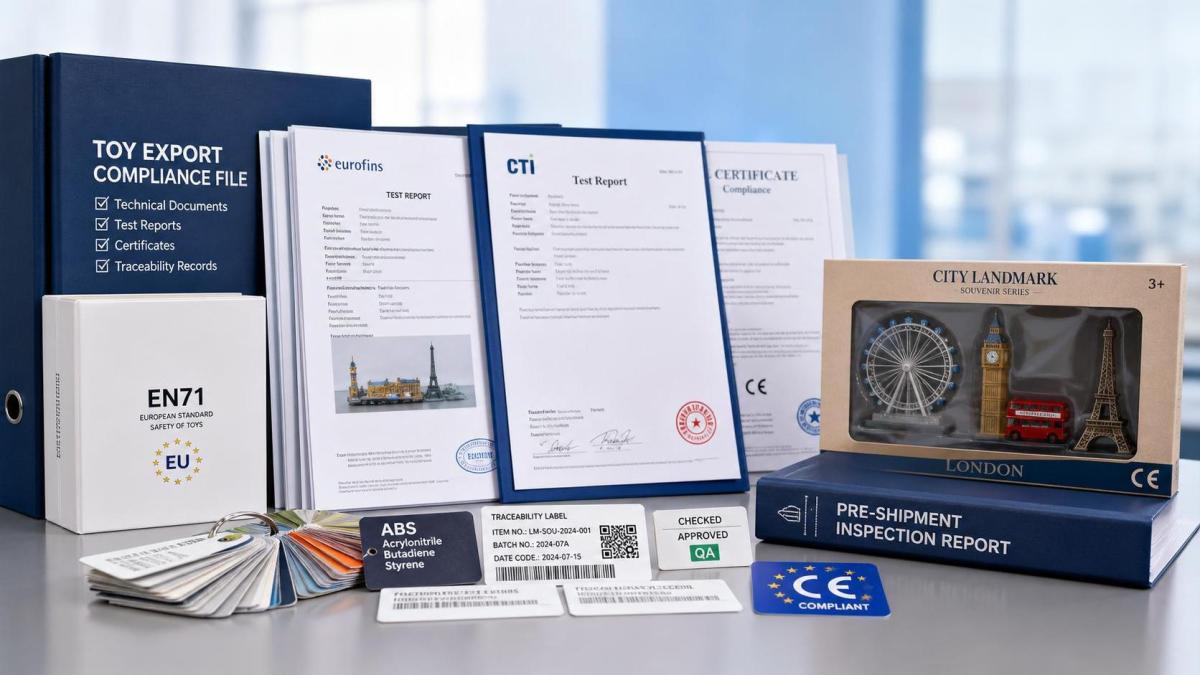
A CE certified toys technical file is not just paperwork for customs clearance.
It is the evidence trail showing that a toy was designed, assessed, tested, and documented against European safety rules.
In practical terms, this file supports market access, shipment continuity, and faster response when authorities ask questions.
That matters even more in travel retail, airport stores, resort gift shops, cruise channels, and cross-border tourist merchandise programs.
These channels often work with seasonal launch windows and mixed-country distribution.
A missing record can hold inventory at the worst possible moment.
A complete CE certified toys technical file also helps when products move through global sourcing networks.
That is one reason platforms like Global Consumer Sourcing keep compliance intelligence close to supply chain planning.
For gifts and toys tied to tourism, brand reputation can be damaged quickly by a recall, border hold, or online complaint.
So the real question is not whether to build the file.
The real question is what must be inside it, and how complete it needs to be.
What must be included in a CE certified toys technical file?
The file should show the full compliance logic of the toy, from concept to finished goods.
A common mistake is treating lab reports as the whole file.
They are important, but they are only one part.
A strong CE certified toys technical file usually includes the following:
- Product description, SKU references, intended age grading, and intended use.
- Design drawings, component lists, materials, colors, and assembly details.
- Bill of materials linked to safety-relevant parts and supplier declarations.
- Risk assessment covering mechanical, physical, chemical, flammability, hygiene, and foreseeable misuse risks.
- Test reports against the Toy Safety Directive and relevant EN 71 standards.
- Where applicable, records for electrical features, sound levels, batteries, magnets, or cords.
- Label artwork, warnings, user instructions, traceability markings, and packaging text.
- EU Declaration of Conformity and the internal approval path supporting it.
- Manufacturing control records showing consistency between tested samples and production goods.
Need a quick reference point before reviewing folders and shared drives?
This table helps separate must-have documents from items often forgotten.
Which records are usually missing when files are reviewed?
In audits, the weak point is rarely the existence of documents.
The weak point is whether the documents connect logically.
For example, a toy may have valid EN 71 reports, but the packaging shows a newer age claim.
That breaks consistency inside the CE certified toys technical file.
Another frequent issue is relying on generic supplier statements without linking them to the final product configuration.
In travel merchandise programs, this can happen when destination-specific packaging changes late in the season.
The toy stays the same, but barcode labels, warning panels, or importer details shift.
Those changes still need file control.
More commonly missing items include:
- Version history for artwork and instructions.
- Signed approval of the final risk assessment.
- Component-level traceability for coatings, inks, and soft plastic parts.
- Evidence that sample tested by the lab matches production tooling.
- Correct retention period and accessible storage format.
Simple filing discipline solves much of this.
Still, discipline only works when document ownership is clear across sourcing, design, testing, and shipping teams.
Does every toy need the same level of documentation?
Not exactly, although every CE certified toys technical file must be complete for its own risk profile.
A plush souvenir toy sold in a museum shop does not carry the same hazards as an electronic travel game.
The documentation depth should follow the product features, age group, and likely misuse.
This is where teams often confuse standardization with simplification.
Using one file structure for all SKUs is sensible.
Using one risk logic for all SKUs is not.
A useful way to judge documentation depth is to ask three practical questions:
- Does the toy contain materials or functions with higher regulatory sensitivity?
- Could the toy be used by younger children than the intended age claim suggests?
- Will the toy move across multiple retail environments with different labeling needs?
When the answer is yes, the CE certified toys technical file usually needs more detailed support records.
That includes stronger control of artwork, importer details, and post-test product changes.
This risk-based approach aligns well with data-led sourcing methods promoted by GCS.
The point is to connect compliance depth with real supply chain exposure.
How should you review a technical file before shipment or listing?
A file review works best when it is staged, not rushed at the shipping deadline.
In actual operations, the fastest method is often a three-check review.
Check one: identity consistency
Make sure product name, item code, photos, packaging, and reports all point to the same toy version.
Check two: hazard coverage
Confirm the risk assessment actually reflects the toy’s features, accessories, and foreseeable misuse.
Check three: production relevance
Verify that approved materials, approved factory, and tested samples still match current production.
This final point matters when tourism demand shifts and factories substitute materials to protect lead times.
If a paint, stuffing, cord, magnet, or battery source changes, the CE certified toys technical file may need updating.
That update may involve more than attaching a new declaration.
It can require a fresh risk judgment and new testing.
What are the biggest mistakes that create enforcement risk?
The most serious mistakes usually come from assumptions.
People assume a previous file can be copied, a supplier certificate is enough, or a package update is only commercial.
Regulators tend to view those assumptions differently.
High-risk errors often include expired references, incomplete warnings, weak traceability, and unsupported age grading.
Another hidden issue is poor retrieval speed.
If the CE certified toys technical file exists but cannot be produced quickly, the compliance benefit drops sharply.
For destination retail and travel-linked assortments, timing pressure makes this worse.
Short sales windows leave little room for document confusion.
A more reliable approach is to treat the file as a living control system.
That means reviewing it whenever design, packaging, labeling, supplier base, or production location changes.
What is the most practical next step if the file feels incomplete?
Start with a gap review against the actual product version in circulation.
Do not begin with old folders, and do not begin with the declaration alone.
Begin with the physical item, final packaging, and current supplier map.
Then work backward into design records, risk analysis, lab reports, and traceability evidence.
If the product supports tourist retail, gift programs, or travel channel distribution, add a location-specific label review.
That catches importer details, language versions, and destination warnings before launch.
A complete CE certified toys technical file should explain not only that the toy passed tests.
It should also explain why the shipped toy remains the same compliant product.
That distinction is what reduces audit pressure and protects continuity.
The next sensible move is to set a file checklist, assign document owners, and review update triggers before the next shipment cycle.
When compliance review is tied to sourcing intelligence, product changes become easier to track and easier to defend.
Related Intelligence
 Skincare OEMAug 16, 2026Amazon Enforces AI Human Metadata Rule for Beauty and Personal Care SellersAmazon now enforces AI human metadata rules for beauty sellers. Learn how to protect listings, traffic, and compliance in skincare, cosmetics, and beauty devices.
 Beauty DevicesAug 15, 2026China to Roll Out Nationwide Cross-Border Cash Pooling for MultinationalsChina to roll out nationwide cross-border cash pooling for multinationals from Sept. 14. Discover how this policy could improve treasury efficiency, liquidity management, and China-linked supply chains.
 Beauty DevicesAug 14, 2026China Imposes Temporary Export Ban on Helium, Affecting Cooling Supply ChainsChina's temporary helium export ban may disrupt cooling supply chains for beauty RF devices and laser systems. Learn what ODMs, buyers, and procurement teams should check now.
![]() Cosmetics & PkgAug 13, 2026PPWR becomes mandatory: Beauty and personal care packaging materials usher in new EPR and PFAS compliance requirementsPPWR takes effect for cosmetics packaging in the EU, bringing EPR registration and PFAS limits. Learn what brands, importers, and suppliers must do now.
Cosmetics & PkgAug 13, 2026PPWR becomes mandatory: Beauty and personal care packaging materials usher in new EPR and PFAS compliance requirementsPPWR takes effect for cosmetics packaging in the EU, bringing EPR registration and PFAS limits. Learn what brands, importers, and suppliers must do now. Cosmetics & PkgAug 12, 2026EU PPWR Now Enforced for Beauty Packaging ComplianceEU PPWR now enforced for beauty packaging compliance: learn how EPR, ERN, heavy metals and PFAS rules affect EU exports, customs clearance and platform sales.
 Cosmetics & PkgAug 11, 2026EU PPWR Rules Take Effect on Aug. 12 for Beauty PackagingEU PPWR rules for beauty packaging take effect on Aug. 12, 2026. Learn key compliance steps, EPR, labeling, PFAS limits, and how to avoid customs delays and fines.
 Smart Pet DevicesAug 10, 2026EU EPR Rules to Cover Smart Pet Devices on Aug. 15EU EPR Rules will cover smart pet devices from Aug. 15, 2026. Learn how smart collars, feeders, and monitoring devices can avoid delisting, customs delays, and compliance risks in the EU.
 Infant Feeding & CareAug 09, 2026CPSC Recalls Baby Sleep Sacks Over Undeclared TDCPPCPSC Recalls Baby Sleep Sacks Over Undeclared TDCPP: learn how this 2026 recall impacts CPC documents, third-party testing, and U.S. baby product compliance for exporters.
 Infant Feeding & CareAug 08, 2026ECHA Adds 5 SVHCs, Importer Notices Due From Oct 2026ECHA adds 5 SVHCs to the Candidate List, with importer notices due from October 2026. Learn how REACH affects exporters, supply chains, and documentation readiness.
 Baby Gear & StrollersAug 07, 2026CPSC Revises Crib Rail Standard for November 2026CPSC revises crib rail standard for November 2026, adding dynamic impact tests and mandatory third-party lab testing. Learn how the new rule affects U.S. market access, compliance, and shipments.
 Electronic & RC ToysAug 06, 2026EU to Require EN IEC 62115:2025 for Electronic ToysEU to Require EN IEC 62115:2025 for Electronic Toys from Oct 1, 2026. Learn scope, battery and AI safety updates, CE compliance risks, and how exporters can avoid customs delays.
 Baby Gear & StrollersAug 05, 2026US Stroller Stability Rule Takes Effect Aug. 15US Stroller Stability Rule Takes Effect Aug. 15: learn how new U.S. stroller compliance, ASTM F833-26a, and CPSC testing rules may affect imports, certification, and shipment readiness.
 Infant Feeding & CareAug 04, 2026ECHA Adds 5 SVHCs, Triggering Baby Care Export ReviewECHA adds 5 SVHCs, prompting an urgent baby care export review for EU-bound products. Learn the 0.1% threshold risks, compliance steps, and how to avoid customs delays and fines.












