OEM Toys vs Ready-Made: Which Lowers Product Risk?
OEM Toys vs Ready-Made: Which Lowers Product Risk?
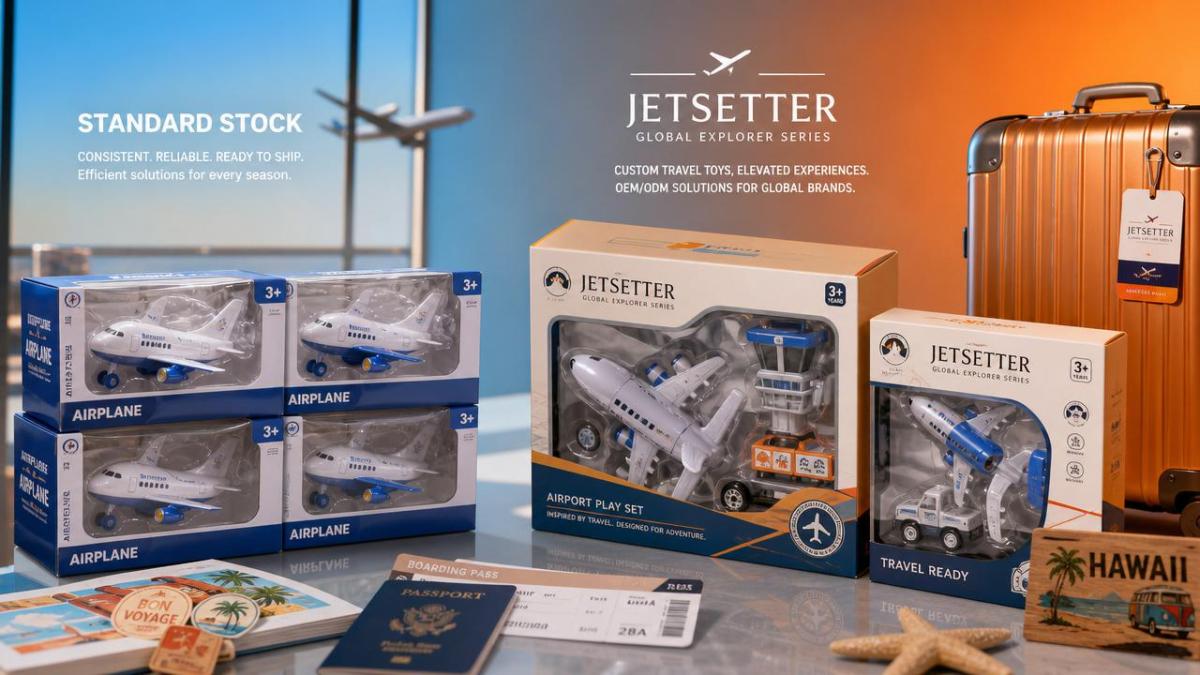
For travel service decision-makers exploring retail partnerships, the choice between OEM toys and ready-made products can shape cost, compliance, and long-term brand exposure.
That choice also affects launch timing, supplier control, packaging flexibility, and the ability to respond to changing customer demand.
In simple terms, ready-made items reduce development effort. OEM toys, however, can reduce deeper product risk when managed with the right sourcing process.
The real answer is not universal. It depends on your margin model, sales channel, compliance pressure, and how much differentiation your business needs.
In today’s unstable supply environment, product risk is no longer just about factory quality. It includes certification gaps, copycat competition, shipping disruption, and slow inventory turnover.
This is why many sourcing teams now compare OEM toys against ready-made options through a broader risk lens, not only a unit-price lens.
What Product Risk Really Means in Toy Sourcing
Before choosing a model, it helps to define product risk clearly. In procurement, risk usually appears in five practical forms.
- Compliance risk, including CPC, CE, labeling, material safety, and age grading issues.
- Commercial risk, such as low margin, fast price erosion, and lack of exclusivity.
- Operational risk, including delays, unstable production quality, and weak change control.
- Demand risk, where product-market fit is unclear or trends fade quickly.
- Reputation risk, especially if returns, defects, or safety complaints reach distribution partners.
Ready-made products seem safer because they already exist. That is true at the sample stage, but not always true after scaling.
OEM toys require more setup. Still, they can lower downstream risk by giving buyers more control over specifications, packaging, and compliance documentation.
That difference becomes more visible when your retail partners ask for traceability, custom branding, or region-specific product adjustments.
Where Ready-Made Products Reduce Risk Faster
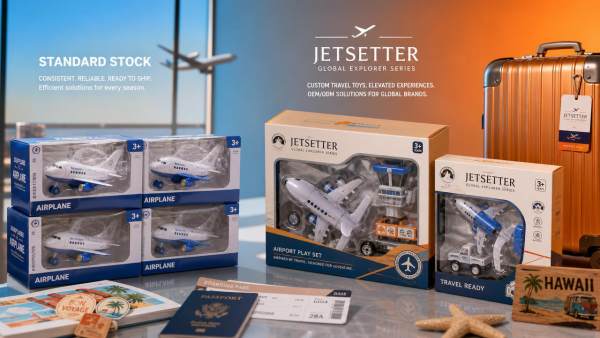
Ready-made toys have one major advantage. They shorten the path from product selection to market testing.
If your goal is to validate demand quickly, ready-made products often lower early-stage risk better than OEM toys.
This matters for seasonal promotions, destination retail, airport stores, resort gift programs, or travel-linked merchandise bundles.
In these situations, speed often matters more than uniqueness. A delayed exclusive item can be riskier than a standard product that ships on time.
Ready-made products work best when
- You need small initial volumes.
- Your launch window is narrow.
- Brand differentiation is not the main value driver.
- You want to test a category before building a custom line.
- Your procurement team has limited engineering or compliance bandwidth.
From a cash-flow angle, this model also reduces upfront development spending. Tooling, artwork revision, and engineering review are usually minimal.
But the trade-off is important. What is easy for you is often easy for competitors too.
Why OEM Toys Often Lower Strategic Risk
OEM toys usually demand more planning, more supplier coordination, and stronger documentation. Yet they often lower strategic risk over time.
The reason is simple. Control reduces surprises.
With OEM toys, buyers can define materials, functions, packaging details, warning labels, manuals, and quality checkpoints before mass production begins.
That makes it easier to align products with specific sales channels, tourism themes, or destination branding programs.
OEM toys lower risk in several practical ways
- They improve exclusivity and protect margin.
- They support customized compliance for target markets.
- They reduce packaging mismatch across channels.
- They allow better quality benchmarks and inspection standards.
- They make supplier accountability easier to document.
This is especially relevant when buyers want private-label assortments or destination-exclusive souvenirs with a higher perceived value.
In actual sourcing operations, the biggest hidden risk is often not product failure. It is lack of ownership over product definition.
That is where OEM toys often outperform ready-made lines.
The Hidden Risks Buyers Miss with Ready-Made Lines
Ready-made products look straightforward, but they carry risks that become visible only after purchase orders increase.
One common issue is document inconsistency. A supplier may show test reports, but those reports may not match your final packaging or destination market.
Another issue is uncontrolled product change. Components, paint, batteries, or accessories can shift without formal notice.
That problem is serious because repeat orders may no longer match approved samples.
Buyers also face channel conflict. The same product may be sold widely, reducing your pricing power within weeks.
For travel retail, where curated product identity matters, this can weaken both sell-through and partner confidence.
Warning signs include
- No version-controlled specification sheet.
- Generic reports without clear SKU linkage.
- Packaging that cannot be adapted efficiently.
- Unclear mold ownership or artwork rights.
- Large dependence on verbal approvals.
When these signals appear, OEM toys may actually be the safer route, even if initial lead times are longer.
Cost, Margin, and Risk: A More Useful Comparison
Many sourcing decisions still focus too heavily on unit cost. That approach misses the full financial picture.
The better question is this: which model creates the lowest total risk-adjusted cost?
If a ready-made item saves one dollar but triggers returns, price compression, or compliance delays, the savings disappear quickly.
If OEM toys cost more at the start but improve differentiation and reduce claims, they often produce a better sourcing outcome.
How to Decide Which Model Fits Your Risk Profile
A practical sourcing decision should match business context, not theory. Start with a few direct questions.
- Is this a short-term test or a multi-season product line?
- Do you need exclusive packaging, branding, or destination storytelling?
- Are your retail partners strict about compliance files and traceability?
- Can your team manage specification approval and factory coordination?
- Is margin protection more important than immediate launch speed?
If most answers point to speed and low commitment, ready-made products may be the right starting point.
If most answers point to control, differentiation, and compliance precision, OEM toys are usually the safer procurement strategy.
Some buyers also use a hybrid path. They test demand with ready-made items, then shift winning concepts into OEM toys for scale.
That approach works well when timing is urgent but long-term brand ownership still matters.
A Smarter Sourcing View for 2025 and Beyond
Recent market changes make this choice more strategic than before. Buyers now operate in a world of tighter safety standards and less predictable demand.
That means product risk should be measured across the full lifecycle, from concept approval to post-sale performance.
For quick category entry, ready-made products still have a clear role. They are efficient, flexible, and useful for testing.
But for buyers seeking defensible margin, consistent compliance, and stronger retail positioning, OEM toys often lower the bigger risks that hurt later.
The best sourcing teams do not ask which option is cheaper. They ask which option gives them more control with fewer surprises.
That shift in thinking leads to better supplier selection, better product governance, and better commercial outcomes.
If your next sourcing decision involves growth, compliance pressure, or private-label potential, evaluate OEM toys against ready-made products using total risk, not just initial price.
In many cases, that is where the safer and more profitable answer becomes clear.
Related Intelligence
 Corporate & Seasonal GiftsOct 26, 2026140th Canton Fair Phase Two in Full Swing as Green, Smart Home Products Secure OrdersExplore 140th Canton Fair Phase Two green and smart home products, reported buyer demand, and key procurement checks to turn orders into reliable export deliveries.
 STEM & Educational ToysOct 25, 2026Malaysia’s KPDN Seizes 5,801 Non-Compliant Squishy Toys in Nationwide ActionMalaysia’s KPDN reportedly seized 5,801 squishy toys lacking safety compliance marks. Discover key checks to help toy suppliers assess stock and verify compliance before distribution.
 Infant Feeding & CareOct 24, 2026FDA Issues Draft Guidance on Cadmium Action Levels in Baby FoodsFDA draft guidance on cadmium action levels in baby foods proposes category-specific targets. Explore potential impacts on sourcing, testing and compliance planning—and how to prepare.
 STEM & Educational ToysOct 23, 20262026 China Toy Expo Gives AI Toys a Dedicated Hall as Practical Features Take Priority2026 China Toy Expo spotlights AI toys with a dedicated hall. Explore how practical features and everyday play experiences are reshaping manufacturers’ product priorities.
 STEM & Educational ToysOct 22, 2026Blokees Showcases Over 900 Products at the 2026 China International Toy FairBlokees showcases over 900 products at the 2026 China International Toy Fair. Explore Model Kits, BLOKEES WHEELS and key sourcing checks to guide your next purchase.
 Cosmetics & PkgOct 21, 2026BASF Plans Beauty Innovation Showcase at in-cosmetics Asia 2026Explore BASF’s planned beauty innovations at in-cosmetics Asia 2026 in Bangkok, with a focus on skin protection, repair and sustainable solutions for personal care formulators.
 Cosmetics & PkgOct 20, 2026Beauty Tops Amazon’s 2026 Prime Big Deal Days Shopping CategoriesBeauty tops Amazon’s 2026 Prime Big Deal Days at 32% of shoppers, according to Market Defense. Explore what the findings could mean for product selection, inventory and promotional planning.
 Pet Furniture & EnrichmentOct 14, 2026Are Removable Covers Worth the Extra Cost for Pet Beds?Are removable covers worth the extra cost for pet beds? Compare cleaning ease, durability, and replacement costs to discover when the upgrade pays off—and when to save.
 Pet Furniture & EnrichmentOct 14, 2026What Should a Pet Bed Factory Quality Inspection Include?What should a pet bed factory quality inspection include? Discover essential checks for materials, durability, washability, and safety to reduce returns and approve shipments with confidence.
 Pet Grooming & TravelOct 14, 2026Which Pet Grooming Tools Have the Lowest Return Risk?Which pet grooming tools have the lowest return risk? Explore manual combs, rubber brushes, and sourcing tips to reduce avoidable returns and build a smarter, customer-friendly assortment.
 Pet Grooming & TravelOct 14, 2026How Should Buyers Assess a Pet Grooming Supplier Before Ordering?How do I assess a pet grooming supplier before ordering? Discover practical checks for quality, compliance, capacity, and contracts to reduce sourcing risks and buy with confidence.
 Corporate & Seasonal GiftsOct 14, 2026How Can Retailers Check Plush Toy Stuffing Quality?How do retailers check plush toy stuffing quality? Discover practical inspections, supplier checks, and testing tips to reduce defects and make smarter pet toy sourcing decisions.
 Corporate & Seasonal GiftsOct 14, 2026Are Embroidered Eyes Safer Than Plastic Eyes on Plush Toys?Are plush toys with embroidered eyes safer than plastic eyes? Discover key pet-toy risks, quality checks, and sourcing tips to make smarter buying decisions.