Toy Compliance Checklist: Key Safety Standards and Test Risks
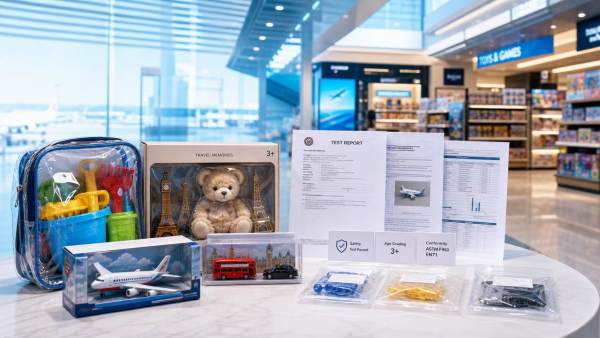
Why does toy compliance matter so much in travel retail?
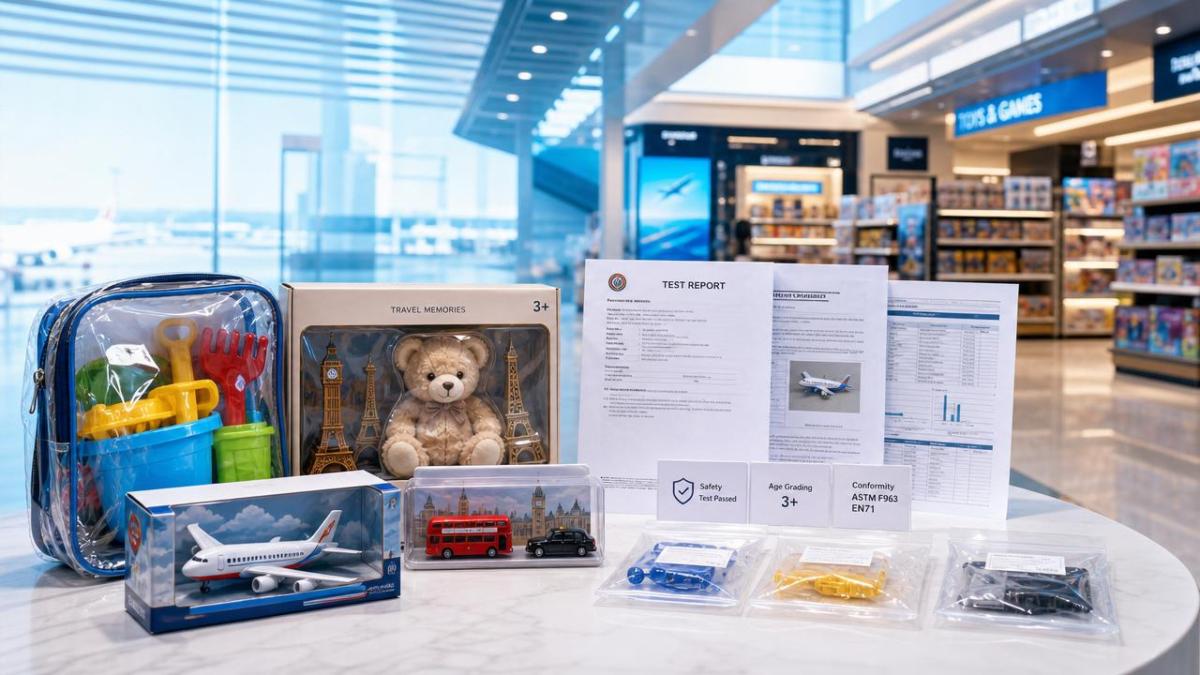
Toy compliance becomes more complex when products move through airports, resorts, museums, cruise shops, and cross-border travel channels.
In these settings, a delayed shipment can miss a seasonal tourism window and create avoidable stock gaps.
That is why many teams treat toy compliance as both a safety issue and a route-to-market issue.
The practical question is not only whether a toy is safe.
It is whether the product file, labeling, materials, and test scope match the destination market.
For travel merchandise, this matters even more because small souvenirs, impulse-purchase toys, and destination-themed gifts often target children across wide age ranges.
A beach toy sold at a coastal resort, for example, may face chemical, mechanical, and packaging checks at the same time.
Industry platforms such as Global Consumer Sourcing keep attention on this overlap.
Their market coverage across gifts and toys reflects how sourcing, certification, and buyer expectations now move together.
A reliable toy compliance checklist reduces recalls, avoids customs friction, and protects travel brand reputation where buyer trust is fragile.
Which safety standards usually sit at the center of a toy compliance checklist?
Most searches start here because the answer depends on where the toy will be sold, not only where it was made.
For the United States, ASTM F963 is a key baseline, often supported by CPSIA requirements and CPC documentation.
For the European market, EN 71 and CE-related obligations usually shape the test plan and technical file.
Other destinations may require ISO references, local chemical restrictions, or importer-specific protocols.
In travel retail, mixed destination flows are common.
A toy prepared for an airport duty-paid shop may still be redistributed into regional stores with different compliance triggers.
That is where teams often make the first mistake.
They test to one standard, then use the same packaging, warnings, and age grading everywhere.
A stronger toy compliance process checks four things together:
- Applicable toy standard by market and sales channel
- Material risks, including heavy metals, phthalates, and coatings
- Mechanical and physical hazards, especially small parts
- Labeling, warnings, traceability, and document completeness
Simple checklists save time only when they reflect the real use case.
A foam airplane sold in a resort gift shop will not carry the same risk profile as a battery toy in a cruise terminal.
How do you decide what to test before production and before shipment?
The most effective approach is to split the toy compliance review into development, pre-production, and final shipment stages.
During development, the focus should stay on design intent, age grading, bill of materials, and likely market access rules.
This is where a surprising number of failures can be prevented.
If a souvenir plush includes detachable accessories, the small-parts risk should be reviewed before tooling is locked.
Before production starts, teams usually need sample-based lab testing on representative materials and components.
Before shipment, the question changes.
Now the concern is whether mass production still matches the tested sample and approved artwork.
A practical review table helps clarify the decision points.
In real travel service supply chains, timing is often tighter than product teams expect.
Tourism-driven launches leave little room for repeated testing after production is complete.
Where do toy compliance test failures usually come from?
Test failures rarely come from a single dramatic defect.
More often, they come from ordinary oversights that build into a non-compliant product file.
The first risk is inaccurate age grading.
If a toy looks suitable for toddlers but was labeled for older children, labs and regulators may challenge the claim.
The second risk is uncontrolled material substitution.
A new paint, plasticizer, fabric trim, or adhesive can invalidate prior reports.
That problem is common with rush orders for destination stores and seasonal attractions.
Another weak point is packaging.
Warnings may be missing, translated poorly, or placed only on a master carton instead of the retail unit.
Battery instructions also create avoidable toy compliance failures, especially for multilingual travel retail packs.
The following checklist covers the most frequent test risks:
- Artwork changed after lab submission
- Supplier changed raw materials without approval
- Assortment items tested as one, despite structural differences
- Pack-out included accessories not listed in the test request
- Destination market changed after testing was finished
A strong toy compliance system therefore depends on version control as much as lab access.
Documentation discipline often prevents more failures than last-minute troubleshooting.
What is the difference between passing a lab test and being market-ready?
This is one of the most useful questions in practice.
A passed report supports toy compliance, but it does not automatically prove complete market readiness.
Market readiness also depends on declarations, traceability, importer details, packaging language, and production consistency.
For travel retail programs, distribution complexity can expose the gap quickly.
A toy can pass ASTM F963, then still face release issues because the CPC file is incomplete or the carton labeling is incorrect.
The same applies in Europe when technical documentation does not fully support CE-related obligations.
A simple way to judge readiness is to ask three operational questions:
- Does the tested sample match the exact sellable unit?
- Do all destination markets have the right warnings and records?
- Can every claim be traced back to current supplier data?
If any answer is uncertain, the toy compliance work is not finished.
This is also why data-backed sourcing intelligence matters.
Platforms like GCS are useful not as advertising channels alone, but as trusted references for how safety, sourcing, and retail execution connect.
How can teams reduce delays, retesting, and compliance surprises?
The answer is usually process design, not extra paperwork.
A workable toy compliance workflow starts with a market map before sampling begins.
That map should show destination countries, applicable standards, language needs, and high-risk components.
Next, link each approval milestone to a frozen version of the product.
This includes artwork, bill of materials, battery type, accessory count, and pack configuration.
It also helps to require change alerts from every supply point, even for minor substitutions.
In travel service environments, line extensions happen fast.
A destination-exclusive toy color or local souvenir insert can trigger a fresh review.
A practical next step is to build an internal release sheet covering:
- Target market and retail channel
- Applicable toy compliance standards
- Required lab reports and validity dates
- Packaging language and warning approval
- Final inspection and shipment release status
That kind of structure keeps the process usable, even when launch calendars are tight.
In short, toy compliance works best when safety review, sourcing visibility, and document control move together.
The immediate next step is to review one live product against the full checklist, not only the lab report.
That exercise usually reveals whether the real risk sits in testing scope, labeling, material change, or shipment timing.
Once those gaps are visible, it becomes easier to set stronger approval rules and avoid repeat failures.
Related Intelligence
 Cosmetics & PkgOct 27, 2026China’s Cosmetics Exports to Russia Hit Record High in September 2026China’s cosmetics exports to Russia reportedly hit $33.6 million in September 2026. Explore category trends and key checks for order planning, documentation and delivery readiness.
 Corporate & Seasonal GiftsOct 26, 2026140th Canton Fair Phase Two in Full Swing as Green, Smart Home Products Secure OrdersExplore 140th Canton Fair Phase Two green and smart home products, reported buyer demand, and key procurement checks to turn orders into reliable export deliveries.
 STEM & Educational ToysOct 25, 2026Malaysia’s KPDN Seizes 5,801 Non-Compliant Squishy Toys in Nationwide ActionMalaysia’s KPDN reportedly seized 5,801 squishy toys lacking safety compliance marks. Discover key checks to help toy suppliers assess stock and verify compliance before distribution.
 Infant Feeding & CareOct 24, 2026FDA Issues Draft Guidance on Cadmium Action Levels in Baby FoodsFDA draft guidance on cadmium action levels in baby foods proposes category-specific targets. Explore potential impacts on sourcing, testing and compliance planning—and how to prepare.
 STEM & Educational ToysOct 23, 20262026 China Toy Expo Gives AI Toys a Dedicated Hall as Practical Features Take Priority2026 China Toy Expo spotlights AI toys with a dedicated hall. Explore how practical features and everyday play experiences are reshaping manufacturers’ product priorities.
 STEM & Educational ToysOct 22, 2026Blokees Showcases Over 900 Products at the 2026 China International Toy FairBlokees showcases over 900 products at the 2026 China International Toy Fair. Explore Model Kits, BLOKEES WHEELS and key sourcing checks to guide your next purchase.
 Cosmetics & PkgOct 21, 2026BASF Plans Beauty Innovation Showcase at in-cosmetics Asia 2026Explore BASF’s planned beauty innovations at in-cosmetics Asia 2026 in Bangkok, with a focus on skin protection, repair and sustainable solutions for personal care formulators.
 Cosmetics & PkgOct 20, 2026Beauty Tops Amazon’s 2026 Prime Big Deal Days Shopping CategoriesBeauty tops Amazon’s 2026 Prime Big Deal Days at 32% of shoppers, according to Market Defense. Explore what the findings could mean for product selection, inventory and promotional planning.
 Pet Grooming & TravelOct 14, 2026Which Pet Care Product Categories Are Growing Fastest in 2026?Which pet care categories are growing fastest in 2026? Explore functional nutrition, preventive wellness, and smart devices to uncover opportunities and build a profitable retail assortment.
 Pet Furniture & EnrichmentOct 14, 2026How Can Retailers Reduce Pet Bed Damage Claims?How can retailers reduce pet bed damage claims? Discover practical quality controls, packaging tests, and care tips to cut returns, protect margins, and build customer trust.
 Pet Furniture & EnrichmentOct 14, 2026Are Removable Covers Worth the Extra Cost for Pet Beds?Are removable covers worth the extra cost for pet beds? Compare cleaning ease, durability, and replacement costs to discover when the upgrade pays off—and when to save.
 Pet Furniture & EnrichmentOct 14, 2026What Should a Pet Bed Factory Quality Inspection Include?What should a pet bed factory quality inspection include? Discover essential checks for materials, durability, washability, and safety to reduce returns and approve shipments with confidence.
 Pet Grooming & TravelOct 14, 2026Which Pet Grooming Tools Have the Lowest Return Risk?Which pet grooming tools have the lowest return risk? Explore manual combs, rubber brushes, and sourcing tips to reduce avoidable returns and build a smarter, customer-friendly assortment.