Customs Expands June Checks on Baby Product Exports
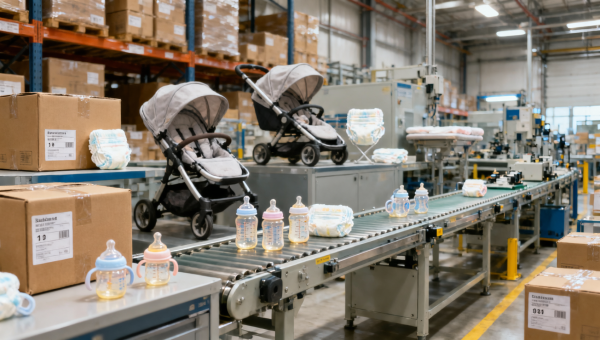
Starting June 1, 2026, China Customs will apply annual random inspection checks to exported baby and child products, with the scope covering categories such as strollers, feeding bottles, pacifiers, and changing tables. What makes this update especially relevant for the industry is not only the wider product coverage, but also the first-time extension of sampling to registered production batches at OEM factories, which puts exporters, brand owners, contract manufacturers, and supply chain coordinators under closer compliance pressure across the full entrusted production chain.
What the new inspection arrangement confirms
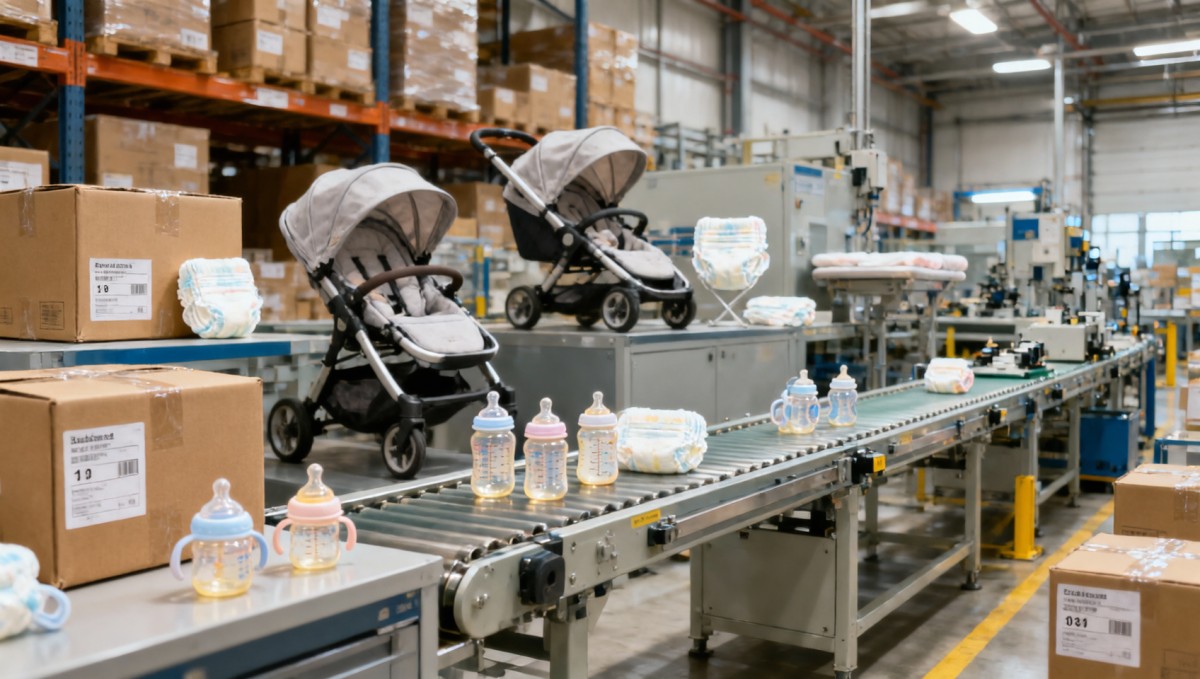
According to the information provided, the General Administration of Customs has clarified that from June 1, 2026, exported baby and child products will be subject to annual random inspection testing. The coverage includes a full range of products, including baby strollers, feeding bottles, pacifiers, and changing tables.
The same notice also states that sampling will, for the first time, extend to registered production batches at OEM factories. If products fail testing, their export qualification will be suspended, and the effect may extend across the entire commissioned production and export chain.
Where the pressure is likely to fall first
Exporters face a broader compliance exposure
From an industry perspective, direct export businesses may be affected first because the inspection mechanism is tied to export qualification. The immediate pressure is likely to concentrate on shipment readiness, document consistency, and the ability to trace products back to specific registered production batches.
OEM factories move closer to the center of risk control
Analysis shows that the extension of sampling to OEM factory registered batches shifts part of the practical compliance burden deeper into manufacturing. For contract manufacturers, the key issue is no longer limited to production execution; their batch registration status and associated production records become more directly relevant to whether the entrusted chain can continue shipping.
Brand owners and commissioning parties need tighter chain visibility
For companies that outsource production, the impact is likely to appear in supplier oversight, production batch alignment, and contingency planning. Because a failed test may affect the whole entrusted chain, commissioning parties may need closer visibility into how OEM-linked batches are filed, identified, and connected to export products.
Supply chain service providers may see higher coordination demands
Observably, service providers involved in coordination, documentation, and delivery scheduling may need to pay closer attention to timing and exception handling. If a product is suspended from export qualification after testing, the operational effect may not remain isolated to one shipment, but could influence delivery commitments across connected parties.
What companies should watch now
Track how official wording is implemented in practice
What deserves closer attention is the difference between the announced inspection framework and its practical enforcement in day-to-day export operations. Businesses should continue monitoring whether there are further clarifications around sampling scope, batch identification, and documentation requirements linked to OEM production records.
Review high-attention product categories and batch links
Because the provided information points to full-category coverage for exported baby and child products, companies should not treat only one or two product lines as exposed. The more practical issue is whether the relevant products can be matched clearly to registered OEM production batches and related export files.
Prepare for qualification disruption scenarios
Analysis shows that the stated consequence of failed testing is serious in operational terms: export qualification may be suspended. Companies involved in contracting, manufacturing, exporting, and fulfillment should therefore review response plans for delayed shipments, replacement production, and customer communication if an inspected batch encounters problems.
Recheck supplier and file consistency
For businesses working through entrusted manufacturing, current attention should focus on whether supplier qualifications, filing information, batch records, and export documentation align cleanly. In this context, consistency across documents and production links may become as important as product testing outcomes themselves.
Why this reads as more than a routine inspection update
In editorial observation, this development is better understood as a concrete compliance signal rather than a routine procedural notice. The notable point is not only that annual random inspection will cover exported baby and child products, but that enforcement attention now explicitly reaches registered OEM production batches.
At the same time, it is more appropriate to understand this as an actionable regulatory signal rather than a finished industry outcome. The confirmed facts show stricter inspection coverage and a clearer consequence for failed testing, but the full operational impact on different business models still needs continued observation as implementation details emerge.
How the market should read the update
At this stage, the industry significance lies in the clearer linkage between export compliance and OEM batch traceability in baby and child product exports. For companies in this chain, the update is less about short-term market interpretation and more about immediate readiness in filing, traceability, supplier coordination, and shipment risk control.
A neutral reading is that this is a substantive policy and enforcement signal with direct operational relevance. It should not yet be overstated into broader market conclusions, but it does warrant close follow-up by exporters, OEM manufacturers, and commissioning brands whose business depends on uninterrupted export qualification.
Basis of this article and follow-up points
This article is generated based on the user-provided news title, event date, and event summary. The current text relies on the supplied information that the announcement takes effect on June 1, 2026, covers exported baby and child product categories, extends sampling to registered OEM factory production batches, and may lead to suspension of export qualification if testing is failed.
For this type of development, commonly relevant source types may include official notices, company announcements, industry association updates, authoritative media reporting, and standards-related documents. A specific official source link was not provided in the input, so the exact source document still requires ongoing verification. Follow-up attention should remain on any later official clarification concerning implementation scope, inspection practice, and documentation expectations.
Related Intelligence
 Cosmetics & PkgOct 27, 2026China’s Cosmetics Exports to Russia Hit Record High in September 2026China’s cosmetics exports to Russia reportedly hit $33.6 million in September 2026. Explore category trends and key checks for order planning, documentation and delivery readiness.
 Corporate & Seasonal GiftsOct 26, 2026140th Canton Fair Phase Two in Full Swing as Green, Smart Home Products Secure OrdersExplore 140th Canton Fair Phase Two green and smart home products, reported buyer demand, and key procurement checks to turn orders into reliable export deliveries.
 STEM & Educational ToysOct 25, 2026Malaysia’s KPDN Seizes 5,801 Non-Compliant Squishy Toys in Nationwide ActionMalaysia’s KPDN reportedly seized 5,801 squishy toys lacking safety compliance marks. Discover key checks to help toy suppliers assess stock and verify compliance before distribution.
 Infant Feeding & CareOct 24, 2026FDA Issues Draft Guidance on Cadmium Action Levels in Baby FoodsFDA draft guidance on cadmium action levels in baby foods proposes category-specific targets. Explore potential impacts on sourcing, testing and compliance planning—and how to prepare.
 STEM & Educational ToysOct 23, 20262026 China Toy Expo Gives AI Toys a Dedicated Hall as Practical Features Take Priority2026 China Toy Expo spotlights AI toys with a dedicated hall. Explore how practical features and everyday play experiences are reshaping manufacturers’ product priorities.
 STEM & Educational ToysOct 22, 2026Blokees Showcases Over 900 Products at the 2026 China International Toy FairBlokees showcases over 900 products at the 2026 China International Toy Fair. Explore Model Kits, BLOKEES WHEELS and key sourcing checks to guide your next purchase.
 Cosmetics & PkgOct 21, 2026BASF Plans Beauty Innovation Showcase at in-cosmetics Asia 2026Explore BASF’s planned beauty innovations at in-cosmetics Asia 2026 in Bangkok, with a focus on skin protection, repair and sustainable solutions for personal care formulators.
 Cosmetics & PkgOct 20, 2026Beauty Tops Amazon’s 2026 Prime Big Deal Days Shopping CategoriesBeauty tops Amazon’s 2026 Prime Big Deal Days at 32% of shoppers, according to Market Defense. Explore what the findings could mean for product selection, inventory and promotional planning.
 Pet Grooming & TravelOct 14, 2026Which Pet Care Product Categories Are Growing Fastest in 2026?Which pet care categories are growing fastest in 2026? Explore functional nutrition, preventive wellness, and smart devices to uncover opportunities and build a profitable retail assortment.
 Pet Furniture & EnrichmentOct 14, 2026How Can Retailers Reduce Pet Bed Damage Claims?How can retailers reduce pet bed damage claims? Discover practical quality controls, packaging tests, and care tips to cut returns, protect margins, and build customer trust.
 Pet Furniture & EnrichmentOct 14, 2026Are Removable Covers Worth the Extra Cost for Pet Beds?Are removable covers worth the extra cost for pet beds? Compare cleaning ease, durability, and replacement costs to discover when the upgrade pays off—and when to save.
 Pet Furniture & EnrichmentOct 14, 2026What Should a Pet Bed Factory Quality Inspection Include?What should a pet bed factory quality inspection include? Discover essential checks for materials, durability, washability, and safety to reduce returns and approve shipments with confidence.
 Pet Grooming & TravelOct 14, 2026Which Pet Grooming Tools Have the Lowest Return Risk?Which pet grooming tools have the lowest return risk? Explore manual combs, rubber brushes, and sourcing tips to reduce avoidable returns and build a smarter, customer-friendly assortment.