
Ningbo Port Pilots Green Clearance Code for Infant Products

Ningbo Customs launched a pilot program for a ‘Green Clearance Code for Infant Products’ at Beilun Port on May 9, 2026 — a development with direct implications for infant and toddler product exporters, third-party testing service providers, and international importers operating in EU, US, and ASEAN markets. This initiative introduces a digital verification mechanism tied to compliance with GB 31701-2026, aiming to reduce clearance uncertainty and improve cross-border supply chain predictability.
Event Overview
Starting May 9, 2026, Ningbo Customs began piloting the ‘Infant Product Green Clearance Code’ at Beilun Port. Under this mechanism, enterprises submitting full-scope test reports for GB 31701-2026 — issued by laboratories accredited by CNAS — receive an automatically generated QR code upon system verification. Products covered include baby strollers, cribs, and other infant care items subject to the standard. Upon scanning the code at customs, these goods undergo expedited release — described officially as ‘instant clearance’ (‘miao fang’).
Industries Affected
Direct Export Trading Enterprises
These firms face immediate operational impact: clearance time for eligible products drops from days to seconds, directly improving delivery reliability. However, eligibility is conditional — only shipments accompanied by full GB 31701-2026 reports from CNAS-accredited labs qualify. Firms exporting mixed batches (e.g., strollers + non-infant items) must ensure segregation and documentation alignment to avoid delays outside the green lane.
Testing & Certification Service Providers
Laboratories holding CNAS accreditation for GB 31701-2026 are positioned to see increased demand for full-scope testing. The pilot does not extend to partial or legacy-version reports (e.g., GB 31701-2015), meaning labs must confirm current scope validity and update internal test protocols accordingly. Non-CNAs-accredited labs — even those offering identical test methods — cannot trigger the auto-verification system.
Manufacturers of Infant Care Products
Factories producing strollers, cribs, bassinets, and similar items must now treat GB 31701-2026 compliance as a prerequisite for participation in the green lane — not merely a market access requirement. Since the standard includes updated mechanical safety, flammability, and chemical migration limits (e.g., for phthalates and heavy metals), production controls, material sourcing, and batch-level traceability need verification prior to lab submission.
International Importers & Brand Owners
Overseas buyers — particularly those managing letter-of-credit (L/C) terms or just-in-time inventory systems — gain enhanced visibility into shipment readiness. A validated green code signals that regulatory documentation is complete and verified pre-departure, supporting earlier L/C negotiation timelines and improved inventory turnover planning. However, the code itself does not replace overseas market conformity assessments (e.g., CPSIA, EN 1888, AS/NZS 2088); it applies solely to China’s export clearance process.
Key Considerations and Recommended Actions
Monitor official expansion plans and scope updates
The program is currently limited to Beilun Port and specific product categories. Analysis shows Ningbo Customs has not announced timeline or criteria for scaling to other ports (e.g., Meishan or Zhenhai) or adding product types (e.g., feeding bottles or apparel). Stakeholders should track official notices via the General Administration of Customs of China (GACC) and Ningbo Customs websites — not third-party summaries.
Verify laboratory accreditation status before test commissioning
Not all CNAS-accredited labs hold authorization for GB 31701-2026 full-scope testing. Observation shows some labs list the standard under their scope but exclude certain sub-clauses (e.g., formaldehyde in textiles or dynamic strength tests for strollers). Exporters must request written confirmation of coverage for all clauses in GB 31701-2026 prior to sample submission.
Distinguish between policy signal and operational readiness
The pilot reflects a procedural optimization — not a relaxation of safety requirements. From industry perspective, the green code does not lower technical thresholds; it shifts verification upstream. Companies assuming ‘faster clearance = lighter compliance’ risk non-conformance post-clearance, especially if overseas regulators conduct post-import audits or market surveillance.
Align internal documentation workflows with QR code requirements
System-generated codes require exact matching between report metadata (e.g., applicant name, product model number, CNAS certificate number) and customs declaration data. Current more suitable practice is to standardize naming conventions across lab reports, packing lists, and electronic customs filings — avoiding abbreviations or alternate model codes that may break auto-verification.
Editorial Perspective / Industry Observation
This initiative is best understood as a targeted efficiency measure — not a broad regulatory shift. Observably, it responds to recurring pain points in infant product exports: inconsistent clearance times, manual document checks, and downstream disputes over compliance timing. Analysis shows the green code’s value lies less in reducing regulatory burden and more in compressing information asymmetry between exporter, lab, and customs. It signals growing institutional emphasis on verifiable, machine-readable compliance — a trend likely to extend to other high-priority consumer goods categories. However, its current port-specific, product-limited nature means it remains a pilot in both form and function; industry should treat it as an early indicator of digital customs infrastructure development, not yet a de facto standard.
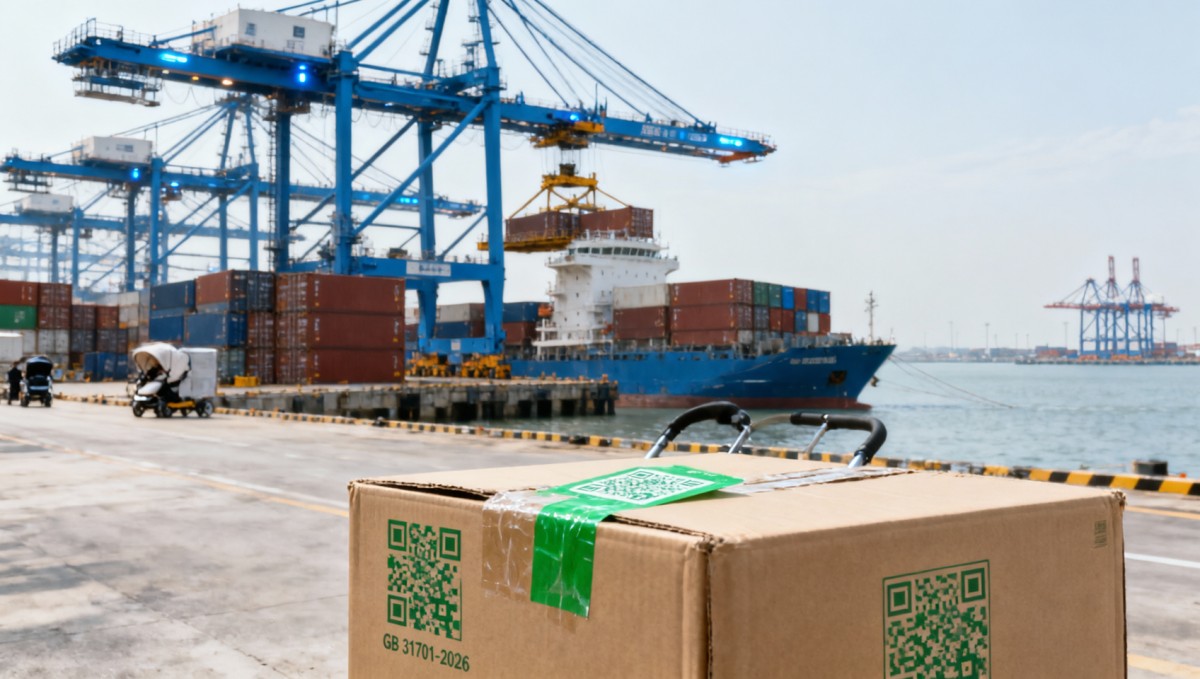
Conclusion: The Ningbo green clearance code enhances predictability for compliant infant product exporters but does not alter underlying safety requirements or overseas market obligations. It is most accurately interpreted as a logistics enabler — one that rewards upstream diligence in testing and documentation. At this stage, it is better understood as a procedural upgrade than a strategic inflection point; sustained relevance will depend on scalability, interoperability with other ports, and integration with broader trade facilitation frameworks.
Source: Official announcement issued by Ningbo Customs on May 9, 2026. Scope, eligibility criteria, and technical parameters confirmed exclusively through that notice. Expansion beyond Beilun Port, inclusion of additional product categories, or integration with other customs authorities remain unconfirmed and are under observation.
Related Intelligence
 Skincare OEMAug 16, 2026Amazon Enforces AI Human Metadata Rule for Beauty and Personal Care SellersAmazon now enforces AI human metadata rules for beauty sellers. Learn how to protect listings, traffic, and compliance in skincare, cosmetics, and beauty devices.
 Beauty DevicesAug 15, 2026China to Roll Out Nationwide Cross-Border Cash Pooling for MultinationalsChina to roll out nationwide cross-border cash pooling for multinationals from Sept. 14. Discover how this policy could improve treasury efficiency, liquidity management, and China-linked supply chains.
 Beauty DevicesAug 14, 2026China Imposes Temporary Export Ban on Helium, Affecting Cooling Supply ChainsChina's temporary helium export ban may disrupt cooling supply chains for beauty RF devices and laser systems. Learn what ODMs, buyers, and procurement teams should check now.
![]() Cosmetics & PkgAug 13, 2026PPWR becomes mandatory: Beauty and personal care packaging materials usher in new EPR and PFAS compliance requirementsPPWR takes effect for cosmetics packaging in the EU, bringing EPR registration and PFAS limits. Learn what brands, importers, and suppliers must do now.
Cosmetics & PkgAug 13, 2026PPWR becomes mandatory: Beauty and personal care packaging materials usher in new EPR and PFAS compliance requirementsPPWR takes effect for cosmetics packaging in the EU, bringing EPR registration and PFAS limits. Learn what brands, importers, and suppliers must do now. Cosmetics & PkgAug 12, 2026EU PPWR Now Enforced for Beauty Packaging ComplianceEU PPWR now enforced for beauty packaging compliance: learn how EPR, ERN, heavy metals and PFAS rules affect EU exports, customs clearance and platform sales.
 Cosmetics & PkgAug 11, 2026EU PPWR Rules Take Effect on Aug. 12 for Beauty PackagingEU PPWR rules for beauty packaging take effect on Aug. 12, 2026. Learn key compliance steps, EPR, labeling, PFAS limits, and how to avoid customs delays and fines.
 Smart Pet DevicesAug 10, 2026EU EPR Rules to Cover Smart Pet Devices on Aug. 15EU EPR Rules will cover smart pet devices from Aug. 15, 2026. Learn how smart collars, feeders, and monitoring devices can avoid delisting, customs delays, and compliance risks in the EU.
 Infant Feeding & CareAug 09, 2026CPSC Recalls Baby Sleep Sacks Over Undeclared TDCPPCPSC Recalls Baby Sleep Sacks Over Undeclared TDCPP: learn how this 2026 recall impacts CPC documents, third-party testing, and U.S. baby product compliance for exporters.
 Infant Feeding & CareAug 08, 2026ECHA Adds 5 SVHCs, Importer Notices Due From Oct 2026ECHA adds 5 SVHCs to the Candidate List, with importer notices due from October 2026. Learn how REACH affects exporters, supply chains, and documentation readiness.
 Baby Gear & StrollersAug 07, 2026CPSC Revises Crib Rail Standard for November 2026CPSC revises crib rail standard for November 2026, adding dynamic impact tests and mandatory third-party lab testing. Learn how the new rule affects U.S. market access, compliance, and shipments.
 Electronic & RC ToysAug 06, 2026EU to Require EN IEC 62115:2025 for Electronic ToysEU to Require EN IEC 62115:2025 for Electronic Toys from Oct 1, 2026. Learn scope, battery and AI safety updates, CE compliance risks, and how exporters can avoid customs delays.
 Baby Gear & StrollersAug 05, 2026US Stroller Stability Rule Takes Effect Aug. 15US Stroller Stability Rule Takes Effect Aug. 15: learn how new U.S. stroller compliance, ASTM F833-26a, and CPSC testing rules may affect imports, certification, and shipment readiness.
 Infant Feeding & CareAug 04, 2026ECHA Adds 5 SVHCs, Triggering Baby Care Export ReviewECHA adds 5 SVHCs, prompting an urgent baby care export review for EU-bound products. Learn the 0.1% threshold risks, compliance steps, and how to avoid customs delays and fines.












