
Malaysia SIRIM Enforces ISO 18287:2026 UPF Testing for Children's Activewear
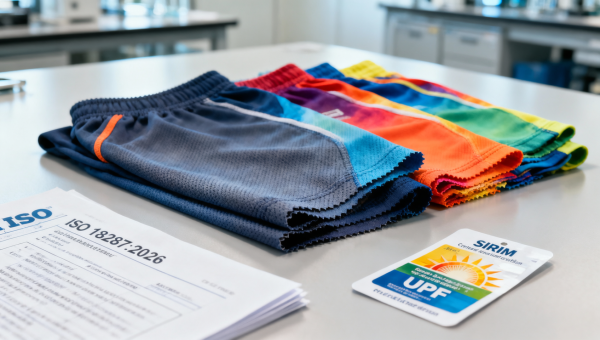
On May 10, 2026, Malaysia’s Standards and Industrial Research Institute (SIRIM) mandated compliance with the updated ISO 18287:2026 standard for ultraviolet protection factor (UPF) testing of children’s sportswear. This requirement directly affects exporters, OEM manufacturers, and importers supplying to the Malaysian market — particularly those engaged in children’s activewear production and distribution.
Event Overview
Effective May 10, 2026, SIRIM requires all imported children’s activewear produced under OEM arrangements to undergo retesting against ISO 18287:2026 and carry an official SIRIM UPF certification label. The new standard introduces mandatory evaluation of UPF performance after combined wetting and mechanical abrasion (‘wet + rubbed’ condition), measuring UPF attenuation rate. Publicly reported data indicates a non-compliance rate exceeding 42% among Chinese contract manufacturers currently undergoing retesting.
Industries Affected by Segment
Direct Trading Enterprises
Importers and brand owners placing orders for children’s activewear destined for Malaysia must now verify UPF certification status prior to shipment. Non-compliant goods risk rejection at customs or post-import audit, leading to delays, rework costs, or loss of market access.
Raw Material Suppliers
Fabric mills supplying base textiles to activewear OEMs face heightened scrutiny: only materials validated for UPF retention under ISO 18287:2026’s wet-and-rubbed protocol qualify. Suppliers lacking SIRIM-recognized long-term UPF validation capacity may lose eligibility for key supply contracts.
Contract Manufacturing (OEM/ODM) Firms
Manufacturers — especially those in China producing under private-label or branded OEM arrangements — are directly impacted by the 42%+ retest failure rate. The root cause lies in insufficient UPF durability under the new conditioning test, indicating gaps in fabric selection, finishing processes, or quality control protocols.
Supply Chain & Certification Service Providers
Laboratories and third-party testing agencies accredited by SIRIM for ISO 18287:2026 — particularly those offering wet-and-rubbed UPF longevity verification — are experiencing increased demand. Unaccredited labs cannot issue valid certification, limiting options for suppliers needing rapid turnaround.
Key Focus Areas and Recommended Actions
Monitor Official SIRIM Guidance on Transitional Arrangements
While enforcement began May 10, 2026, SIRIM has not publicly clarified whether grace periods apply to existing stock or pending shipments. Importers and manufacturers should track official SIRIM notices and consult authorized representatives for clarification before clearing goods.
Prioritize Verification of Fabric-Level UPF Longevity Capability
Rather than relying solely on initial dry-state UPF 50+ results, sourcing teams should request full test reports showing UPF retention after wetting and 20 cycles of standardized rubbing per ISO 18287:2026 Annex B. Confirm that the issuing lab holds current SIRIM accreditation for this specific protocol.
Assess Supplier Readiness Beyond Labeling Compliance
Certification labeling is a downstream requirement; upstream readiness depends on process controls. Audit supplier documentation on dye selection, UV-absorbing additive integration, and post-finishing stability testing — not just final product certification.
Update Internal Quality Agreements and Purchase Terms
Brands and importers should revise OEM agreements to explicitly assign responsibility for ISO 18287:2026 compliance, including cost allocation for retesting, liability for failed batches, and timelines for corrective action. Avoid ambiguity in contractual language around ‘UPF performance under use conditions’.
Editorial Observation / Industry Perspective
Observably, this regulation signals a shift from static UPF measurement toward functional durability standards — aligning Malaysia’s requirements more closely with real-world garment use. Analysis shows the 42%+ failure rate reflects systemic gaps in textile engineering for UV resistance under stress, rather than isolated noncompliance. From an industry perspective, this is less a one-time compliance hurdle and more an inflection point: it reveals latent capability mismatches between global supply bases and evolving regional technical regulations. Current enforcement appears operational (not provisional), but broader adoption across ASEAN markets remains unconfirmed and warrants monitoring.
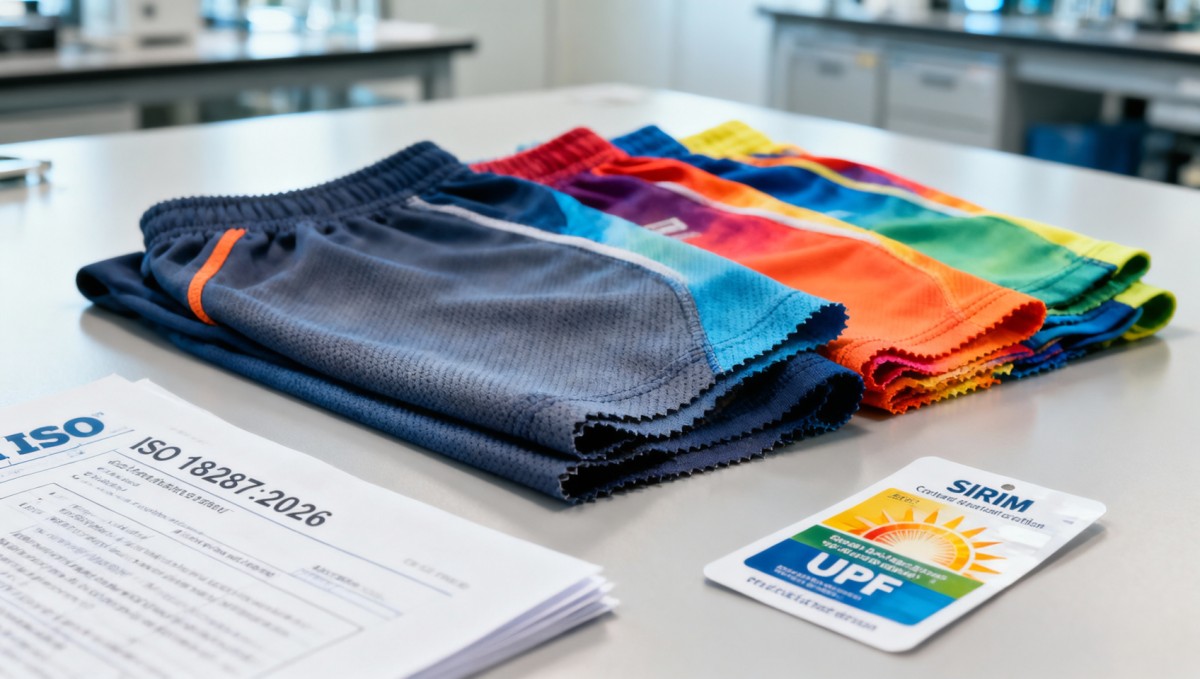
This development underscores how regional standardization bodies are increasingly embedding performance-based, condition-specific criteria into textile safety frameworks — moving beyond basic composition or static property thresholds. For stakeholders, it is more accurate to interpret this as an enforceable regulatory baseline for the Malaysian market, not merely a warning signal.
Information Source: Official announcement issued by Malaysia’s Standards and Industrial Research Institute (SIRIM), effective May 10, 2026. Publicly cited non-compliance data originates from SIRIM-accredited testing service providers reporting preliminary retest outcomes for Chinese OEM facilities. Ongoing observation is recommended regarding potential SIRIM clarifications on transitional implementation timelines or scope adjustments.
Related Intelligence
 Skincare OEMAug 16, 2026Amazon Enforces AI Human Metadata Rule for Beauty and Personal Care SellersAmazon now enforces AI human metadata rules for beauty sellers. Learn how to protect listings, traffic, and compliance in skincare, cosmetics, and beauty devices.
 Beauty DevicesAug 15, 2026China to Roll Out Nationwide Cross-Border Cash Pooling for MultinationalsChina to roll out nationwide cross-border cash pooling for multinationals from Sept. 14. Discover how this policy could improve treasury efficiency, liquidity management, and China-linked supply chains.
 Beauty DevicesAug 14, 2026China Imposes Temporary Export Ban on Helium, Affecting Cooling Supply ChainsChina's temporary helium export ban may disrupt cooling supply chains for beauty RF devices and laser systems. Learn what ODMs, buyers, and procurement teams should check now.
![]() Cosmetics & PkgAug 13, 2026PPWR becomes mandatory: Beauty and personal care packaging materials usher in new EPR and PFAS compliance requirementsPPWR takes effect for cosmetics packaging in the EU, bringing EPR registration and PFAS limits. Learn what brands, importers, and suppliers must do now.
Cosmetics & PkgAug 13, 2026PPWR becomes mandatory: Beauty and personal care packaging materials usher in new EPR and PFAS compliance requirementsPPWR takes effect for cosmetics packaging in the EU, bringing EPR registration and PFAS limits. Learn what brands, importers, and suppliers must do now. Cosmetics & PkgAug 12, 2026EU PPWR Now Enforced for Beauty Packaging ComplianceEU PPWR now enforced for beauty packaging compliance: learn how EPR, ERN, heavy metals and PFAS rules affect EU exports, customs clearance and platform sales.
 Cosmetics & PkgAug 11, 2026EU PPWR Rules Take Effect on Aug. 12 for Beauty PackagingEU PPWR rules for beauty packaging take effect on Aug. 12, 2026. Learn key compliance steps, EPR, labeling, PFAS limits, and how to avoid customs delays and fines.
 Smart Pet DevicesAug 10, 2026EU EPR Rules to Cover Smart Pet Devices on Aug. 15EU EPR Rules will cover smart pet devices from Aug. 15, 2026. Learn how smart collars, feeders, and monitoring devices can avoid delisting, customs delays, and compliance risks in the EU.
 Infant Feeding & CareAug 09, 2026CPSC Recalls Baby Sleep Sacks Over Undeclared TDCPPCPSC Recalls Baby Sleep Sacks Over Undeclared TDCPP: learn how this 2026 recall impacts CPC documents, third-party testing, and U.S. baby product compliance for exporters.
 Infant Feeding & CareAug 08, 2026ECHA Adds 5 SVHCs, Importer Notices Due From Oct 2026ECHA adds 5 SVHCs to the Candidate List, with importer notices due from October 2026. Learn how REACH affects exporters, supply chains, and documentation readiness.
 Baby Gear & StrollersAug 07, 2026CPSC Revises Crib Rail Standard for November 2026CPSC revises crib rail standard for November 2026, adding dynamic impact tests and mandatory third-party lab testing. Learn how the new rule affects U.S. market access, compliance, and shipments.
 Electronic & RC ToysAug 06, 2026EU to Require EN IEC 62115:2025 for Electronic ToysEU to Require EN IEC 62115:2025 for Electronic Toys from Oct 1, 2026. Learn scope, battery and AI safety updates, CE compliance risks, and how exporters can avoid customs delays.
 Baby Gear & StrollersAug 05, 2026US Stroller Stability Rule Takes Effect Aug. 15US Stroller Stability Rule Takes Effect Aug. 15: learn how new U.S. stroller compliance, ASTM F833-26a, and CPSC testing rules may affect imports, certification, and shipment readiness.
 Infant Feeding & CareAug 04, 2026ECHA Adds 5 SVHCs, Triggering Baby Care Export ReviewECHA adds 5 SVHCs, prompting an urgent baby care export review for EU-bound products. Learn the 0.1% threshold risks, compliance steps, and how to avoid customs delays and fines.












