
Small Animal Cage Manufacturer Cost Factors
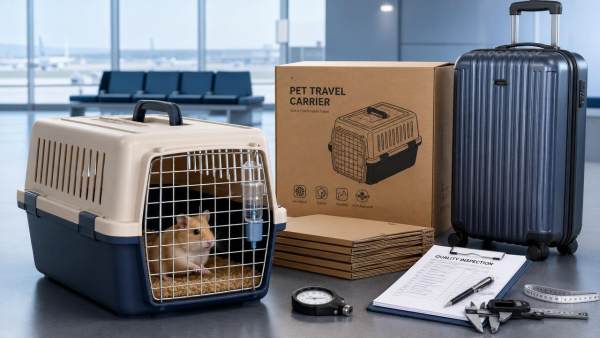
For financial approvers, choosing a small animal cage manufacturer is not only a procurement decision but a cost-control strategy tied to quality, compliance, logistics, and long-term retail margins. As pet products become a faster-growing category in global consumer sourcing, understanding what drives manufacturer pricing helps buyers evaluate quotes more accurately, avoid hidden expenses, and protect profitability. This guide breaks down the key cost factors behind small animal cage production so procurement teams can make smarter, data-backed sourcing decisions.
In the travel services market, small animal cages are no longer basic pet accessories. They support pet-friendly accommodation, road trips, relocation services, travel retail, and short-term pet transport needs. For retailers and travel-related service providers, the right sourcing decision affects customer safety, return rates, storage efficiency, and category margin.
Why Manufacturer Cost Analysis Matters in Pet Travel Retail
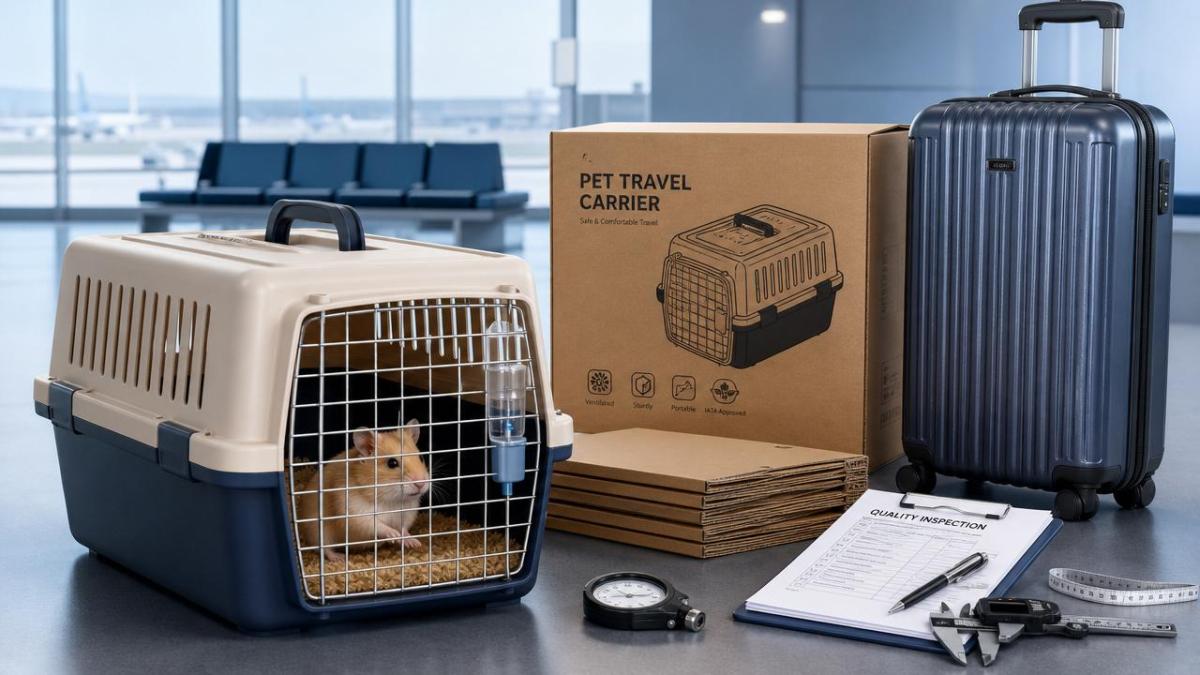
A small animal cage manufacturer typically prices products according to materials, structure, tooling, packaging, compliance, and order volume. For financial approvers, the lowest unit price may hide 6 to 10 downstream cost items, including inspection, freight, repacking, warranty claims, and inventory aging.
Travel-focused buyers often need cages for hamsters, rabbits, guinea pigs, ferrets, and small birds. These products may be sold through pet travel stores, hotel gift areas, online travel retail platforms, or bundled with relocation and boarding services.
The finance view: landed cost instead of factory price
Factory quotations are only one layer of total cost. A cage quoted at USD 4.80 may cost USD 6.20 to USD 7.50 after export cartons, quality checks, duties, inland transport, and e-commerce packaging are included.
For travel service businesses, landed cost matters because products often move through multiple sales channels. A cage may be stocked for airport-adjacent pet shops, hotel partners, online bundles, or seasonal travel campaigns.
Key cost questions before approval
- Does the quotation include packaging suitable for parcel delivery and retail display?
- Is the cage structure strong enough for travel movement over 2 to 8 hours?
- Are test reports, material declarations, and labeling costs included?
- What is the MOQ, and how does it affect cash flow and warehouse capacity?
- Can the supplier support 2 to 4 reorder cycles during peak travel seasons?
A reliable small animal cage manufacturer should help buyers compare not only price but also design stability, defect risk, compliance readiness, and supply continuity. This is especially important when cages are linked to customer-facing travel experiences.
Core Production Factors That Shape Cage Pricing
Production cost is usually driven by 5 major variables: raw material type, cage size, structural complexity, finishing process, and labor intensity. A small change in wire diameter or plastic thickness can influence both unit cost and shipping weight.
For travel retail programs, finance teams should also evaluate whether a product is designed for static home use or frequent movement. Travel-oriented cages usually require better handles, safer locks, rounded edges, and stronger base trays.
The following table summarizes common cost drivers when sourcing from a small animal cage manufacturer for travel-related retail or service applications.
The table shows why two quotations with similar dimensions can differ by 15% to 35%. A lower-cost cage may use lighter wire, thinner trays, simpler locks, or less protective packaging, which can increase after-sale losses.
Material selection and travel durability
Small animal cages often combine metal wire, PP or ABS plastic, clips, handles, and transparent panels. For travel services, PP trays are common because they are lightweight, moldable, and relatively cost-efficient.
However, material savings should be tested against real movement conditions. A cage stored in a car trunk, hotel luggage area, or courier network may face vibration, compression, and temperature changes from 5°C to 35°C.
Tooling, customization, and private-label cost
Private-label buyers may request branded colors, logo plates, packaging artwork, or unique door structures. Simple color customization may be feasible at 1,000 to 3,000 units, while new molds may require higher volume commitments.
A small animal cage manufacturer may charge tooling separately or amortize it into unit cost. Financial teams should model both options across at least 3 order scenarios: pilot order, seasonal reorder, and annual forecast.
Compliance, Safety, and Quality Costs That Protect Margin
Compliance is a major cost factor because small animal cages interact with pets, families, and sometimes children. Travel-related retail channels may also impose stricter labeling, packaging, and documentation requirements.
For global sourcing, buyers may request material safety declarations, sharp-edge checks, pull tests, coating checks, and carton drop tests. These steps usually add cost, but they reduce product recalls and customer complaints.
Testing requirements to include in the budget
A practical quality plan often includes 3 inspection stages: pre-production sample approval, during-production review, and final random inspection. For new suppliers, finance teams should budget inspection fees before approving mass production.
- Check door locks with repeated open-close cycles, often 100 to 300 times for baseline validation.
- Inspect wire welding points for burrs, weak joints, and uneven coating before packing.
- Run carton drop tests for e-commerce or travel retail shipments, commonly from 60 cm to 80 cm.
- Confirm warning labels, age guidance, material marks, and country-specific packaging language.
These checks are not only technical tasks. They influence refund provisions, insurance exposure, retailer chargebacks, and brand reputation in travel service environments where convenience and safety are expected.
Hidden cost of weak quality control
If defect rates rise from 1% to 4%, the financial effect can be significant. Replacement shipping, customer support time, product disposal, and negative reviews may erase the savings gained from a cheaper supplier.
For cages sold as travel essentials, failures are particularly damaging. A broken latch or cracked base during a trip can create urgent service issues and reduce trust in the retailer or travel partner.
MOQ, Lead Time, and Logistics: The Cash Flow Equation
Minimum order quantity affects cash outlay, storage pressure, and inventory risk. A small animal cage manufacturer may quote lower prices at 3,000 units, but a travel service buyer may only need 800 units for a pilot program.
Lead time also matters. Standard production may require 25 to 45 days after sample approval, while customized packaging or new tooling can extend the timeline to 60 to 90 days.
The table below compares sourcing options that financial approvers often review when matching cage programs to travel retail demand cycles.
The key conclusion is that MOQ should be approved together with sell-through assumptions. A larger order only improves profit if the buyer can move inventory within a planned 8 to 16 week retail window.
Freight efficiency and carton design
Small animal cages are often bulky relative to their value. Foldable designs, nested trays, and optimized master cartons can reduce cubic volume and improve container utilization.
For travel retail, packaging must also protect the product through courier networks and storage rooms. A stronger carton may increase unit packaging cost by a few cents but lower breakage claims.
Inventory planning for seasonal travel demand
Demand may rise before school holidays, relocation seasons, and pet-friendly vacation periods. Financial teams should align purchasing with 3 planning points: forecast accuracy, reorder lead time, and warehouse space.
If a reorder takes 45 days, safety stock should cover promotional periods and shipping delays. However, excess stock may increase holding costs, especially when packaging designs change every season.
How to Evaluate a Small Animal Cage Manufacturer Before Approval
Financial approval should not rely on price sheets alone. A structured supplier evaluation helps teams compare risk-adjusted cost, especially when products support travel services where safety and reliability are visible to customers.
Global Consumer Sourcing supports buyers by turning supplier information into clearer sourcing intelligence across pet economy categories. For approval teams, this reduces uncertainty before committing capital to a product line.
A practical 6-point supplier checklist
- Review production capability, including welding, injection molding, coating, and final assembly capacity.
- Request recent sample photos, packing specifications, and standard operating tolerances.
- Compare quotations using the same material, size, packaging, and inspection requirements.
- Ask for quality control checkpoints and defect classification rules before production starts.
- Confirm lead time for samples, mass production, replacement parts, and urgent reorders.
- Assess communication speed, revision accuracy, and willingness to support private-label growth.
A qualified small animal cage manufacturer should answer these questions with specific production details. Vague responses often signal weak cost control, unstable documentation, or poor coordination between sales and factory teams.
Common quotation traps to avoid
Some quotations exclude printing plates, inner protection, palletization, testing, spare parts, or export documentation. These items may seem minor but can change the final budget by 5% to 12%.
Financial approvers should also question unusually low prices. The difference may come from lighter materials, fewer weld points, simplified coatings, weak carton strength, or reduced inspection time.
When a higher unit price is financially rational
A higher price can be justified when it lowers failure risk, improves freight efficiency, supports better merchandising, or enables faster replenishment. In travel services, reliability often protects revenue beyond the product margin.
For example, a cage with a stronger latch, cleaner coating, and better tray fit may cost 8% more. Yet it can reduce returns, protect user experience, and support premium positioning.
Budgeting Strategy for Retail Buyers and Travel Service Operators
A sound budgeting model separates product cost, compliance cost, logistics cost, and commercial cost. This lets finance teams compare manufacturers with a consistent method instead of reacting to headline unit prices.
For travel service operators entering pet retail, a staged sourcing model is often safer. Start with 1 to 2 standard cage sizes, validate demand for 8 to 12 weeks, then expand into private-label options.
Recommended approval workflow
- Stage 1: Define animal type, travel scenario, target retail price, and expected margin range.
- Stage 2: Shortlist 3 to 5 manufacturers with comparable specifications and production scope.
- Stage 3: Request samples and inspect structure, packaging, labeling, and assembly accuracy.
- Stage 4: Build a landed cost model including freight, duties, inspection, and storage.
- Stage 5: Approve pilot order, monitor sell-through, and adjust reorder quantities.
This workflow gives finance, procurement, and category teams a shared approval language. It also makes supplier negotiations more precise because every price discussion is linked to measurable cost components.
Where GCS adds sourcing value
Global Consumer Sourcing helps buyers understand manufacturer capabilities, retail trends, product compliance, and private-label opportunities across the pet economy. This intelligence is especially useful when travel services expand into pet-friendly commerce.
Instead of treating the small animal cage manufacturer decision as a one-time purchase, GCS encourages buyers to evaluate supplier fit across quality, scalability, documentation, and category strategy.
Final Procurement Takeaways for Financial Approvers
Selecting a small animal cage manufacturer requires a full-cost view. Materials, design, tooling, compliance, packaging, MOQ, and logistics all influence whether a product protects or weakens retail margin.
For travel services, the stakes are higher because product performance directly affects customer confidence during movement, relocation, boarding, or vacation planning. A reliable cage must be safe, durable, shippable, and commercially viable.
Financial approvers should compare suppliers through landed cost, defect exposure, reorder flexibility, and documentation quality. This approach supports healthier margins and more resilient pet travel retail programs.
To evaluate sourcing options, benchmark manufacturers, or build a cost model for your next pet product program, connect with Global Consumer Sourcing and get a customized sourcing strategy for your business needs.
Related Intelligence
 Skincare OEMAug 16, 2026Amazon Enforces AI Human Metadata Rule for Beauty and Personal Care SellersAmazon now enforces AI human metadata rules for beauty sellers. Learn how to protect listings, traffic, and compliance in skincare, cosmetics, and beauty devices.
 Beauty DevicesAug 15, 2026China to Roll Out Nationwide Cross-Border Cash Pooling for MultinationalsChina to roll out nationwide cross-border cash pooling for multinationals from Sept. 14. Discover how this policy could improve treasury efficiency, liquidity management, and China-linked supply chains.
 Beauty DevicesAug 14, 2026China Imposes Temporary Export Ban on Helium, Affecting Cooling Supply ChainsChina's temporary helium export ban may disrupt cooling supply chains for beauty RF devices and laser systems. Learn what ODMs, buyers, and procurement teams should check now.
![]() Cosmetics & PkgAug 13, 2026PPWR becomes mandatory: Beauty and personal care packaging materials usher in new EPR and PFAS compliance requirementsPPWR takes effect for cosmetics packaging in the EU, bringing EPR registration and PFAS limits. Learn what brands, importers, and suppliers must do now.
Cosmetics & PkgAug 13, 2026PPWR becomes mandatory: Beauty and personal care packaging materials usher in new EPR and PFAS compliance requirementsPPWR takes effect for cosmetics packaging in the EU, bringing EPR registration and PFAS limits. Learn what brands, importers, and suppliers must do now. Cosmetics & PkgAug 12, 2026EU PPWR Now Enforced for Beauty Packaging ComplianceEU PPWR now enforced for beauty packaging compliance: learn how EPR, ERN, heavy metals and PFAS rules affect EU exports, customs clearance and platform sales.
 Cosmetics & PkgAug 11, 2026EU PPWR Rules Take Effect on Aug. 12 for Beauty PackagingEU PPWR rules for beauty packaging take effect on Aug. 12, 2026. Learn key compliance steps, EPR, labeling, PFAS limits, and how to avoid customs delays and fines.
 Smart Pet DevicesAug 10, 2026EU EPR Rules to Cover Smart Pet Devices on Aug. 15EU EPR Rules will cover smart pet devices from Aug. 15, 2026. Learn how smart collars, feeders, and monitoring devices can avoid delisting, customs delays, and compliance risks in the EU.
 Infant Feeding & CareAug 09, 2026CPSC Recalls Baby Sleep Sacks Over Undeclared TDCPPCPSC Recalls Baby Sleep Sacks Over Undeclared TDCPP: learn how this 2026 recall impacts CPC documents, third-party testing, and U.S. baby product compliance for exporters.
 Infant Feeding & CareAug 08, 2026ECHA Adds 5 SVHCs, Importer Notices Due From Oct 2026ECHA adds 5 SVHCs to the Candidate List, with importer notices due from October 2026. Learn how REACH affects exporters, supply chains, and documentation readiness.
 Baby Gear & StrollersAug 07, 2026CPSC Revises Crib Rail Standard for November 2026CPSC revises crib rail standard for November 2026, adding dynamic impact tests and mandatory third-party lab testing. Learn how the new rule affects U.S. market access, compliance, and shipments.
 Electronic & RC ToysAug 06, 2026EU to Require EN IEC 62115:2025 for Electronic ToysEU to Require EN IEC 62115:2025 for Electronic Toys from Oct 1, 2026. Learn scope, battery and AI safety updates, CE compliance risks, and how exporters can avoid customs delays.
 Baby Gear & StrollersAug 05, 2026US Stroller Stability Rule Takes Effect Aug. 15US Stroller Stability Rule Takes Effect Aug. 15: learn how new U.S. stroller compliance, ASTM F833-26a, and CPSC testing rules may affect imports, certification, and shipment readiness.
 Infant Feeding & CareAug 04, 2026ECHA Adds 5 SVHCs, Triggering Baby Care Export ReviewECHA adds 5 SVHCs, prompting an urgent baby care export review for EU-bound products. Learn the 0.1% threshold risks, compliance steps, and how to avoid customs delays and fines.












