
Pet Retail Buyers Sourcing: 7 Supplier Risks to Check Early
Pet Retail Buyers Sourcing: 7 Supplier Risks to Check Early
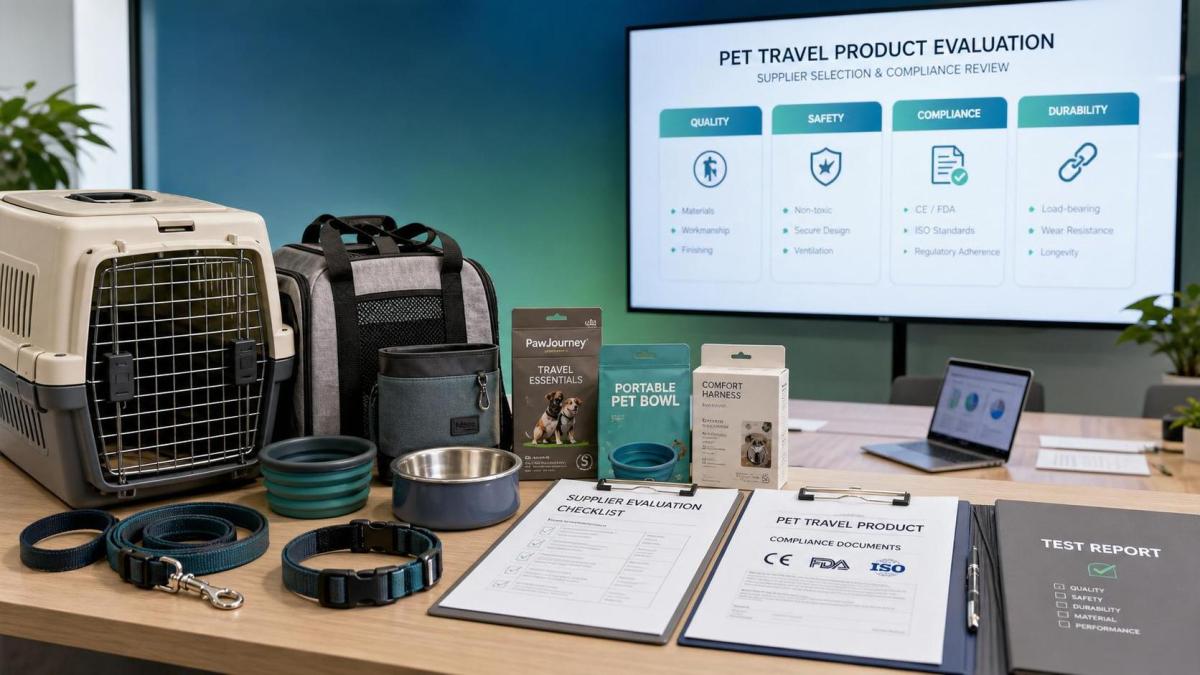
In pet retail buyers sourcing, early supplier evaluation can prevent costly delays, compliance issues, and weak product performance.
For business assessors reviewing new partners, identifying the right risks at the start protects margins, timelines, and brand trust.
That matters even more in the pet category, where safety, repeat purchase behavior, and emotional customer expectations all intersect.
A supplier may look competitive on price, yet still create expensive problems later.
In practice, strong pet retail buyers sourcing starts with disciplined risk screening before samples become orders.
The seven areas below help turn early supplier conversations into clearer sourcing decisions.
1. Compliance Gaps That Surface Too Late
In pet retail buyers sourcing, compliance failures rarely begin at shipment.
They usually begin much earlier, when supplier claims are accepted without enough document validation.
Pet toys, feeding items, grooming tools, and soft goods can each involve different test requirements.
Some factories provide old reports, unrelated certificates, or testing tied to another SKU.
That creates a hidden exposure around market access and retail approval.
Check whether the supplier can match each product with current testing, material declarations, and destination-market requirements.
- Review report dates, lab names, and exact SKU references.
- Confirm regulatory fit by sales region, not only by factory location.
- Ask who manages updates when standards change.
From a cost standpoint, this is one of the easiest risks to underestimate.
Retesting, relabeling, and held inventory can erase any initial price advantage.
2. Weak Material Control and Inconsistent Product Safety
The next issue in pet retail buyers sourcing is material control.
A supplier may send a strong sample, then substitute lower-grade inputs during production.
This happens more often in items using rubber, plush fabric, adhesives, coatings, and plastic blends.
The result is not only quality drift.
It can also affect chew resistance, odor, breakage risk, wash durability, and chemical compliance.
In actual sourcing reviews, ask how raw materials are approved, coded, and rechecked before production release.
Reliable suppliers can explain their control process clearly and show records.
- Request a bill of materials for critical components.
- Compare sample materials with production specifications.
- Set approval rules for any material substitution.
For pet retail buyers sourcing, this step supports both risk control and more stable customer reviews after launch.
3. Capacity Claims That Do Not Match Real Throughput
A common sourcing mistake is trusting stated capacity without checking production reality.
In pet retail buyers sourcing, delays often come from overloaded lines, not from shipping alone.
Factories may quote confidently during low season, then struggle when peak orders arrive.
This is especially risky for promotional bundles, seasonal pet apparel, and holiday giftable items.
A realistic review goes beyond machine count.
It should cover labor stability, subcontracting practices, line balancing, and schedule visibility.
More telling signals include missed sample deadlines, vague lead-time ranges, or inconsistent answers from sales and operations teams.
When pet retail buyers sourcing depends on launch timing, a two-week slip can reduce the full campaign return.
4. Cost Quotes That Hide Future Margin Pressure
Low quotes attract attention, but they deserve careful breakdowns.
In pet retail buyers sourcing, margin erosion often starts with incomplete costing.
Tooling, packaging changes, test fees, carton upgrades, or labeling revisions may appear later.
Some suppliers also price aggressively for the first order, then raise rates once dependency grows.
This is why cost review should separate unit price from total delivered cost.
A practical supplier comparison looks like this:
For procurement and cost planning, this level of detail makes pet retail buyers sourcing far more predictable.
5. Limited Product Development Support
Not every supplier is built for product development.
Some are fine with exact repeats, yet weak when customization starts.
In pet retail buyers sourcing, that gap shows up when packaging, colors, materials, or functionality need adjustment.
A factory that cannot translate requirements into workable prototypes will slow every next step.
This matters because pet categories move with fast consumer expectations.
Retailers increasingly want better textures, cleaner materials, more travel-friendly formats, and stronger shelf differentiation.
A capable supplier should improve the concept, not just copy it.
- Ask how many sample rounds are usually needed.
- Review development lead times for revised versions.
- Check whether the team can suggest safer or lower-cost alternatives.
Within pet retail buyers sourcing, development capability is often the difference between a launch-ready supplier and a transactional vendor.
6. Poor Communication Across Teams
Communication quality is easy to dismiss early, yet it strongly predicts later execution.
In pet retail buyers sourcing, misalignment often appears between sales, engineering, quality, and logistics contacts.
One person confirms a requirement, while another team never receives it.
That creates avoidable errors in packaging text, accessory counts, carton marks, or inspection criteria.
A strong supplier usually shows process discipline in simple ways.
Meeting notes are clear, drawings are version-controlled, and changes are formally acknowledged.
In real sourcing work, fast replies are helpful, but accurate replies are more important.
For pet retail buyers sourcing, poor communication usually becomes a cost issue long before it becomes a relationship issue.
7. No Clear Plan for Quality Drift and Corrective Action
Every factory can promise quality.
The better question in pet retail buyers sourcing is what happens when quality slips.
Many supplier problems are manageable if detection and corrective action are fast.
They become serious when the supplier lacks traceability, root-cause analysis, or ownership.
This is especially relevant for pet products with repeated consumer use.
Minor defects can quickly turn into return spikes, negative reviews, and retail account pressure.
Ask the supplier how nonconforming goods are isolated, how causes are documented, and how fixes are verified.
Useful evidence includes inspection records, complaint logs, and examples of closed corrective actions.
In pet retail buyers sourcing, resilience is not the absence of problems.
It is the ability to contain them early and prevent repeat failures.
How to Turn These Risks Into a Better Supplier Decision
The strongest pet retail buyers sourcing process does not rely on one impressive meeting or one good sample.
It compares suppliers through the same risk lens from the beginning.
A practical evaluation model can stay simple:
- Score compliance readiness by SKU and destination market.
- Verify material consistency and substitution controls.
- Test claimed lead times against actual sample and production performance.
- Compare total sourcing cost, not just quoted price.
- Review development support, communication quality, and corrective-action discipline.
This approach gives sourcing teams clearer trade-offs and fewer surprises after onboarding.
For companies scaling private label or expanding category depth, better early screening supports stronger long-term margin control.
That is the real value of disciplined pet retail buyers sourcing.
Check these seven risks before moving forward, and supplier selection becomes less reactive, more measurable, and much easier to defend internally.
Related Intelligence
 Skincare OEMAug 16, 2026Amazon Enforces AI Human Metadata Rule for Beauty and Personal Care SellersAmazon now enforces AI human metadata rules for beauty sellers. Learn how to protect listings, traffic, and compliance in skincare, cosmetics, and beauty devices.
 Beauty DevicesAug 15, 2026China to Roll Out Nationwide Cross-Border Cash Pooling for MultinationalsChina to roll out nationwide cross-border cash pooling for multinationals from Sept. 14. Discover how this policy could improve treasury efficiency, liquidity management, and China-linked supply chains.
 Beauty DevicesAug 14, 2026China Imposes Temporary Export Ban on Helium, Affecting Cooling Supply ChainsChina's temporary helium export ban may disrupt cooling supply chains for beauty RF devices and laser systems. Learn what ODMs, buyers, and procurement teams should check now.
![]() Cosmetics & PkgAug 13, 2026PPWR becomes mandatory: Beauty and personal care packaging materials usher in new EPR and PFAS compliance requirementsPPWR takes effect for cosmetics packaging in the EU, bringing EPR registration and PFAS limits. Learn what brands, importers, and suppliers must do now.
Cosmetics & PkgAug 13, 2026PPWR becomes mandatory: Beauty and personal care packaging materials usher in new EPR and PFAS compliance requirementsPPWR takes effect for cosmetics packaging in the EU, bringing EPR registration and PFAS limits. Learn what brands, importers, and suppliers must do now. Cosmetics & PkgAug 12, 2026EU PPWR Now Enforced for Beauty Packaging ComplianceEU PPWR now enforced for beauty packaging compliance: learn how EPR, ERN, heavy metals and PFAS rules affect EU exports, customs clearance and platform sales.
 Cosmetics & PkgAug 11, 2026EU PPWR Rules Take Effect on Aug. 12 for Beauty PackagingEU PPWR rules for beauty packaging take effect on Aug. 12, 2026. Learn key compliance steps, EPR, labeling, PFAS limits, and how to avoid customs delays and fines.
 Smart Pet DevicesAug 10, 2026EU EPR Rules to Cover Smart Pet Devices on Aug. 15EU EPR Rules will cover smart pet devices from Aug. 15, 2026. Learn how smart collars, feeders, and monitoring devices can avoid delisting, customs delays, and compliance risks in the EU.
 Infant Feeding & CareAug 09, 2026CPSC Recalls Baby Sleep Sacks Over Undeclared TDCPPCPSC Recalls Baby Sleep Sacks Over Undeclared TDCPP: learn how this 2026 recall impacts CPC documents, third-party testing, and U.S. baby product compliance for exporters.
 Infant Feeding & CareAug 08, 2026ECHA Adds 5 SVHCs, Importer Notices Due From Oct 2026ECHA adds 5 SVHCs to the Candidate List, with importer notices due from October 2026. Learn how REACH affects exporters, supply chains, and documentation readiness.
 Baby Gear & StrollersAug 07, 2026CPSC Revises Crib Rail Standard for November 2026CPSC revises crib rail standard for November 2026, adding dynamic impact tests and mandatory third-party lab testing. Learn how the new rule affects U.S. market access, compliance, and shipments.
 Electronic & RC ToysAug 06, 2026EU to Require EN IEC 62115:2025 for Electronic ToysEU to Require EN IEC 62115:2025 for Electronic Toys from Oct 1, 2026. Learn scope, battery and AI safety updates, CE compliance risks, and how exporters can avoid customs delays.
 Baby Gear & StrollersAug 05, 2026US Stroller Stability Rule Takes Effect Aug. 15US Stroller Stability Rule Takes Effect Aug. 15: learn how new U.S. stroller compliance, ASTM F833-26a, and CPSC testing rules may affect imports, certification, and shipment readiness.
 Infant Feeding & CareAug 04, 2026ECHA Adds 5 SVHCs, Triggering Baby Care Export ReviewECHA adds 5 SVHCs, prompting an urgent baby care export review for EU-bound products. Learn the 0.1% threshold risks, compliance steps, and how to avoid customs delays and fines.












