
World Drone Conference Opens in Shenzhen; New Live-Animal Air Transport Standards Unveiled
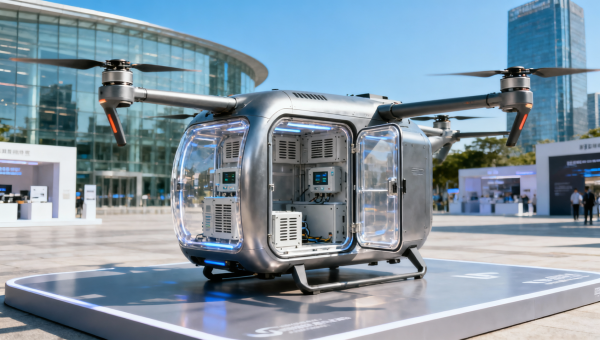
On May 21, 2026, the World Drone Conference opened in Shenzhen, marking a pivotal moment for low-altitude economic industrialization — particularly in drone-based logistics. The event spotlighted the Ministry of Industry and Information Technology’s (MIIT) release of the Guidelines for Civilian Drone Logistics Payload Safety (Draft for Public Comment), which introduces the first nationally coordinated technical requirements for ‘live-animal transport compartments’. This development directly affects manufacturers, integrators, and service providers involved in pet-centric aerial logistics solutions.
Event Overview
The World Drone Conference commenced in Shenzhen on May 21, 2026. During the event, MIIT published the Guidelines for Civilian Drone Logistics Payload Safety (Draft for Public Comment). The document specifies, for the first time, mandatory performance criteria for live-animal transport compartments: temperature control accuracy of ±1.5°C, airflow uniformity ≥85%, and emergency power redundancy requirements. Three Chinese ODMs have reportedly received joint development authorizations from leading drone platform operators to build compliant smart pet transport solutions.
Which Sub-Sectors Are Affected?
Drone Hardware Integrators & ODMs
These firms are directly impacted because the Guidelines define minimum technical thresholds for cabin-level subsystems used in live-animal transport. Compliance now requires integrated thermal management, airflow calibration, and dual-power architecture — shifting design priorities from payload capacity alone to life-support reliability.
Smart Pet Device Manufacturers
Companies developing intelligent pet carriers or climate-controlled transport modules must align new product roadmaps with the stated tolerances. The ±1.5°C temperature precision and ≥85% airflow uniformity represent measurable engineering targets — not aspirational goals — for any module intended for regulatory acceptance or platform integration.
Drone Platform Operators (Logistics-Focused)
Operators deploying cargo drones for urban last-mile delivery — especially those piloting pet-related services — now face formalized safety expectations for live-cargo configurations. The Guidelines serve as a de facto technical prerequisite for certification pathways and commercial partnerships involving animal transport use cases.
Aviation Certification Support Services
Firms offering testing, validation, or compliance consulting for unmanned aviation systems must update their service scope to include verification protocols for thermal stability under dynamic flight conditions, airflow distribution mapping, and failover behavior during power interruption — all newly codified in the Draft.
What Should Relevant Enterprises or Practitioners Monitor and Do Now?
Track official revisions and timeline for finalization
The Guidelines remain in draft form. Stakeholders should monitor MIIT’s official announcements for revision cycles, public consultation deadlines, and expected implementation dates — as these will determine when compliance becomes a contractual or operational requirement.
Assess current R&D pipelines against the three core metrics
Manufacturers and integrators should benchmark existing or planned transport cabin designs against the specified ±1.5°C temperature control, ≥85% airflow uniformity, and emergency power redundancy requirements — identifying gaps before prototype validation or platform submission.
Distinguish between policy signal and enforceable mandate
As a draft document, the Guidelines reflect regulatory intent but do not yet carry legal force. Enterprises should treat them as strong directional signals — informing procurement decisions, supplier qualification criteria, and internal test standards — rather than immediate compliance obligations.
Engage early with authorized ODM partners and platform operators
Given that three Chinese ODMs have already secured joint development authorization, stakeholders seeking market entry should prioritize alignment with those partnerships — including shared testing frameworks and documentation templates — to accelerate path-to-certification readiness.
Editorial Perspective / Industry Observation
Observably, this initiative signals a maturing phase in low-altitude logistics standardization — moving beyond general cargo to mission-critical, biologically sensitive applications. Analysis shows the focus on live-animal transport is less about near-term commercial scale and more about establishing foundational safety baselines for future regulated air mobility segments (e.g., medical specimen transit, pharmaceutical delivery). From an industry perspective, the Guidelines are best understood not as a finished regulatory outcome, but as an early-stage technical anchor — one that clarifies minimum viability thresholds for hardware developers while also raising the bar for system-level integration rigor. Continued attention is warranted as MIIT refines definitions, adds test methodologies, and potentially links these criteria to broader airworthiness or operational approval processes.
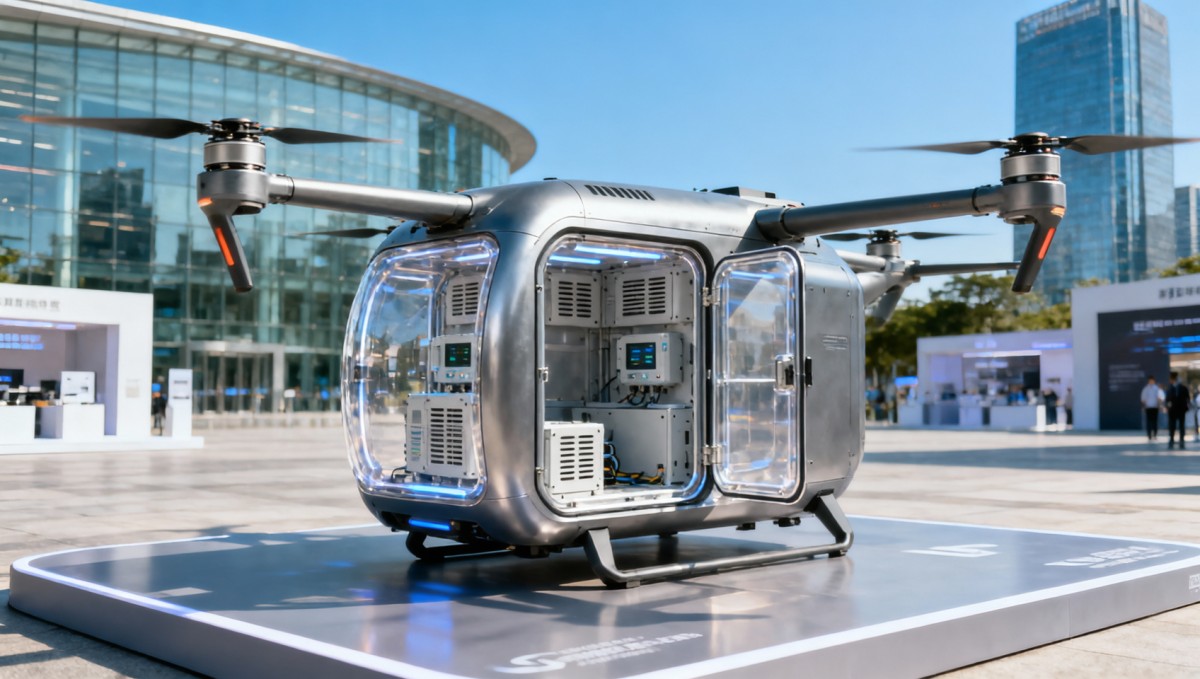
In summary, the publication of the Guidelines for Civilian Drone Logistics Payload Safety marks a structural step toward formalizing technical accountability in low-altitude live-cargo operations. It does not yet mandate deployment, nor does it guarantee market adoption — but it does redefine the engineering prerequisites for participation. Currently, it is more accurately interpreted as a framework-setting milestone than an enforcement trigger; stakeholders are advised to treat it as a strategic reference point for product planning, supplier engagement, and regulatory foresight — rather than an immediate compliance deadline.
Source: Ministry of Industry and Information Technology (MIIT) — Guidelines for Civilian Drone Logistics Payload Safety (Draft for Public Comment), released May 21, 2026, at the World Drone Conference in Shenzhen.
Note: Final version status, effective date, and potential amendments remain subject to ongoing public consultation and MIIT review.
Related Intelligence
 Skincare OEMAug 16, 2026Amazon Enforces AI Human Metadata Rule for Beauty and Personal Care SellersAmazon now enforces AI human metadata rules for beauty sellers. Learn how to protect listings, traffic, and compliance in skincare, cosmetics, and beauty devices.
 Beauty DevicesAug 15, 2026China to Roll Out Nationwide Cross-Border Cash Pooling for MultinationalsChina to roll out nationwide cross-border cash pooling for multinationals from Sept. 14. Discover how this policy could improve treasury efficiency, liquidity management, and China-linked supply chains.
 Beauty DevicesAug 14, 2026China Imposes Temporary Export Ban on Helium, Affecting Cooling Supply ChainsChina's temporary helium export ban may disrupt cooling supply chains for beauty RF devices and laser systems. Learn what ODMs, buyers, and procurement teams should check now.
![]() Cosmetics & PkgAug 13, 2026PPWR becomes mandatory: Beauty and personal care packaging materials usher in new EPR and PFAS compliance requirementsPPWR takes effect for cosmetics packaging in the EU, bringing EPR registration and PFAS limits. Learn what brands, importers, and suppliers must do now.
Cosmetics & PkgAug 13, 2026PPWR becomes mandatory: Beauty and personal care packaging materials usher in new EPR and PFAS compliance requirementsPPWR takes effect for cosmetics packaging in the EU, bringing EPR registration and PFAS limits. Learn what brands, importers, and suppliers must do now. Cosmetics & PkgAug 12, 2026EU PPWR Now Enforced for Beauty Packaging ComplianceEU PPWR now enforced for beauty packaging compliance: learn how EPR, ERN, heavy metals and PFAS rules affect EU exports, customs clearance and platform sales.
 Cosmetics & PkgAug 11, 2026EU PPWR Rules Take Effect on Aug. 12 for Beauty PackagingEU PPWR rules for beauty packaging take effect on Aug. 12, 2026. Learn key compliance steps, EPR, labeling, PFAS limits, and how to avoid customs delays and fines.
 Smart Pet DevicesAug 10, 2026EU EPR Rules to Cover Smart Pet Devices on Aug. 15EU EPR Rules will cover smart pet devices from Aug. 15, 2026. Learn how smart collars, feeders, and monitoring devices can avoid delisting, customs delays, and compliance risks in the EU.
 Infant Feeding & CareAug 09, 2026CPSC Recalls Baby Sleep Sacks Over Undeclared TDCPPCPSC Recalls Baby Sleep Sacks Over Undeclared TDCPP: learn how this 2026 recall impacts CPC documents, third-party testing, and U.S. baby product compliance for exporters.
 Infant Feeding & CareAug 08, 2026ECHA Adds 5 SVHCs, Importer Notices Due From Oct 2026ECHA adds 5 SVHCs to the Candidate List, with importer notices due from October 2026. Learn how REACH affects exporters, supply chains, and documentation readiness.
 Baby Gear & StrollersAug 07, 2026CPSC Revises Crib Rail Standard for November 2026CPSC revises crib rail standard for November 2026, adding dynamic impact tests and mandatory third-party lab testing. Learn how the new rule affects U.S. market access, compliance, and shipments.
 Electronic & RC ToysAug 06, 2026EU to Require EN IEC 62115:2025 for Electronic ToysEU to Require EN IEC 62115:2025 for Electronic Toys from Oct 1, 2026. Learn scope, battery and AI safety updates, CE compliance risks, and how exporters can avoid customs delays.
 Baby Gear & StrollersAug 05, 2026US Stroller Stability Rule Takes Effect Aug. 15US Stroller Stability Rule Takes Effect Aug. 15: learn how new U.S. stroller compliance, ASTM F833-26a, and CPSC testing rules may affect imports, certification, and shipment readiness.
 Infant Feeding & CareAug 04, 2026ECHA Adds 5 SVHCs, Triggering Baby Care Export ReviewECHA adds 5 SVHCs, prompting an urgent baby care export review for EU-bound products. Learn the 0.1% threshold risks, compliance steps, and how to avoid customs delays and fines.












