
Malaysia Enforces UPF Retesting for Children's Activewear
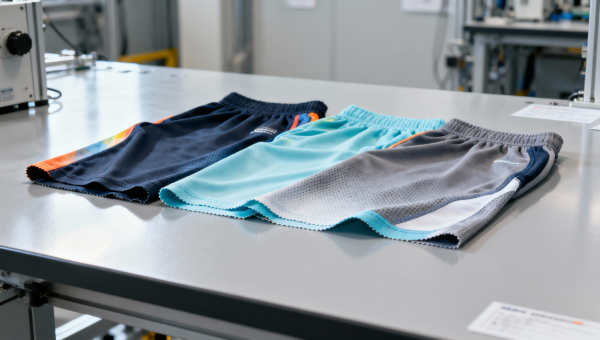
Malaysia’s Standards and Industrial Research Institute (SIRIM) issued an urgent notice on 12 May 2026 mandating UPF (Ultraviolet Protection Factor) retesting for all imported children’s activewear, triggering immediate compliance adjustments across the global sportswear supply chain. The move follows the immediate enforcement of national standard MS ISO 18287:2026 — replacing MS 2330:2012 — and reflects heightened regulatory focus on functional safety performance in youth-oriented apparel.
Event Overview
SIRIM announced on 12 May 2026 that all children’s activewear produced under OEM arrangements and imported into Malaysia must be retested against MS ISO 18287:2026. The previous standard, MS 2330:2012, was formally withdrawn effective immediately. MS ISO 18287:2026 introduces a new requirement: UPF attenuation after dynamic stretching must not exceed 15%. Preliminary data from Chinese contract manufacturers indicate a non-compliance rate exceeding 41%, with average retesting lead times extending to 25–30 days.
Industries Affected
Direct trading enterprises face delayed customs clearance, increased documentation burden, and potential shipment rejections. Since SIRIM now requires certified test reports referencing MS ISO 18287:2026 prior to import release, traders must verify conformity before shipment — adding verification steps and contractual risk exposure, especially where original order specifications predate the standard update.
Raw material procurement enterprises are impacted due to revised fabric performance expectations. The dynamic stretch requirement implies tighter control over fiber blend ratios, knit structure stability, and UV-absorbing finish durability. Suppliers previously qualifying fabrics under MS 2330:2012 may find their existing stock or vendor certifications insufficient — prompting urgent requalification of base materials and renegotiation of technical data sheets.
Contract manufacturing enterprises bear direct operational impact: 41%+ initial retest failure rates suggest systemic gaps in process validation for post-stretch UPF retention. This points to underestimation of mechanical stress effects during garment construction (e.g., seam tension, panel orientation) and limited in-house UPF monitoring capability. Lead-time extensions also pressure production planning and penalty clauses in OEM agreements.
Supply chain service enterprises, including testing laboratories, certification bodies, and logistics coordinators, experience surging demand for accredited UPF retesting and faster turnaround reporting. Capacity constraints are emerging, particularly among labs holding both SIRIM-recognized accreditation and ISO/IEC 17025 scope covering MS ISO 18287:2026. Third-party compliance consultants report rising inquiries related to gap analysis between legacy production protocols and the new attenuation threshold.
Key Focus Areas and Recommended Actions
Verify current fabric certifications against MS ISO 18287:2026
Do not assume equivalence with prior standards. Confirm whether supplier-provided UPF reports include dynamic stretch conditioning per Clause 6.4 of MS ISO 18287:2026 — static UPF alone is no longer sufficient for SIRIM acceptance.
Conduct pre-shipment pilot retesting on high-volume SKUs
Given the 41%+ failure rate observed among Chinese OEMs, prioritize retesting of top-selling styles — especially those using lightweight knits, mesh panels, or recycled polyester blends, which historically show higher UPF decay under extension.
Update technical packs with stretch-conditioned UPF requirements
Integrate dynamic stretch UPF thresholds into spec sheets, quality control checklists, and AQL sampling plans. Require suppliers to submit stretch-conditioned UPF data at bulk production sign-off — not just at lab-dip stage.
Editorial Perspective / Industry Observation
Observably, this enforcement signals a broader regulatory shift toward performance durability — not just baseline functionality — in protective apparel categories. MS ISO 18287:2026 does not merely raise UPF minimums; it introduces a time- and stress-dependent metric that better reflects real-world wear conditions. Analysis shows similar dynamic testing clauses are under active review by regulators in Australia (AS/NZS 4399) and the EU’s upcoming PPE Regulation revision. Current more-than-technical impact lies in how quickly downstream actors adapt their quality governance models — many still treat UPF as a ‘one-time lab pass’ rather than a process-critical KPI.
Conclusion
This development underscores that regulatory convergence in textile safety is increasingly driven by biomechanical realism — not just static benchmarks. For global suppliers serving Southeast Asian markets, the SIRIM update serves as a timely inflection point: compliance can no longer be outsourced solely to final-stage testing. It must be embedded earlier — in fiber selection, knitting parameters, finishing chemistry, and even pattern engineering. A rational interpretation is that long-term competitiveness will hinge less on cost arbitrage and more on integrated technical traceability across the value chain.
Source Attribution
Official notice issued by Standards and Industrial Research Institute (SIRIM), Malaysia, dated 12 May 2026 (Ref: SIRIM/STD/NOT/2026/05/001). MS ISO 18287:2026 is published by SIRIM Berhad in alignment with ISO 18287:2026. Note: SIRIM has indicated that enforcement timelines for domestic manufacturers may differ and remain under review; updates expected by Q3 2026.
Related Intelligence
 Skincare OEMAug 16, 2026Amazon Enforces AI Human Metadata Rule for Beauty and Personal Care SellersAmazon now enforces AI human metadata rules for beauty sellers. Learn how to protect listings, traffic, and compliance in skincare, cosmetics, and beauty devices.
 Beauty DevicesAug 15, 2026China to Roll Out Nationwide Cross-Border Cash Pooling for MultinationalsChina to roll out nationwide cross-border cash pooling for multinationals from Sept. 14. Discover how this policy could improve treasury efficiency, liquidity management, and China-linked supply chains.
 Beauty DevicesAug 14, 2026China Imposes Temporary Export Ban on Helium, Affecting Cooling Supply ChainsChina's temporary helium export ban may disrupt cooling supply chains for beauty RF devices and laser systems. Learn what ODMs, buyers, and procurement teams should check now.
![]() Cosmetics & PkgAug 13, 2026PPWR becomes mandatory: Beauty and personal care packaging materials usher in new EPR and PFAS compliance requirementsPPWR takes effect for cosmetics packaging in the EU, bringing EPR registration and PFAS limits. Learn what brands, importers, and suppliers must do now.
Cosmetics & PkgAug 13, 2026PPWR becomes mandatory: Beauty and personal care packaging materials usher in new EPR and PFAS compliance requirementsPPWR takes effect for cosmetics packaging in the EU, bringing EPR registration and PFAS limits. Learn what brands, importers, and suppliers must do now. Cosmetics & PkgAug 12, 2026EU PPWR Now Enforced for Beauty Packaging ComplianceEU PPWR now enforced for beauty packaging compliance: learn how EPR, ERN, heavy metals and PFAS rules affect EU exports, customs clearance and platform sales.
 Cosmetics & PkgAug 11, 2026EU PPWR Rules Take Effect on Aug. 12 for Beauty PackagingEU PPWR rules for beauty packaging take effect on Aug. 12, 2026. Learn key compliance steps, EPR, labeling, PFAS limits, and how to avoid customs delays and fines.
 Smart Pet DevicesAug 10, 2026EU EPR Rules to Cover Smart Pet Devices on Aug. 15EU EPR Rules will cover smart pet devices from Aug. 15, 2026. Learn how smart collars, feeders, and monitoring devices can avoid delisting, customs delays, and compliance risks in the EU.
 Infant Feeding & CareAug 09, 2026CPSC Recalls Baby Sleep Sacks Over Undeclared TDCPPCPSC Recalls Baby Sleep Sacks Over Undeclared TDCPP: learn how this 2026 recall impacts CPC documents, third-party testing, and U.S. baby product compliance for exporters.
 Infant Feeding & CareAug 08, 2026ECHA Adds 5 SVHCs, Importer Notices Due From Oct 2026ECHA adds 5 SVHCs to the Candidate List, with importer notices due from October 2026. Learn how REACH affects exporters, supply chains, and documentation readiness.
 Baby Gear & StrollersAug 07, 2026CPSC Revises Crib Rail Standard for November 2026CPSC revises crib rail standard for November 2026, adding dynamic impact tests and mandatory third-party lab testing. Learn how the new rule affects U.S. market access, compliance, and shipments.
 Electronic & RC ToysAug 06, 2026EU to Require EN IEC 62115:2025 for Electronic ToysEU to Require EN IEC 62115:2025 for Electronic Toys from Oct 1, 2026. Learn scope, battery and AI safety updates, CE compliance risks, and how exporters can avoid customs delays.
 Baby Gear & StrollersAug 05, 2026US Stroller Stability Rule Takes Effect Aug. 15US Stroller Stability Rule Takes Effect Aug. 15: learn how new U.S. stroller compliance, ASTM F833-26a, and CPSC testing rules may affect imports, certification, and shipment readiness.
 Infant Feeding & CareAug 04, 2026ECHA Adds 5 SVHCs, Triggering Baby Care Export ReviewECHA adds 5 SVHCs, prompting an urgent baby care export review for EU-bound products. Learn the 0.1% threshold risks, compliance steps, and how to avoid customs delays and fines.












