
Private Label Activewear Compliance: Common Labeling and Testing Mistakes
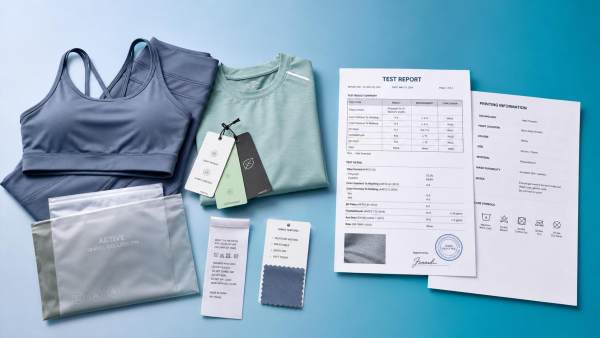
Why does private label activewear compliance become a launch blocker so often?
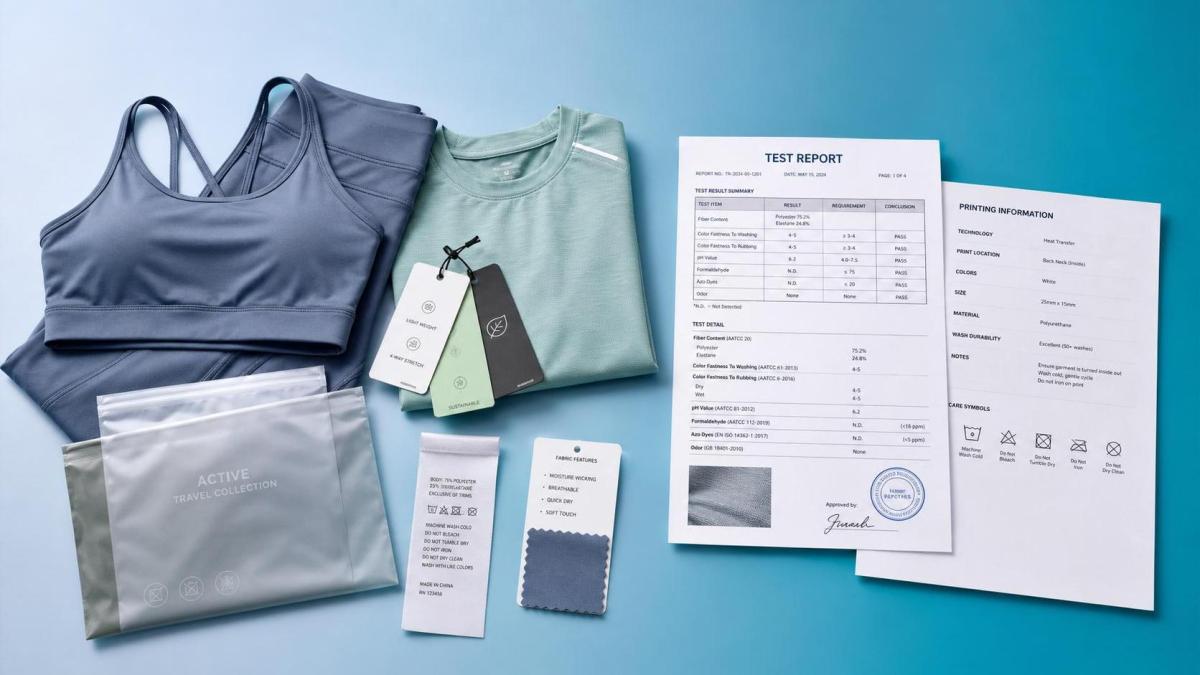
Private label activewear compliance looks straightforward until goods reach a border check, retail review, or lab confirmation. That is where small documentation gaps become commercial problems.
In travel service retail, the risk is even sharper. Airport shops, resort stores, tour brands, and destination merchandise programs often run on fixed seasonal windows.
If activewear arrives late, the selling opportunity may disappear with the travel season. A delayed yoga set for a wellness retreat or a branded running top for a destination marathon loses value quickly.
That is why private label activewear compliance is not only a legal question. It is also a timing, reputation, and margin issue.
More often, the failure starts earlier than most teams expect. Labels are drafted from old artwork, performance claims are copied from supplier decks, and testing plans are approved too late.
A platform such as Global Consumer Sourcing tracks this pattern across sports and outdoors sourcing. The recurring lesson is simple: compliance mistakes usually come from weak coordination, not one dramatic defect.
Which labeling mistakes cause the most trouble in private label activewear compliance?
Fiber content errors remain one of the most common failures. Stretch fabrics, blends, mesh panels, and recycled yarns often create confusion between development samples and final bulk materials.
If the label says one blend and the finished garment contains another, the issue can trigger relabeling, rejection, or a customs hold. It also raises doubt about factory control.
Care instructions are another weak point. Activewear sold for travel use faces repeated washing, humidity, sunscreen contact, and friction from luggage or outdoor use.
When care labels are generic, they may not match the real fabric finish. Heat-sensitive prints, compression panels, and moisture-management treatments need accurate care language.
Country of origin details also create avoidable errors. The problem is not only missing text. It can involve placement, permanence, or inconsistency across packaging and garment labels.
Performance claims deserve special caution. Terms like moisture wicking, UV protection, anti-odor, or quick dry should not appear unless the claim is backed by relevant test evidence.
For travel-focused collections, lifestyle marketing can push teams into overclaiming. A top promoted for hiking tours or hot-climate excursions needs proof, not optimistic copy.
- Check fiber composition against final approved bill of materials, not sales samples.
- Confirm care wording after print, trim, and finish decisions are locked.
- Review origin marking across label, polybag, carton, and digital spec files.
- Remove any performance claim that cannot be tied to a test report.
Are testing mistakes usually about missing tests, or the wrong testing sequence?
Usually, it is the sequence. Many teams do test eventually, but they test too late, on the wrong sample stage, or without matching the final market requirement.
Private label activewear compliance depends on timing because activewear combines functional textiles, trims, prints, and chemical treatments. One late material swap can invalidate earlier results.
For travel service channels, this matters when product drops align with events, hotel openings, cruise programs, or guided outdoor packages. Missing the shipment window can damage the entire launch calendar.
Colorfastness, dimensional stability, seam strength, pilling, and restricted substance testing are often relevant. Yet the exact matrix should follow the destination market and the claim profile.
A useful way to judge readiness is to compare the compliance plan against the commercial promise. If the garment is promoted for movement, heat, repeated washing, or outdoor use, the tests should reflect that promise.
This type of review is more useful than a generic pass or fail checklist. It shows where private label activewear compliance tends to break under real production pressure.
How do performance claims create hidden compliance risk?
Claims sound commercial, but they are really evidence statements. That is the part often missed.
A garment described as cooling, compression-supportive, antibacterial, or UPF-rated can attract more scrutiny than a basic fitness top. The claim itself changes the compliance burden.
In travel service retail, products are often positioned around climate, comfort, and activity. A resort collection may emphasize heat relief. An adventure package may emphasize durability or odor control.
The risk appears when marketing language outruns test scope. A technically safe garment can still become noncompliant if the selling message is unsupported.
More careful teams separate soft descriptions from measurable claims. “Lightweight feel” is different from “UV protection 50+.” One is subjective. The other requires substantiation.
Private label activewear compliance improves when every claim is assigned an owner, a proof document, and a final approval point before packaging print starts.
What should be checked before scaling a travel-related activewear program?
The key question is not whether one sample passed. It is whether the full supply chain can repeat that result consistently across colors, sizes, and delivery waves.
This is where private label activewear compliance becomes operational. A passing report means little if fabric substitutions, trim shortages, or late artwork edits remain uncontrolled.
Before scale-up, it helps to confirm five things:
- The approved specification pack matches the final label content exactly.
- Test reports reflect final production materials and intended selling markets.
- Artwork files do not contain unsupported environmental or performance wording.
- Supplier change control is documented for fabric mills, dye lots, and trims.
- A corrective action path exists if bulk goods fail a spot verification test.
In practice, the strongest programs treat compliance as a gate within sourcing, not a final inspection event. That approach aligns well with the intelligence model promoted by GCS, where supply chain decisions are tied to evidence and market readiness.
What does a sensible compliance workflow look like when timelines are tight?
A workable system starts with market mapping. Identify destination country rules, retail channel standards, and any travel-use positioning before product development moves too far.
Next, freeze the claim strategy early. If no proof path exists, downgrade the wording while there is still time to update packaging and digital listings.
Then link material approval to compliance triggers. Any change in fiber blend, finish, print method, or trim source should reopen the relevant checks automatically.
A short workflow can still be disciplined:
- Map product claims, markets, and expected use scenarios.
- Build a labeling and testing matrix for that exact product family.
- Review sample, pre-production, and bulk stages separately.
- Hold packaging release until claim evidence and labels match.
- Archive reports in a retrievable compliance file for future orders.
This reduces repeated debate during production. It also supports smoother onboarding when a collection expands into new travel destinations or retail partners.
So, where should the next review start?
Start with the places where private label activewear compliance usually fails quietly: labels copied from old styles, claims approved without evidence, and tests scheduled after materials changed.
For travel-linked activewear, timing matters as much as technical accuracy. A compliant launch that misses the season still hurts performance.
A practical next step is to audit one current style from tech pack to carton marking. Compare the label file, the market claim set, and the latest test reports line by line.
That small review often reveals whether the process is robust or just familiar. Once gaps are visible, standards can be tightened before the next production scale-up.
Used well, private label activewear compliance becomes less about firefighting and more about predictable market entry, especially in travel retail programs where windows are short and scrutiny is high.
Related Intelligence
 Skincare OEMAug 16, 2026Amazon Enforces AI Human Metadata Rule for Beauty and Personal Care SellersAmazon now enforces AI human metadata rules for beauty sellers. Learn how to protect listings, traffic, and compliance in skincare, cosmetics, and beauty devices.
 Beauty DevicesAug 15, 2026China to Roll Out Nationwide Cross-Border Cash Pooling for MultinationalsChina to roll out nationwide cross-border cash pooling for multinationals from Sept. 14. Discover how this policy could improve treasury efficiency, liquidity management, and China-linked supply chains.
 Beauty DevicesAug 14, 2026China Imposes Temporary Export Ban on Helium, Affecting Cooling Supply ChainsChina's temporary helium export ban may disrupt cooling supply chains for beauty RF devices and laser systems. Learn what ODMs, buyers, and procurement teams should check now.
![]() Cosmetics & PkgAug 13, 2026PPWR becomes mandatory: Beauty and personal care packaging materials usher in new EPR and PFAS compliance requirementsPPWR takes effect for cosmetics packaging in the EU, bringing EPR registration and PFAS limits. Learn what brands, importers, and suppliers must do now.
Cosmetics & PkgAug 13, 2026PPWR becomes mandatory: Beauty and personal care packaging materials usher in new EPR and PFAS compliance requirementsPPWR takes effect for cosmetics packaging in the EU, bringing EPR registration and PFAS limits. Learn what brands, importers, and suppliers must do now. Cosmetics & PkgAug 12, 2026EU PPWR Now Enforced for Beauty Packaging ComplianceEU PPWR now enforced for beauty packaging compliance: learn how EPR, ERN, heavy metals and PFAS rules affect EU exports, customs clearance and platform sales.
 Cosmetics & PkgAug 11, 2026EU PPWR Rules Take Effect on Aug. 12 for Beauty PackagingEU PPWR rules for beauty packaging take effect on Aug. 12, 2026. Learn key compliance steps, EPR, labeling, PFAS limits, and how to avoid customs delays and fines.
 Smart Pet DevicesAug 10, 2026EU EPR Rules to Cover Smart Pet Devices on Aug. 15EU EPR Rules will cover smart pet devices from Aug. 15, 2026. Learn how smart collars, feeders, and monitoring devices can avoid delisting, customs delays, and compliance risks in the EU.
 Infant Feeding & CareAug 09, 2026CPSC Recalls Baby Sleep Sacks Over Undeclared TDCPPCPSC Recalls Baby Sleep Sacks Over Undeclared TDCPP: learn how this 2026 recall impacts CPC documents, third-party testing, and U.S. baby product compliance for exporters.
 Infant Feeding & CareAug 08, 2026ECHA Adds 5 SVHCs, Importer Notices Due From Oct 2026ECHA adds 5 SVHCs to the Candidate List, with importer notices due from October 2026. Learn how REACH affects exporters, supply chains, and documentation readiness.
 Baby Gear & StrollersAug 07, 2026CPSC Revises Crib Rail Standard for November 2026CPSC revises crib rail standard for November 2026, adding dynamic impact tests and mandatory third-party lab testing. Learn how the new rule affects U.S. market access, compliance, and shipments.
 Electronic & RC ToysAug 06, 2026EU to Require EN IEC 62115:2025 for Electronic ToysEU to Require EN IEC 62115:2025 for Electronic Toys from Oct 1, 2026. Learn scope, battery and AI safety updates, CE compliance risks, and how exporters can avoid customs delays.
 Baby Gear & StrollersAug 05, 2026US Stroller Stability Rule Takes Effect Aug. 15US Stroller Stability Rule Takes Effect Aug. 15: learn how new U.S. stroller compliance, ASTM F833-26a, and CPSC testing rules may affect imports, certification, and shipment readiness.
 Infant Feeding & CareAug 04, 2026ECHA Adds 5 SVHCs, Triggering Baby Care Export ReviewECHA adds 5 SVHCs, prompting an urgent baby care export review for EU-bound products. Learn the 0.1% threshold risks, compliance steps, and how to avoid customs delays and fines.












