Wholesale Camping Lanterns: Key Specs That Affect Field Reliability
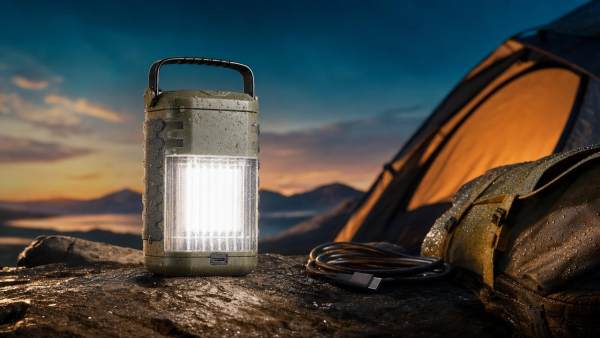
For technical evaluators assessing wholesale camping lanterns, field reliability depends on more than brightness claims or unit price.
Battery chemistry, lumen stability, ingress protection, thermal control, charging architecture, and compliance documentation all influence outdoor performance.
This guide explains the key specifications to verify before shortlisting suppliers, reducing failures and improving user safety in camping and travel retail markets.
What Makes Wholesale Camping Lanterns Reliable in Real Outdoor Use?
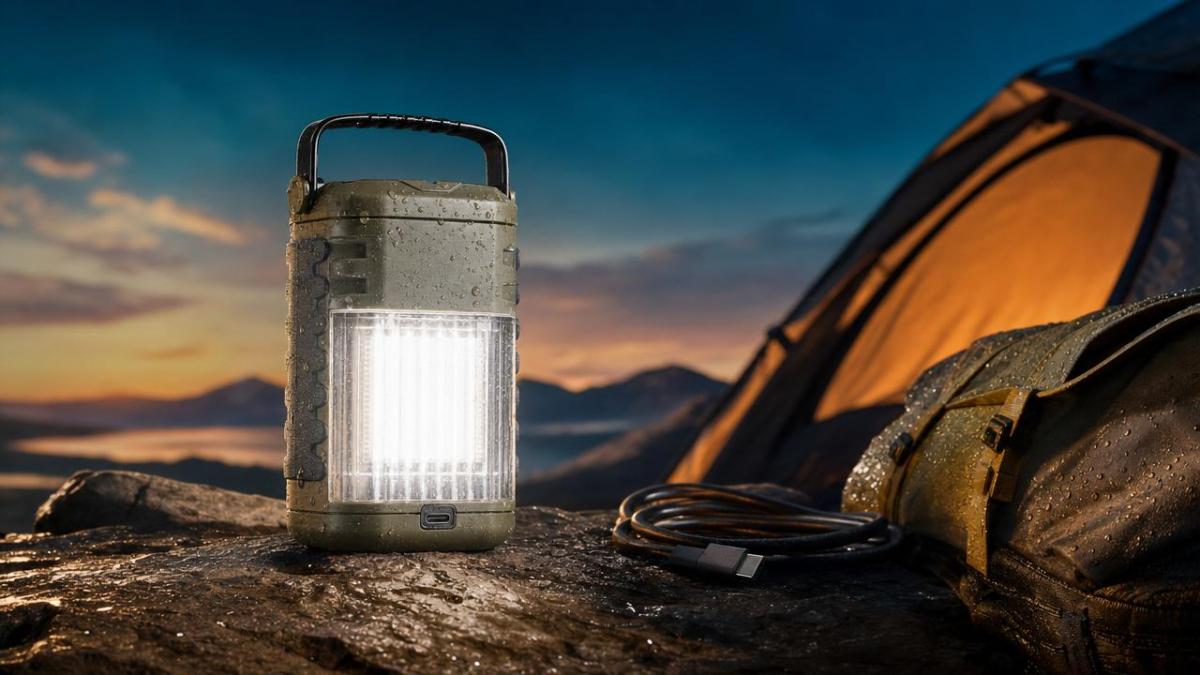
Reliable wholesale camping lanterns deliver predictable light across tents, campsites, trailside cooking areas, emergency kits, and vehicle-based travel setups.
Field reliability means the product keeps working despite cold nights, damp gear bags, dust, accidental drops, and repeated charging cycles.
A dependable lantern should not only turn on during testing. It should maintain usable output throughout its advertised runtime.
For wholesale camping lanterns, reliability starts with honest specifications and ends with consistent manufacturing control.
Outdoor users often operate lanterns with cold hands, wet surfaces, gloves, or limited visibility. Controls must remain intuitive and responsive.
A lantern used for family camping has different needs from one packed for trekking, festival travel, or roadside emergency use.
However, the same fundamentals apply: stable illumination, safe power storage, rugged housing, and verified protection against environmental stress.
Core reliability indicators
- Measured lumen output, not only theoretical LED rating.
- Runtime curves showing brightness decline over time.
- Battery quality, protection circuit design, and cycle life.
- Ingress protection suited to rain, dust, and campsite handling.
- Thermal design that avoids overheating inside tents.
How Should Brightness and Runtime Be Evaluated?
Brightness is one of the most visible claims on wholesale camping lanterns, but it is also frequently misunderstood.
A high lumen number may describe peak output for a short period, not stable brightness during actual camping use.
For campsite lighting, uniform diffusion often matters more than aggressive glare. A lantern should illuminate people, gear, and ground safely.
Request lumen test data under defined conditions. Temperature, battery state, and measurement distance can change results significantly.
Runtime should be checked by mode. Low, medium, high, red light, and SOS settings usually consume power differently.
For wholesale camping lanterns, a runtime curve is more useful than a single hour figure printed on packaging.
A poor driver may produce impressive brightness for ten minutes, then quickly drop below practical campsite usefulness.
Stable current regulation supports better user experience and fewer complaints after night hikes, storms, or extended tent use.
Practical brightness benchmarks
- 50–150 lumens: tent lighting, reading, and close-range tasks.
- 150–400 lumens: family campsite use and food preparation.
- 400+ lumens: group areas, emergency visibility, and vehicle camping.
Cold weather can reduce battery performance. Testing wholesale camping lanterns at lower temperatures gives a more realistic reliability picture.
Which Battery and Charging Specs Matter Most?
Battery design is central to the safety and dependability of wholesale camping lanterns used in travel and outdoor retail programs.
Common options include lithium-ion, lithium-polymer, replaceable alkaline cells, and hybrid designs supporting both rechargeable and disposable power.
Rechargeable models are popular for sustainability and convenience, but they require stronger quality control and protection circuitry.
Battery protection should cover overcharge, over-discharge, short circuit, overload, and temperature-related risk.
USB-C charging is increasingly expected, especially for travel customers using power banks, car adapters, and solar panels.
Still, connector type alone does not guarantee quality. Charging current, port durability, and sealing design must be checked.
For wholesale camping lanterns, battery capacity should be stated in watt-hours when possible, not only milliamp-hours.
Watt-hours allow fairer comparison when voltage differs between cell configurations and lantern designs.
Key battery questions
- Is the cell supplier traceable and consistent across production batches?
- What is the rated cycle life after repeated charge and discharge?
- Does the lantern support pass-through charging safely?
- Is the charging port protected from rain, sand, and dirt?
Lanterns shipped internationally may require UN38.3 battery transport documentation and market-specific electrical safety files.
How Important Are IP Rating, Drop Resistance, and Housing Materials?
Outdoor travel exposes wholesale camping lanterns to moisture, mud, dust, packing pressure, and accidental impact.
An IP rating describes resistance against solids and liquids. It should match the intended field environment.
IPX4 may be acceptable for splashing rain. IPX5 or higher supports stronger water exposure during unpredictable camping weather.
For sandy campsites, off-road travel, or beach tourism, dust protection becomes equally important.
Drop resistance should be supported by test height, surface type, and sample quantity. Vague “shockproof” claims are not enough.
Housing materials affect durability and perceived value. ABS, PC, aluminum, silicone, and rubberized components each behave differently.
Polycarbonate offers impact resistance. Aluminum improves heat dissipation, while silicone improves grip and edge protection.
For wholesale camping lanterns, hinges, handles, hooks, magnets, and tripod threads deserve close inspection.
These smaller parts often fail before LEDs or batteries, especially during group camping and rental travel use.
Material and protection checklist
- Confirm IP test standard and laboratory report date.
- Inspect gasket placement around ports and battery covers.
- Review drop test method and functional results after impact.
- Check handle fatigue under repeated hanging loads.
What Compliance Documents Should Be Verified Before Bulk Orders?
Compliance is a major reliability factor for wholesale camping lanterns entering regulated retail and travel accessory channels.
Documentation should reflect the exact model, battery configuration, charger interface, material set, and packaging claims.
Common references include CE, RoHS, FCC, UKCA, REACH, UN38.3, MSDS, and relevant battery safety reports.
For children-adjacent family camping products, additional checks may apply to materials, small parts, and warning labels.
A certificate alone is not enough. The issuing body, test report number, sample description, and validity must align.
Packaging claims should avoid overstating waterproofing, runtime, solar charging speed, or emergency power bank capacity.
Misleading claims create return risk, marketplace penalties, and reputational damage across outdoor retail platforms.
For wholesale camping lanterns, compliance review should happen before tooling changes, artwork approval, or first production deposit.
Specification and risk comparison
How Can Cost Be Balanced Against Field Reliability?
The lowest unit price rarely delivers the strongest outcome for wholesale camping lanterns in competitive outdoor categories.
Small savings in batteries, switches, seals, or LED drivers can create higher return costs later.
A better cost model compares landed cost with warranty exposure, review risk, compliance gaps, and seasonal stock pressure.
Camping products often sell before peak travel periods. Delays from failed testing can miss the main demand window.
Sampling should include performance testing, teardown inspection, packaging review, and charging cycle checks.
For private-label programs, pilot orders help validate real defect rates before larger seasonal commitments.
Wholesale camping lanterns with modular parts may reduce after-sales loss because handles, cables, or battery covers can be replaced.
Eco-focused materials, repairable design, and recyclable packaging can also support premium positioning in travel retail.
Cost and sourcing reminders
- Compare samples from mass production materials, not only showroom prototypes.
- Confirm whether batteries, cables, and manuals are included in quoted pricing.
- Set acceptable quality limits for cosmetic and functional defects.
- Use pre-shipment inspection for charging, lighting, sealing, and packaging checks.
What Final Checks Improve Sourcing Decisions?
Before committing to wholesale camping lanterns, align the specification sheet with real scenarios and claims visible to end users.
A family campground lantern may prioritize soft diffusion, hanging stability, and long low-mode runtime.
A backpacking lantern may need low weight, compact form, USB-C charging, and reliable cold-weather output.
An emergency travel lantern may require flashing modes, power bank output, strong visibility, and clear battery indicators.
Supplier evaluation should include production capacity, traceability, defect handling, document responsiveness, and change-control discipline.
If a supplier changes LED chips, batteries, molds, or circuit boards, previous test reports may no longer apply.
For wholesale camping lanterns, consistent quality depends on controlling these changes before shipment.
FAQ-style decision guide
Reliable wholesale camping lanterns are built through disciplined specification review, controlled components, credible testing, and realistic outdoor positioning.
Brightness, runtime, battery safety, IP protection, materials, and compliance files should be evaluated together, not separately.
The next practical step is to create a comparison sheet, request matched reports, test production-grade samples, and verify claims before scale-up.
With this approach, wholesale camping lanterns can support safer trips, stronger reviews, and more resilient outdoor product lines.
Related Intelligence
 Corporate & Seasonal GiftsSep 20, 2026What Should Be Approved Before Placing a Custom Gift Order?What should be approved before placing a custom gift order? Explore the essential checks for safe, compliant, retail-ready custom pet gifts.
 Corporate & Seasonal GiftsSep 20, 2026Which Custom Gift Materials Have the Lowest Defect Rates?Which custom gift materials have the lowest defect rate? Explore why silicone, stainless steel, polypropylene, and polyester help pet gift brands reduce rejects and improve quality.
 Skincare OEMAug 16, 2026Amazon Enforces AI Human Metadata Rule for Beauty and Personal Care SellersAmazon now enforces AI human metadata rules for beauty sellers. Learn how to protect listings, traffic, and compliance in skincare, cosmetics, and beauty devices.
 Beauty DevicesAug 15, 2026China to Roll Out Nationwide Cross-Border Cash Pooling for MultinationalsChina to roll out nationwide cross-border cash pooling for multinationals from Sept. 14. Discover how this policy could improve treasury efficiency, liquidity management, and China-linked supply chains.
 Beauty DevicesAug 14, 2026China Imposes Temporary Export Ban on Helium, Affecting Cooling Supply ChainsChina's temporary helium export ban may disrupt cooling supply chains for beauty RF devices and laser systems. Learn what ODMs, buyers, and procurement teams should check now.
![]() Cosmetics & PkgAug 13, 2026PPWR becomes mandatory: Beauty and personal care packaging materials usher in new EPR and PFAS compliance requirementsPPWR takes effect for cosmetics packaging in the EU, bringing EPR registration and PFAS limits. Learn what brands, importers, and suppliers must do now.
Cosmetics & PkgAug 13, 2026PPWR becomes mandatory: Beauty and personal care packaging materials usher in new EPR and PFAS compliance requirementsPPWR takes effect for cosmetics packaging in the EU, bringing EPR registration and PFAS limits. Learn what brands, importers, and suppliers must do now. Cosmetics & PkgAug 12, 2026EU PPWR Now Enforced for Beauty Packaging ComplianceEU PPWR now enforced for beauty packaging compliance: learn how EPR, ERN, heavy metals and PFAS rules affect EU exports, customs clearance and platform sales.
 Cosmetics & PkgAug 11, 2026EU PPWR Rules Take Effect on Aug. 12 for Beauty PackagingEU PPWR rules for beauty packaging take effect on Aug. 12, 2026. Learn key compliance steps, EPR, labeling, PFAS limits, and how to avoid customs delays and fines.
 Smart Pet DevicesAug 10, 2026EU EPR Rules to Cover Smart Pet Devices on Aug. 15EU EPR Rules will cover smart pet devices from Aug. 15, 2026. Learn how smart collars, feeders, and monitoring devices can avoid delisting, customs delays, and compliance risks in the EU.
 Infant Feeding & CareAug 09, 2026CPSC Recalls Baby Sleep Sacks Over Undeclared TDCPPCPSC Recalls Baby Sleep Sacks Over Undeclared TDCPP: learn how this 2026 recall impacts CPC documents, third-party testing, and U.S. baby product compliance for exporters.
 Infant Feeding & CareAug 08, 2026ECHA Adds 5 SVHCs, Importer Notices Due From Oct 2026ECHA adds 5 SVHCs to the Candidate List, with importer notices due from October 2026. Learn how REACH affects exporters, supply chains, and documentation readiness.
 Baby Gear & StrollersAug 07, 2026CPSC Revises Crib Rail Standard for November 2026CPSC revises crib rail standard for November 2026, adding dynamic impact tests and mandatory third-party lab testing. Learn how the new rule affects U.S. market access, compliance, and shipments.
 Electronic & RC ToysAug 06, 2026EU to Require EN IEC 62115:2025 for Electronic ToysEU to Require EN IEC 62115:2025 for Electronic Toys from Oct 1, 2026. Learn scope, battery and AI safety updates, CE compliance risks, and how exporters can avoid customs delays.