Custom Makeup Bags That Feel Premium Without Pushing Up Unit Cost
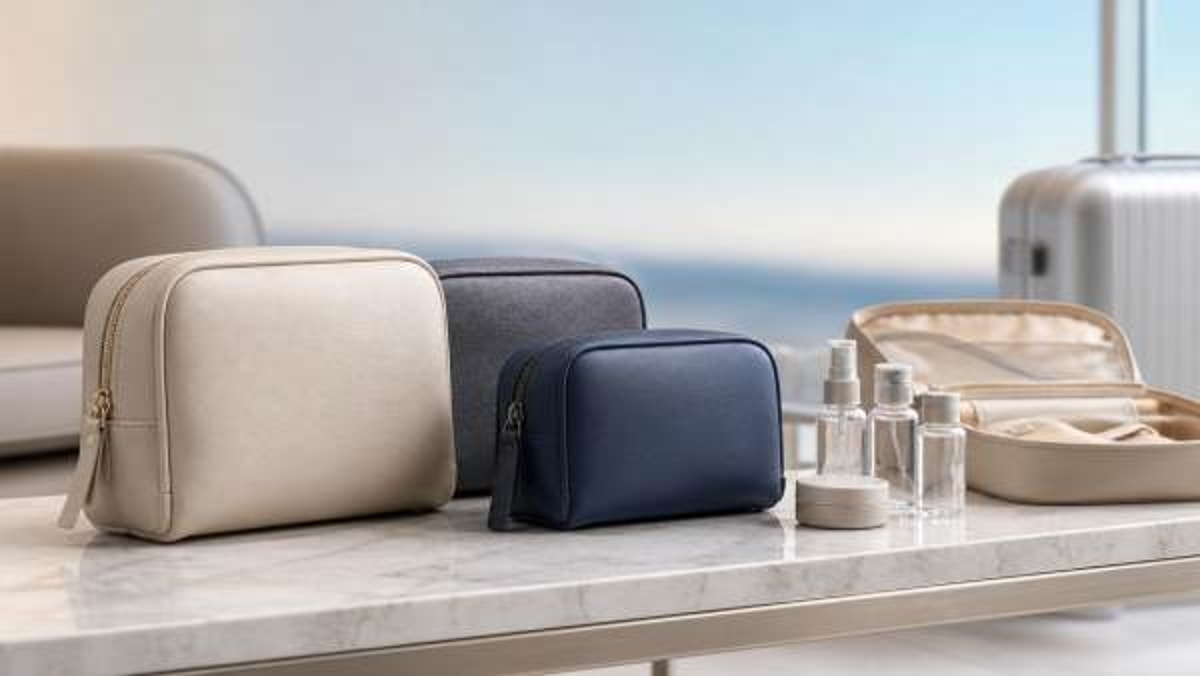
For finance approvers, premium packaging only makes sense when it protects margin. Custom makeup bags can elevate perceived value, support brand positioning, and improve customer experience without driving up unit cost—if sourcing decisions are made with the right materials, construction methods, and supplier strategy. This guide explores how to balance aesthetics, compliance, and cost efficiency in a competitive retail environment.
Why finance teams should use a checklist before approving custom makeup bags
In travel retail, amenity kits, gift-with-purchase programs, hotel partnerships, airline collaborations, and branded beauty bundles often rely on packaging that must look elevated while staying commercially disciplined. That is why custom makeup bags should never be approved on appearance alone. A checklist-driven review helps finance decision-makers compare total value instead of reacting to unit price in isolation.
The real question is not whether a bag looks premium. The real question is whether the chosen format improves sell-through, supports the brand story, survives transport, meets compliance expectations, and avoids hidden cost drivers such as high defect rates, inefficient packing, or excessive freight volume. For travel-service buyers and sourcing leaders, the smartest approvals come from standardizing these checks early.
First-pass approval checklist: what to confirm before discussing price
Before negotiating quotations for custom makeup bags, finance approvers should ask product, sourcing, and brand teams to validate the following points. This reduces revision rounds and prevents cost inflation caused by late design changes.
- Usage scenario: Is the bag for travel kits, retail sale, loyalty rewards, influencer seeding, or hotel amenities? Each use case changes material, size, and durability requirements.
- Target landed cost: Approve a cost ceiling based on channel margin, not just ex-factory price.
- Required premium cues: Define which details matter most—texture, zipper feel, lining, print quality, or silhouette—so suppliers do not overbuild low-value features.
- Order volume and replenishment logic: A design that works at 100,000 units may not be efficient at 5,000 units.
- Compliance requirements: Confirm chemical, labeling, and destination-market standards before sampling.
- Freight sensitivity: Bulkier structures can erase apparent savings through shipping inefficiency.
Core cost levers that make custom makeup bags feel premium
The most effective custom makeup bags do not achieve a premium look by using the most expensive inputs. They do it by selecting visual and tactile upgrades that shoppers notice immediately, while simplifying the hidden parts of construction. Finance teams should pay close attention to these cost levers.
1. Material choice: premium perception starts with surface finish
Material is usually the biggest driver of perceived quality. However, premium does not always require genuine leather or complex laminates. Good options include textured PU, matte TPU, structured canvas blends, RPET fabrics, coated cotton, and soft-touch polyester. For travel-focused programs, wipeable and lightweight materials often deliver better operational value than heavier luxury alternatives.
The approval standard should be simple: choose a material that aligns with the customer promise and route to market. If the bag is used in resort retail, airport gifting, or beauty travel kits, durability, cleanability, and a polished hand-feel may matter more than expensive base substrates.
2. Construction: simplify internal complexity
Many buyers unintentionally raise unit cost by adding internal pockets, thick padding, contrast piping, and multiple compartments that customers barely notice. A smarter approach is to prioritize one or two visible quality signals—such as a smooth zipper track or a tailored edge—while keeping the internal build straightforward.
3. Decoration method: select branding that scales efficiently
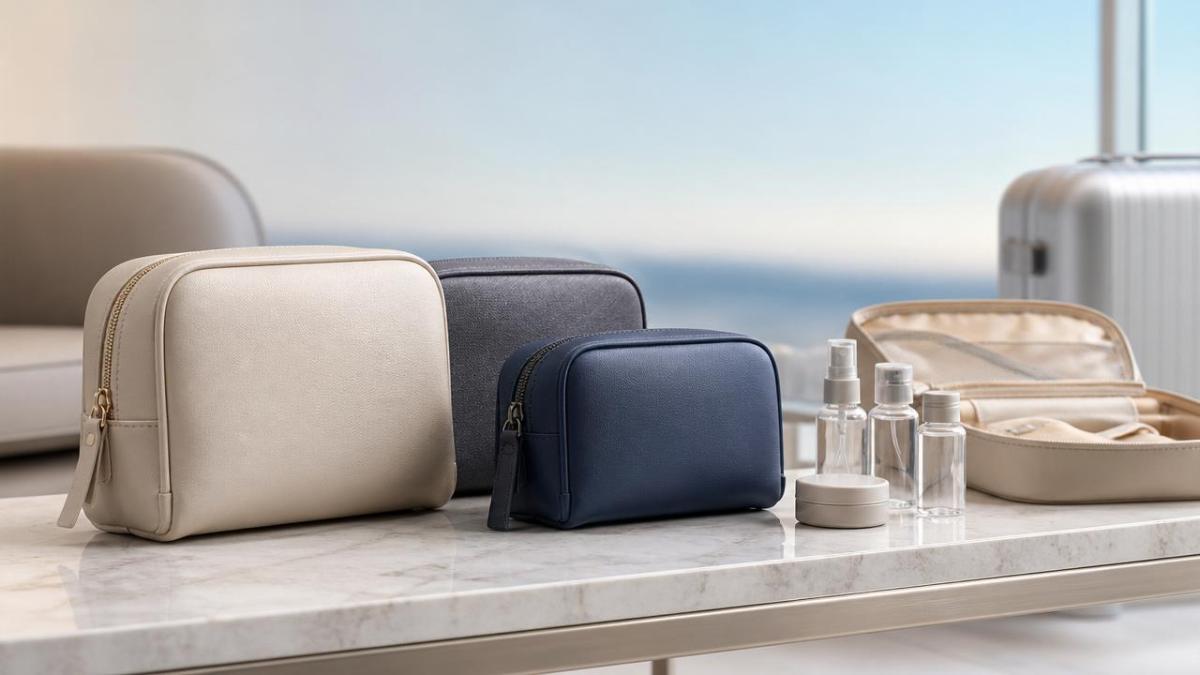
Debossing, screen printing, heat transfer, woven labels, metal pulls, and silicone patches can all work for custom makeup bags. The best option depends on order volume, artwork complexity, and desired brand positioning. A low-cost print can still look premium if color control is strong and placement is clean. On the other hand, too many decorative elements can increase defect risk and production lead time.
4. Shape and size: compact efficiency protects margin
Oversized bags may appear generous but often increase material consumption, packing inefficiency, and freight costs. Finance approvers should challenge dimensions that exceed the actual product set. In travel service environments, a well-proportioned bag that fits carry-on usage often performs better than a larger format with no clear consumer benefit.
A practical scoring table for finance approval
Use this quick framework when comparing suppliers or concepts for custom makeup bags. It helps teams move from subjective opinions to measurable approval criteria.
Travel-service use cases: where approval criteria should change
Not all custom makeup bags should be evaluated the same way. In travel service and retail-adjacent programs, finance teams should adapt their checklist to the operating model.
Hotel and resort amenities
Prioritize compact size, fast replenishment, and materials that withstand humidity and repeated handling. The bag should photograph well for guest experience, but it should also be simple to stock and store. Overengineered lining or hardware rarely adds enough value here.
Airline or duty-free gifting
Weight and carton efficiency become critical. A highly structured beauty pouch may look attractive in concept review but underperform when air freight or onboard storage limits are considered. Lightweight materials and crush-resistant formats usually offer better economics.
Retail travel kits and promotional bundles
Here, the bag acts as both packaging and a reusable product. That means premium cues can justify slightly higher spend if they support conversion and repeat brand exposure. Finance approvers should request evidence: expected uplift in basket value, giftability advantage, or stronger social-media presentation.
Commonly overlooked cost traps in custom makeup bags
Many sourcing plans fail not because the quoted price is too high, but because hidden cost items were not screened early. Watch for these issues when reviewing custom makeup bags.
- Low MOQ mismatch: Small runs with complex design details often create poor cost efficiency.
- Color inconsistency: Custom shades can trigger higher rejection rates if tolerance standards are unclear.
- Sampling drift: The approved sample may include hand-finished details that are difficult to replicate at scale.
- Excess packaging: Individual polybags, inserts, and tissue can inflate cost without meaningful end-user benefit.
- Freight cube expansion: Structured bags may look premium but ship inefficiently.
- Weak supplier specialization: A general sewing factory may quote aggressively but struggle with cosmetic-bag finishing standards.
Supplier questions finance approvers should insist on
To approve custom makeup bags with confidence, ask suppliers for more than a unit quote. The right questions reveal whether a proposal is commercially reliable.
- Which material alternatives provide a similar premium look at lower cost?
- Which decorative feature has the highest defect rate in production?
- Can the bag be packed flatter or nested to reduce freight?
- What testing or documentation can support destination-market compliance?
- How will the factory control zipper quality, edge finishing, and print consistency?
- What is the cost impact of reducing one compartment, changing lining, or simplifying hardware?
Execution plan: how to lower risk before purchase order approval
A disciplined approval process can preserve both premium appearance and financial control. For custom makeup bags, the most effective execution plan usually follows five steps: define end use, cap landed cost, shortlist materials by perceived value, test a production-realistic sample, and compare suppliers using a standardized scorecard. This sequence is especially useful for cross-border retail, travel gifting, and multi-market sourcing programs.
If the business is under time pressure, do not compress quality validation. Instead, reduce design variation. Fewer colorways, simpler trim combinations, and standardized dimensions typically improve on-time delivery and reduce working-capital risk. For finance approvers, that is often more valuable than chasing the absolute lowest initial quote.
Final approval guidance for margin-conscious buyers
Custom makeup bags can absolutely feel premium without pushing up unit cost, but only when the decision is based on visible value drivers, realistic production methods, and full landed-cost thinking. In travel service, hospitality, and retail-adjacent sourcing, the winning concept is usually not the most elaborate one. It is the one that delivers a strong first impression, packs efficiently, meets compliance expectations, and scales with low operational friction.
If your team is moving toward supplier discussions, the priority information to prepare is clear: target cost range, order volume, destination market, required testing, desired premium cues, packing constraints, and timeline. With those inputs defined upfront, sourcing conversations become faster, quotations become more comparable, and finance approvals become easier to justify.
Related Intelligence
 Cosmetics & PkgMay 02, 2026OEM Cosmetics Manufacturer: 7 Questions to Ask Before Product Development StartsOEM cosmetics manufacturer selection starts with the right questions. Learn 7 smart checks to reduce compliance, cost, and launch risks before product development begins.
 Beauty DevicesMay 02, 2026How to Evaluate a Gua Sha Tools Manufacturer for Consistent QualityGua sha tools manufacturer selection starts with quality control. Learn how to assess materials, certifications, production consistency, and supply reliability with confidence.
 Beauty DevicesMay 02, 2026Body Contouring Machine: When the Higher Price Is Actually JustifiedBody contouring machine buyers in travel services: learn when a higher price is justified through ROI, compliance, uptime, and premium package revenue potential.
 Fitness EquipmentMay 02, 2026Power Rack Manufacturer: Safety Details That Matter More Than FinishPower rack manufacturer selection starts with safety, not surface finish. Discover a practical checklist for QC teams to assess welds, load testing, stability, and compliance before sourcing.
 Fitness EquipmentMay 02, 2026Olympic Barbell Manufacturer Checklist for Strength Equipment SourcingOlympic barbell manufacturer checklist for travel service buyers: compare quality, compliance, OEM capability, and delivery reliability to source safer, longer-lasting strength equipment.
 Skincare OEMMay 02, 2026Whitening Toothpaste Private Label: What Customers Notice FirstWhitening toothpaste private label buyers in travel retail notice packaging, whitening claims, and daily-use safety first. See what drives trust, faster conversions, and smarter sourcing.
 Skincare OEMMay 02, 2026Wholesale Body Scrub: Texture, Fragrance, and Packaging Choices That SellWholesale body scrub buying guide for travel retail: compare textures, fragrances, and packaging choices that boost shelf appeal, compliance readiness, and faster sales.
 Beauty DevicesMay 02, 2026Jade Roller Wholesale: How to Spot Quality Issues Before They Reach CustomersJade roller wholesale quality issues can lead to costly returns. Learn how to spot material flaws, weak assembly, and compliance risks before products reach customers.
 Beauty DevicesMay 02, 2026What Makes a Water Flosser Manufacturer Reliable for Ongoing OrdersWater flosser manufacturer selection matters for travel retail success. Learn how to assess quality, compliance, lead times, and OEM support for reliable ongoing orders.
 Fitness EquipmentMay 02, 2026Commercial Treadmills Wholesale: Cost Drivers You Need to Understand FirstCommercial treadmills wholesale cost drivers explained for hotels, resorts, and travel brands. Compare pricing, compliance, shipping, and service risks before you buy.
 Fitness EquipmentMay 02, 2026Resistance Bands OEM: Small Design Choices That Improve Daily UseResistance bands OEM tips for travel service brands: discover small design choices that improve comfort, safety, storage, and durability for better guest use and operator efficiency.
 Fitness EquipmentMay 02, 2026Wholesale Yoga Mats: How to Build a Better Product Mix for RetailWholesale yoga mats buying guide for travel retail: learn how to build a profitable product mix for resorts, hotels, airports, and retreat channels with smarter sourcing and lower inventory risk.
 Cosmetics & PkgMay 02, 2026Wholesale Cosmetic Sponges: Material Differences That Change User ExperienceWholesale cosmetic sponges explained: discover how latex-free, hydrophilic, and microfiber materials affect blending, hygiene, and travel convenience for a smarter beauty buy.