Global Li-ion Recycling Rate Hits 62%; Beauty Device Battery Costs Down 9%
On April 18, 2026, the International Battery Association (IBA) reported a global lithium-ion battery recycling rate of 62%, driving downward pressure on cobalt and nickel prices. This development is notably impacting manufacturers of battery-powered beauty devices in China—particularly ODM suppliers—whose bill-of-materials (BOM) costs for battery modules have fallen by 9%, while standard module lead times have shortened from 10 to 6 weeks. Companies involved in battery sourcing, medical/beauty device manufacturing, and supply chain logistics should monitor implications for cost structure, procurement planning, and fast-response production capacity.
Event Overview
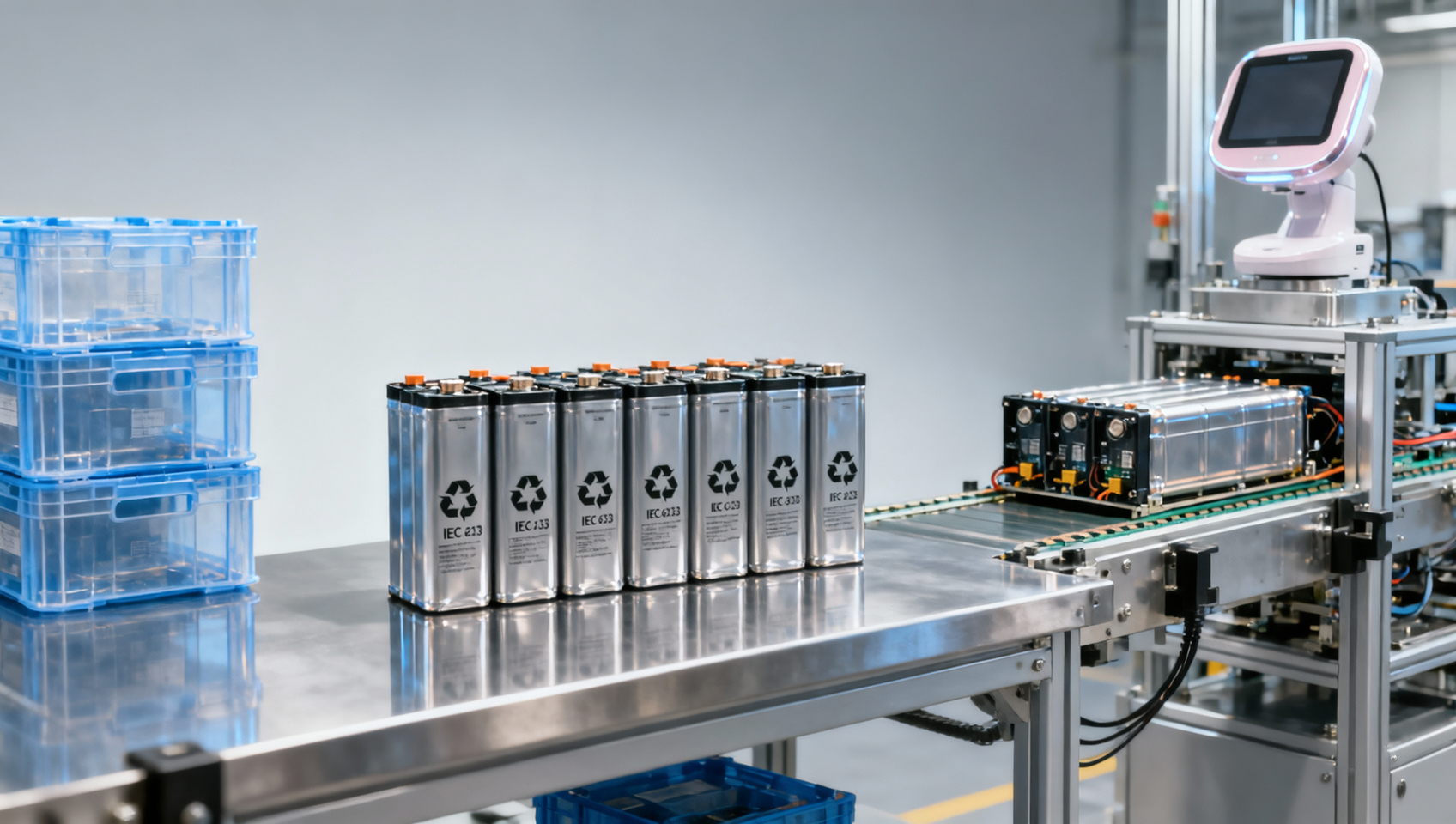
According to the International Battery Association (IBA), as of April 18, 2026, the global lithium-ion battery recycling rate reached 62%. The report attributes falling cobalt and nickel metal prices to improved recycling efficiency. Chinese ODM manufacturers of beauty devices confirmed that battery modules using repurposed (second-life) cells reduced BOM costs by 9% year-on-year. Concurrently, domestic PACK manufacturers’ increased capacity has shortened standard battery module delivery lead times from 10 weeks to 6 weeks.
Impact on Specific Industry Segments
Raw material procurement enterprises: Lower cobalt and nickel prices—driven by higher recycling rates—may ease input cost volatility. However, price stability remains contingent on consistent recycling infrastructure performance and metal refining yield, not just collection volume.
Electronics manufacturing & ODM service providers (beauty device focus): Reduced BOM costs and shorter lead times directly improve margin flexibility and responsiveness to seasonal or promotional demand spikes. This benefit applies specifically to models using standardized, non-proprietary cell formats suitable for second-life integration.
Supply chain & logistics service providers: A compressed 6-week lead time increases pressure on inventory forecasting accuracy and just-in-time coordination. Service providers supporting beauty device OEMs/ODMs may need to adjust buffer stock policies and cross-border documentation timelines for battery shipments.
Component distributors & battery module integrators: Demand for certified, tested second-life cells—and associated quality assurance documentation—is rising. Distributors with traceability systems and IEC 62133-compliant testing capabilities may gain competitive advantage in this segment.
What Relevant Enterprises or Practitioners Should Focus On Now
Monitor official recycling metrics beyond headline rates
Recycling rate figures reflect mass recovery volume relative to total end-of-life batteries, but do not indicate electrochemical health, consistency, or certification readiness of recovered materials. Enterprises should track IBA’s upcoming technical annexes (e.g., on cathode material purity thresholds) rather than relying solely on the 62% figure.
Assess eligibility of current battery designs for second-life integration
Not all beauty device battery architectures support repurposed cells. Factors include voltage tolerance, thermal management compatibility, and firmware-level cell monitoring. Manufacturers should conduct internal feasibility reviews before assuming BOM savings apply to existing platforms.
Validate lead time reductions across actual order volumes and configurations
The 6-week lead time applies to standard, off-the-shelf battery modules. Customized chemistries, form factors, or safety certifications (e.g., UL 2054 vs. IEC 62133) may retain longer timelines. Procurement teams should request updated lead time matrices segmented by specification tier.
Prepare documentation alignment for regulatory compliance
Second-life cells used in consumer devices face evolving scrutiny under regional safety standards (e.g., EU Battery Regulation Annex XII, US CPSC guidance). Teams responsible for product certification should begin mapping documentation gaps—including origin tracing, cycle history, and residual capacity validation—against upcoming audit requirements.
Editorial Observation / Industry Perspective
From an industry perspective, the 62% global recycling rate is better understood as an infrastructure milestone than a market inflection point. It signals maturation in collection logistics and mechanical processing—but not yet in high-yield hydrometallurgical recovery or standardized reuse protocols. The observed 9% BOM reduction and 4-week lead time improvement are real operational outcomes, yet they remain concentrated among manufacturers with vertically aligned PACK partners and modular device architectures. Analysis来看, this data reflects early-stage scalability—not broad-based commoditization—of second-life battery integration in low-power consumer electronics.
Current more appropriate interpretation is that this is a signal of tightening alignment between upstream recycling capacity and downstream electronics manufacturing needs—not yet evidence of systemic cost transformation. Continued observation is warranted for how consistently these benefits extend beyond standard beauty device modules to higher-voltage or regulated categories (e.g., wearable health monitors).
Conclusion
This update reflects tangible progress in circular battery value chains, particularly for standardized, low-risk applications like battery-powered beauty devices. However, its scope remains narrow: benefits are conditional on design compatibility, geographic proximity to domestic PACK capacity, and adherence to current safety certification pathways. For most stakeholders, it is best interpreted not as a near-term cost revolution, but as a validated pathway toward incremental resilience—provided supply chain assumptions are verified case by case.
Source Attribution
Main source: International Battery Association (IBA), April 18, 2026 public report.
Points requiring ongoing observation: long-term cobalt/nickel price elasticity to recycling rates; adoption rate of second-life cells outside standard beauty device modules; evolution of regulatory acceptance criteria for reused lithium-ion cells in consumer electronics.
Related Intelligence
 Cosmetics & PkgApr 21, 2026SAMR Penalizes 7 Platforms for 'Ghost Kitchen' Packaging ViolationsSAMR penalizes 7 platforms for 'ghost kitchen' packaging violations—key alert for food packaging exporters, converters & brands on licensing compliance.
 Cosmetics & PkgApr 21, 2026EU EPR Dual-Country Registration Effective for Beauty PackagingEU EPR Dual-Country Registration is now live for beauty packaging in France & Germany — act now to avoid shipment delays, fees, and customs holds.
 Cosmetics & PkgApr 21, 2026FDA MoCRA Rule: Cosmetic Packaging Must File Separate VCRPFDA MoCRA Rule requires cosmetic packaging—vacuum bottles, pumps, tubes—to file separate VCRP registration by April 17, 2026. Stay compliant & avoid shipment delays!
 Beauty DevicesApr 21, 2026Global Li-ion Recycling Rate Hits 62%; Beauty Device Battery Costs Down 9%Li-ion recycling rate hits 62%—driving 9% lower battery costs for beauty devices. Discover how ODMs, suppliers & logistics teams gain cost, speed & compliance advantages.
 Nursery Furniture & MonitorsApr 21, 2026Canton Fair Phase III: Infant Monitor Inquiries Surge, EN60601-1-12 Gains Traction in Middle EastEN60601-1-12:2023 compliance surges at Canton Fair Phase III — Middle East buyers demand certified infant monitors for clinical-grade home use.
 Smart Pet DevicesApr 21, 2026Vietnam Mandates ISO 13485 & Vietnamese Instructions for Smart Pet CollarsVietnam mandates ISO 13485 & Vietnamese instructions for smart pet collars—key compliance update for exporters, importers, and tech documentation providers.
 Infant Feeding & CareApr 21, 2026JETRO Spring 2026: Blockchain Batch Code Mandatory for Infant Silicone Feeding ProductsBlockchain batch code mandatory for infant silicone feeding products in Japan from Apr 18, 2026—ensure JP-Trace compliance now to avoid port detention & shipment delays.
 STEM & Educational ToysApr 21, 2026SASO Launches 24-Hour AI Module Certification for STEM Toys in Saudi ArabiaSASO FastTrack AI certification for STEM toys: Get SASO AI module certification in just 24 hours—exclusively for CNAS-tested, IEC-compliant smart educational toys.
 Corporate & Seasonal GiftsApr 21, 2026TÜV Germany Enforces LCA Carbon Heatmaps for Gift PackagingLCA carbon heatmaps now mandatory for gift packaging in Germany—TÜV Germany enforces ISO-compliant lifecycle assessments from April 2026. Act now to avoid delisting.
 Camping & WaterApr 21, 2026RCEP Cuts Tariff on Camping Water Bags to Indonesia by 0.8%RCEP cuts tariff on camping water bags to Indonesia by 0.8%—but new LPSE tender demands TPU+aluminum composite & EN13593 certification. Act now to align sourcing, testing, and origin compliance.
 Corporate & Seasonal GiftsApr 20, 2026Crystal Paperweights Wholesale Looks Simple Until Shipping BeginsCrystal paperweights wholesale looks easy until shipping starts. Explore travel retail sourcing risks, packaging, customs, and smarter supplier planning to protect margins and delivery timelines.
 Corporate & Seasonal GiftsApr 20, 2026Sublimation Blank Gifts That Sell Better Than Generic Promo ItemsSublimation blank gifts outperform generic travel promos with higher personalization, better margins, and easier sourcing—plus insights on crystal paperweights wholesale and led fairy lights wholesale.
 STEM & Educational ToysApr 20, 2026Why CPC Toys Get Flagged Even When the Product Looks FineCPC toys can be flagged even when they look fine. Learn hidden toy compliance risks affecting playpen manufacturers, stroller OEM, pet private label, and tourism retail launches.