How to Compare a Ceramic Hair Straightener Manufacturer Beyond Price

Choosing a ceramic hair straightener manufacturer on price alone can expose buyers to quality, compliance, and supply chain risks. For technical evaluation teams, the real comparison should include heating performance, plate materials, safety certifications, OEM/ODM capability, consistency, and production transparency. This guide explains how to assess manufacturers with a sharper, evidence-based framework that supports reliable sourcing and long-term retail success.
What a Technical Team Should Really Compare
A ceramic hair straightener manufacturer is not simply a factory that assembles heated styling tools. In practical sourcing, it is a systems supplier responsible for thermal engineering, electrical safety, material stability, cosmetic finish quality, packaging compatibility, and production repeatability. For technical evaluation personnel, the challenge is to determine whether a supplier can deliver not only a marketable product, but also a stable program that survives compliance checks, retail audits, and customer use over time.
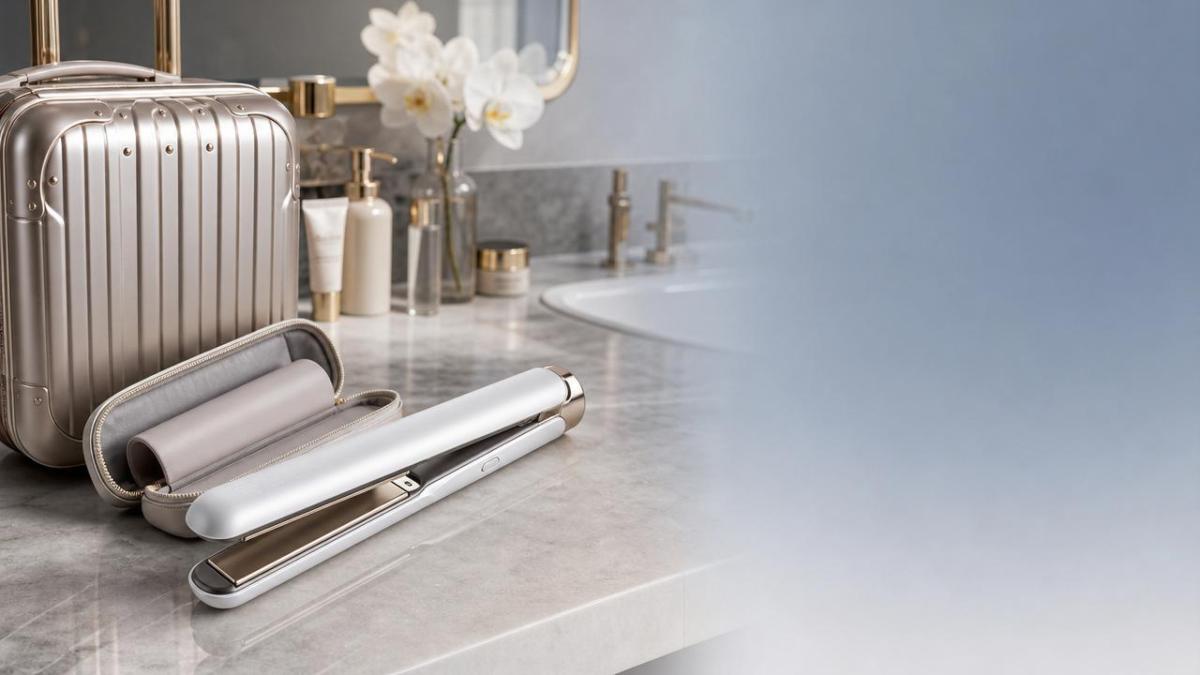
This matters even more in a travel service context, where portable beauty tools are often sold through airport retail, hotel amenities programs, travel-size private labels, duty-free channels, and luggage-friendly personal care bundles. In these scenarios, buyers often need compact dimensions, dual-voltage design, reliable heat-up speed, and packaging that can communicate safety and convenience to mobile consumers. A ceramic hair straightener manufacturer serving travel retail must therefore understand both engineering fundamentals and route-to-market realities.
Price still matters, but it should be treated as the output of capability, risk, and lifecycle cost. A low quotation can quickly become expensive when inconsistent plate coatings, weak temperature control, or missing certification files delay launch schedules. The strongest manufacturers help reduce total sourcing friction, not just unit cost.
Why the Industry Is Paying Closer Attention
The beauty appliance market has become more demanding because buyers now expect retail-ready products to meet multiple performance and compliance targets at once. Brands want fast heat-up, smooth glide, reduced hair damage claims, compact travel form factors, and visual differentiation. At the same time, cross-border e-commerce and global retail expansion require better documentation, stronger consistency, and clearer traceability from every ceramic hair straightener manufacturer under review.
For technical teams, this changes the evaluation model. It is no longer enough to test one attractive sample. Teams need evidence that the supplier can reproduce the same thermal behavior, coating durability, and electrical integrity at scale. This is especially relevant for private-label and ODM projects, where cosmetic appearance may change while core safety architecture must remain dependable across markets.
In travel-related retail settings, product misuse risks may also be higher because end users operate devices in hotels, shared accommodations, or international destinations with different voltage expectations. That raises the value of auto shut-off features, cord durability, compact heat-resistant storage design, and multilingual warning support. A capable ceramic hair straightener manufacturer should be ready to address these usage realities during development rather than after a return spike.
Core Evaluation Dimensions Beyond Price
When comparing suppliers, technical evaluators should organize discussions around measurable factors. The goal is to replace general promises with testable criteria.
A serious ceramic hair straightener manufacturer should be able to discuss these areas with data, not just brochures. Ask for test protocols, outgoing quality criteria, sample retention practices, and failure analysis examples. The quality of answers often reveals more than the sample itself.
Understanding Product Architecture and Material Quality
The term “ceramic” is often used loosely in the market. Some suppliers use full ceramic plates, while others use aluminum plates with ceramic coating. That difference affects thermal transfer, surface feel, coating life, and manufacturing cost. A technical team should ask exactly what the plate substrate is, how the ceramic layer is applied, how thick the coating is, and what abrasion or life-cycle tests support durability claims.
Equally important is the heating assembly. PTC heaters are common because they offer self-regulating characteristics, but execution quality varies. A reliable ceramic hair straightener manufacturer should be able to explain sensor placement, controller logic, temperature tolerance range, and how the product behaves after repeated heat cycles. If a factory cannot define acceptable variance between units, repeatability risk is high.
Housing materials, hinge construction, cord rotation, and strain relief also deserve attention. In travel retail especially, devices may be packed tightly, dropped more often, or used in short, frequent sessions. A compact form factor looks attractive, but mechanical compromises can create field failures. Technical assessment should therefore include drop resistance, hinge fatigue, and cord bend testing where possible.
Compliance, Documentation, and Market Access
A ceramic hair straightener manufacturer may offer a well-finished sample, yet still fall short on certification discipline. For global programs, technical teams should examine whether reports are current, relevant to the exact model family, and issued by credible labs. It is common to see outdated reports, borrowed documentation, or test files that do not match the final bill of materials.
Documentation strength includes more than certificates. Buyers should review product specifications, critical component lists, user manuals, warning labels, carton markings, and traceability methods. If the target channel includes travel retail or hospitality distribution, package claims must be carefully controlled. Statements such as “safe for all hair types,” “instant heat,” or “global use” should be backed by product design and test evidence.
For technical evaluators, one practical question is whether the supplier can manage change control. If a thermostat vendor, plate supplier, or plastic resin source changes, how is the buyer informed? A mature ceramic hair straightener manufacturer will have engineering change notice procedures and revalidation standards, helping protect long-term compliance integrity.
Where Different Manufacturer Types Fit Best
Not every supplier is suitable for every sourcing goal. Some are efficient for mature catalog products, while others are better for brand-led innovation.
The right ceramic hair straightener manufacturer depends on channel goals, target price band, and required customization depth. Technical teams should align evaluation criteria with business strategy rather than score every supplier by the same checklist weight.
Practical Assessment Methods for Technical Evaluation Teams
A robust supplier review usually combines document study, sample validation, process review, and communication testing. Start by comparing at least two or three samples per supplier, not one. Measure heat-up curve, actual plate temperature at multiple points, and recovery after contact. Record cosmetic differences, assembly gaps, and control response. If possible, compare pre-production samples against mass-production references from the same ceramic hair straightener manufacturer.
Next, review the manufacturing process. Ask how incoming heaters, plates, cords, and switches are inspected. Find out whether 100% electrical tests are performed, what final inspection standards apply, and how failed units are quarantined. A supplier that speaks clearly about defect categories, root-cause analysis, and corrective action usually has stronger internal discipline.
Factory communication is also part of technical capability. During development, unresolved ambiguity around specifications often leads to hidden rework or unstable output. A trustworthy ceramic hair straightener manufacturer should provide version control, clear engineering drawings, and realistic tolerance discussions. Fast replies are useful, but accurate replies are more valuable.
Business Value of a Better Comparison Framework
For sourcing organizations and travel retail operators, better manufacturer comparison improves more than product quality. It supports launch reliability, lowers return risk, protects brand reputation, and helps category teams maintain assortment confidence. In a market where beauty appliances often compete on user experience and trust, weak manufacturing control can quickly damage a premium positioning.
This is where structured intelligence becomes useful. Platforms such as Global Consumer Sourcing help procurement and technical teams interpret supplier claims within broader retail and compliance trends. Instead of viewing a ceramic hair straightener manufacturer only through a quotation sheet, buyers can benchmark capability against market expectations for safety, customization, and resilience.
Common Mistakes to Avoid
One common mistake is selecting a supplier based on an attractive first sample without confirming process consistency. Another is assuming all ceramic plate claims mean the same thing. Teams also underestimate packaging and label compliance, especially when products are sold in international travel environments. Finally, some buyers ignore after-launch support, even though field complaint handling and spare documentation can become critical once volumes grow.
Moving from Comparison to Confident Selection
The best way to compare a ceramic hair straightener manufacturer beyond price is to evaluate the supplier as a long-term operating partner. Look at engineering depth, plate and heater integrity, compliance discipline, production control, and willingness to support transparent validation. In travel service and travel retail channels, where portability, safety, and convenience shape customer expectations, those details directly influence commercial performance.
If your team is building a sourcing short list, define weighted criteria before negotiations begin, request evidence rather than claims, and match supplier type to business model. A lower unit cost may win a quote comparison, but a stronger ceramic hair straightener manufacturer usually wins on total value, risk reduction, and long-term retail success.
Related Intelligence
 Cosmetics & PkgMay 02, 2026OEM Cosmetics Manufacturer: 7 Questions to Ask Before Product Development StartsOEM cosmetics manufacturer selection starts with the right questions. Learn 7 smart checks to reduce compliance, cost, and launch risks before product development begins.
 Beauty DevicesMay 02, 2026How to Evaluate a Gua Sha Tools Manufacturer for Consistent QualityGua sha tools manufacturer selection starts with quality control. Learn how to assess materials, certifications, production consistency, and supply reliability with confidence.
 Beauty DevicesMay 02, 2026Body Contouring Machine: When the Higher Price Is Actually JustifiedBody contouring machine buyers in travel services: learn when a higher price is justified through ROI, compliance, uptime, and premium package revenue potential.
 Fitness EquipmentMay 02, 2026Power Rack Manufacturer: Safety Details That Matter More Than FinishPower rack manufacturer selection starts with safety, not surface finish. Discover a practical checklist for QC teams to assess welds, load testing, stability, and compliance before sourcing.
 Fitness EquipmentMay 02, 2026Olympic Barbell Manufacturer Checklist for Strength Equipment SourcingOlympic barbell manufacturer checklist for travel service buyers: compare quality, compliance, OEM capability, and delivery reliability to source safer, longer-lasting strength equipment.
 Skincare OEMMay 02, 2026Whitening Toothpaste Private Label: What Customers Notice FirstWhitening toothpaste private label buyers in travel retail notice packaging, whitening claims, and daily-use safety first. See what drives trust, faster conversions, and smarter sourcing.
 Skincare OEMMay 02, 2026Wholesale Body Scrub: Texture, Fragrance, and Packaging Choices That SellWholesale body scrub buying guide for travel retail: compare textures, fragrances, and packaging choices that boost shelf appeal, compliance readiness, and faster sales.
 Beauty DevicesMay 02, 2026Jade Roller Wholesale: How to Spot Quality Issues Before They Reach CustomersJade roller wholesale quality issues can lead to costly returns. Learn how to spot material flaws, weak assembly, and compliance risks before products reach customers.
 Beauty DevicesMay 02, 2026What Makes a Water Flosser Manufacturer Reliable for Ongoing OrdersWater flosser manufacturer selection matters for travel retail success. Learn how to assess quality, compliance, lead times, and OEM support for reliable ongoing orders.
 Fitness EquipmentMay 02, 2026Commercial Treadmills Wholesale: Cost Drivers You Need to Understand FirstCommercial treadmills wholesale cost drivers explained for hotels, resorts, and travel brands. Compare pricing, compliance, shipping, and service risks before you buy.
 Fitness EquipmentMay 02, 2026Resistance Bands OEM: Small Design Choices That Improve Daily UseResistance bands OEM tips for travel service brands: discover small design choices that improve comfort, safety, storage, and durability for better guest use and operator efficiency.
 Fitness EquipmentMay 02, 2026Wholesale Yoga Mats: How to Build a Better Product Mix for RetailWholesale yoga mats buying guide for travel retail: learn how to build a profitable product mix for resorts, hotels, airports, and retreat channels with smarter sourcing and lower inventory risk.
 Cosmetics & PkgMay 02, 2026Wholesale Cosmetic Sponges: Material Differences That Change User ExperienceWholesale cosmetic sponges explained: discover how latex-free, hydrophilic, and microfiber materials affect blending, hygiene, and travel convenience for a smarter beauty buy.