South Korea MFDS Updates Beauty Device Safety Guidelines
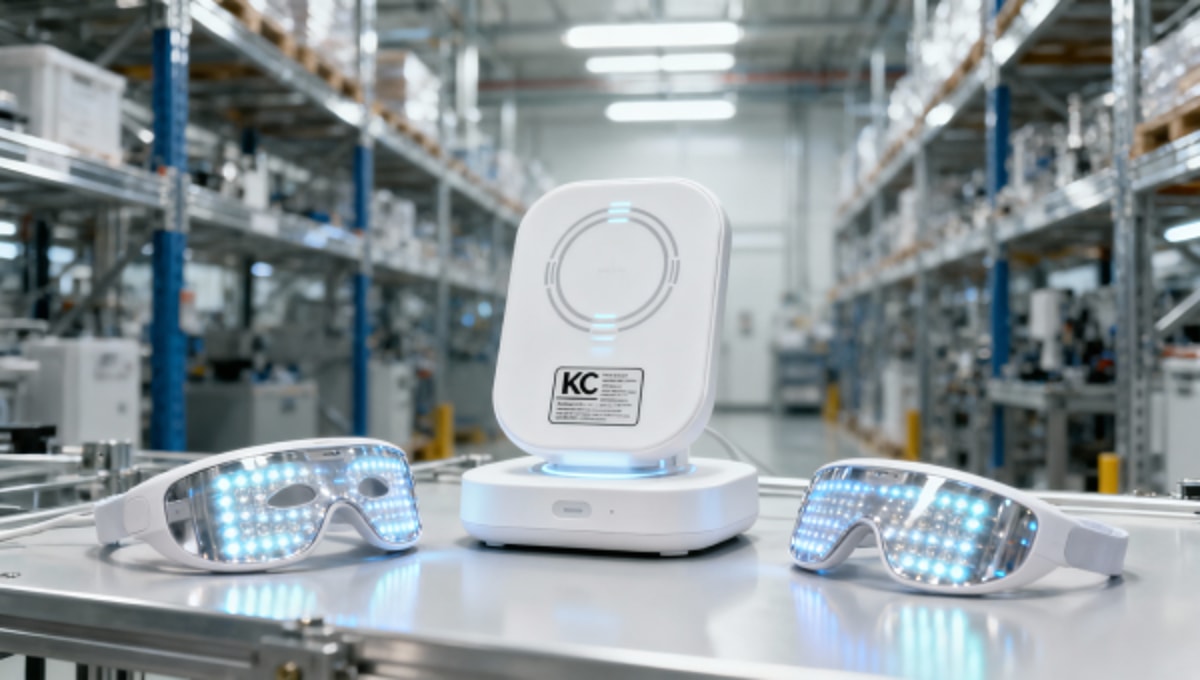
On May 5, 2026, the Korean Ministry of Food and Drug Safety (MFDS) revised its Guidelines for Safety of Cosmetic Devices, mandating that wireless charging bases for beauty devices—such as LED face masks and microcurrent delivery units—must undergo separate KC certification to IEC 62368-1:2026 (audio/video and IT equipment safety standard). This requirement applies regardless of whether the base is bundled with or sold separately from the main device. The update takes effect on May 20, 2026, and has already triggered retesting delays among ODM manufacturers in Dongguan, with some test scheduling pushed to mid-June.
Event Overview
The Korean Ministry of Food and Drug Safety (MFDS) published an updated version of its Guidelines for Safety of Cosmetic Devices on May 5, 2026. The revision explicitly states that any wireless charging base accompanying a cosmetic device must be certified independently under KC 62368-1:2026. It may not share a safety test report with the host device. The revised guidelines enter into force on May 20, 2026. Publicly available information confirms the effective date, scope (wireless charging bases for LED masks, microcurrent devices, etc.), and early operational impact on Dongguan-based ODM firms.
Which Subsectors Are Affected
ODM/OEM Manufacturing Enterprises
These firms are directly affected because many produce integrated beauty devices with proprietary wireless charging bases. Under the new rule, previously accepted shared safety reports no longer suffice. Impact manifests as delayed product registrations, extended time-to-market, and additional testing costs—already reflected in postponed lab bookings through mid-June in Dongguan.
Export-Oriented Trading Companies
Firms exporting beauty devices to South Korea must now verify whether their wireless charging accessories have standalone KC 62368-1:2026 certification. Without it, customs clearance or post-market inspection may result in non-compliance notices. Impact includes increased pre-shipment documentation review and potential shipment holds if certification status is unverified.
Supply Chain & Certification Service Providers
Certification bodies and local representatives supporting KC applications face higher demand for component-level assessments. The requirement shifts workload from system-level reporting to discrete sub-assembly evaluation—particularly for charging bases previously treated as ancillary parts. Impact includes tighter capacity for KC 62368-1:2026 testing slots and more complex technical file preparation.
What Relevant Companies or Practitioners Should Focus On and How to Respond
Confirm whether existing or planned wireless charging bases qualify as independent ‘accessories’ under MFDS definitions
Review current product configurations against MFDS’s functional and physical separation criteria—not just marketing bundling. A base integrated into the device housing or sharing firmware logic may still be deemed inseparable; clarification should be sought directly from MFDS or its designated certification body.
Prioritize KC 62368-1:2026 test planning for wireless charging bases before May 20, 2026
Given lab backlogs reported in Dongguan, initiate sample submission and technical documentation preparation immediately—even for products scheduled for launch after May 20. Note that KC certification requires Korean-language labeling, local representative designation, and factory audit readiness, all of which take lead time.
Distinguish between MFDS guidance updates and formal regulatory amendments
This change appears in MFDS’s technical guidelines—not in enforceable ordinances or ministerial decrees. While binding for KC certification purposes, it does not yet constitute a statutory amendment to the Act on Safety Control of Consumer Products. Monitor for official notifications from the Korea Testing & Research Institute (KTR) or National Institute of Environmental Research (NIER) to confirm alignment with enforcement practice.
Update internal compliance checklists and supplier agreements to reflect component-level certification obligations
Revise procurement terms for wireless charging components to require proof of KC 62368-1:2026 certification prior to integration. Where suppliers lack such certification, assess feasibility of redesigning bases to use certified reference designs—or shift to wired alternatives where technically viable.
Editor Perspective / Industry Observation
Observably, this update signals a tightening of regulatory granularity in Korea’s cosmetic device oversight—not a broad policy shift, but a targeted refinement in how accessory safety is assessed. Analysis shows MFDS is increasingly treating power delivery subsystems as distinct safety-critical components, especially where wireless energy transfer introduces unique risk factors (e.g., thermal management, electromagnetic compatibility, unintended activation). From an industry perspective, this reflects a broader global trend toward modular safety assessment, seen similarly in EU MDR Annex I interpretations and recent FDA guidance on AI-enabled dermatology tools. However, it remains unclear whether MFDS will extend similar treatment to other detachable modules (e.g., interchangeable probes or sensor attachments) in future revisions. Current attention should focus less on extrapolation and more on verifying how this specific requirement maps to actual product architecture and supply chain ownership models.
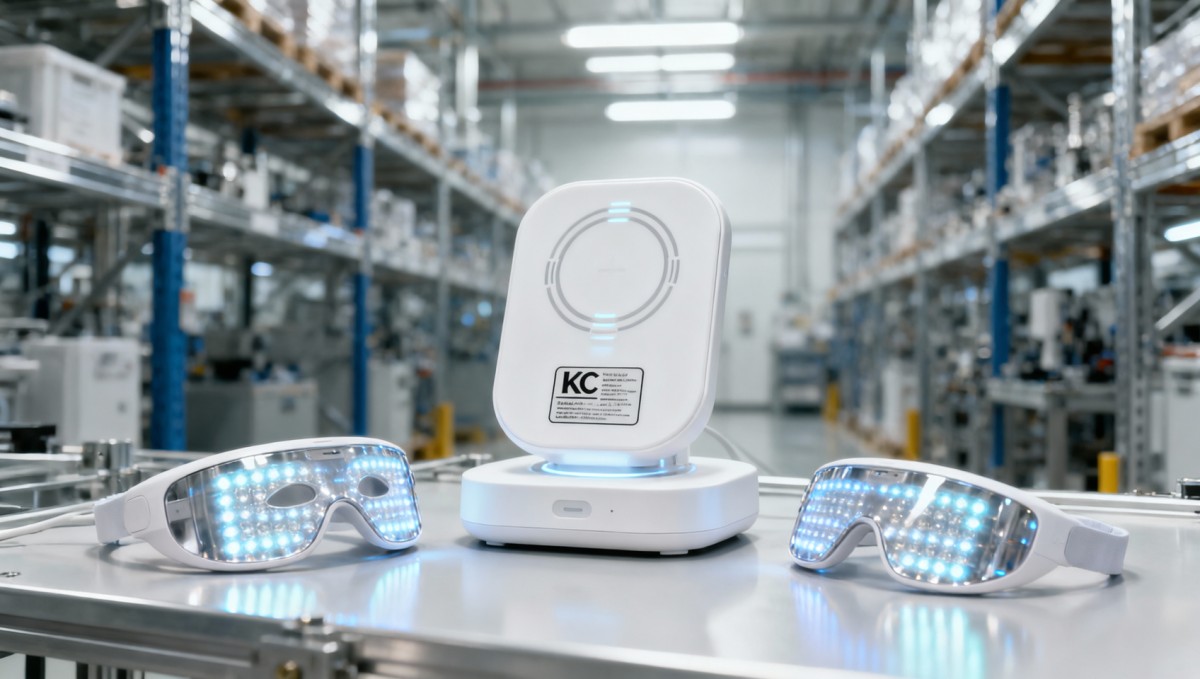
In summary, the MFDS guideline revision represents a concrete operational adjustment—not a strategic pivot—for companies exporting beauty devices to South Korea. Its significance lies in shifting certification responsibility from system-level to component-level validation for one specific subsystem. For stakeholders, the most rational interpretation is that this is a procedural enforcement refinement, not a signal of imminent expansion to other accessories—yet it underscores the growing importance of early-stage regulatory mapping for power-related subassemblies in consumer-facing health and beauty hardware.
Information Source: Korean Ministry of Food and Drug Safety (MFDS), official revision notice dated May 5, 2026, regarding the Guidelines for Safety of Cosmetic Devices. Lab scheduling delays reported by multiple Dongguan-based ODM firms (publicly confirmed in industry briefings as of May 2026). Ongoing observation required for official KTR implementation clarifications and potential alignment with KC Mark enforcement protocols.
Related Intelligence
 Corporate & Seasonal GiftsMay 07, 2026Branded USB Flash Drives: When Classic Promo Items Still Make SenseBranded USB flash drives still make sense for travel service brands—discover how they boost partner engagement, showcase premium content, and support higher-conversion B2B campaigns.
![]() Corporate & Seasonal GiftsMay 07, 2026Reborn Baby Dolls Wholesale: Key Quality Signs to Check Before Orderingreborn baby dolls wholesale buyers: learn the key quality signs to check before ordering, from materials and realism to compliance and factory consistency.
Corporate & Seasonal GiftsMay 07, 2026Reborn Baby Dolls Wholesale: Key Quality Signs to Check Before Orderingreborn baby dolls wholesale buyers: learn the key quality signs to check before ordering, from materials and realism to compliance and factory consistency. STEM & Educational ToysMay 07, 2026Montessori Toys Wholesale: What Sells Better Than Trend-Driven Toy PicksMontessori toys wholesale offers travel retailers and distributors a smarter alternative to fad toys—safer, educational, durable, and built for steady demand, repeat orders, and long-term trust.
 Corporate & Seasonal GiftsMay 07, 2026Custom Printed Mugs Bulk: Which Sizes and Coatings Make Better Gift ItemsCustom printed mugs bulk: discover the best sizes and coatings for travel gifts, hotel branding, and souvenir retail to boost appeal, durability, and buyer confidence.
 STEM & Educational ToysMay 07, 2026Sensory Toys for Autism OEM: Features That Matter More Than Bright PackagingSensory toys for autism OEM selection for travel services should prioritize safety, compliance, durability, and calming design over flashy packaging. Discover what truly improves guest experience.
 STEM & Educational ToysMay 07, 2026Custom Board Games Printing: How to Avoid Expensive Reprint MistakesCustom board games printing guide for travel service teams: avoid costly reprints, fix supplier risks, choose the right materials, and keep projects on time and on budget.
 Corporate & Seasonal GiftsMay 07, 2026Custom Power Banks OEM: What to Review Before Approving Battery SpecsCustom power banks OEM guide for travel service buyers: review battery chemistry, real output, safety, cycle life, and compliance before approval to reduce risk and boost buyer confidence.
 STEM & Educational ToysMay 07, 2026DIY Craft Kits for Kids: Which Projects Work Best for Short Attention SpansDIY craft kits for kids that keep short attention spans engaged on trips. Discover mess-free, travel-friendly projects for flights, road trips, and hotel downtime.
 STEM & Educational ToysMay 07, 2026Magnetic Building Blocks Manufacturer: Safety Points You Should Never SkipMagnetic building blocks manufacturer safety guide: learn the must-check tests, compliance documents, and audit points to avoid recalls, protect your brand, and source with confidence.
 Corporate & Seasonal GiftsMay 07, 2026Corporate Gift Sets Wholesale: How to Match Product Mix With BudgetCorporate gift sets wholesale for travel services: learn how to match product mix with budget, control landed costs, manage compliance, and choose higher-ROI gift sets.
 Corporate & Seasonal GiftsMay 07, 2026Action Figures Manufacturer: What to Compare Before Locking in a SupplierAction figures manufacturer comparison guide for travel buyers: evaluate compliance, customization, packaging, lead times, and supplier stability before choosing a sourcing partner.
 Corporate & Seasonal GiftsMay 07, 2026Birthday Party Decorations: How to Build a Theme Without OverbuyingBirthday party decorations made simple: learn how to build a stylish theme with fewer items, smart venue-friendly choices, and budget-saving tips that still create a memorable celebration.
 Corporate & Seasonal GiftsMay 07, 2026Fidget Spinners Bulk: When Low Unit Cost Becomes a Hidden Quality RiskFidget spinners bulk may look cost-effective, but hidden quality, compliance, and return risks can hurt travel retail margins. Learn how to source smarter before you buy.