FDA Certified Skincare: Label Shortcut or Real Requirement?
For global procurement teams, the phrase FDA certified often appears on skincare labels—but is it a legal requirement or just a marketing shortcut? As D2C brands expand across beauty, gift products, maternity items, outdoor gear, and sports equipment, buyers must also weigh CE compliance, CPC certified claims, and sustainable manufacturing standards before making sourcing decisions.
For travel retail operators, airport concession buyers, duty-free distributors, hotel amenity managers, cruise procurement teams, and destination gift wholesalers, this question is not theoretical. It directly affects import risk, shelf claims, supplier approval, packaging decisions, and the speed of launching compliant products across cross-border channels. In tourism-driven retail, one incorrect label can delay customs clearance, trigger a retailer rejection, or create avoidable legal exposure.
The challenge is that many skincare products sold into travel-adjacent channels are sourced through OEM or ODM factories that serve multiple markets at once. A hand cream for a resort boutique, a lip balm in an airline amenity kit, or a sunscreen in a beach destination gift shop may all carry different claim requirements depending on market, product function, and point of sale. Procurement teams therefore need a practical framework, not just a label phrase.
This article explains what “FDA certified” usually means in skincare sourcing, where the phrase is often misunderstood, how it intersects with travel retail purchasing, and what commercial buyers should verify before approving a supplier. The goal is to help technical reviewers, sourcing managers, quality teams, financial approvers, and channel partners make faster and safer decisions.
Why the “FDA Certified” Claim Matters in Travel Retail and Tourism Supply Chains
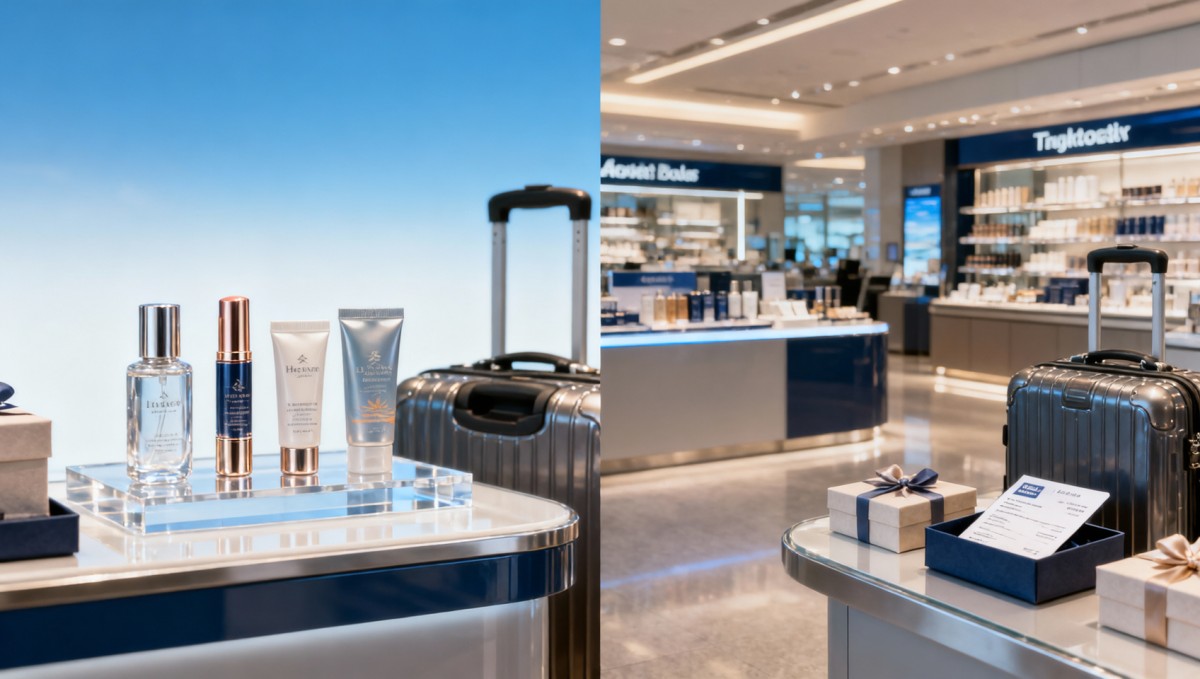
In tourism service ecosystems, skincare is no longer limited to traditional beauty counters. It appears in hotel welcome kits, spa retail shelves, travel-size convenience packs, cruise cabins, museum gift stores, airport kiosks, and seasonal destination promotions. That means a single product may pass through 4 to 7 commercial checkpoints: supplier audit, sample approval, packaging review, import review, merchandising review, channel listing, and end-user complaint handling.
Because travel service channels operate on compressed launch windows, often between 30 and 90 days for seasonal programs, procurement teams look for fast trust signals. “FDA certified” sounds reassuring, especially to non-technical stakeholders. However, in many cases, the phrase is used loosely in marketing rather than as a precise legal classification. That creates confusion between registration, facility compliance, testing, and true certification.
The issue becomes more serious in cross-border tourism retail, where multilingual packaging and mixed destination requirements increase the risk of overclaiming. A product designed for a beach resort in Southeast Asia may later be redistributed to airport retail in North America or Europe. If the original label language is inaccurate, the commercial cost can include relabeling, delayed stocking, or unsellable inventory.
For operators and buyers in tourism service environments, the safest approach is to treat “FDA certified” as a phrase that requires verification, not acceptance. Teams should ask what exactly is certified, by whom, for which market, and for what product category. A compliant sourcing file should typically include 5 to 8 core documents, not one claim on a carton.
Where the phrase appears in tourism channels
Skincare compliance questions commonly arise in the following travel-related formats:
- Hotel and resort amenities, especially products below 100 ml for guest room use or retail upsell.
- Airline and rail amenity kits that bundle lip care, hand cream, facial mist, or wipes.
- Duty-free and airport retail packs designed for impulse purchase and multilingual labeling.
- Cruise and spa retail items that combine wellness positioning with cross-border sales exposure.
Common stakeholder concerns
Different roles evaluate the same claim differently. Technical teams focus on formula safety and documentation. Buyers focus on speed and risk. Finance reviews the exposure tied to returns or unsold stock. Distributors worry about channel acceptance. This is why a sourcing decision should not rely on a simplified claim without supporting evidence.
What “FDA Certified” Usually Means in Skincare—and What It Does Not Mean
In the United States, cosmetics are generally not approved by the FDA before they enter the market, with specific exceptions for certain categories and color additives. That means many skincare items sold in travel and tourism channels do not have an official FDA product certification in the way buyers may assume. A supplier using the phrase may be referring to facility registration, ingredient compliance, documentation readiness, or third-party testing performed to support market access.
This distinction matters. If a hotel operator or airport retailer interprets “FDA certified” as a formal government-issued product approval, the procurement record may be built on a false assumption. In a standard sourcing workflow, teams should separate at least 4 issues: product category, manufacturing site status, formulation restrictions, and label claim substantiation.
A useful internal rule is simple: if the supplier cannot state in 1 to 2 sentences what the claim refers to, the claim should not be accepted for listing or contract approval. This is especially important for tourism service companies that rely on reputation, guest trust, and repeat bookings. A compliance problem in an amenity line can quickly become a service quality problem.
The table below helps procurement and quality teams distinguish between acceptable compliance language and risky shorthand often seen in supplier materials.
The practical conclusion is that procurement teams should focus less on the phrase itself and more on document traceability. For tourism service operators, traceability reduces rework across multiple destinations, especially where a product may be sold in 2 or 3 countries within the same regional program.
A better documentation checklist
Minimum file set before supplier approval
- Full product specification sheet, including size, batch coding, shelf life, and storage conditions.
- Ingredient list and restricted substance review for the intended destination market.
- Microbiological and stability test reports, ideally covering 12 to 36 months depending on claim.
- Packaging artwork review showing mandatory warnings, volume declaration, and distributor or importer details.
- Factory audit summary or quality questionnaire covering GMP-related controls and complaint handling.
How Travel Service Buyers Should Evaluate Compliance Beyond a Single Label Claim
Tourism procurement differs from standard retail purchasing because the product experience is tied to the service experience. If a resort amenity leaks in transit, if a sunscreen claim creates regulatory issues at destination, or if a gift shop hand cream cannot pass distributor review, the operational burden falls on service staff. That is why compliance review should be built into sourcing from the first RFQ stage, not after sampling.
A strong review process usually works in 3 stages. Stage 1 is commercial screening: product category, target market, MOQ, lead time, and claim language. Stage 2 is technical review: formula data, testing, packaging compatibility, and transport stability. Stage 3 is launch readiness: labeling, shipping pack-out, complaint process, and replenishment planning. For most travel retail and amenity programs, this can be completed in 2 to 6 weeks depending on documentation quality.
One of the biggest mistakes is assuming CE, CPC, and skincare documentation operate the same way. They do not. CE is relevant to certain products under EU directives or regulations, CPC is used in child-related consumer product contexts, and skincare documentation follows a different compliance route depending on jurisdiction. Buyers managing mixed tourism assortments must avoid using one certification logic across unrelated categories.
For mixed travel merchandise programs, the compliance workflow should identify product type before document request. A baby travel accessory sold in a family resort store may need one set of evidence; a cosmetic toiletry item in the same store needs another. This category discipline reduces back-and-forth and helps procurement teams avoid 10 to 15 days of preventable delay per SKU.
Key evaluation dimensions for tourism buyers
The following comparison can be used by project managers, quality leaders, and distributors when screening new suppliers for hotels, airports, cruise channels, and destination retail programs.
This matrix shows that compliance is only one part of the sourcing equation. In tourism service, packaging durability, replenishment timing, and channel fit can be just as important as formula data. A compliant product that cannot survive destination logistics is still a weak commercial choice.
A 5-step sourcing workflow
- Define channel and destination market before sampling, including hotel use, airport sale, spa retail, or distributor resale.
- Request claim clarification in writing, especially for “FDA certified,” organic, hypoallergenic, or dermatologist-tested wording.
- Review test reports, shelf-life support, and packaging compatibility with travel handling conditions.
- Approve final artwork only after technical and commercial sign-off from at least 3 functions: procurement, quality, and legal or import review.
- Run a pilot order or limited rollout where possible, often 500 to 3,000 units for a new tourism channel.
Common Risks, Misunderstandings, and Cost Traps in Tourism-Focused Skincare Sourcing
The first risk is overreliance on supplier brochures. A polished catalog may compress complex compliance language into a few simplified phrases. For tourism buyers under launch pressure, this seems efficient, but it shifts verification work downstream. If the product later enters a stricter channel, such as duty-free or large hotel groups, the missing documentation becomes a bottleneck.
The second risk is category confusion. Some travel service companies source skincare alongside toys, baby accessories, wellness electronics, or sports recovery items for gift stores and resort retail. Each category has different compliance logic. Treating CE, CPC, and skincare claims as interchangeable can create misfiled documentation, incorrect packaging statements, and inaccurate supplier onboarding.
The third risk is underestimating relabeling costs. In cross-border tourism programs, a packaging correction may affect cartons, inserts, unit labels, barcodes, and customs files. A small wording issue can add 7 to 21 days and increase landed cost through repacking, warehouse handling, and missed promotional windows. For seasonal travel peaks, that cost can outweigh the original product margin.
The fourth risk is weak storage planning. Travel retail products may sit in mixed environments, including humid coastal destinations, air-conditioned airport backrooms, cruise storage areas, and hotel operations cupboards. If stability support only reflects ideal laboratory conditions, quality complaints can rise even when the formula itself is acceptable on paper.
Red flags during supplier assessment
- The supplier uses “FDA certified” but cannot provide the exact compliance basis within 24 to 48 hours.
- Test reports do not match the final pack size, formula version, or manufacturing site listed on commercial documents.
- Shelf-life claims exceed available stability support, for example a 36-month claim backed by limited short-cycle data.
- The product is intended for multiple tourism channels, but only one language version of artwork has been reviewed.
- MOQ is attractive, yet repeat lead times exceed 45 to 60 days during peak travel seasons.
How to reduce decision risk
Operational controls that work
A practical control is to build a one-page compliance summary for each SKU. This should capture product type, intended market, claim wording, key tests, shelf life, storage range, and packaging approval date. For tourism service groups handling 20 to 100 rotating SKUs, this document improves cross-functional visibility and speeds finance and project approval.
Another effective measure is tiered supplier approval. New suppliers can be limited to low-risk amenity items or pilot gift-shop volumes before entering premium airport or multi-country resort programs. This staged approach reduces exposure while preserving sourcing flexibility.
A Practical Buying Framework for Hotels, Resorts, Duty-Free, Cruise, and Destination Retail
For tourism service businesses, the right question is not “Is this skincare FDA certified?” but “Is this product commercially and legally ready for our target channel?” That shift helps teams evaluate usable evidence rather than marketing language. A strong buying framework should align compliance, guest experience, operating conditions, and replenishment economics.
Start by segmenting the use case into at least 4 channel types: guest-use amenities, premium resale, promotional gift bundles, and regulated travel retail. Each type has different tolerance for pack size, labeling complexity, and documentation depth. For example, a 30 ml hand cream in a hotel room and a 75 ml facial product sold in duty-free may require completely different review intensity despite both being skincare.
Next, score suppliers across commercial and operational dimensions. Price alone is a weak metric in tourism sourcing because the hidden cost of delays, repacking, spoilage, or channel rejection can be higher than a 5% to 8% unit saving. The most resilient suppliers are those that can explain claims clearly, support documentation promptly, and maintain repeat quality over multiple reorder cycles.
Finally, connect sourcing with service delivery. A product selected for tourism use must work not only in a warehouse or lab, but also in the hands of front-desk staff, housekeeping teams, spa attendants, retail clerks, and travelers. That means usability, leakage control, barcode readability, and multilingual clarity all matter during final approval.
Recommended supplier scorecard
The table below can be adapted by hotel groups, airport retailers, cruise operators, and destination distributors when comparing OEM or ODM skincare suppliers.
Used consistently, this scorecard helps teams compare suppliers on practical execution, not just brochure language. It is especially useful when multiple stakeholders share approval authority, including technical reviewers, commercial managers, quality leads, and financial approvers.
FAQ for tourism procurement teams
How should we handle a supplier that insists its skincare is FDA certified?
Ask the supplier to define the phrase in writing and provide the exact supporting document. If the response remains vague after 2 rounds of clarification, treat the claim as a marketing statement and continue evaluation based on actual compliance records, testing, and labeling readiness.
What lead time should we allow for compliance review in travel programs?
For a new supplier, allow 2 to 6 weeks depending on document completeness, artwork complexity, and destination market count. Multi-country tourism programs or kits with bundled items may require additional review time beyond the product itself.
Which teams should approve tourism skincare before launch?
At minimum, procurement, quality, and commercial operations should review the file. For cross-border channels, include legal, import, or distributor-side review as needed. In many cases, 4-function approval prevents late-stage corrections.
Is a lower MOQ always better for seasonal resort or airport programs?
Not always. Low MOQ can help testing, but if repeat orders require long lead times or unstable packaging sourcing, the total program risk increases. It is better to balance MOQ with supply continuity, especially for peak periods lasting 8 to 12 weeks.
For tourism service buyers, “FDA certified” should never be the final basis for selecting a skincare supplier. It is a signal to investigate, not a substitute for technical review. The smarter path is to verify what the phrase actually covers, align compliance with the target travel channel, and evaluate suppliers on documentation quality, packaging performance, and operational reliability.
Global Consumer Sourcing supports procurement teams, distributors, brand owners, and project decision-makers with clear market intelligence across beauty, baby, gifts, sports, and adjacent consumer categories. If you are building a travel retail assortment, hotel amenity line, airport program, or destination gift offer, now is the time to standardize your compliance review and supplier scorecard.
Contact us to discuss your sourcing scenario, request a tailored evaluation framework, or explore more compliance-focused supply chain solutions for global tourism and travel retail channels.
Related Intelligence
 Camping & WaterApr 18, 2026CPSC Launches New TPU Camping Bladder ChecksCPSC launches TPU camping bladder checks: Critical −20°C performance enforcement for exporters, suppliers & OEMs. Act now to avoid U.S. customs delays.
 Beauty DevicesApr 18, 2026Global Li-ion Battery Recycling Rate Hits 62.3%Li-ion battery recycling rate hits 62.3%—cutting BOM costs for beauty & smart pet device batteries. Discover how LFP cathode savings boost margins and compliance readiness.
 Beauty DevicesApr 18, 2026Canton Fair Phase II Preview: Beauty Device Inquiries +41% YoYBeauty device inquiries surge +41% YoY ahead of Canton Fair Phase II — Middle East buyers prioritize RF safety & energy efficiency certification.
 Smart Pet DevicesApr 18, 2026Vietnam Requires ISO 13485 + Vietnamese Manual for Smart Pet CollarsISO 13485 + Vietnamese manual now mandatory for smart pet collars entering Vietnam from May 2026—avoid customs delays & ensure compliance now.
 Infant Feeding & CareApr 18, 2026JETRO 2026 Spring Guide: Antibacterial Silicone & Traceability Now Dual Requirements for Infant Feeding Products in JapanAntibacterial silicone & traceability are now dual must-haves for Japan’s infant feeding products — per JETRO’s 2026 Spring Guide. Act now to secure certified supply and avoid Q2 delays.
 Corporate & Seasonal GiftsApr 18, 2026TÜV Rheinland Launches Green Gift Packaging CertificationGreen Gift Packaging certification by TÜV Rheinland unlocks EU retail access, 18% price premiums & 'Eco-Preferred' labeling — act now to meet mandatory tender requirements.
 STEM & Educational ToysApr 18, 2026SASO Launches Fast-Track for STEM Toy EMC Pre-ScanSASO Launches Fast-Track for STEM Toy EMC Pre-Scan: AI voice modules must complete EMC pre-scan within 48h — slash certification to 5 days. Act now!
 Camping & WaterApr 18, 2026RCEP Cuts Tariffs on China-Made Camping Water Bags for Vietnam/IndonesiaRCEP cuts tariffs on China-made camping water bags for Vietnam/Indonesia—unlock cost savings & navigate new TPU cold-resistance compliance demands now.
 Cosmetics & PkgApr 18, 2026FDA VCRP Rule for Cosmetic Packaging Effective Apr 16, 2026FDA VCRP Rule for Cosmetic Packaging takes effect Apr 16, 2026 — register PET bottles, tubes & pumps separately. Avoid U.S. customs delays!
 Beauty DevicesApr 18, 2026EU CBAM Carbon Tariff Takes Effect Apr 1, 2026: Impacts on Beauty Devices & Smart Nursery MonitorsEU CBAM carbon tariff starts Apr 1, 2026 — impacts beauty devices & smart nursery monitors using aluminum, lithium-ion batteries. Act now to avoid 3.2–5.8% cost hikes.
 Infant Feeding & CareApr 17, 2026Canton Fair Phase II 2026 Focuses on Health ConsumptionCanton Fair Phase II 2026 highlights surging global demand for Health Consumption—Infant Feeding & Care, Beauty Devices, and Camping & Water lead buyer pre-registrations.
 Smart Pet DevicesApr 17, 2026JIS T 0901:2026 Enforces 3m Drop & Salt Spray for Pet Smart CollarsJIS T 0901:2026 mandates 3m drop & salt spray tests for pet smart collars — critical for Japan market access. Learn compliance steps, impact on exporters, and urgent actions.
 Nursery Furniture & MonitorsApr 17, 2026Vietnam Requires ISO 13485 for Imported Used Baby Beds from July 2026ISO 13485 required for imported used baby beds in Vietnam from July 2026 — critical for exporters, OEMs & retailers. Act now to ensure compliance and market access.