Wholesale Shaving Razors: What to Compare Before Placing a Large Order
For sourcing teams evaluating wholesale shaving razors, a large order should never be decided by unit price alone. Blade quality, skin-safety compliance, packaging flexibility, private-label options, and supplier reliability all shape long-term profitability and brand trust. This guide highlights the key factors business evaluators should compare before committing, helping buyers reduce sourcing risk and make smarter, more scalable procurement decisions.
Why a checklist-based review is the safest way to assess wholesale shaving razors
For business evaluators, wholesale shaving razors are not a simple commodity purchase. They sit at the intersection of personal care performance, consumer safety, repeat purchase behavior, and retail positioning. A razor that looks competitive on paper can still fail in real travel retail, hotel amenity programs, airport duty-free channels, online travel kits, or destination convenience supply if shave comfort, corrosion resistance, or packaging durability falls below expectation.
That is why a checklist matters. It forces the buying team to compare wholesale shaving razors across measurable criteria instead of relying on price sheets or sales claims. In travel service-related procurement environments, where guest experience, portability, and inventory efficiency are all important, a structured review helps prevent over-ordering the wrong specification, underestimating compliance risk, or selecting a supplier that cannot support seasonal demand spikes.
Start with these priority checks before requesting final quotes
Before comparing full proposals, evaluators should confirm the most decision-critical points first. This saves time and removes non-viable suppliers early.
- Confirm intended use case: disposable hotel amenity razor, retail travel razor, premium multi-blade cartridge model, or private-label travel kit component.
- Verify blade material and coating: stainless steel grade, chromium or PTFE coating, anti-rust treatment, and expected sharpness retention.
- Check safety and regulatory documentation: skin-contact material declarations, factory audits, packaging safety, and destination-market compliance files.
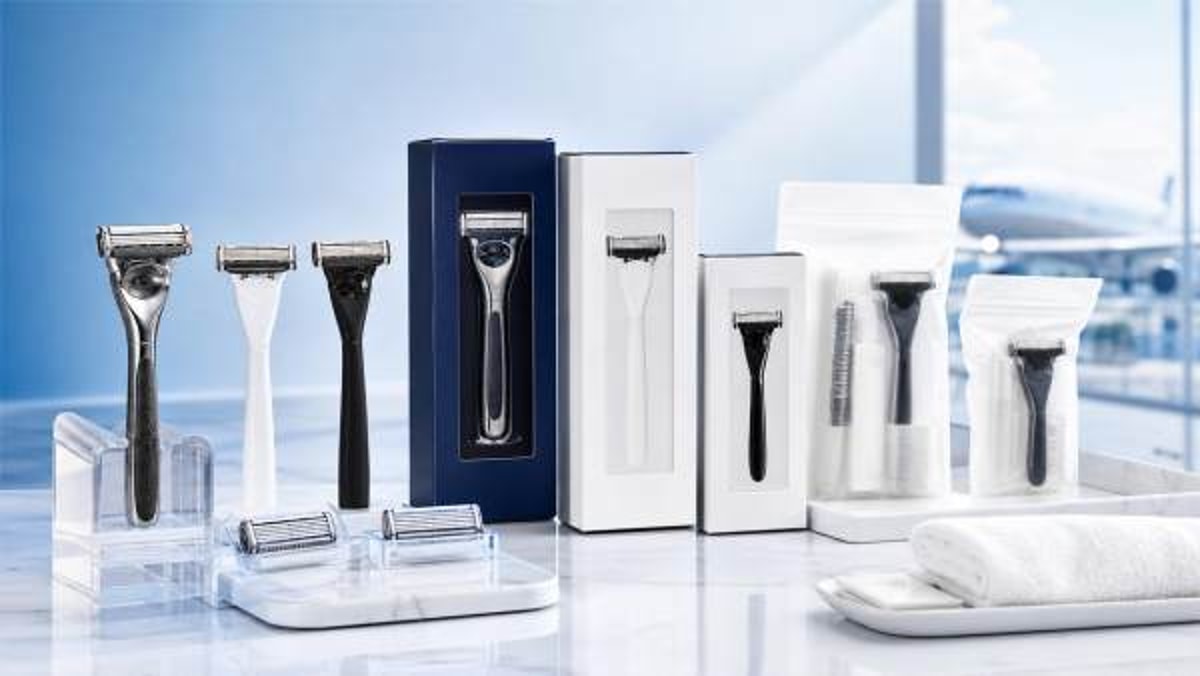
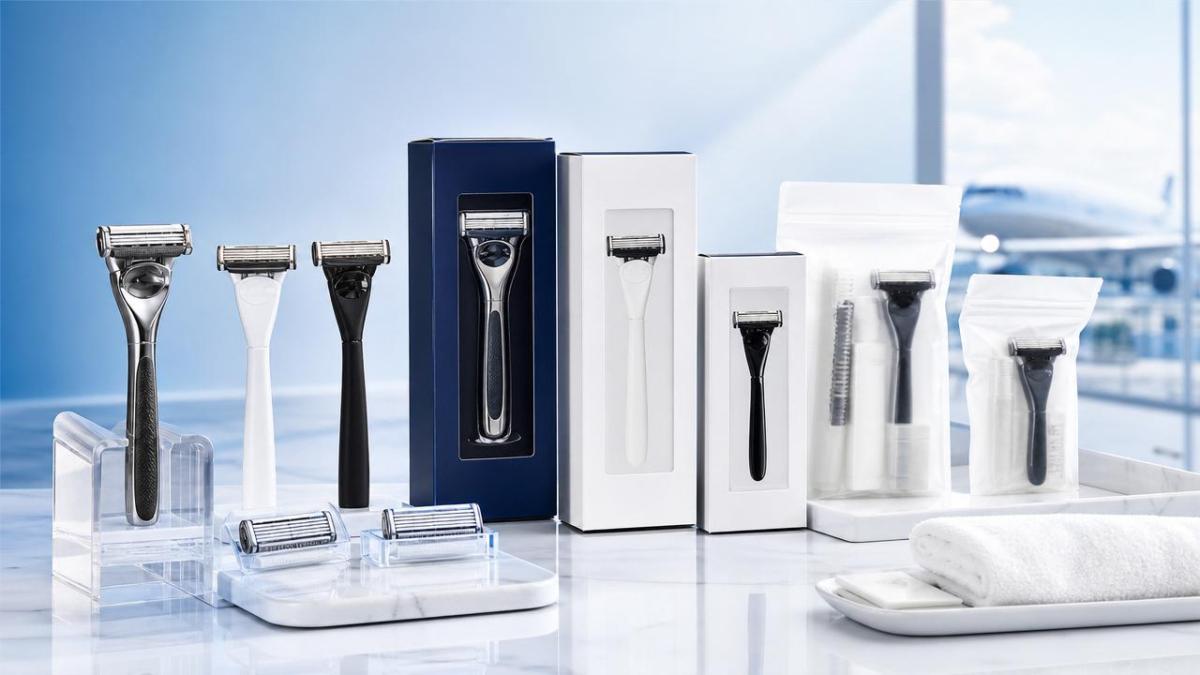
- Review packaging adaptability: single sachet, blister card, box set, hotel pouch, airport retail pack, multilingual labeling, and barcode support.
- Assess supplier production stability: monthly capacity, lead time consistency, defect handling, and peak-season fulfillment ability.
- Clarify branding options: logo printing, handle color customization, custom molds, packaging artwork support, and low-MOQ trial runs.
If a supplier cannot provide clear answers to these six areas, the conversation on wholesale shaving razors is not yet mature enough for a large order commitment.
Core comparison checklist: what business evaluators should measure side by side
A useful buying decision usually comes from side-by-side scoring. The table below can help sourcing teams compare wholesale shaving razors in a disciplined way, especially when multiple factories appear similar on unit cost.
For wholesale shaving razors, the best value often comes from the supplier that performs consistently across all six areas, not the factory that simply offers the cheapest base quote.
How to judge blade quality beyond the sample appearance
Many sourcing teams make the mistake of approving wholesale shaving razors after a visual inspection only. A polished sample can still hide production inconsistency. Evaluators should request both lab-style specifications and use-case testing feedback.
Ask for these blade-related data points
- Blade steel origin and grade, especially if corrosion resistance is a selling point.
- Coating type and whether the supplier can verify friction-reduction treatment.
- Edge uniformity tolerances across production batches.
- In-house or third-party sharpness and durability testing methods.
- Storage performance in humid conditions, which matters for travel packs and hotel bathrooms.
If the razor is intended for travel service channels, humidity resistance deserves special attention. Products stored in coastal resorts, cruise-related amenity inventories, or bathroom environments can degrade faster than standard dry retail stock. This makes corrosion resistance a practical, not theoretical, selection criterion.
Packaging and channel fit: the hidden driver of profitability
In wholesale shaving razors, packaging often changes the economics more than buyers expect. The right blade can underperform commercially if the pack format does not match the selling environment. For travel service buyers, channel fit should be reviewed as carefully as product quality.
Different travel-related scenarios require different packaging logic
For hotel amenities, the priority is hygiene, compactness, and cost-per-occupied-room. For airport retail or travel convenience stores, visual shelf impact, barcode compliance, and multilingual claims matter more. For branded travel kits or tour welcome packs, packaging should support bundle assembly, light weight, and easy storage. Evaluators should therefore ask suppliers whether they can adapt pack count, material, insert cards, and print design without creating long delays or excessive tooling costs.
A useful question is: can this supplier deliver the same wholesale shaving razors in at least three packaging formats with stable quality? The answer reveals whether the factory is truly suitable for cross-channel growth.
Private label and OEM/ODM checks that should not be skipped
Private-label opportunities can raise margins, but only if execution is disciplined. When comparing wholesale shaving razors for OEM or ODM projects, business evaluators should look beyond logo printing and ask deeper questions about development capability.
- Can the supplier modify handle shape, blade count, or lubricating strip formula, or are they only relabeling a standard item?
- Who owns packaging artwork files, molds, and regulatory documents after project launch?
- What is the real MOQ for customized wholesale shaving razors after sampling, not just the advertised MOQ?
- How many approval rounds are included before mass production begins?
- Can the supplier support line extensions later, such as women’s razors, travel shave kits, or hospitality amenity bundles?
These questions help separate strategic manufacturing partners from factories that are only suitable for one-off spot buys.
Compliance, documentation, and audit readiness
For personal care products with skin contact, documentation matters as much as design. Evaluators sourcing wholesale shaving razors should prepare a compliance file review before final PO approval. The exact requirements depend on the destination market and retail channel, but several checks are broadly relevant.
- Material safety declarations for plastics, metals, lubricating strips, and colorants.
- Factory quality management evidence, including incoming material inspection and final AQL procedures.
- Packaging label review for country-of-origin, warnings, usage instructions, and barcode accuracy.
- Social or ethical audit readiness if supplying major travel retail groups, hotel chains, or global marketplaces.
- Sustainability claims support if the supplier promotes recycled materials or reduced-plastic packaging.
A supplier that struggles to produce organized compliance records will likely also struggle with larger operational demands. For business evaluators, documentation quality is often a proxy for management discipline.
Common oversights that increase risk in large razor orders
Even experienced teams can miss small details that become expensive at scale. The most common oversight in wholesale shaving razors is assuming all samples represent future batch quality. Another is neglecting freight and packaging efficiency; a low-cost unit may still create higher landed cost if cartons are bulky or poorly optimized.
Other overlooked risks include weak rust resistance during long transit, limited spare capacity during tourism peak seasons, unclear responsibility for defective packaging, and poor compatibility with bundled travel service assortments. In hospitality or travel programs, customer expectations are immediate and practical: the razor must feel safe, clean, and effective on first use. That makes user experience failures more damaging than in some other low-ticket categories.
A practical execution plan before placing a large order
To move from evaluation to action, sourcing teams should build a simple decision workflow. First, define the target channel and price architecture. Second, shortlist suppliers that can support both product and packaging fit. Third, run sample testing under realistic travel or hospitality conditions. Fourth, verify compliance files and QC standards. Fifth, negotiate commercial terms only after technical suitability is confirmed.
For wholesale shaving razors, it is also wise to begin with a pilot volume or split order when entering a new supplier relationship. This allows the buyer to evaluate batch consistency, on-time shipment, claims handling, and final user response before scaling to a long-term annual contract.
Final buying guidance for business evaluators
The strongest sourcing decision is rarely the one with the lowest quoted price. In wholesale shaving razors, the better choice is the supplier that proves stable blade performance, channel-appropriate packaging, solid compliance discipline, scalable OEM support, and dependable delivery. For travel service-related procurement, those factors influence both guest satisfaction and operating efficiency.
If your team is preparing to compare wholesale shaving razors in depth, prioritize discussion around target market requirements, expected order volume, packaging format, lead time tolerance, compliance needs, and private-label goals. Those six topics will make supplier conversations far more productive and help you determine whether a factory is suitable for short-term purchasing only or for long-term strategic sourcing.
Related Intelligence
 Cosmetics & PkgMay 02, 2026OEM Cosmetics Manufacturer: 7 Questions to Ask Before Product Development StartsOEM cosmetics manufacturer selection starts with the right questions. Learn 7 smart checks to reduce compliance, cost, and launch risks before product development begins.
 Beauty DevicesMay 02, 2026How to Evaluate a Gua Sha Tools Manufacturer for Consistent QualityGua sha tools manufacturer selection starts with quality control. Learn how to assess materials, certifications, production consistency, and supply reliability with confidence.
 Beauty DevicesMay 02, 2026Body Contouring Machine: When the Higher Price Is Actually JustifiedBody contouring machine buyers in travel services: learn when a higher price is justified through ROI, compliance, uptime, and premium package revenue potential.
 Fitness EquipmentMay 02, 2026Power Rack Manufacturer: Safety Details That Matter More Than FinishPower rack manufacturer selection starts with safety, not surface finish. Discover a practical checklist for QC teams to assess welds, load testing, stability, and compliance before sourcing.
 Fitness EquipmentMay 02, 2026Olympic Barbell Manufacturer Checklist for Strength Equipment SourcingOlympic barbell manufacturer checklist for travel service buyers: compare quality, compliance, OEM capability, and delivery reliability to source safer, longer-lasting strength equipment.
 Skincare OEMMay 02, 2026Whitening Toothpaste Private Label: What Customers Notice FirstWhitening toothpaste private label buyers in travel retail notice packaging, whitening claims, and daily-use safety first. See what drives trust, faster conversions, and smarter sourcing.
 Skincare OEMMay 02, 2026Wholesale Body Scrub: Texture, Fragrance, and Packaging Choices That SellWholesale body scrub buying guide for travel retail: compare textures, fragrances, and packaging choices that boost shelf appeal, compliance readiness, and faster sales.
 Beauty DevicesMay 02, 2026Jade Roller Wholesale: How to Spot Quality Issues Before They Reach CustomersJade roller wholesale quality issues can lead to costly returns. Learn how to spot material flaws, weak assembly, and compliance risks before products reach customers.
 Beauty DevicesMay 02, 2026What Makes a Water Flosser Manufacturer Reliable for Ongoing OrdersWater flosser manufacturer selection matters for travel retail success. Learn how to assess quality, compliance, lead times, and OEM support for reliable ongoing orders.
 Fitness EquipmentMay 02, 2026Commercial Treadmills Wholesale: Cost Drivers You Need to Understand FirstCommercial treadmills wholesale cost drivers explained for hotels, resorts, and travel brands. Compare pricing, compliance, shipping, and service risks before you buy.
 Fitness EquipmentMay 02, 2026Resistance Bands OEM: Small Design Choices That Improve Daily UseResistance bands OEM tips for travel service brands: discover small design choices that improve comfort, safety, storage, and durability for better guest use and operator efficiency.
 Fitness EquipmentMay 02, 2026Wholesale Yoga Mats: How to Build a Better Product Mix for RetailWholesale yoga mats buying guide for travel retail: learn how to build a profitable product mix for resorts, hotels, airports, and retreat channels with smarter sourcing and lower inventory risk.
 Cosmetics & PkgMay 02, 2026Wholesale Cosmetic Sponges: Material Differences That Change User ExperienceWholesale cosmetic sponges explained: discover how latex-free, hydrophilic, and microfiber materials affect blending, hygiene, and travel convenience for a smarter beauty buy.