SASO ISO 8124-1:2026 Enforced for STEM Toys in Saudi Arabia
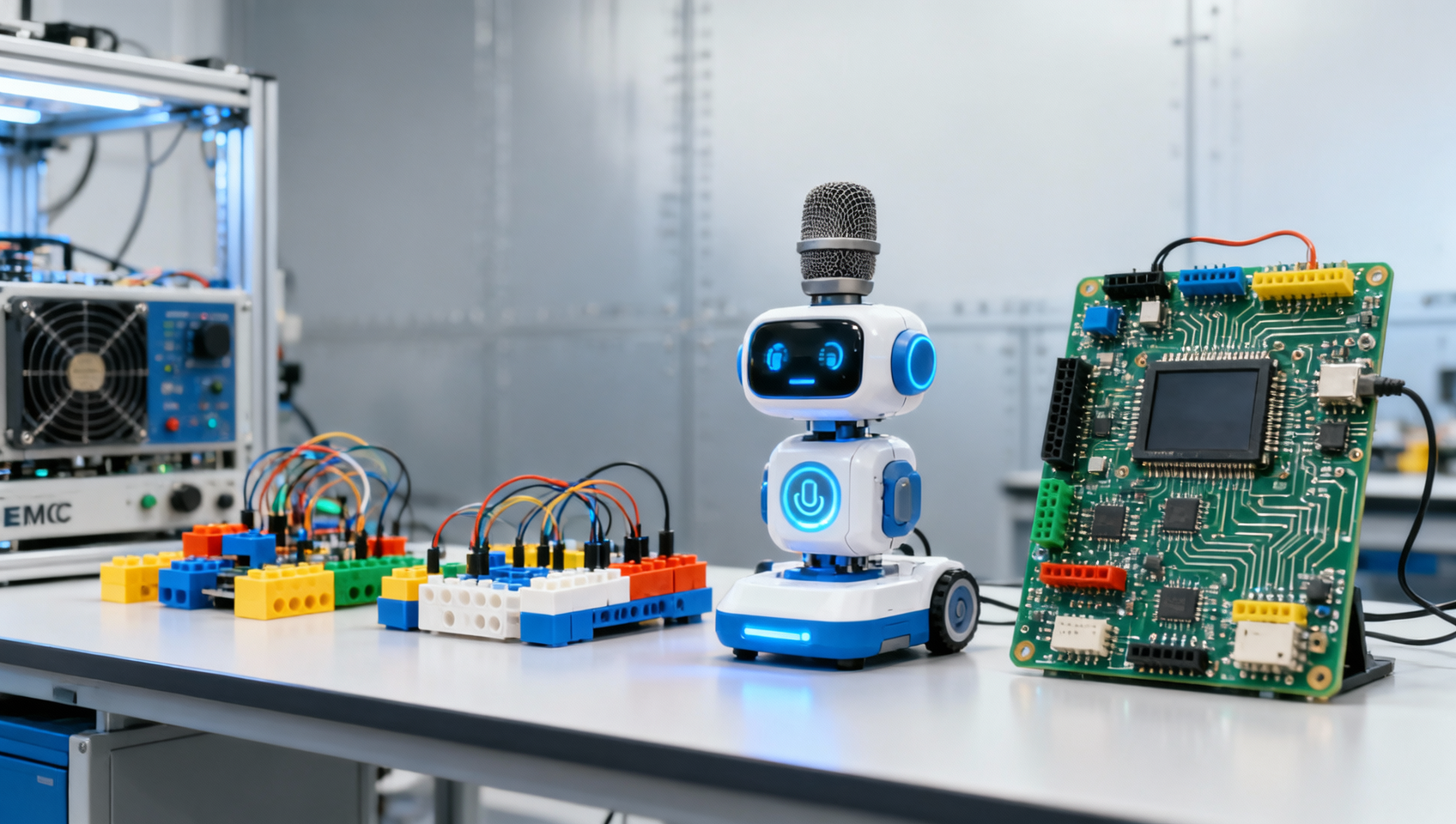
Saudi Arabia’s Standards, Metrology and Quality Organization (SASO) enforced the updated toy safety standard SASO ISO 8124-1:2026 on April 15, 2026. This revision introduces mandatory electromagnetic compatibility (EMC) testing — specifically IEC 61000-4-3 radiation immunity — for AI voice–enabled STEM educational toys. Exporters of such products, particularly from China, must now secure certification from SASO-recognized laboratories before shipment to obtain the SABER customs clearance certificate. The change directly impacts manufacturers, exporters, and compliance service providers engaged in the STEM toy supply chain to Saudi Arabia.
Event Overview
On April 15, 2026, SASO officially mandated the implementation of SASO ISO 8124-1:2026. This edition explicitly extends EMC testing requirements to AI voice–interactive STEM educational toys, requiring compliance with IEC 61000-4-3 radiation immunity testing. Certification must be conducted by SASO-accredited laboratories — including SGS and TÜV Rheinland’s Saudi branches — and is a prerequisite for issuing the SABER certificate required for customs clearance into Saudi Arabia.
Industries Affected by Segment
Direct Exporters (China-based STEM & Educational Toy Companies)
These companies are directly affected because their products now require additional pre-shipment EMC validation. Failure to complete certified testing means inability to obtain SABER clearance, resulting in shipment rejection or delays at Saudi ports.
Contract Manufacturers & OEM/ODM Factories
Factories producing AI voice–integrated STEM toys for export brands face revised technical specifications in production control plans. They must verify that embedded voice modules (e.g., microphones, speakers, wireless transceivers) meet radiation immunity thresholds prior to final assembly — adding a new verification step to quality assurance workflows.
Compliance & Certification Service Providers
Third-party labs and consultants supporting Saudi market access must now offer IEC 61000-4-3 testing capability — or partner with SASO-recognized entities — to remain operationally relevant for clients shipping AI-enabled educational toys.
Distribution & Import Agents in KSA
Local importers and distributors handling STEM toy portfolios must validate upstream certification documentation before accepting goods. Incomplete or non-SASO-recognized test reports will invalidate SABER application submissions, increasing administrative risk and potential inventory hold-ups.
Key Focus Areas and Recommended Actions
Confirm laboratory accreditation status before scheduling tests
Verify that the chosen lab (e.g., SGS, TÜV Rheinland Saudi branch) holds current SASO recognition for IEC 61000-4-3 testing — not just general EMC accreditation. SASO periodically updates its list of approved bodies; relying on outdated status may invalidate results.
Prioritize product categorization and technical scoping
Identify which SKUs contain AI voice interaction functionality (e.g., wake-word detection, cloud-connected speech synthesis). Only those models fall under the new requirement — basic electronic or mechanical STEM kits without voice interfaces remain exempt under this clause.
Align internal timelines with SABER processing windows
Allow minimum 10–14 business days between test completion and SABER submission, as SASO’s online platform requires manual verification of EMC reports. Rushed submissions without full documentation often trigger rework cycles.
Review supplier declarations for voice module components
Request EMC immunity data sheets from suppliers of voice ICs, Bluetooth/Wi-Fi modules, and audio amplifiers. Pre-validated component-level performance reduces system-level retesting risk and supports faster root-cause analysis if failures occur.
Editorial Perspective / Industry Observation
From an industry perspective, SASO ISO 8124-1:2026 signals a structural shift — not merely a technical update — toward regulating intelligent functions within children’s products. It reflects growing regional scrutiny of AI-integrated consumer goods, especially where human interaction (e.g., voice) intersects with safety-critical environments like early education. Analysis来看, this is less about harmonizing with global standards (as IEC 61000-4-3 is widely used) and more about establishing enforceable local accountability for AI behavior in physical products. Observation来看, Saudi Arabia is positioning itself as an early adopter of AI-aware product regulation in the GCC, potentially influencing neighboring markets’ future revisions. Current more appropriate understanding is that this is a binding regulatory outcome — not a draft proposal — with immediate operational consequences for shipments after April 15, 2026.
This update underscores how rapidly evolving technology features — even when marketed as educational enhancements — can trigger new conformity obligations in regulated markets. For stakeholders, it highlights the need to treat firmware, connectivity, and voice logic not as ‘value-add extras’, but as integral, certifiable safety subsystems.
Information Source: Official SASO announcement dated April 15, 2026, referencing SASO ISO 8124-1:2026 enforcement notice and associated SABER guidance documents. Note: Future amendments to the scope or transitional arrangements — if any — remain pending official confirmation and are under ongoing monitoring.
Related Intelligence
 Infant Feeding & CareApr 17, 2026Canton Fair Phase II 2026 Focuses on Health ConsumptionCanton Fair Phase II 2026 highlights surging global demand for Health Consumption—Infant Feeding & Care, Beauty Devices, and Camping & Water lead buyer pre-registrations.
 Smart Pet DevicesApr 17, 2026JIS T 0901:2026 Enforces 3m Drop & Salt Spray for Pet Smart CollarsJIS T 0901:2026 mandates 3m drop & salt spray tests for pet smart collars — critical for Japan market access. Learn compliance steps, impact on exporters, and urgent actions.
 Nursery Furniture & MonitorsApr 17, 2026Vietnam Requires ISO 13485 for Imported Used Baby Beds from July 2026ISO 13485 required for imported used baby beds in Vietnam from July 2026 — critical for exporters, OEMs & retailers. Act now to ensure compliance and market access.
 Corporate & Seasonal GiftsApr 17, 2026TÜV Rheinland Launches Green Gift Packaging Certification in ShenzhenGreen Gift Packaging certification by TÜV Rheinland in Shenzhen unlocks 18% price premiums & Amazon EU visibility — act now to meet EU retail sustainability demands.
 Camping & WaterApr 17, 2026CPSC Targets Chinese Camping Water Bladders for TPU Cold-Resistance ChecksCPSC targets Chinese camping water bladders for TPU cold-resistance checks — verify ASTM F2332-23 compliance now to avoid recalls, delays & reputational risk.
 Beauty DevicesApr 17, 2026Global Li-ion Battery Recycling Rate Hits 62.3%Li-ion battery recycling rate hits 62.3% — discover how beauty & pet-tech brands cut BOM costs by 9% and shorten lead times to 6 weeks with regenerated cathode materials.
 STEM & Educational ToysApr 17, 2026SASO ISO 8124-1:2026 Enforced for STEM Toys in Saudi ArabiaSASO ISO 8124-1:2026 now mandates IEC 61000-4-3 EMC testing for AI voice–enabled STEM toys entering Saudi Arabia — secure SABER clearance fast with SASO-recognized labs.
 Fitness EquipmentApr 17, 2026RCEP Cuts China Fitness Equipment Tariffs to 2.8% in Vietnam, Thailand, MalaysiaRCEP cuts China fitness equipment tariffs to 2.8% in Vietnam, Thailand & Malaysia—boosting margins and slashing lead times to 8–10 weeks. Act now!
 Skincare OEMApr 17, 2026FDA VCRP Electronic System Mandatory from April 16, 2026FDA VCRP electronic system becomes mandatory April 16, 2026 — register cosmetics & packaging now to ensure U.S. market access, Amazon listing, and FDA compliance.
 Baby Gear & StrollersApr 17, 2026EU Ban on PFAS in Children's Products Takes Effect Apr 17, 2026EU PFAS ban on children's products takes effect Apr 17, 2026 — impact on strollers, pacifiers, feeding gear & infant monitors. Act now to ensure compliance.
 Infant Feeding & CareApr 16, 2026Wholesale baby hooded towels: shrinkage variance between cotton and bamboo blendsWholesale baby hooded towels: Discover critical shrinkage variance between cotton & bamboo blends—key for diaper changing pad wholesale, bamboo baby washcloths, custom knit baby blankets & more.
 Infant Feeding & CareApr 16, 2026Bamboo baby washcloths: formaldehyde residue risk in low-cost suppliersBamboo baby washcloths safety alert! Avoid formaldehyde risks in low-cost suppliers. Source compliant diaper changing pad wholesale, baby safety gates wholesale, custom knit baby blankets & more—trusted by global OEMs.
 Infant Feeding & CareApr 16, 2026Baby grooming kit OEM: nickel content in stainless steel tools — does it matter?Baby grooming kit OEM, diaper changing pad wholesale & baby safety gates wholesale — ensure nickel-safe stainless steel for infant skin. Get compliant, certified suppliers now.