Do corner protectors for babies really stay on every surface?

When sourcing child-safety products for travel retail, one practical question matters: do corner protectors for babies really stay on every surface? The short answer is no—not on every surface, and not with the same reliability. Performance depends mainly on the surface material, the adhesive system, installation conditions, and whether the product has been tested under realistic use scenarios. For buyers, distributors, and quality teams, this is not a minor detail. It directly affects product safety, return rates, customer satisfaction, and brand trust, much like cabinet locks baby proofing products, baby safety gates wholesale programs, and other nursery essentials where installation reliability matters as much as design.
For commercial buyers and technical evaluators, the real task is not to ask whether a corner protector “works,” but under what conditions it works consistently. That distinction is what separates a marketable baby safety accessory from a product likely to trigger complaints, detachment issues, and compliance concerns.
Do baby corner protectors stay on every surface? Here is the practical answer
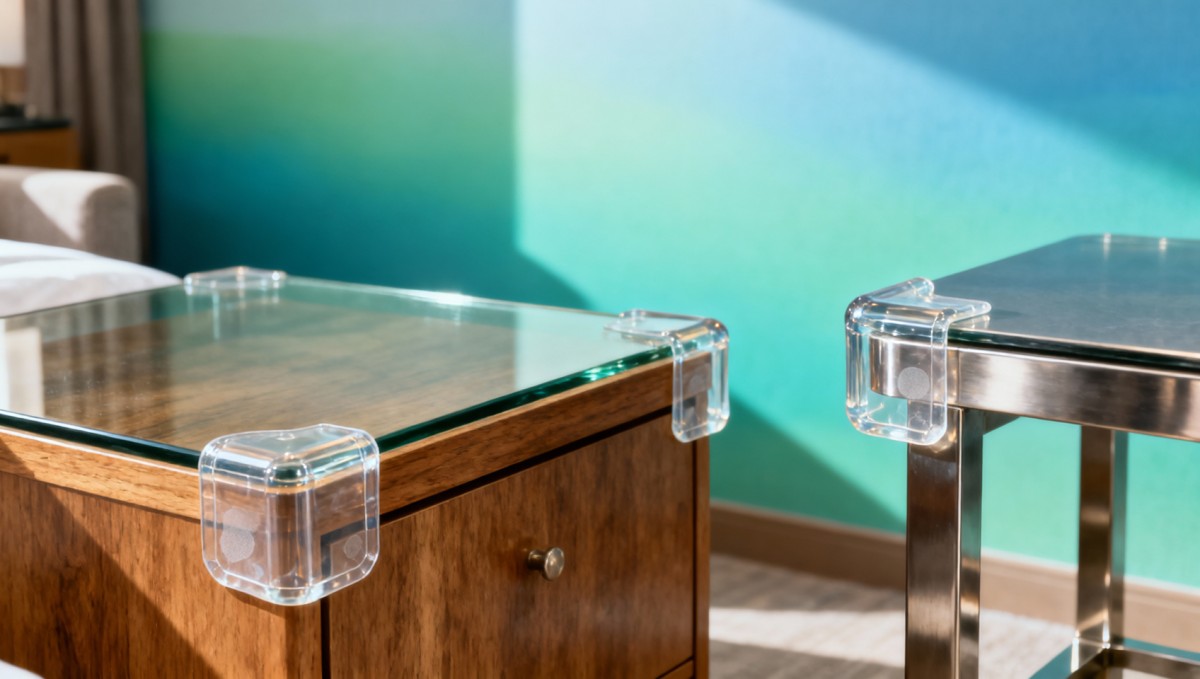
In real-world use, baby corner protectors do not adhere equally well to every surface. They usually perform best on clean, smooth, sealed, non-porous materials such as:
- Finished wood with smooth coating
- Laminated furniture panels
- Metal surfaces
- Glass tables
- Some sealed plastic surfaces
They are less reliable on:
- Textured wood grain
- Rough or matte-painted surfaces
- Unsealed wood
- Stone with porous finish
- Dusty, oily, or humid surfaces
- Low-surface-energy plastics
This matters because many end users assume “universal fit” means universal adhesion. In practice, it rarely does. For sourcing teams, any product claiming to stay on every surface should be reviewed carefully. Such claims often create avoidable legal and commercial risk unless supported by test data and clear instructions.
What actually determines whether corner protectors stay attached
The biggest factor is the match between adhesive type and substrate surface. Most baby corner protectors use pre-applied adhesive pads, often acrylic foam tape or similar pressure-sensitive adhesive systems. Better products are not defined only by softer foam or thicker silicone; they are defined by whether the adhesive has the right bond strength, aging performance, and compatibility with common furniture materials.
Key performance variables include:
- Surface energy: Some surfaces naturally allow stronger bonding than others.
- Texture: Rougher surfaces reduce actual contact area.
- Cleanliness: Oil, wax, polish, and dust can significantly weaken adhesion.
- Temperature and humidity: Installation in cold or damp conditions can reduce initial tack.
- Cure time: Many adhesives need hours before reaching stable strength.
- Edge geometry: Sharp, rounded, or irregular corners affect how well the protector sits and bonds.
For procurement and QA teams, this means product evaluation should never focus only on the protector material itself. Adhesive performance is often the deciding factor in market success.
Which surfaces are most likely to create complaints or returns
If the goal is to reduce returns in retail or distribution channels, focus on the surfaces where failure is most common. These include painted furniture with anti-stick finishes, handcrafted wooden furniture with uneven varnish, and decorative surfaces treated with polish or wax.
Common complaint triggers include:
- The protector falls off within 24 to 72 hours
- The protector detaches when touched by a child
- The adhesive leaves residue or damages furniture finish
- The protector appears secure at first but loosens over time
- The product works on one table but fails on another, causing “inconsistent quality” complaints
For distributors and brand owners, these complaints are especially costly because the perceived failure is usually attributed to the product, not the surface condition. That is why packaging, product claims, and testing protocols need to reflect real installation limits clearly.
How buyers and technical teams should evaluate product reliability before sourcing
If you are selecting baby corner protectors for wholesale, retail, or private-label programs, the right question is: what evidence shows that the product stays attached on the surfaces our customers actually use?
A practical evaluation framework should include:
- Substrate testing: Test on glass, sealed wood, laminate, painted MDF, metal, and textured furniture surfaces.
- Peel and shear performance: Review whether the adhesive resists both pulling force and side pressure.
- Aging tests: Ask for heat, humidity, and time-based adhesion performance data.
- User installation simulation: Check performance after realistic cleaning and hand-applied installation, not just lab-perfect conditions.
- Removal assessment: Evaluate whether removal damages furniture or leaves adhesive residue.
- Child-safety compliance review: Confirm that the full product meets relevant chemical and mechanical safety expectations for target markets.
For sourcing managers, this is also where supplier maturity becomes visible. Strong suppliers can explain why their adhesive choice fits specific substrates, provide internal or third-party test results, and recommend claim language that aligns with actual performance.
What compliance and safety teams should not overlook
In baby and maternity product sourcing, adhesion is not just a convenience issue. If a corner protector detaches too easily, it may become a separate small part hazard or fail to deliver its intended protective function. That creates both safety and reputational risk.
Quality and compliance teams should review:
- Material safety documentation for foam, silicone, PVC, TPE, or other protector materials
- Adhesive chemical compliance for destination markets
- Warnings and instructions for proper installation and cure time
- Age grading and misuse risk
- Packaging claims that may overstate universal adhesion
- Applicable certifications or test references for the target channel
For cross-border retail programs, claim control is especially important. Saying “works on all surfaces” may be commercially attractive, but it is often a poor risk decision unless validated thoroughly. A more defensible position is to specify recommended surfaces and installation conditions.
How better product design can improve surface compatibility
Not all improvement comes from stronger glue. Better-performing corner protectors often combine several design decisions:
- Adhesive pads selected for multiple common substrates
- Base geometry that increases contact area
- Flexible material that conforms better to slight surface irregularities
- Clear installation instructions with cleaning steps and wait times
- Optional extra adhesive pads for replacement or reinstallation
In some cases, suppliers can also offer different adhesive configurations for different markets or furniture types. This can be valuable for private-label buyers who want to reduce customer complaints without redesigning the visible product.
What this means for travel retail, sourcing strategy, and commercial decisions
For travel retail and broader consumer sourcing, the answer to “do corner protectors for babies really stay on every surface?” should guide listing decisions, not just content messaging. These products are often bought by parents who need a fast, reliable safety fix in temporary or changing environments. That means ease of application, clarity of instructions, and predictable adhesion matter even more than in standard home-retail settings.
Commercially, the most successful products usually share three strengths:
- They perform well on the most common real-life furniture surfaces
- They communicate installation limits honestly
- They are backed by safety and quality documentation suitable for retailer review
For enterprise buyers, this supports better margin protection as well. A slightly higher unit cost can be justified if it reduces refund rates, negative reviews, and post-sale support burdens.
Final takeaway
Baby corner protectors do not reliably stay on every surface, and buyers should not expect universal performance from any single adhesive setup. The right sourcing decision depends on understanding where the product works best, where it may fail, and how clearly those limits are communicated to the market.
For procurement teams, distributors, safety managers, and brand owners, the best approach is simple: prioritize substrate-specific testing, realistic claim language, and supplier evidence over broad marketing promises. That is the most effective way to choose baby safety products that perform better in use, create fewer complaints, and deliver stronger long-term retail value.
Related Intelligence
 Electronic & RC ToysApr 25, 2026CPSC Proposes FCC Part 18B RF Leakage Test for Wireless Charging in Electronic ToysCPSC proposes FCC Part 18B RF leakage testing for wireless charging in electronic toys—critical for Qi2.0/USB-PD3.1 exporters, OEMs & compliance labs.
 Nursery Furniture & MonitorsApr 25, 2026JETRO Spring 2026: Blockchain Batch Code Mandatory for Infant MonitorsJETRO Spring 2026 mandates blockchain batch code for infant monitors — EN60601-1-12 compliance + Hyperledger Fabric registration required. Act now to avoid port rejections!
") Corporate & Seasonal GiftsApr 25, 2026TÜV Rheinland Updates Green Packaging LCA Protocol (2026)TÜV Rheinland Green Packaging LCA Protocol V2.1 (2026) mandates full-life-cycle carbon heatmaps for Corporate & Seasonal Gifts packaging — critical for ALDI/LIDL market access.
Corporate & Seasonal GiftsApr 25, 2026TÜV Rheinland Updates Green Packaging LCA Protocol (2026)TÜV Rheinland Green Packaging LCA Protocol V2.1 (2026) mandates full-life-cycle carbon heatmaps for Corporate & Seasonal Gifts packaging — critical for ALDI/LIDL market access. Beauty DevicesApr 25, 2026Global Li-ion Recycling Rate Hits 62%: Impact on Beauty Device BatteriesLi-ion recycling rate hits 62% — discover how this impacts beauty device battery costs, lead times & compliance for D2C brands and OEMs.
 Infant Feeding & CareApr 25, 2026Canton Fair Phase III: Infant Feeding Inquiries +63% YoYCanton Fair Phase III infant feeding inquiries +63% YoY — urgent CPC & ISO 8124-3 compliance insights for exporters, silicone suppliers & labs.
") Smart Pet DevicesApr 25, 2026Vietnam Enforces New Smart Pet Collar Standards (Apr 2026)Vietnam Enforces New Smart Pet Collar Standards: Bluetooth 5.4 testing & embedded Vietnamese voice prompts now mandatory for market entry.
Smart Pet DevicesApr 25, 2026Vietnam Enforces New Smart Pet Collar Standards (Apr 2026)Vietnam Enforces New Smart Pet Collar Standards: Bluetooth 5.4 testing & embedded Vietnamese voice prompts now mandatory for market entry. Nursery Furniture & MonitorsApr 25, 2026SASO AI Ethics Rule for Smart Baby Monitors in Saudi ArabiaSASO AI Ethics Rule for Smart Baby Monitors in Saudi Arabia: Urgent compliance update for exporters & manufacturers — local AI ethics testing now mandatory at Riyadh lab.
 Camping & WaterApr 25, 2026RCEP Camping Water Bag Tariff Cut: Indonesia Adopts New TPU-Aluminum SpecRCEP Camping Water Bag tariff cut + new TPU-aluminum spec in Indonesia — boost compliance, cut costs, and win LPSE tenders. Act now!
 Cosmetics & PkgApr 25, 2026FDA Updates VCRP Guidance: Nano-TiO₂ Sunscreen Packaging Requires Separate Safety DossierNano-TiO₂ sunscreen packaging now requires a separate FDA VCRP safety dossier—key for Chinese OEMs & U.S. brands. Act before Q2 2026 deadlines.
 Cosmetics & PkgApr 25, 2026EU EPR Mandatory for Beauty Packaging in FR/DE/BE/NL from Apr 25, 2026EU EPR mandatory for beauty packaging in FR/DE/BE/NL from Apr 25, 2026—act now to avoid customs blocks, marketplace delisting & fines up to 4% of turnover.
 Cosmetics & PkgApr 24, 2026SAMR Fines 7 Platforms $230M for 'Ghost Kitchen' Packaging ViolationsSAMR fines 7 platforms $230M for ghost kitchen packaging violations—critical alert for infant feeding, supplement, and export packaging manufacturers.
 Nursery Furniture & MonitorsApr 24, 2026Canton Fair Phase III: Infant Monitors Draw Middle East Demand Amid EN60601-1-12 FocusInfant monitors at Canton Fair Phase III spark Middle East demand — IEC 60601-1-12:2022 compliance is now critical for GCC hospital tenders.
 Smart Pet DevicesApr 24, 2026Vietnam Enforces ISO 13485 + Vietnamese Manual for Smart Pet CollarsISO 13485 + Vietnamese manual now mandatory for smart pet collars entering Vietnam — avoid customs rejection. Act now to comply with MOH/MOIT’s April 2026 regulation.