JIS T 0901:2026 Enforces 3m Drop & Salt Spray for Pet Smart Collars
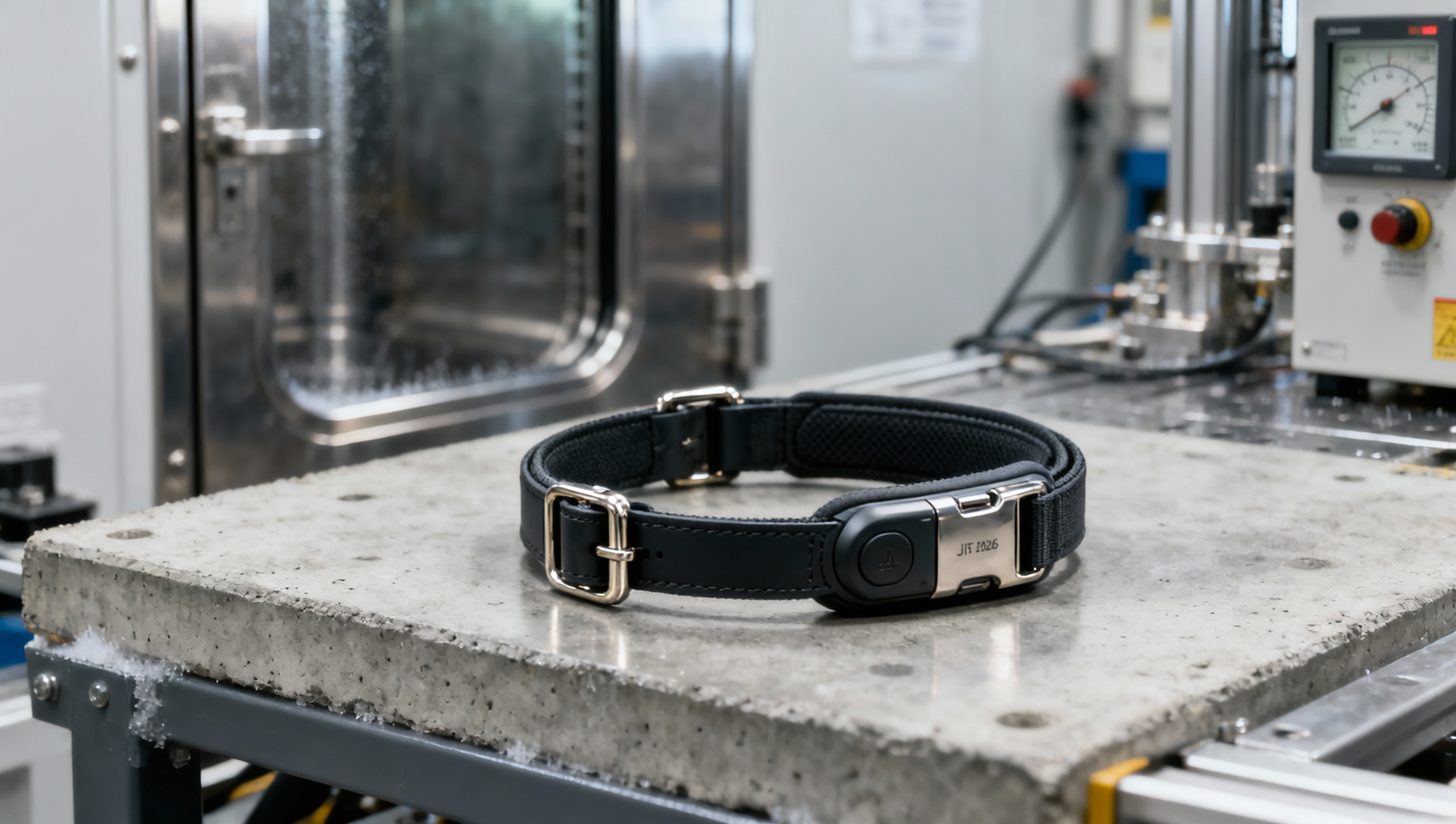
On April 12, 2026, the Japanese Industrial Standards Committee (JISC) released the revised JIS T 0901:2026 standard, introducing mandatory mechanical reliability requirements for GPS- and Bluetooth-enabled smart pet collars destined for the Japanese market — specifically, a 3-meter concrete-surface drop test (IEC 60068-2-32) and a 48-hour 5% NaCl salt spray test (JIS Z 2371). This update directly affects manufacturers, exporters, and distributors of smart pet wearables targeting Japan, especially those based in China, where reported compliance rates fall below 40% and several firms have paused shipments pending remediation.
Event Overview
The Japanese Industrial Standards Committee (JISC) published JIS T 0901:2026 on April 12, 2026. The revision adds two new mandatory physical durability tests for smart pet devices — namely, GPS- and Bluetooth-equipped pet collars: (1) a single 3-meter free-fall impact onto a concrete surface per IEC 60068-2-32; and (2) a 48-hour neutral salt spray exposure at 5% NaCl concentration per JIS Z 2371. Public reports indicate that Chinese manufacturers’ current pass rate for both tests is under 40%, and multiple companies have temporarily suspended exports to Japan while undertaking product and packaging redesigns.
Industries Affected by Segment
Direct Exporters (Especially China-Based)
Exporters supplying smart pet collars to Japanese importers or retailers are now subject to mandatory pre-market verification against the updated standard. Non-compliance blocks customs clearance and market access. Affected firms face immediate shipment delays, retesting costs, and potential contract renegotiations with Japanese partners.
Contract Manufacturers & OEM/ODM Suppliers
Manufacturers producing collars on behalf of global brands must now validate structural integrity (e.g., housing material selection, latch robustness, sealing against corrosion) against the two new tests. Design revisions may require mold modifications, new gasketing, or upgraded PCB conformal coating — impacting lead times and unit cost.
Component & Material Suppliers
Suppliers of enclosures, battery housings, fasteners, and waterproof membranes may see revised specification requests — particularly for UV-stable polycarbonate blends, stainless-steel clasps, and IP67-grade seals. Demand for salt-spray–resistant adhesives and corrosion-inhibiting plating could rise among tier-2 vendors.
Distribution & Certification Service Providers
Japanese domestic distributors and third-party conformity assessment bodies are updating internal checklists and quotation sheets for JIS T 0901:2026 testing. Clients seeking JIS certification will require documentation covering both drop and salt spray test reports — not just electrical safety or radio compliance.
What Relevant Companies or Practitioners Should Focus On & How to Respond
Monitor official JISC guidance and interpretation notes
JISC has not yet published application notes clarifying test sample quantity, conditioning requirements, or pass/fail criteria for functional recovery post-test. Companies should track JISC’s official portal and authorized testing labs (e.g., JQA, UL Japan) for updates before initiating formal submissions.
Prioritize high-volume SKUs and Japan-bound shipments
Given limited lab capacity and extended turnaround times for salt spray testing, firms should identify top-selling collar models destined for Japan and sequence them for early validation — rather than applying blanket retesting across entire portfolios.
Distinguish between regulatory signal and enforceable requirement
While JIS standards are voluntary under Japanese law, they are widely referenced in procurement contracts and retailer compliance programs. Enforcement is currently driven by buyer mandates, not statutory penalties — meaning commercial consequences (e.g., rejected deliveries, lost shelf space) precede legal liability.
Review packaging, labeling, and technical documentation now
Revised test data must be included in Japanese-language technical files submitted to importers. Firms should verify whether existing user manuals, warranty statements, or CE/Japan PSE-marked labels require revision to reflect updated mechanical performance claims — especially if prior marketing implied ‘rugged’ or ‘outdoor-ready’ use.
Editorial Observation / Industry Perspective
From industry perspective, this revision signals a shift from functional interoperability toward environmental resilience as a baseline expectation for consumer-facing smart pet hardware in Japan. Analysis来看, it reflects growing retailer and consumer sensitivity to device longevity — particularly for products worn continuously on animals exposed to rain, mud, and rough terrain. Current more appropriate understanding is that JIS T 0901:2026 functions less as a standalone regulation and more as a de facto market entry gatekeeper, enforced via private-sector supply chain controls. Continued observation is warranted on whether similar requirements emerge in other mature markets (e.g., EU EN 62366-1 usability annexes, or proposed UK pet tech guidelines).
This development underscores how regional standard updates — even without statutory force — can rapidly reshape export readiness, design priorities, and supplier engagement. It is not an isolated technical change, but a marker of tightening expectations for real-world durability in connected pet care hardware.
Information Source: Japanese Industrial Standards Committee (JISC) official release, April 12, 2026; public statements from Chinese smart pet device exporters cited in domestic trade media (as of April 2026). Ongoing monitoring required for JISC-issued implementation guidance and accredited lab interpretations.
Related Intelligence
 Infant Feeding & CareApr 17, 2026Canton Fair Phase II 2026 Focuses on Health ConsumptionCanton Fair Phase II 2026 highlights surging global demand for Health Consumption—Infant Feeding & Care, Beauty Devices, and Camping & Water lead buyer pre-registrations.
 Smart Pet DevicesApr 17, 2026JIS T 0901:2026 Enforces 3m Drop & Salt Spray for Pet Smart CollarsJIS T 0901:2026 mandates 3m drop & salt spray tests for pet smart collars — critical for Japan market access. Learn compliance steps, impact on exporters, and urgent actions.
 Nursery Furniture & MonitorsApr 17, 2026Vietnam Requires ISO 13485 for Imported Used Baby Beds from July 2026ISO 13485 required for imported used baby beds in Vietnam from July 2026 — critical for exporters, OEMs & retailers. Act now to ensure compliance and market access.
 Corporate & Seasonal GiftsApr 17, 2026TÜV Rheinland Launches Green Gift Packaging Certification in ShenzhenGreen Gift Packaging certification by TÜV Rheinland in Shenzhen unlocks 18% price premiums & Amazon EU visibility — act now to meet EU retail sustainability demands.
 Camping & WaterApr 17, 2026CPSC Targets Chinese Camping Water Bladders for TPU Cold-Resistance ChecksCPSC targets Chinese camping water bladders for TPU cold-resistance checks — verify ASTM F2332-23 compliance now to avoid recalls, delays & reputational risk.
 Beauty DevicesApr 17, 2026Global Li-ion Battery Recycling Rate Hits 62.3%Li-ion battery recycling rate hits 62.3% — discover how beauty & pet-tech brands cut BOM costs by 9% and shorten lead times to 6 weeks with regenerated cathode materials.
 STEM & Educational ToysApr 17, 2026SASO ISO 8124-1:2026 Enforced for STEM Toys in Saudi ArabiaSASO ISO 8124-1:2026 now mandates IEC 61000-4-3 EMC testing for AI voice–enabled STEM toys entering Saudi Arabia — secure SABER clearance fast with SASO-recognized labs.
 Fitness EquipmentApr 17, 2026RCEP Cuts China Fitness Equipment Tariffs to 2.8% in Vietnam, Thailand, MalaysiaRCEP cuts China fitness equipment tariffs to 2.8% in Vietnam, Thailand & Malaysia—boosting margins and slashing lead times to 8–10 weeks. Act now!
 Skincare OEMApr 17, 2026FDA VCRP Electronic System Mandatory from April 16, 2026FDA VCRP electronic system becomes mandatory April 16, 2026 — register cosmetics & packaging now to ensure U.S. market access, Amazon listing, and FDA compliance.
 Baby Gear & StrollersApr 17, 2026EU Ban on PFAS in Children's Products Takes Effect Apr 17, 2026EU PFAS ban on children's products takes effect Apr 17, 2026 — impact on strollers, pacifiers, feeding gear & infant monitors. Act now to ensure compliance.
 Infant Feeding & CareApr 16, 2026Wholesale baby hooded towels: shrinkage variance between cotton and bamboo blendsWholesale baby hooded towels: Discover critical shrinkage variance between cotton & bamboo blends—key for diaper changing pad wholesale, bamboo baby washcloths, custom knit baby blankets & more.
 Infant Feeding & CareApr 16, 2026Bamboo baby washcloths: formaldehyde residue risk in low-cost suppliersBamboo baby washcloths safety alert! Avoid formaldehyde risks in low-cost suppliers. Source compliant diaper changing pad wholesale, baby safety gates wholesale, custom knit baby blankets & more—trusted by global OEMs.
 Infant Feeding & CareApr 16, 2026Baby grooming kit OEM: nickel content in stainless steel tools — does it matter?Baby grooming kit OEM, diaper changing pad wholesale & baby safety gates wholesale — ensure nickel-safe stainless steel for infant skin. Get compliant, certified suppliers now.