China Fitness Equipment Export to Vietnam: Zero Tariff Effective May 2026
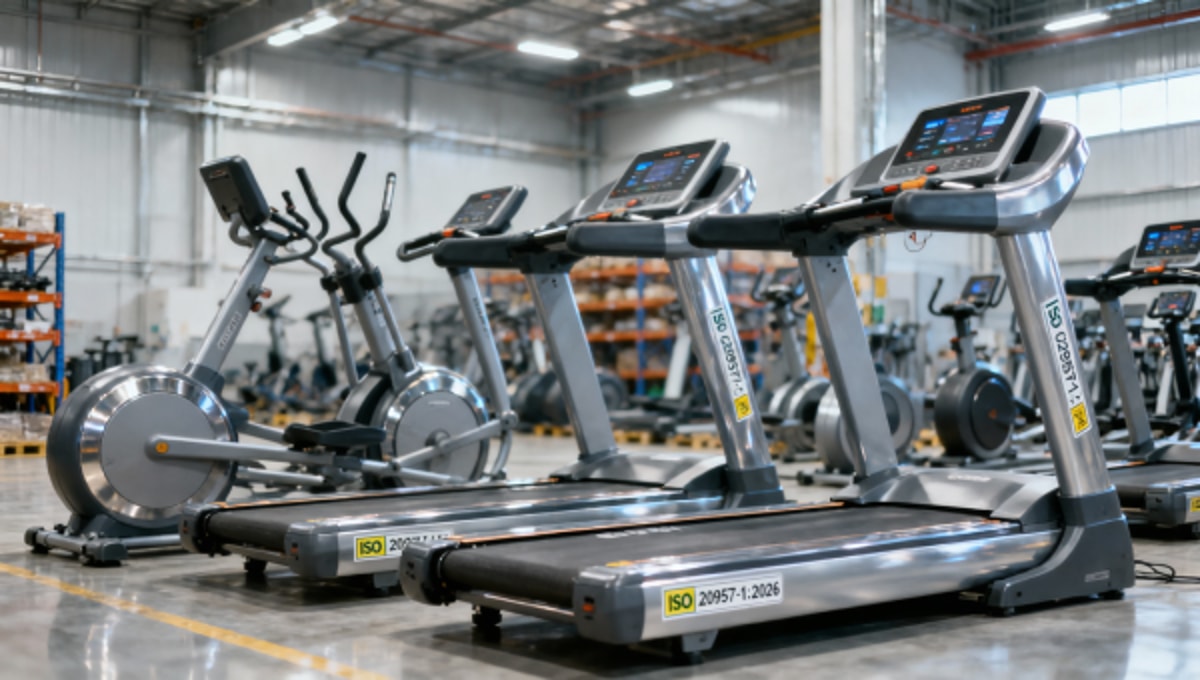
On May 10, 2026, China-originated fitness equipment—including treadmills and exercise bikes—became eligible for zero tariff treatment upon export to Vietnam under the RCEP framework. This change directly affects manufacturers, exporters, and compliance service providers in the fitness equipment supply chain, as it introduces a mandatory technical requirement alongside tariff relief.
Event Overview
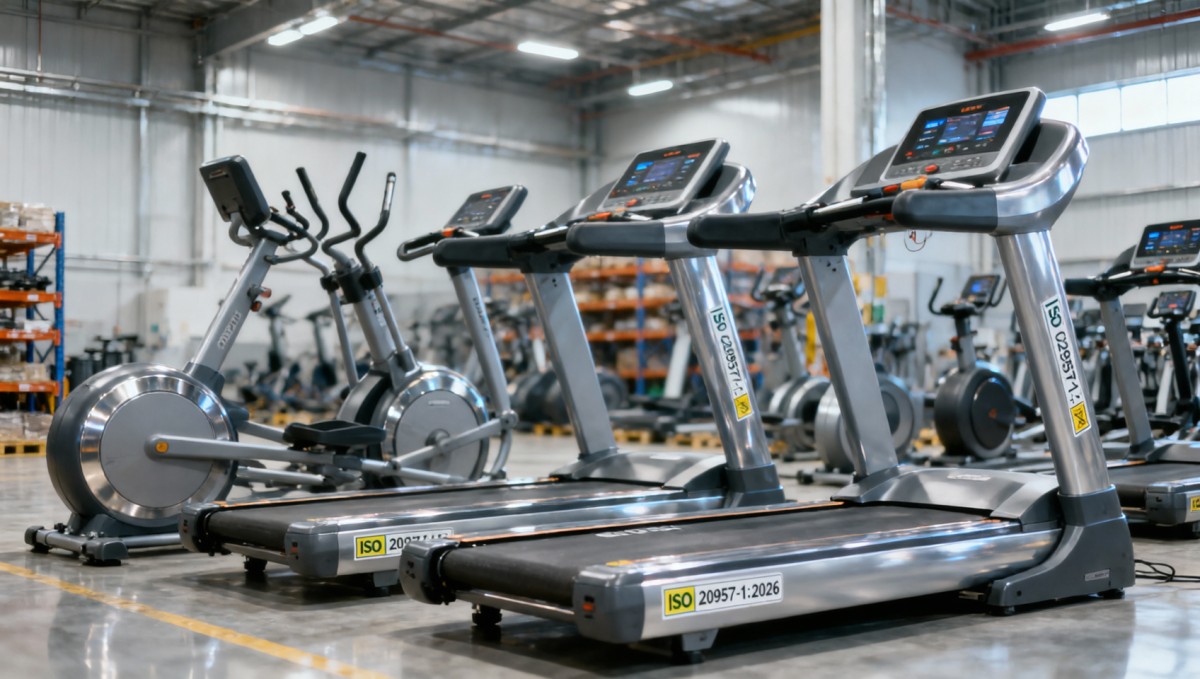
The ASEAN Secretariat of the Regional Comprehensive Economic Partnership (RCEP) issued Technical Barriers to Trade notification TBT/RCEP/2026/017 on May 6, 2026. It confirms that, effective May 10, 2026, imports of Chinese fitness equipment into Vietnam qualify for zero applied tariff rates under RCEP. However, shipments must be accompanied by a full-scope test report for ISO 20957-1:2026 (Safety requirements for fixed training equipment), issued by a laboratory accredited by the China National Accreditation Service for Conformity Assessment (CNAS). Reports based on prior editions of ISO 20957-1 are explicitly not accepted.
Industries Affected
Direct Exporters (OEM/ODM Manufacturers & Trading Companies)
Exporters shipping fitness equipment from China to Vietnam will face immediate compliance verification at customs. Non-compliant shipments—those lacking a valid CNAS-issued ISO 20957-1:2026 report—may be detained, rejected, or subject to retesting, delaying clearance and increasing cost. The shift from older standards means previously certified products may require retesting even if unchanged in design.
Contract Manufacturers & Component Suppliers
Suppliers providing frames, control systems, or load-bearing assemblies to final-assemblers must ensure their components meet the updated mechanical, electrical, and stability requirements embedded in ISO 20957-1:2026. Design validation and documentation traceability—especially for structural integrity and emergency stop functionality—are now critical upstream inputs for final certification.
Supply Chain & Logistics Service Providers
Cargo forwarders and customs brokers handling China–Vietnam fitness equipment consignments must verify document completeness before shipment. A missing or non-conforming test report triggers procedural delays—not just tariff-related queries—but also classification challenges under Vietnam’s national product safety regulations (QCVN 08:2022/BKHCN).
Compliance & Testing Service Providers
Laboratories and third-party conformity assessment bodies accredited by CNAS must confirm capacity to perform all clauses of ISO 20957-1:2026—including dynamic load testing, static stability evaluation, and software-controlled safety logic verification. Demand for such testing is expected to rise, but only CNAS-accredited labs’ reports satisfy the requirement; international accreditation (e.g., ILAC-MRA) alone is insufficient unless paired with CNAS endorsement.
What Enterprises Should Monitor and Do Now
Confirm lab accreditation status and test scope coverage
Exporters should verify—directly with their testing lab—that the CNAS accreditation certificate explicitly lists ISO 20957-1:2026 within its approved scope. Some labs hold CNAS accreditation but have not yet extended it to the 2026 edition; using such a lab results in an invalid report.
Review existing product certifications and retest timelines
Products previously certified to ISO 20957-1:2013 or ISO 20957-1:2016 must undergo full retesting to the 2026 version. There is no grandfathering clause stated in TBT/RCEP/2026/017. Enterprises should prioritize high-volume SKUs and allocate testing lead time (typically 10–15 working days per model).
Update commercial documentation workflows
Pro forma invoices, packing lists, and certificates of origin must now reference the test report number and issuing lab’s CNAS registration ID. Vietnamese importers increasingly request this data pre-shipment to pre-validate compliance—a step beyond standard RCEP origin procedures.
Monitor Vietnam’s national implementation guidance
While the RCEP ASEAN Secretariat issued the TBT notification, enforcement rests with Vietnam’s Ministry of Science and Technology (MOST) and General Department of Vietnam Customs. No official circular from MOST has yet clarified inspection frequency or penalties for non-compliance—but enterprises should treat the May 10 date as fully operational.
Editorial Perspective / Industry Observation
Observably, this measure reflects a broader trend: RCEP’s tariff liberalization is increasingly coupled with harmonized technical requirements—not merely mutual recognition of standards, but conditional acceptance tied to specific accreditation pathways. Analysis shows this is less a one-off regulatory update and more an early signal of how ASEAN members may operationalize RCEP’s Chapter 8 (Technical Barriers to Trade) in practice—using CNAS as a de facto gatekeeper for Chinese exports. From an industry perspective, the zero tariff benefit is real, but its realization is now contingent on alignment across three layers: product design, laboratory capability, and documentation discipline. Current implementation appears focused on verification at point of entry rather than pre-market approval, suggesting flexibility remains—but only for those prepared with compliant evidence.
Conclusion
This development marks a calibrated advancement in RCEP implementation: tariff reduction is delivered, but with enforceable technical conditions attached. It does not represent a barrier to market access per se, but rather a shift toward evidence-based, accreditation-anchored compliance. For stakeholders, it is best understood not as a policy change requiring strategic pivot, but as an operational adjustment demanding precision in testing, documentation, and cross-border coordination.
Information Sources
Main source: RCEP ASEAN Secretariat, TBT Notification TBT/RCEP/2026/017, issued May 6, 2026.
Additional context: RCEP Agreement Annex 2-D (Tariff Commitments – Vietnam), effective May 10, 2026; ISO 20957-1:2026 published by ISO; CNAS accreditation requirements per CNAS-CL01:2023.
Note: Vietnam’s domestic enforcement guidance (e.g., customs inspection protocols or penalty thresholds) remains pending official publication and is subject to ongoing observation.
Related Intelligence
 Corporate & Seasonal GiftsMay 07, 2026Branded USB Flash Drives: When Classic Promo Items Still Make SenseBranded USB flash drives still make sense for travel service brands—discover how they boost partner engagement, showcase premium content, and support higher-conversion B2B campaigns.
![]() Corporate & Seasonal GiftsMay 07, 2026Reborn Baby Dolls Wholesale: Key Quality Signs to Check Before Orderingreborn baby dolls wholesale buyers: learn the key quality signs to check before ordering, from materials and realism to compliance and factory consistency.
Corporate & Seasonal GiftsMay 07, 2026Reborn Baby Dolls Wholesale: Key Quality Signs to Check Before Orderingreborn baby dolls wholesale buyers: learn the key quality signs to check before ordering, from materials and realism to compliance and factory consistency. STEM & Educational ToysMay 07, 2026Montessori Toys Wholesale: What Sells Better Than Trend-Driven Toy PicksMontessori toys wholesale offers travel retailers and distributors a smarter alternative to fad toys—safer, educational, durable, and built for steady demand, repeat orders, and long-term trust.
 Corporate & Seasonal GiftsMay 07, 2026Custom Printed Mugs Bulk: Which Sizes and Coatings Make Better Gift ItemsCustom printed mugs bulk: discover the best sizes and coatings for travel gifts, hotel branding, and souvenir retail to boost appeal, durability, and buyer confidence.
 STEM & Educational ToysMay 07, 2026Sensory Toys for Autism OEM: Features That Matter More Than Bright PackagingSensory toys for autism OEM selection for travel services should prioritize safety, compliance, durability, and calming design over flashy packaging. Discover what truly improves guest experience.
 STEM & Educational ToysMay 07, 2026Custom Board Games Printing: How to Avoid Expensive Reprint MistakesCustom board games printing guide for travel service teams: avoid costly reprints, fix supplier risks, choose the right materials, and keep projects on time and on budget.
 Corporate & Seasonal GiftsMay 07, 2026Custom Power Banks OEM: What to Review Before Approving Battery SpecsCustom power banks OEM guide for travel service buyers: review battery chemistry, real output, safety, cycle life, and compliance before approval to reduce risk and boost buyer confidence.
 STEM & Educational ToysMay 07, 2026DIY Craft Kits for Kids: Which Projects Work Best for Short Attention SpansDIY craft kits for kids that keep short attention spans engaged on trips. Discover mess-free, travel-friendly projects for flights, road trips, and hotel downtime.
 STEM & Educational ToysMay 07, 2026Magnetic Building Blocks Manufacturer: Safety Points You Should Never SkipMagnetic building blocks manufacturer safety guide: learn the must-check tests, compliance documents, and audit points to avoid recalls, protect your brand, and source with confidence.
 Corporate & Seasonal GiftsMay 07, 2026Corporate Gift Sets Wholesale: How to Match Product Mix With BudgetCorporate gift sets wholesale for travel services: learn how to match product mix with budget, control landed costs, manage compliance, and choose higher-ROI gift sets.
 Corporate & Seasonal GiftsMay 07, 2026Action Figures Manufacturer: What to Compare Before Locking in a SupplierAction figures manufacturer comparison guide for travel buyers: evaluate compliance, customization, packaging, lead times, and supplier stability before choosing a sourcing partner.
 Corporate & Seasonal GiftsMay 07, 2026Birthday Party Decorations: How to Build a Theme Without OverbuyingBirthday party decorations made simple: learn how to build a stylish theme with fewer items, smart venue-friendly choices, and budget-saving tips that still create a memorable celebration.
 Corporate & Seasonal GiftsMay 07, 2026Fidget Spinners Bulk: When Low Unit Cost Becomes a Hidden Quality RiskFidget spinners bulk may look cost-effective, but hidden quality, compliance, and return risks can hurt travel retail margins. Learn how to source smarter before you buy.