
Indonesia BPOM Enforces New Cosmetic Packaging Labeling Rules
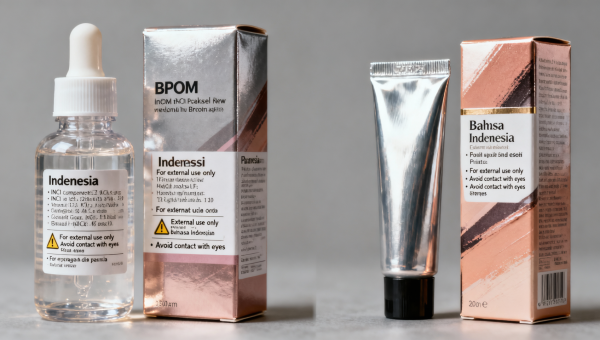
On May 24, 2026, Indonesia’s National Agency of Drug and Food Control (BPOM) implemented new labeling requirements for cosmetic packaging—covering both finished products and empty packaging components such as bottles, tubes, pumps, and makeup boxes. The rule mandates full INCI name disclosure in Bahasa Indonesia on the smallest retail unit, along with locally adapted safety warnings (e.g., ‘For external use only’, ‘Avoid contact with eyes’). Non-compliant shipments face customs rejection, directly impacting time-to-market for skincare OEMs and brand owners.
Event Overview
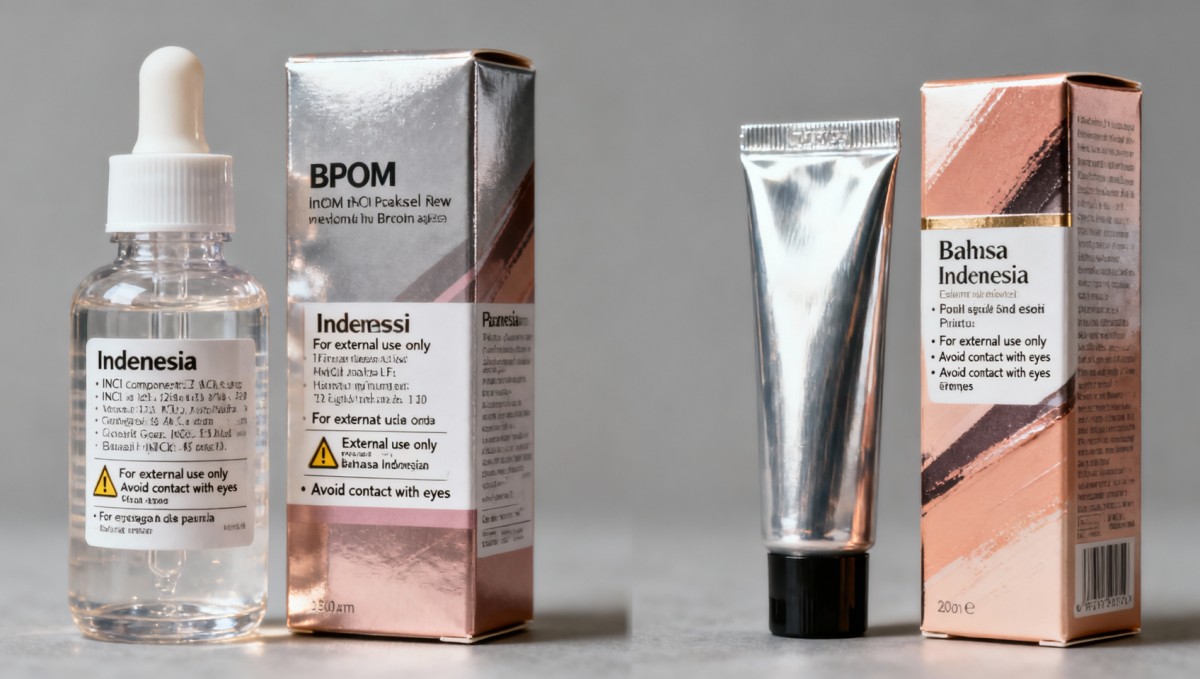
Effective May 24, 2026, BPOM requires all imported cosmetic products and cosmetic packaging—including empty containers (e.g., bottles, tubes, pump dispensers, rigid color cosmetic boxes)—to display complete INCI ingredient names in Bahasa Indonesia on the smallest sales unit. Additionally, mandatory local-language precautionary statements must be included, such as ‘For external use only’ and ‘Avoid contact with eyes’. Shipments failing to meet these labeling criteria will be denied customs clearance.
Impact on Specific Industry Segments
Direct Importers & Exporters
These entities handle cross-border shipment documentation and customs declarations. Non-compliant labeling triggers immediate release delays or rejection at Indonesian ports, increasing demurrage costs and disrupting launch timelines. Impact manifests primarily in clearance failure, inventory hold-ups, and rework logistics.
OEM/ODM Manufacturers (Skincare & Cosmetics)
Manufacturers supplying private-label or contract-packaged goods must now adapt artwork, printing plates, and packaging specifications per BPOM’s language and content rules—even for empty vessels supplied to brands. This affects design lead time, print vendor coordination, and sample approval cycles.
Packaging Component Suppliers
Suppliers of tubes, airless pumps, folding cartons, and other cosmetic-grade packaging must ensure that any unit sold into Indonesia—whether filled or empty—carries compliant labeling. This introduces new compliance obligations upstream, particularly for standardized SKUs distributed across multiple markets.
Distribution & Brand Operations Teams
Brands managing regional inventory or third-party fulfillment in Indonesia must verify label conformity before warehousing or e-commerce listing. Non-compliant stock may be blocked from sale on local platforms (e.g., Tokopedia, Shopee), affecting campaign execution and shelf availability.
What Relevant Enterprises or Practitioners Should Focus On and How to Respond
Monitor official BPOM guidance and enforcement patterns
While the regulation took effect on May 24, 2026, BPOM may issue clarifications on scope (e.g., whether ‘empty packaging’ includes bulk-quantity shipments not intended for end consumers) or transitional arrangements. Stakeholders should track updates via BPOM’s official portal and registered trade associations.
Review labeling assets for high-priority SKUs entering Indonesia
Focus first on products with imminent import schedules or active listings on Indonesian e-commerce platforms. Prioritize SKUs where packaging is co-branded, multi-market, or uses shared artwork templates—these carry highest risk of non-compliance due to language or warning omissions.
Distinguish regulatory signal from operational readiness
The rule reflects BPOM’s broader emphasis on consumer transparency and post-market traceability—not just cosmetic ingredients but also packaging material safety. However, its immediate operational impact remains confined to labeling format and language; it does not introduce new testing, registration, or pre-market approval requirements for packaging alone.
Update internal workflows for artwork sign-off and supplier briefings
Integrate Bahasa Indonesia INCI translation and approved warning statements into packaging development checklists. Require suppliers to submit label mockups for BPOM compliance review prior to plate engraving or production—especially for SKUs with tight Q3/Q4 2026 launch windows.
Editorial Perspective / Industry Observation
Observably, this requirement signals a tightening of regulatory oversight at the point of entry—not just for formulations, but for the physical delivery system of cosmetics. Analysis shows BPOM is extending its consumer protection mandate downstream into packaging, aligning more closely with EU and ASEAN harmonization trends. It is currently best understood as an enforcement-driven compliance checkpoint rather than a broad policy shift; however, its precedent may inform future labeling or sustainability-related mandates in Indonesia. Continued attention is warranted—not because it reshapes market access broadly, but because it introduces a new, non-negotiable gate in the import workflow.
This update underscores how localized regulatory execution—rather than headline-grabbing legislation—increasingly defines operational viability in Southeast Asian markets. For stakeholders, the takeaway is not about systemic disruption, but about precision: accurate INCI translation, validated local phrasing, and timely alignment across global supply chain touchpoints.
Source: Indonesia National Agency of Drug and Food Control (BPOM) official announcement, effective May 24, 2026.
Note: Clarifications regarding scope (e.g., applicability to B2B bulk packaging) remain under observation and are not yet confirmed by BPOM.
Related Intelligence
 Skincare OEMAug 16, 2026Amazon Enforces AI Human Metadata Rule for Beauty and Personal Care SellersAmazon now enforces AI human metadata rules for beauty sellers. Learn how to protect listings, traffic, and compliance in skincare, cosmetics, and beauty devices.
 Beauty DevicesAug 15, 2026China to Roll Out Nationwide Cross-Border Cash Pooling for MultinationalsChina to roll out nationwide cross-border cash pooling for multinationals from Sept. 14. Discover how this policy could improve treasury efficiency, liquidity management, and China-linked supply chains.
 Beauty DevicesAug 14, 2026China Imposes Temporary Export Ban on Helium, Affecting Cooling Supply ChainsChina's temporary helium export ban may disrupt cooling supply chains for beauty RF devices and laser systems. Learn what ODMs, buyers, and procurement teams should check now.
![]() Cosmetics & PkgAug 13, 2026PPWR becomes mandatory: Beauty and personal care packaging materials usher in new EPR and PFAS compliance requirementsPPWR takes effect for cosmetics packaging in the EU, bringing EPR registration and PFAS limits. Learn what brands, importers, and suppliers must do now.
Cosmetics & PkgAug 13, 2026PPWR becomes mandatory: Beauty and personal care packaging materials usher in new EPR and PFAS compliance requirementsPPWR takes effect for cosmetics packaging in the EU, bringing EPR registration and PFAS limits. Learn what brands, importers, and suppliers must do now. Cosmetics & PkgAug 12, 2026EU PPWR Now Enforced for Beauty Packaging ComplianceEU PPWR now enforced for beauty packaging compliance: learn how EPR, ERN, heavy metals and PFAS rules affect EU exports, customs clearance and platform sales.
 Cosmetics & PkgAug 11, 2026EU PPWR Rules Take Effect on Aug. 12 for Beauty PackagingEU PPWR rules for beauty packaging take effect on Aug. 12, 2026. Learn key compliance steps, EPR, labeling, PFAS limits, and how to avoid customs delays and fines.
 Smart Pet DevicesAug 10, 2026EU EPR Rules to Cover Smart Pet Devices on Aug. 15EU EPR Rules will cover smart pet devices from Aug. 15, 2026. Learn how smart collars, feeders, and monitoring devices can avoid delisting, customs delays, and compliance risks in the EU.
 Infant Feeding & CareAug 09, 2026CPSC Recalls Baby Sleep Sacks Over Undeclared TDCPPCPSC Recalls Baby Sleep Sacks Over Undeclared TDCPP: learn how this 2026 recall impacts CPC documents, third-party testing, and U.S. baby product compliance for exporters.
 Infant Feeding & CareAug 08, 2026ECHA Adds 5 SVHCs, Importer Notices Due From Oct 2026ECHA adds 5 SVHCs to the Candidate List, with importer notices due from October 2026. Learn how REACH affects exporters, supply chains, and documentation readiness.
 Baby Gear & StrollersAug 07, 2026CPSC Revises Crib Rail Standard for November 2026CPSC revises crib rail standard for November 2026, adding dynamic impact tests and mandatory third-party lab testing. Learn how the new rule affects U.S. market access, compliance, and shipments.
 Electronic & RC ToysAug 06, 2026EU to Require EN IEC 62115:2025 for Electronic ToysEU to Require EN IEC 62115:2025 for Electronic Toys from Oct 1, 2026. Learn scope, battery and AI safety updates, CE compliance risks, and how exporters can avoid customs delays.
 Baby Gear & StrollersAug 05, 2026US Stroller Stability Rule Takes Effect Aug. 15US Stroller Stability Rule Takes Effect Aug. 15: learn how new U.S. stroller compliance, ASTM F833-26a, and CPSC testing rules may affect imports, certification, and shipment readiness.
 Infant Feeding & CareAug 04, 2026ECHA Adds 5 SVHCs, Triggering Baby Care Export ReviewECHA adds 5 SVHCs, prompting an urgent baby care export review for EU-bound products. Learn the 0.1% threshold risks, compliance steps, and how to avoid customs delays and fines.












