
SIRIM Enforces OCR Check for Cosmetic Packaging Green Labels
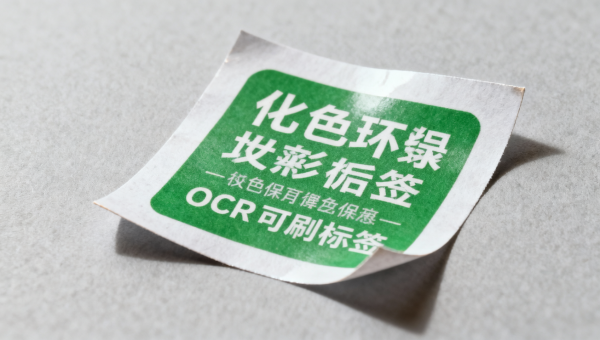
Malaysia’s Standards and Industrial Research Institute (SIRIM) activated mandatory optical character recognition (OCR) verification for Chinese-language green labels on cosmetic packaging on 7 May 2026. As of 8 May 2026, the failure rate in the first week reached 32.7%. This development directly affects exporters and suppliers of cosmetic packaging materials—especially those based in China and other non-Malaysian jurisdictions—whose products enter the Malaysian market via SIRIM certification. The policy shift signals tightening regulatory gatekeeping at the pre-market approval stage, with implications for supply chain responsiveness, label design compliance, and cross-border documentation workflows.
Event Overview
On 8 May 2026, SIRIM issued a notice confirming that, effective 7 May 2026, its system began enforcing mandatory OCR recognition of Chinese text on cosmetic packaging green labels. Within the first week, 32.7% of submissions failed OCR verification. Primary technical causes cited include blurred fonts, reflective background colors, and incompatibility with traditional Chinese characters. As a result, SIRIM immediately suspended acceptance of new certification applications from enterprises that have not completed prior verification via the SIRIM Green Label Pre-Check Portal. The notice further recommends overseas buyers prioritize packaging suppliers displaying the ‘Pre-Verified’ status on the portal.
Which Sub-Sectors Are Affected
Direct Exporters of Cosmetic Packaging
Enterprises exporting cosmetic containers, labels, or printed secondary packaging into Malaysia must now clear OCR verification before submission. Failure to do so halts the entire certification process—delaying market entry and potentially voiding commercial agreements tied to SIRIM clearance timelines.
Contract Manufacturers & OEM Packaging Suppliers
Suppliers producing packaging under private labels for international brands face cascading risk: if their label artwork fails OCR, brand owners may reject shipments or shift sourcing. The requirement adds a new layer of pre-production validation—not just for regulatory alignment, but for machine-readability standards.
Label Design & Prepress Service Providers
Firms responsible for label layout, font selection, and print-ready file preparation are now operationally implicated. OCR failure drivers—such as low-contrast color schemes or unsupported character sets—fall squarely within their scope of deliverables. Their output must now satisfy both human readability and automated recognition thresholds.
Supply Chain Compliance & Certification Support Providers
Third-party consultants, testing labs, and certification facilitators assisting clients with SIRIM submissions must update service offerings to include OCR-readiness audits. This includes verifying font rendering, background reflectivity, and character encoding—distinct from prior content review practices.
What Relevant Enterprises or Practitioners Should Focus On Now
Monitor official updates to the Pre-Check Portal interface and validation rules
SIRIM has not published detailed OCR tolerance thresholds (e.g., minimum font size, contrast ratio, or acceptable character variants). Enterprises should track any subsequent guidance released through the portal or official notices, particularly regarding traditional vs. simplified Chinese handling and image resolution requirements.
Prioritize pre-submission verification for high-volume or time-sensitive SKUs
Given the 32.7% initial failure rate, batch-level pre-checking is no longer optional for routine SKUs. Firms should triage product lines by Malaysia-bound volume and lead-time sensitivity—and allocate verification resources accordingly, starting with top-tier SKUs.
Distinguish between policy intent and current enforcement scope
The notice applies specifically to cosmetic packaging green labels subject to SIRIM certification—not general labeling or non-cosmetic goods. Enterprises should avoid overgeneralizing the OCR mandate across product categories or markets unless explicitly extended by SIRIM in future announcements.
Review and adjust label artwork production workflows now—not after rejection
Font embedding, color mode (CMYK vs. RGB), background texture, and PDF export settings all affect OCR reliability. Teams should conduct internal test scans using standard OCR engines (e.g., Tesseract) against sample files before uploading to the Pre-Check Portal.
Editorial Perspective / Industry Observation
Observably, this is less a sudden regulatory escalation and more a formalization of an emerging technical checkpoint—one that reflects broader global trends toward machine-verifiable compliance documentation. Analysis shows the 32.7% failure rate is likely driven by legacy design practices rather than intentional noncompliance, suggesting the immediate impact is operational friction, not punitive action. From an industry perspective, the pause in unverified submissions functions primarily as a calibration phase: it gives SIRIM data on common failure modes while signaling to suppliers that label legibility is now a quantifiable, enforceable criterion—not just a visual or linguistic one. It is currently more a procedural signal than a finalized compliance barrier, but one requiring active adaptation.
This notice underscores how digital verification infrastructure is reshaping traditional conformity assessment pathways. For cosmetic packaging stakeholders, it marks a transition point—from human-reviewed label checks to algorithmic gatekeeping. The immediate implication is not market exclusion, but a narrowing window for reactive correction. Current best practice is not to wait for failure, but to treat OCR readiness as a built-in specification—like material safety or dimensional tolerance—in packaging development cycles.
Information Sources
Primary source: Official notice issued by Standards and Industrial Research Institute (SIRIM), dated 8 May 2026.
Points under ongoing observation: Specific OCR technical parameters (e.g., contrast thresholds, supported fonts), timeline for potential expansion to other product categories, and frequency of portal interface updates.
Related Intelligence
 Skincare OEMAug 16, 2026Amazon Enforces AI Human Metadata Rule for Beauty and Personal Care SellersAmazon now enforces AI human metadata rules for beauty sellers. Learn how to protect listings, traffic, and compliance in skincare, cosmetics, and beauty devices.
 Beauty DevicesAug 15, 2026China to Roll Out Nationwide Cross-Border Cash Pooling for MultinationalsChina to roll out nationwide cross-border cash pooling for multinationals from Sept. 14. Discover how this policy could improve treasury efficiency, liquidity management, and China-linked supply chains.
 Beauty DevicesAug 14, 2026China Imposes Temporary Export Ban on Helium, Affecting Cooling Supply ChainsChina's temporary helium export ban may disrupt cooling supply chains for beauty RF devices and laser systems. Learn what ODMs, buyers, and procurement teams should check now.
![]() Cosmetics & PkgAug 13, 2026PPWR becomes mandatory: Beauty and personal care packaging materials usher in new EPR and PFAS compliance requirementsPPWR takes effect for cosmetics packaging in the EU, bringing EPR registration and PFAS limits. Learn what brands, importers, and suppliers must do now.
Cosmetics & PkgAug 13, 2026PPWR becomes mandatory: Beauty and personal care packaging materials usher in new EPR and PFAS compliance requirementsPPWR takes effect for cosmetics packaging in the EU, bringing EPR registration and PFAS limits. Learn what brands, importers, and suppliers must do now. Cosmetics & PkgAug 12, 2026EU PPWR Now Enforced for Beauty Packaging ComplianceEU PPWR now enforced for beauty packaging compliance: learn how EPR, ERN, heavy metals and PFAS rules affect EU exports, customs clearance and platform sales.
 Cosmetics & PkgAug 11, 2026EU PPWR Rules Take Effect on Aug. 12 for Beauty PackagingEU PPWR rules for beauty packaging take effect on Aug. 12, 2026. Learn key compliance steps, EPR, labeling, PFAS limits, and how to avoid customs delays and fines.
 Smart Pet DevicesAug 10, 2026EU EPR Rules to Cover Smart Pet Devices on Aug. 15EU EPR Rules will cover smart pet devices from Aug. 15, 2026. Learn how smart collars, feeders, and monitoring devices can avoid delisting, customs delays, and compliance risks in the EU.
 Infant Feeding & CareAug 09, 2026CPSC Recalls Baby Sleep Sacks Over Undeclared TDCPPCPSC Recalls Baby Sleep Sacks Over Undeclared TDCPP: learn how this 2026 recall impacts CPC documents, third-party testing, and U.S. baby product compliance for exporters.
 Infant Feeding & CareAug 08, 2026ECHA Adds 5 SVHCs, Importer Notices Due From Oct 2026ECHA adds 5 SVHCs to the Candidate List, with importer notices due from October 2026. Learn how REACH affects exporters, supply chains, and documentation readiness.
 Baby Gear & StrollersAug 07, 2026CPSC Revises Crib Rail Standard for November 2026CPSC revises crib rail standard for November 2026, adding dynamic impact tests and mandatory third-party lab testing. Learn how the new rule affects U.S. market access, compliance, and shipments.
 Electronic & RC ToysAug 06, 2026EU to Require EN IEC 62115:2025 for Electronic ToysEU to Require EN IEC 62115:2025 for Electronic Toys from Oct 1, 2026. Learn scope, battery and AI safety updates, CE compliance risks, and how exporters can avoid customs delays.
 Baby Gear & StrollersAug 05, 2026US Stroller Stability Rule Takes Effect Aug. 15US Stroller Stability Rule Takes Effect Aug. 15: learn how new U.S. stroller compliance, ASTM F833-26a, and CPSC testing rules may affect imports, certification, and shipment readiness.
 Infant Feeding & CareAug 04, 2026ECHA Adds 5 SVHCs, Triggering Baby Care Export ReviewECHA adds 5 SVHCs, prompting an urgent baby care export review for EU-bound products. Learn the 0.1% threshold risks, compliance steps, and how to avoid customs delays and fines.












