
Saudi SASO Launches AI Pre-Cert Portal for Beauty Devices
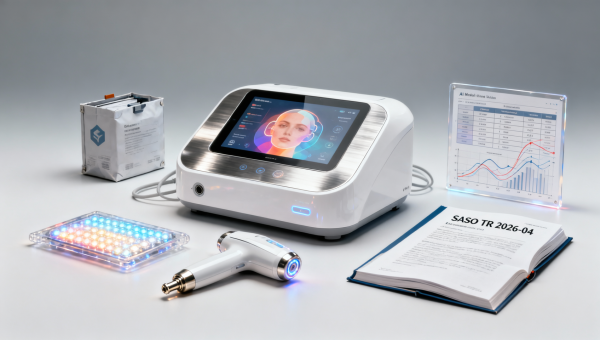
Saudi Arabia’s Standards, Metrology and Quality Organization (SASO) launched the SABER AI Pre-Certification Portal on May 8, 2026, mandating algorithmic transparency for smart beauty devices—including radiofrequency, microcurrent, and LED phototherapy equipment—exported to the Kingdom. This development directly affects manufacturers, exporters, and compliance service providers in the global aesthetic technology supply chain, as it introduces enforceable technical documentation requirements previously absent from regional cosmetic device regulation.
Event Overview
On May 8, 2026, SASO activated the new SABER AI Pre-Certification Portal. The system enforces mandatory submission of firmware source code (as a compressed package) and AI skin-detection model training logs—including dataset provenance, annotation protocols, and accuracy validation reports—for smart beauty devices. Submissions are automatically assessed against SASO TR 2026-04, Ethical and Safety Guidelines for AI-Driven Beauty Devices. The first AI-related certification rejection occurred on May 7, 2026, one day prior to the portal’s official go-live.
Industries Affected
Device Manufacturers & Exporters
Manufacturers producing AI-enabled beauty devices for export to Saudi Arabia must now treat firmware and AI model documentation as core compliance deliverables—not optional add-ons. Impact includes extended pre-market lead times, increased internal coordination between R&D, software engineering, and regulatory teams, and potential redesign of data governance practices to support audit-ready training logs.
OEM/ODM Contract Manufacturers
Contract manufacturers supplying finished devices or sub-assemblies with embedded AI functionality face new contractual and liability exposure. Since SASO requires source-level firmware artifacts and traceable model development records, OEM clients may impose stricter documentation clauses in manufacturing agreements—and reject shipments lacking verifiable AI development metadata.
Regulatory & Certification Service Providers
Third-party conformity assessment bodies and SABER agents must adapt their review workflows to validate not only electrical safety and EMC, but also software architecture integrity and AI model transparency. This necessitates upskilling in firmware analysis tools and familiarity with ML model documentation standards (e.g., model cards, data sheets), beyond traditional hardware-based testing scopes.
What Enterprises and Practitioners Should Monitor and Do Now
Track official clarifications on scope boundaries
Current guidance specifies applicability to radiofrequency, microcurrent, and LED phototherapy devices with AI skin recognition. However, SASO has not yet published an exhaustive list of covered models or thresholds (e.g., minimum AI inference latency, classification confidence levels). Stakeholders should monitor SASO’s official notices and SABER portal updates for formalized scope definitions.
Inventory firmware and AI documentation readiness by product family
Companies should conduct internal audits to identify which exported SKUs contain AI-driven features subject to the requirement—and assess whether existing firmware build processes generate reproducible, version-controlled source archives, and whether AI training logs meet SASO TR 2026-04’s reporting expectations (e.g., inclusion of data source jurisdiction, inter-annotator agreement metrics).
Distinguish policy signal from operational rollout
The May 7 rejection indicates enforcement is active, but SASO has not publicly disclosed whether transitional arrangements apply, nor whether legacy certifications remain valid for devices placed on market before May 8. Firms should treat current submissions as binding precedent while awaiting formal guidance on grandfathering or phased implementation.
Prepare cross-functional alignment protocols
Compliance now requires synchronization across firmware developers, AI engineers, QA leads, and export documentation specialists. Establishing standardized handover checklists—covering archive naming conventions, log file structure, and version mapping between firmware binaries and source packages—reduces risk of portal rejection due to formatting or metadata gaps.
Editorial Perspective / Industry Observation
Observably, this initiative signals SASO’s shift from outcome-based safety evaluation to process-oriented AI governance—a trend increasingly visible in Gulf Cooperation Council (GCC) digital health policy. Analysis shows it functions less as a standalone certification hurdle and more as an early indicator of how GCC regulators may integrate software bill-of-materials (SBOM) and AI model provenance into broader medical and wellness device frameworks. From an industry standpoint, the May 7 rejection confirms that enforcement is operational, not merely symbolic—but the absence of published appeal mechanisms or interpretation guidelines means stakeholders are currently navigating uncharted procedural terrain.
Conclusion: This requirement represents a structural change in regulatory expectations for AI-integrated consumer wellness hardware—not just a procedural update. It reflects growing global emphasis on algorithmic accountability in low-risk health-adjacent devices. Currently, it is best understood as an enforcement pilot with high signal value for future GCC-wide harmonization efforts, rather than a fully matured regime with stable interpretation or redress pathways.
Information Source: Saudi Standards, Metrology and Quality Organization (SASO); official SABER AI Pre-Certification Portal launch notice dated May 8, 2026. Ongoing observation is required regarding SASO’s publication of interpretive FAQs, scope expansion announcements, or transitional provisions.
Related Intelligence
 Skincare OEMAug 16, 2026Amazon Enforces AI Human Metadata Rule for Beauty and Personal Care SellersAmazon now enforces AI human metadata rules for beauty sellers. Learn how to protect listings, traffic, and compliance in skincare, cosmetics, and beauty devices.
 Beauty DevicesAug 15, 2026China to Roll Out Nationwide Cross-Border Cash Pooling for MultinationalsChina to roll out nationwide cross-border cash pooling for multinationals from Sept. 14. Discover how this policy could improve treasury efficiency, liquidity management, and China-linked supply chains.
 Beauty DevicesAug 14, 2026China Imposes Temporary Export Ban on Helium, Affecting Cooling Supply ChainsChina's temporary helium export ban may disrupt cooling supply chains for beauty RF devices and laser systems. Learn what ODMs, buyers, and procurement teams should check now.
![]() Cosmetics & PkgAug 13, 2026PPWR becomes mandatory: Beauty and personal care packaging materials usher in new EPR and PFAS compliance requirementsPPWR takes effect for cosmetics packaging in the EU, bringing EPR registration and PFAS limits. Learn what brands, importers, and suppliers must do now.
Cosmetics & PkgAug 13, 2026PPWR becomes mandatory: Beauty and personal care packaging materials usher in new EPR and PFAS compliance requirementsPPWR takes effect for cosmetics packaging in the EU, bringing EPR registration and PFAS limits. Learn what brands, importers, and suppliers must do now. Cosmetics & PkgAug 12, 2026EU PPWR Now Enforced for Beauty Packaging ComplianceEU PPWR now enforced for beauty packaging compliance: learn how EPR, ERN, heavy metals and PFAS rules affect EU exports, customs clearance and platform sales.
 Cosmetics & PkgAug 11, 2026EU PPWR Rules Take Effect on Aug. 12 for Beauty PackagingEU PPWR rules for beauty packaging take effect on Aug. 12, 2026. Learn key compliance steps, EPR, labeling, PFAS limits, and how to avoid customs delays and fines.
 Smart Pet DevicesAug 10, 2026EU EPR Rules to Cover Smart Pet Devices on Aug. 15EU EPR Rules will cover smart pet devices from Aug. 15, 2026. Learn how smart collars, feeders, and monitoring devices can avoid delisting, customs delays, and compliance risks in the EU.
 Infant Feeding & CareAug 09, 2026CPSC Recalls Baby Sleep Sacks Over Undeclared TDCPPCPSC Recalls Baby Sleep Sacks Over Undeclared TDCPP: learn how this 2026 recall impacts CPC documents, third-party testing, and U.S. baby product compliance for exporters.
 Infant Feeding & CareAug 08, 2026ECHA Adds 5 SVHCs, Importer Notices Due From Oct 2026ECHA adds 5 SVHCs to the Candidate List, with importer notices due from October 2026. Learn how REACH affects exporters, supply chains, and documentation readiness.
 Baby Gear & StrollersAug 07, 2026CPSC Revises Crib Rail Standard for November 2026CPSC revises crib rail standard for November 2026, adding dynamic impact tests and mandatory third-party lab testing. Learn how the new rule affects U.S. market access, compliance, and shipments.
 Electronic & RC ToysAug 06, 2026EU to Require EN IEC 62115:2025 for Electronic ToysEU to Require EN IEC 62115:2025 for Electronic Toys from Oct 1, 2026. Learn scope, battery and AI safety updates, CE compliance risks, and how exporters can avoid customs delays.
 Baby Gear & StrollersAug 05, 2026US Stroller Stability Rule Takes Effect Aug. 15US Stroller Stability Rule Takes Effect Aug. 15: learn how new U.S. stroller compliance, ASTM F833-26a, and CPSC testing rules may affect imports, certification, and shipment readiness.
 Infant Feeding & CareAug 04, 2026ECHA Adds 5 SVHCs, Triggering Baby Care Export ReviewECHA adds 5 SVHCs, prompting an urgent baby care export review for EU-bound products. Learn the 0.1% threshold risks, compliance steps, and how to avoid customs delays and fines.












