CBP Activates F865 Holds for HTS Mismatches
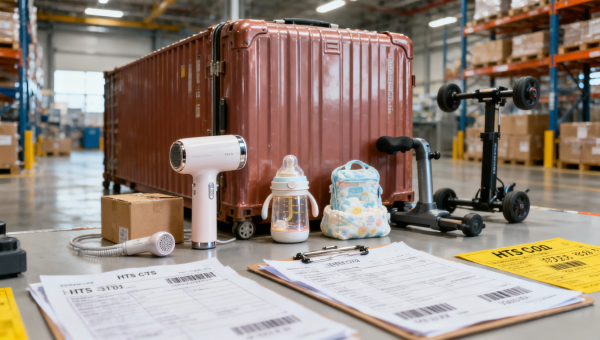
On June 2, 2026, U.S. Customs and Border Protection began using the F865 error code in the ACE system to reject filings when the declared HTS code does not align with importer qualifications, PGA filings such as FDA or CPSC, or license status. For exporters shipping to the United States, this is worth close attention because it shifts the point of failure forward: for regulated categories including beauty devices, infant feeding products, and fitness equipment, a mismatch may now stop a container before shipment rather than becoming a later customs issue.
What the June 2 change confirms
The confirmed change is that, starting June 2, 2026, the ACE system formally applies the F865 error code to declarations with inconsistencies between the HTS tariff number and related importer eligibility, PGA registration records, or license status.
The information provided also indicates that filings with such inconsistencies are directly rejected. In practical terms, the previous room for filing under a vague or loosely matched classification is being narrowed, especially where FDA- or CPSC-related requirements are involved.
The stated risk is particularly clear for exporters of products such as beauty devices, infant feeding utensils, and fitness equipment that may fall under FDA or CPSC oversight. If HTS codes have not been cross-checked against qualification and filing status in advance, the shipment may become invalid before loading.
Where pressure is likely to appear first
Export-side product classification moves closer to shipment readiness
From an industry perspective, exporters are likely to feel the impact first at the product classification stage. Where a shipment depends on a specific HTS declaration and also touches FDA or CPSC-related requirements, classification can no longer be treated as a separate paperwork step. The operational effect may appear before cargo departure, especially when booking and customs preparation are already underway.
Importers face tighter alignment between filing and qualification status
For importers and U.S.-side filing parties, the immediate issue is alignment. Analysis shows that an HTS code is no longer only a tariff entry decision in these cases; it also needs to match the importer's qualification profile, PGA record, and any relevant license status. Any disconnect across those elements may interrupt entry acceptance at the filing stage.
Supply chain service providers may absorb earlier disruption
Customs brokers, freight forwarders, and other supply chain service providers may face pressure in document review and pre-shipment coordination. Observably, if a filing is rejected earlier in the process, service providers may need to spend more time confirming code selection, regulatory coverage, and documentation completeness before cargo is handed over for transport.
Buyers and channel partners may need to watch delivery timing more closely
For buyers, distributors, and downstream channel partners, the main concern is execution risk rather than policy interpretation. If a regulated product is blocked from moving because its HTS code does not match the supporting compliance framework, delivery timing and order fulfillment may be affected even before the cargo enters the customs clearance queue.
What companies should review now
Cross-check HTS coding against regulatory status before booking
What deserves closer attention is whether HTS classification is being verified together with importer qualification, PGA filing status, and license status before shipment arrangements are finalized. The information provided suggests that this cross-verification is no longer optional for regulated categories.
Identify product groups with FDA or CPSC exposure
Companies shipping beauty devices, infant feeding products, fitness equipment, or other goods that may involve FDA or CPSC oversight should pay particular attention to product-level review. The key point is not only whether a product is regulated, but whether its declared HTS code and the supporting compliance path match each other.
Separate policy reading from operational readiness
Analysis shows that the policy signal and the operational impact are not the same step. A company may understand that tighter control is in place, yet still face disruption if internal teams, suppliers, importers, and service providers are not using the same classification and filing assumptions in live shipments.
Prepare customer and supplier communication around shipment validity
Where containers risk becoming invalid before loading, communication becomes a practical issue. Exporters and service partners should focus on document consistency, timing of compliance checks, and expectation setting with customers and suppliers when a shipment includes products that may require matching HTS and PGA or license conditions.
Why this reads as a stronger compliance signal
Observably, this development is more than a routine filing adjustment because it points to earlier enforcement inside the customs submission flow. It is more appropriate to understand this as a compliance-control signal rather than as a simple technical code update.
At the same time, it should not be overstated beyond the facts provided. The confirmed information supports a clear tightening around mismatched HTS and qualification data, but the broader operational scope and any subsequent implementation details still require continued observation.
How the market may need to interpret it
For the market, the immediate meaning is that pre-entry consistency is becoming more important in U.S.-bound trade involving regulated product categories. The change is best understood as a near-term operational compliance issue with possible longer-term implications if similar pre-screening logic continues to expand.
A neutral reading is that this is already a concrete filing outcome for affected declarations, while its wider industry effect still depends on how broadly companies are exposed to regulated classifications and how quickly they adjust internal review procedures.
Basis of this article and points to keep tracking
This article is based on the user-provided news title, event date, and event summary. The specific official source link was not provided in the input, so any follow-up review should continue to verify official notices and operational guidance.
For this type of development, commonly relevant source categories may include official government notices, company disclosures, industry association updates, authoritative media coverage, and documents from standard-setting or regulatory bodies. The next point to watch is whether further official clarification appears on filing practice, affected product categories, or implementation details related to HTS, PGA records, and license alignment.
Related Intelligence
 Cosmetics & PkgOct 21, 2026BASF Plans Beauty Innovation Showcase at in-cosmetics Asia 2026Explore BASF’s planned beauty innovations at in-cosmetics Asia 2026 in Bangkok, with a focus on skin protection, repair and sustainable solutions for personal care formulators.
 Cosmetics & PkgOct 20, 2026Beauty Tops Amazon’s 2026 Prime Big Deal Days Shopping CategoriesBeauty tops Amazon’s 2026 Prime Big Deal Days at 32% of shoppers, according to Market Defense. Explore what the findings could mean for product selection, inventory and promotional planning.
 Baby Gear & StrollersOct 14, 2026How Long Does Custom Diaper Bag Production Usually Take?How long does custom diaper bag production usually take? Plan for 30–60 days after sample approval. Discover key lead-time factors and practical tips to avoid delays and launch on schedule.
 Baby Gear & StrollersOct 14, 2026Which Diaper Bag Features Justify a Higher Wholesale Price?What diaper bag features justify a higher wholesale price? Discover durability, comfort, and easy-clean upgrades worth paying for—and source smarter with practical buyer tips.
 Infant Feeding & CareOct 14, 2026How Can Retailers Prevent Baby Clothing Color Bleeding Claims?How can retailers avoid color bleeding claims on baby clothing? Discover testing, supplier controls, and care-label strategies to reduce returns and protect customer trust.
 Infant Feeding & CareOct 14, 2026Which Baby Clothing Materials Are Easier to Source Compliantly?What materials make baby clothing easier to source compliantly? Compare cotton, blends, and certified options, with practical supplier checks to reduce risk and make smarter sourcing decisions.
 Baby Gear & StrollersOct 14, 2026Are Baby Carrier Buckle Failures a Common Reason for Returns?Are baby carrier buckle failures a common return issue? Explore defects, usability complaints, and safety checks to make informed sourcing decisions before your next order.
 Baby Gear & StrollersOct 14, 2026How Do You Compare Baby Carrier Suppliers on Safety and Cost?How do I compare baby carrier suppliers on safety and cost? Learn to verify safety evidence, assess factory controls, and compare total landed costs to make a confident sourcing decision.
 STEM & Educational ToysSep 20, 2026How Do I Verify Age Grading for Educational Toys?How do I verify educational toy age grading? Learn how to assess safety risks, test reports, packaging, and market compliance before buying or selling.
 Corporate & Seasonal GiftsSep 20, 2026Are Promotional Items Worth Ordering for Short Campaigns?Are promotional items worth ordering for short campaigns? Learn how pet brands can choose useful, compliant giveaways that drive measurable engagement, sales, and loyalty.
 STEM & Educational ToysSep 20, 2026What Safety Checks Should Wooden Toy Suppliers Pass?What safety checks should wooden toy suppliers pass? Explore essential compliance, material traceability, chemical testing, and quality controls to source safer toys with confidence.
 Infant Feeding & CareSep 20, 2026Which Teething Toy Materials Are Easiest to Clean?Which teething toy materials are easiest to clean? Discover why silicone and natural rubber lead for hygienic, easy-care pet chew toys.
 Infant Feeding & CareSep 20, 2026How Can Retailers Prevent Mold Complaints About Bath Toys?How can retailers prevent mold complaints about bath toys? Explore drainable designs, supplier controls, testing, and care guidance to reduce moisture risks.