Sports and Outdoor Package Size Guide: Fit, Weight, and Shipping Trade-Offs

Package design rarely gets headline attention, yet it shapes cost, protection, storage, and customer experience across the sports and outdoor trade. In travel-related retail, where products move through airports, resorts, tour operators, e-commerce channels, and seasonal distribution hubs, the right sports and outdoor package size can influence far more than carton appearance.
A tent accessory, trekking bottle, beach game, compact chair, or travel fitness item may look simple on a sample table. Once shipped globally, every extra centimeter can change freight class, pallet efficiency, dimensional weight, and shelf handling. That is why package sizing has become a practical sourcing issue rather than a late-stage design task.
Within the GCS view of modern retail supply chains, packaging decisions sit at the intersection of compliance, margin control, and market readiness. For sports and outdoor lines connected to tourism and mobility, the best result usually comes from balancing fit, weight, durability, and shipping performance instead of optimizing only one factor.
Why package size matters in sports and outdoor travel retail
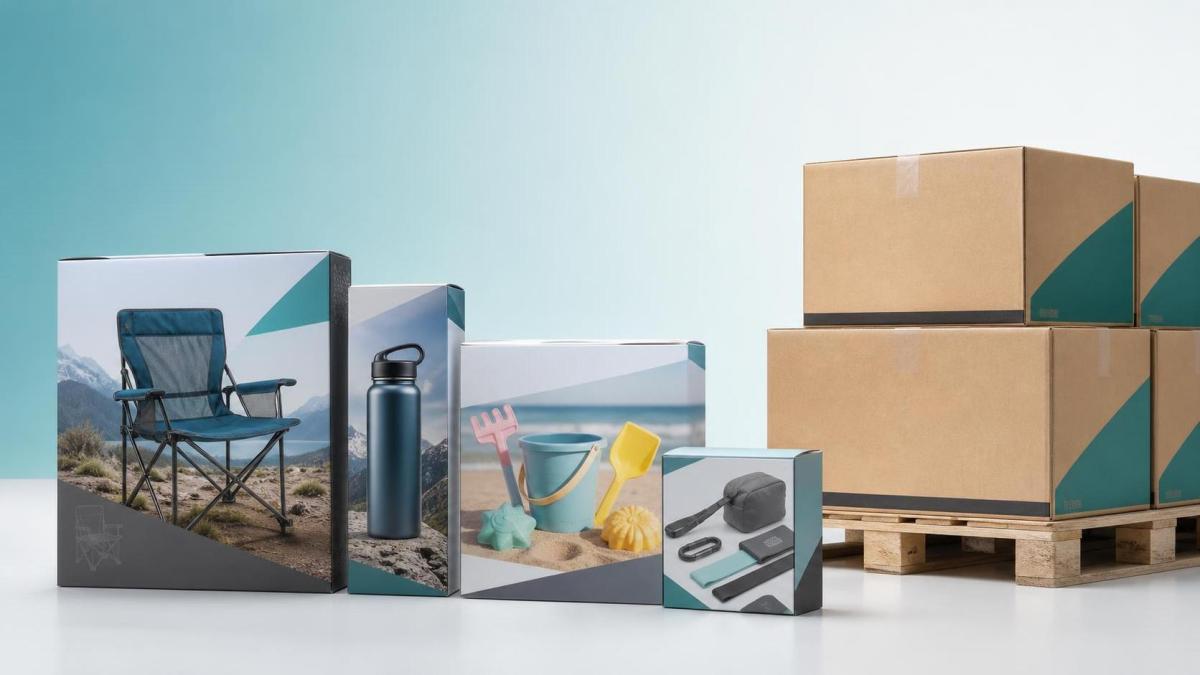
Travel service demand changes what buyers expect from sports and outdoor goods. Products sold through destination shops, hotel partnerships, airport retail, guided activity operators, or online travel gear stores often need to be portable, giftable, and easy to replenish.
That puts pressure on the sports and outdoor package size from several directions at once. The pack must protect the item, fit transport constraints, present well at retail, and avoid wasting space in containers and storerooms.
A package that is too large increases void fill, cube cost, and warehouse congestion. A package that is too tight can damage finishes, deform soft goods, or create a poor unboxing experience. In travel-focused channels, both mistakes can be expensive because replenishment windows are often short and demand is seasonal.
This is also where GCS-style supply chain analysis becomes useful. The right sizing decision depends on the product’s route to market, likely reorder rhythm, compliance needs, and retail format, not only on the item’s dimensions.
Understanding sports and outdoor package size beyond simple measurements
At a basic level, sports and outdoor package size refers to the external dimensions and weight of the unit pack, inner pack, and master carton. In practice, that definition is too narrow.
A useful evaluation includes five connected layers: product fit, protective structure, retail display needs, shipping efficiency, and handling compliance. A box can be dimensionally correct and still commercially wrong.
Soft travel goods, foldable outdoor accessories, and modular sports items often create hidden packaging decisions. Compression may reduce volume, but it can also increase wrinkle risk or make repacking difficult. Rigid packaging may improve presentation, but it can push the carton into a higher dimensional weight bracket.
For that reason, evaluating sports and outdoor package size should start with the actual logistics unit. The question is not only, “Does the item fit?” It is also, “How does this package behave across storage, transport, retail handling, and returns?”
The three packaging levels that affect cost
- Unit pack: influences shelf appeal, parcel fees, and customer perception.
- Inner pack: affects replenishment speed for multi-location retail and travel programs.
- Master carton: drives pallet pattern, container fill, and warehouse labor.
Sizing one level without checking the others often creates hidden cost elsewhere.
The main trade-offs: fit, weight, and shipping performance
Most sourcing decisions involve compromise. The ideal sports and outdoor package size is rarely the smallest possible pack or the strongest possible pack. It is the one that protects margin while meeting channel requirements.
Fit versus protection
A tighter package reduces empty space and lowers material use. Still, outdoor products often include straps, valves, buckles, frames, or coated surfaces that need movement control and impact buffering.
Travel-related goods add another layer. Items sold for carry-on convenience or excursion use are expected to arrive clean, compact, and retail-ready. Damage at the first touchpoint weakens sell-through.
Weight versus durability
Lighter packaging can lower freight cost, especially in air shipments or express replenishment. But very light board grades or thin protective inserts may collapse during long transit or humid storage.
This matters in tourism supply chains because products may move through mixed environments, including ports, tropical destinations, remote activity centers, and temporary event storage.
Small dimensions versus shipping thresholds
Reducing external size usually helps. However, carton proportions also affect conveyor handling, stacking stability, and pallet overhang. A smaller box with poor proportions can still create losses.
The practical target is a sports and outdoor package size that avoids dead space while remaining stable through the full transport cycle.
Where sizing choices show up in real travel-related scenarios
Different sales environments reward different packaging logic. A resort retail program and a cross-border e-commerce listing may sell similar products, yet the packaging priorities can be very different.
This is why one universal packaging template rarely works across the category. The best sports and outdoor package size depends on channel mix and replenishment model.
What buyers should check before locking dimensions
Good sizing decisions are usually made before artwork approval and before final carton specs are released. By that stage, changing dimensions becomes slower and more expensive.
Several checkpoints help prevent that problem.
- Compare product dimensions in assembled, folded, and packed states.
- Test whether the proposed sports and outdoor package size triggers dimensional weight pricing.
- Review case-pack counts against target pallet patterns and container utilization.
- Check for label space, warning marks, barcode placement, and certification visibility.
- Model storage conditions, including humidity, stacking pressure, and destination handling.
- Confirm whether the package supports retail display, mailer use, or both.
The compliance point is especially important. Sports and outdoor products may need country-specific warnings, material disclosures, or safety markings. A package that is too small can force awkward label placement or secondary stickers that reduce presentation quality.
How GCS-style sourcing analysis improves packaging decisions
Global Consumer Sourcing has highlighted a broader shift in supply chains: packaging is now part of commercial intelligence, not just factory execution. Data-backed sourcing reviews can uncover whether a proposed sports and outdoor package size supports margin resilience across multiple markets.
This matters when comparing OEM and ODM partners. Two suppliers may quote similar unit prices, but their packaging assumptions can produce different landed costs, damage rates, and storage footprints.
The more volatile the channel, the more valuable this analysis becomes. Travel service-linked retail can shift quickly with weather, tourism recovery, route changes, and event demand. Packaging that improves container fill and replenishment flexibility can protect profitability when forecasts move.
This is also where sustainability becomes practical rather than symbolic. A better sports and outdoor package size often reduces material use and transport waste at the same time. The real gain comes from eliminating unnecessary volume without weakening product integrity.
A practical framework for the next sourcing review
A useful next step is to review package specs the same way landed cost is reviewed: as a mix of dimensions, performance, and route-to-market fit.
Start with these questions
- Is the current sports and outdoor package size built for the real sales channel or only for factory convenience?
- Which dimension is pushing freight cost most: length, cube, or weight?
- Can the pack be reduced without creating higher damage or return risk?
- Does the case-pack support destination storage limits and faster replenishment?
- Are certification, language, and warning requirements fully accommodated?
When these questions are answered early, packaging becomes a source of control rather than an afterthought. In sports and outdoor categories tied to travel and tourism, that control can improve freight efficiency, retail readiness, and service consistency at the same time.
The strongest decisions usually come from comparing several packaging options side by side, then testing them against channel realities. That approach makes the sports and outdoor package size a measurable supply chain lever, not just a box specification.
Related Intelligence
 STEM & Educational ToysSep 20, 2026How Do I Verify Age Grading for Educational Toys?How do I verify educational toy age grading? Learn how to assess safety risks, test reports, packaging, and market compliance before buying or selling.
 Corporate & Seasonal GiftsSep 20, 2026Are Promotional Items Worth Ordering for Short Campaigns?Are promotional items worth ordering for short campaigns? Learn how pet brands can choose useful, compliant giveaways that drive measurable engagement, sales, and loyalty.
 STEM & Educational ToysSep 20, 2026What Safety Checks Should Wooden Toy Suppliers Pass?What safety checks should wooden toy suppliers pass? Explore essential compliance, material traceability, chemical testing, and quality controls to source safer toys with confidence.
 Infant Feeding & CareSep 20, 2026Which Teething Toy Materials Are Easiest to Clean?Which teething toy materials are easiest to clean? Discover why silicone and natural rubber lead for hygienic, easy-care pet chew toys.
 Infant Feeding & CareSep 20, 2026How Can Retailers Prevent Mold Complaints About Bath Toys?How can retailers prevent mold complaints about bath toys? Explore drainable designs, supplier controls, testing, and care guidance to reduce moisture risks.
 Camping & WaterSep 20, 2026Which Folding Chair Fabrics Last Longest Outdoors?Which folding chair fabrics last longest outdoors? Compare acrylic, PVC-coated polyester, UV-stabilized polyester, and mesh for durable, pet-friendly outdoor seating.
 Camping & WaterSep 20, 2026Are Folding Camping Chairs Tested for Weight Capacity?Are folding camping chairs tested for weight capacity? Learn what credible load testing, safety margins, and supplier documentation mean for confident outdoor product sourcing.
 Corporate & Seasonal GiftsSep 20, 2026How Can Corporate Gift Buyers Avoid Missing Event Deadlines?How do corporate gift buyers avoid missed event deadlines? Discover proven sourcing, customization, compliance, and shipping strategies for pet-themed corporate gifts.
 Corporate & Seasonal GiftsSep 20, 2026What Should Be Approved Before Placing a Custom Gift Order?What should be approved before placing a custom gift order? Explore the essential checks for safe, compliant, retail-ready custom pet gifts.
 Corporate & Seasonal GiftsSep 20, 2026Which Custom Gift Materials Have the Lowest Defect Rates?Which custom gift materials have the lowest defect rate? Explore why silicone, stainless steel, polypropylene, and polyester help pet gift brands reduce rejects and improve quality.
 Skincare OEMAug 16, 2026Amazon Enforces AI Human Metadata Rule for Beauty and Personal Care SellersAmazon now enforces AI human metadata rules for beauty sellers. Learn how to protect listings, traffic, and compliance in skincare, cosmetics, and beauty devices.
 Beauty DevicesAug 15, 2026China to Roll Out Nationwide Cross-Border Cash Pooling for MultinationalsChina to roll out nationwide cross-border cash pooling for multinationals from Sept. 14. Discover how this policy could improve treasury efficiency, liquidity management, and China-linked supply chains.
 Beauty DevicesAug 14, 2026China Imposes Temporary Export Ban on Helium, Affecting Cooling Supply ChainsChina's temporary helium export ban may disrupt cooling supply chains for beauty RF devices and laser systems. Learn what ODMs, buyers, and procurement teams should check now.