What Safety Checks Should Wooden Toy Suppliers Pass?
What safety checks should wooden toy suppliers pass? Global buyers should expect documented compliance, traceable materials, verified chemical safety, durable construction, and reliable quality-control systems before approving production.
For retailers and private-label brands, wooden toys can appear lower risk than plastic alternatives. However, unsafe coatings, loose components, splintering, and incomplete documentation create serious legal and reputational exposure.
The right supplier assessment combines laboratory reports, factory-process evidence, product inspection results, and market-specific compliance records. A single certificate is rarely enough to demonstrate ongoing safety performance.
This guide explains the checks sourcing teams should prioritize when evaluating wooden toy manufacturers for international retail programs, especially where children’s safety, product recalls, and regulatory accountability matter.
Start With the Safety Standard Required in Your Sales Market
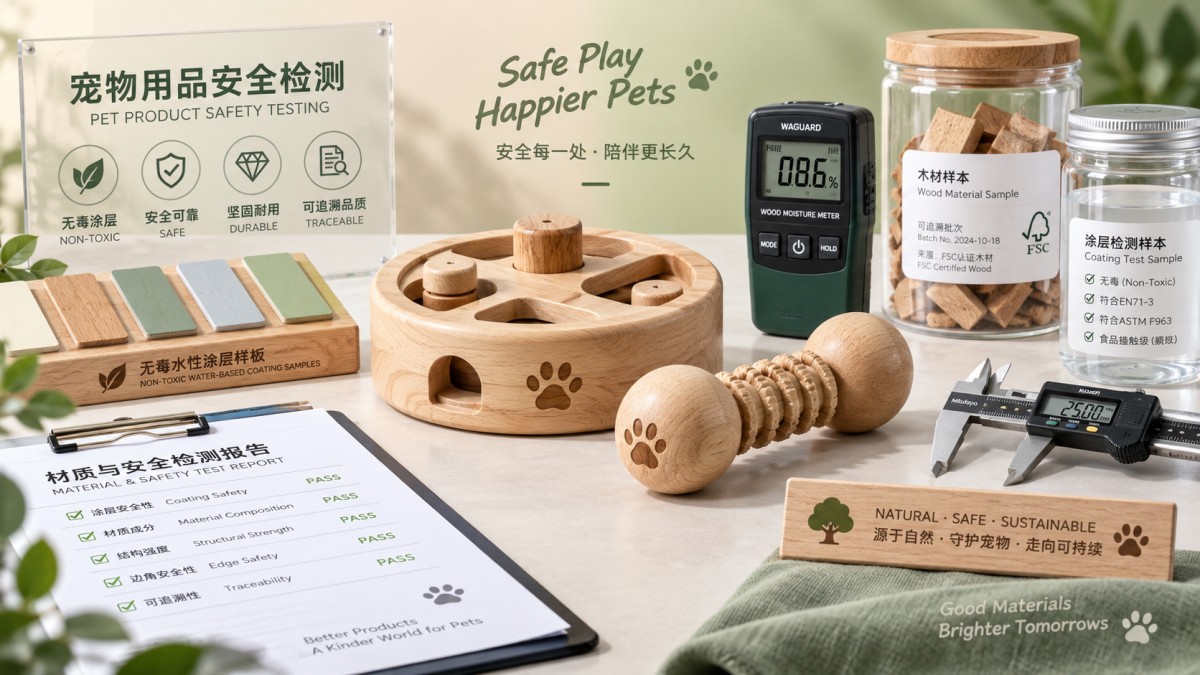
Wooden toy suppliers must first identify where the product will be sold. Safety requirements vary across the European Union, United States, United Kingdom, Canada, Australia, and other markets.
For the European Union, suppliers commonly need to support compliance with the Toy Safety Directive and applicable EN 71 standards before products can carry the CE mark.
EN 71 covers several risk areas, including mechanical properties, flammability, and chemical migration. Buyers should confirm which parts apply to their exact product design and materials.
In the United States, children’s toys generally require testing under ASTM F963. Products intended for children aged twelve and under may also require a Children’s Product Certificate.
The Consumer Product Safety Improvement Act creates additional obligations around lead, phthalates, tracking labels, and third-party testing. Suppliers should understand these requirements before sampling begins.
UK-bound products may require UKCA marking, although CE marking rules can change depending on product category and regulatory updates. Buyers should validate current obligations before shipment.
A capable supplier does not merely state that it is “EN71 certified.” It should provide current reports showing the tested product, applicable standard, laboratory, dates, and conclusions.
Ask whether reports cover the same materials, paint colors, dimensions, age grading, and construction planned for your order. Generic reports from unrelated samples do not eliminate compliance risk.
Verify the Wood Source, Species, and Material Traceability
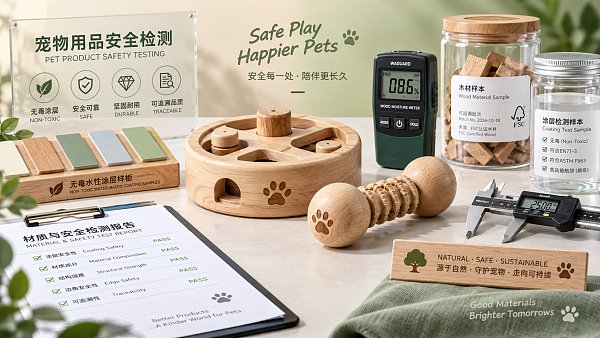
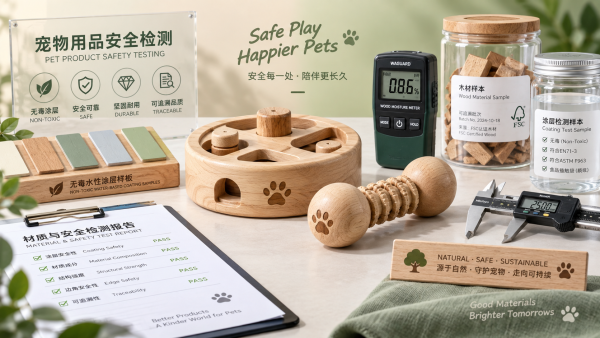
Wooden toy safety begins with the raw material. Buyers should know the wood species, country of origin, treatment method, moisture specification, and supplier traceability process.
Different wood species have different grain patterns, hardness, splintering behavior, and natural chemical characteristics. These differences can affect machining quality, durability, and the appropriate finishing process.
Suppliers should avoid wood containing visible cracks, knots likely to detach, insect damage, mold, or excessive moisture. Poor material selection often creates defects later in production.
Moisture content deserves particular attention. Wood that is too wet can warp, crack, separate at glue joints, or develop mold during storage and international transportation.
Ask suppliers how they inspect incoming lumber and whether they maintain batch records. A documented incoming-quality process makes it easier to trace and contain problems quickly.
For sustainability-sensitive retailers, wood sourcing should also be reviewed through FSC, PEFC, or equivalent chain-of-custody documentation where commercially and legally appropriate.
Sustainability certification does not replace toy safety testing. Still, verified forestry records can reduce sourcing risk and support buyer claims about responsible material procurement.
Buyers should request a bill of materials that identifies solid wood, plywood, MDF, particleboard, cork, fabric, magnets, metal fasteners, paints, adhesives, and packaging components.
Test Paints, Coatings, Adhesives, and Chemical Migration
Non-toxic claims must be supported by evidence. The greatest chemical risks in wooden toys often come from paint, varnish, ink, glue, stain, and decorative printing.
Suppliers should provide chemical test reports for all relevant surface coatings, especially when toys are intended for mouthing, chewing, handling, or use by children under three.
Under EN 71-3, laboratories assess the migration of certain elements from toy materials. This helps identify risks associated with substances such as lead, cadmium, chromium, and mercury.
US buyers should also verify lead content and soluble lead limits under applicable federal rules. Painted surfaces, printed graphics, and colored accessories need individual attention.
Phthalate testing may be necessary when products include plasticized components, soft grips, rubber elements, flexible straps, or coated accessories. Wooden toys often contain mixed materials.
Adhesives require careful review because glue failure creates both chemical and mechanical risks. Confirm whether adhesives are suitable for children’s products and tested under relevant standards.
Suppliers should control color batches tightly. Switching paint vendors or substituting pigments without approval can invalidate prior laboratory reports and create noncompliant finished goods.
Require a change-control procedure covering materials, suppliers, formulas, and manufacturing locations. This ensures your team receives notice before any adjustment affects compliance documentation.
Check Mechanical Safety, Splinters, Edges, and Small Parts
Mechanical safety is the most visible aspect of wooden toy quality, but buyers should assess it systematically rather than relying on a quick visual sample review.
Every accessible edge should be rounded, sanded, and consistently finished. Sharp corners, rough grain, exposed staples, and chipped paint can cause cuts or skin irritation.
Splintering is particularly important because children may grip, mouth, throw, or repeatedly drop wooden toys. Suppliers need sanding standards and inspection criteria for exposed surfaces.
Ask how components are checked after machining, before coating, and after final assembly. Multiple inspection points are more reliable than discovering defects only during final packing.
Products for children under three must be assessed for choking hazards. Small balls, wheels, pegs, buttons, and detachable decorative parts require particular scrutiny.
Small-parts testing evaluates whether components can fit entirely inside a prescribed cylinder representing a young child’s airway. Failed components may require redesign or higher age grading.
Pull, torque, tension, drop, impact, and compression tests help determine whether attached parts remain secure during foreseeable use. Test methods should match the product’s intended play pattern.
Buyers should review actual test samples, not only written claims. A wooden pull toy, stacking set, puzzle, or activity board each presents different stress points.
Assess Age Grading, Warning Labels, and Product Instructions
Correct age grading is a safety decision, not simply a marketing choice. It determines applicable standards, test methods, labeling requirements, and how consumers understand product risks.
Suppliers should explain why a toy is suitable for a stated age group. Consider component size, skill level, intended use, supervision expectations, and foreseeable misuse.
A product may require a choking-hazard warning when small parts are present and the item is not suitable for children under three. Wording must match local rules.
Labels should remain legible through normal handling and distribution. Buyers should check that warnings, tracking codes, importer details, and compliance marks are durable and accurate.
For multilingual markets, packaging and instructions must use the appropriate languages. Translation errors can undermine legal compliance and create confusion around assembly or safe use.
Assembly instructions matter for larger wooden toys, furniture-style play products, and activity equipment. Missing fasteners, unclear diagrams, or incorrect steps can create post-purchase hazards.
Retailers should verify that packaging does not introduce new risks. Polybags, staples, sharp box inserts, loose ties, and poorly secured accessories need assessment during final approval.
Product traceability labels should allow the brand and supplier to identify production batches quickly. This supports recall management, complaint investigation, and targeted corrective actions.
Review Factory Quality Systems and Production Controls
Laboratory testing proves a sample met defined requirements at one point in time. Factory quality systems determine whether every production batch can consistently meet the same standard.
Buyers should review the supplier’s documented quality process from incoming materials through machining, sanding, painting, assembly, packing, and final inspection.
Effective factories use approved samples, standard operating procedures, inspection checklists, and clearly defined defect limits. These controls reduce dependence on subjective operator judgment.
Ask whether workers receive training on splinter detection, paint defects, glue application, loose-part risks, and packaging accuracy. Safety failures often start with inconsistent execution.
Calibration records for gauges, scales, test equipment, and moisture meters are also useful. Measurements cannot be trusted when the tools themselves are unreliable.
Factories should maintain corrective-action records when defects occur. Look for evidence that the supplier identifies root causes, assigns responsibility, and verifies whether changes actually work.
Third-party social and ethical audits are not toy safety certificates, but they can indicate operational maturity. Strong management practices often support more reliable production discipline.
For high-volume programs, buyers should consider pre-production inspections, during-production inspections, and pre-shipment inspections. Independent oversight reduces the chance of shipping avoidable defects.
Use Independent Testing and Inspection Before Final Shipment
Independent verification is especially valuable when sourcing from a new factory, developing a private-label range, changing materials, or entering a tightly regulated consumer market.
Choose accredited laboratories with experience in children’s products and the standards relevant to your destination market. Laboratory scope and accreditation should be checked before testing begins.
Testing should be performed on representative finished goods whenever possible. Raw material reports are useful, but assembled products may reveal additional hazards introduced during manufacturing.
Pre-shipment inspections should include workmanship, quantity, packaging, labeling, dimensions, functionality, and safety-critical defects. Inspectors should use approved samples and buyer-defined acceptance criteria.
AQL sampling can help manage large orders, but it should not be the only protection for critical hazards. Zero tolerance is generally appropriate for sharp points, loose parts, and serious labeling errors.
Request clear reports with photographs, defect classifications, tested quantities, and recommendations. Vague inspection summaries make it difficult to decide whether rework, retesting, or shipment holds are necessary.
When issues are found, require documented corrective action before release. For serious failures, retesting after rework may be necessary rather than accepting a supplier’s verbal confirmation.
Keep compliance documents organized by product SKU, production batch, market, and revision date. Accessible records improve internal approvals and reduce response time during retailer audits.
Evaluate Responsible Manufacturing Risks Beyond Formal Compliance
Formal testing is essential, but buyers should also consider broader manufacturing risks that affect product safety, brand trust, and long-term supplier reliability.
Check whether suppliers manage dust, chemicals, ventilation, fire prevention, and worker protection appropriately. Poor production conditions can lead to contamination, inconsistent finishing, and disrupted supply.
Environmental controls matter when paints, coatings, and adhesives are used. Responsible chemical storage and waste handling reduce the chance of accidental substitutions or uncontrolled material exposure.
Retail buyers increasingly expect suppliers to demonstrate responsible sourcing and transparent operations. These expectations often influence vendor approval, marketplace eligibility, and brand reputation.
For companies operating across consumer categories, consistent supplier governance creates efficiencies. The same evidence-based approach can support toys, baby products, pet accessories, gifts, and household goods.
Global Consumer Sourcing teams should treat wooden toy safety as a supplier-management discipline rather than a one-time documentation exercise. Ongoing monitoring protects product continuity and commercial value.
The most reliable manufacturers communicate early when designs create testing concerns. Suppliers that identify risks before mass production help buyers avoid expensive delays and rushed redesigns.
Price should never be the only qualification criterion. A lower unit cost can quickly disappear when products fail testing, require rework, miss retail launch windows, or trigger returns.
Build a Practical Approval Checklist for Wooden Toy Suppliers
Before approving a supplier, confirm the intended market, product age grade, applicable standards, required labeling, and the exact materials used in each product variation.
Request current laboratory reports that match the finished product. Review reports for chemical migration, lead, phthalates where applicable, mechanical safety, flammability, and small-parts requirements.
Verify wood species, moisture controls, coating specifications, adhesive details, and material traceability. Document approved suppliers and prohibit substitutions without written buyer authorization.
Evaluate samples for smooth finishes, secure components, paint adhesion, consistent assembly, and packaging quality. Conduct foreseeable-use checks that reflect how children will actually handle the toy.
Audit the factory’s quality controls, worker training, inspection records, change-management process, and corrective-action system. A supplier should demonstrate repeatable controls, not rely on final sorting.
Arrange independent inspections and testing at appropriate stages, especially for first orders or complex designs. Hold shipment until critical nonconformities are corrected and verified.
Maintain a product compliance file containing certificates, test reports, approved artwork, labels, supplier declarations, inspection reports, and batch identifiers for each market.
Repeat key checks when designs, colors, materials, factories, or regulations change. Compliance is not permanent; it must be maintained throughout the product lifecycle.
Conclusion: Safety Evidence Should Drive Supplier Selection
What safety checks should wooden toy suppliers pass? The strongest answer is a complete system: market compliance, safe materials, tested construction, accurate labeling, controlled production, and independent verification.
Retailers and private-label brands should favor suppliers that provide clear evidence, welcome technical questions, manage changes responsibly, and understand the requirements of destination markets.
A smooth wooden surface and attractive design are only starting points. Real buyer confidence comes from traceability, testing discipline, production controls, and the ability to prevent recurring safety failures.
By applying a structured approval process, sourcing teams can reduce recalls, protect children, strengthen retailer relationships, and build wooden toy assortments that are safer, more reliable, and commercially sustainable.
- toy suppliers
- toy safety
- toy materials
- toy quality
- pet accessories
- baby products
- wooden toys
- retail buyers
- product safety
- product compliance
- global buyers
- international retail
- global consumer sourcing
- supplier selection
- material selection
- toy safety testing
- What safety checks should wooden toy suppliers pass?
Related Intelligence
 STEM & Educational ToysSep 20, 2026What Safety Checks Should Wooden Toy Suppliers Pass?What safety checks should wooden toy suppliers pass? Explore essential compliance, material traceability, chemical testing, and quality controls to source safer toys with confidence.
 Infant Feeding & CareSep 20, 2026Which Teething Toy Materials Are Easiest to Clean?Which teething toy materials are easiest to clean? Discover why silicone and natural rubber lead for hygienic, easy-care pet chew toys.
 Infant Feeding & CareSep 20, 2026How Can Retailers Prevent Mold Complaints About Bath Toys?How can retailers prevent mold complaints about bath toys? Explore drainable designs, supplier controls, testing, and care guidance to reduce moisture risks.
 Camping & WaterSep 20, 2026Which Folding Chair Fabrics Last Longest Outdoors?Which folding chair fabrics last longest outdoors? Compare acrylic, PVC-coated polyester, UV-stabilized polyester, and mesh for durable, pet-friendly outdoor seating.
 Camping & WaterSep 20, 2026Are Folding Camping Chairs Tested for Weight Capacity?Are folding camping chairs tested for weight capacity? Learn what credible load testing, safety margins, and supplier documentation mean for confident outdoor product sourcing.
 Corporate & Seasonal GiftsSep 20, 2026How Can Corporate Gift Buyers Avoid Missing Event Deadlines?How do corporate gift buyers avoid missed event deadlines? Discover proven sourcing, customization, compliance, and shipping strategies for pet-themed corporate gifts.
 Corporate & Seasonal GiftsSep 20, 2026What Should Be Approved Before Placing a Custom Gift Order?What should be approved before placing a custom gift order? Explore the essential checks for safe, compliant, retail-ready custom pet gifts.
 Corporate & Seasonal GiftsSep 20, 2026Which Custom Gift Materials Have the Lowest Defect Rates?Which custom gift materials have the lowest defect rate? Explore why silicone, stainless steel, polypropylene, and polyester help pet gift brands reduce rejects and improve quality.
 Skincare OEMAug 16, 2026Amazon Enforces AI Human Metadata Rule for Beauty and Personal Care SellersAmazon now enforces AI human metadata rules for beauty sellers. Learn how to protect listings, traffic, and compliance in skincare, cosmetics, and beauty devices.
 Beauty DevicesAug 15, 2026China to Roll Out Nationwide Cross-Border Cash Pooling for MultinationalsChina to roll out nationwide cross-border cash pooling for multinationals from Sept. 14. Discover how this policy could improve treasury efficiency, liquidity management, and China-linked supply chains.
 Beauty DevicesAug 14, 2026China Imposes Temporary Export Ban on Helium, Affecting Cooling Supply ChainsChina's temporary helium export ban may disrupt cooling supply chains for beauty RF devices and laser systems. Learn what ODMs, buyers, and procurement teams should check now.
![]() Cosmetics & PkgAug 13, 2026PPWR becomes mandatory: Beauty and personal care packaging materials usher in new EPR and PFAS compliance requirementsPPWR takes effect for cosmetics packaging in the EU, bringing EPR registration and PFAS limits. Learn what brands, importers, and suppliers must do now.
Cosmetics & PkgAug 13, 2026PPWR becomes mandatory: Beauty and personal care packaging materials usher in new EPR and PFAS compliance requirementsPPWR takes effect for cosmetics packaging in the EU, bringing EPR registration and PFAS limits. Learn what brands, importers, and suppliers must do now. Cosmetics & PkgAug 12, 2026EU PPWR Now Enforced for Beauty Packaging ComplianceEU PPWR now enforced for beauty packaging compliance: learn how EPR, ERN, heavy metals and PFAS rules affect EU exports, customs clearance and platform sales.