How Do I Verify Age Grading for Educational Toys?
Age grading on an educational toy should be treated as a safety and use assessment, not a marketing recommendation. A package that says “3+” or “6+” may be appropriate, but a buyer should be able to trace that claim back to the product’s physical design, intended play pattern, foreseeable misuse, and the rules of the destination market.
For retail buyers, private-label brands, and sourcing teams, the practical question is: can the factory demonstrate why this product belongs in a given age range, and does the evidence match the exact version being purchased? Verification becomes especially important for educational products because they often combine multiple risk factors: small manipulatives, magnets, cords, batteries, chemical kits, water-based activities, wooden components, and packaging designed to look more advanced than the child using it.
An age label is only credible when the product, the documentation, and the market-specific compliance file point in the same direction.
Start with the product, not the printed age label
The first review should be physical. Ask what a child actually does with the toy, how the toy may be handled outside its intended activity, and whether a younger child could access it. Educational value does not lower the safety threshold. In some cases, it raises the need for careful assessment because learning kits encourage repeated handling, disassembly, sorting, building, pouring, or experimenting.
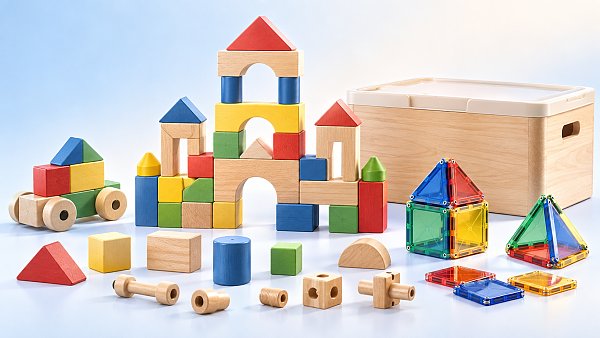
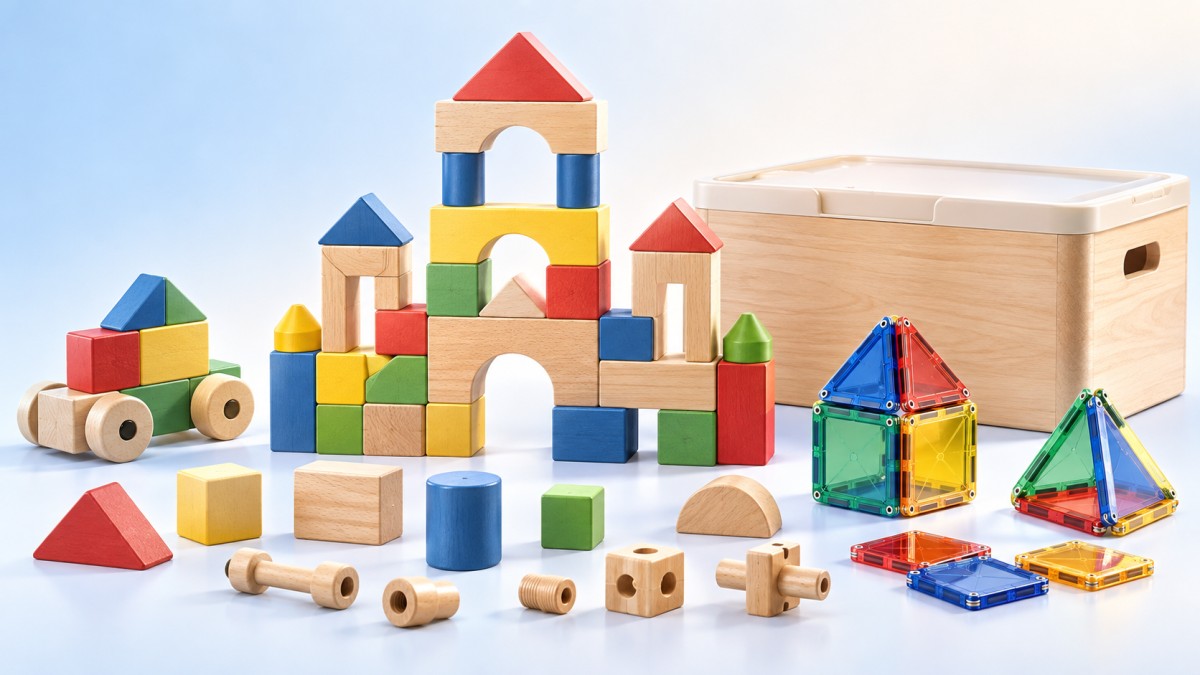
A “3+” construction set, for example, may contain pieces that are large enough when assembled but include smaller detachable connectors. A science kit marketed to school-age children may include powders, liquids, sharp tools, electrical parts, or instructions that assume adult supervision. A puzzle can be suitable for a toddler in its finished form while its packaging accessories, replacement pieces, or decorative attachments create a different risk profile.
Review the product as a child would encounter it, including:
- The main toy and every removable component.
- Accessories, refills, instruction cards, storage containers, and display packaging.
- Parts that could loosen after drops, pulling, twisting, biting, or repeated assembly.
- How the product is likely to be used by siblings outside the stated age group.
- Whether the educational task requires fine motor control, reading ability, coordination, or judgment beyond the recommended age.
This last point is often overlooked. Age grading is not only about preventing injury. It should also reflect whether the toy can be used as intended. A coding game with no physical hazard may still be poorly graded if its rules, screen interface, or required reading level make it unsuitable for the age shown on the front panel. That mismatch may not trigger a safety failure, but it can create returns, negative reviews, and frustrated parents.
For buyers, it helps to separate two questions: “Is this safe for a child of this age?” and “Can a child of this age obtain the claimed educational benefit?” The final age range should withstand both questions.
Compare the age claim with the risk category
Not every product risk is evaluated in the same way. A simple wooden stacking toy, a battery-powered language device, and a chemistry-style activity set should not be verified using one generic checklist. The starting point is to identify the risk category that drives the age recommendation.
Small parts and detachable components
Small-part risk is among the clearest reasons for a product to be restricted from children under three. However, buyers should not rely only on whether a loose item appears small. Components can be created through breakage, separation, or disassembly. A bead that is securely embedded in a learning board may be acceptable in one configuration, while a similar bead supplied for threading presents a different assessment.
Ask the supplier which components were evaluated, whether the assessment considered foreseeable use and abuse, and whether the tested samples were production-equivalent. Decorative caps, wheels, snap-on eyes, small puzzle pieces, removable stickers, and loose game tokens deserve the same attention as the obvious play parts.
Magnets, batteries, and electrical features
Educational toys increasingly use magnetic tiles, electronic readers, talking flash cards, coding boards, and light-up activity sets. These products require close scrutiny because a risk can change sharply when a magnetic element or battery becomes accessible.
A magnet that remains securely enclosed may support an older-child product. A small magnet that can detach after impact or torque creates a far more serious concern. Similarly, a battery compartment should be assessed for secure closure, access by a child, battery type, and the condition of the product after normal handling. Do not accept a broad statement that the item is “battery safe.” The review should cover the exact enclosure, fastener design, battery configuration, and production version.
Cords, tools, chemicals, and project materials
STEM and craft products frequently create age-grading issues because their risk is tied to the activity rather than the final object. Cord length, sharp points, cutting tools, heat-producing elements, adhesives, paints, clay, water beads, or experiment ingredients may limit the appropriate user age or require prominent adult-supervision instructions.
In these categories, a supplier’s proposed age grade should be assessed alongside the instructions. If the activity cannot be safely completed without an adult, the packaging and directions should communicate that clearly. A label cannot compensate for instructions that invite risky use, omit preparation steps, or leave disposal and cleanup unclear.
Match the claim to the destination market’s rules
An age grade that works for one sales region may not be enough for another. Buyers should establish the intended market before approving artwork, tooling, and testing. This is particularly important for brands that sell across online marketplaces, retail chains, distributors, and direct-to-consumer channels, where one product file may be expected to support multiple jurisdictions.
In the United States, toys intended for children are commonly reviewed against applicable requirements that can include ASTM F963, Consumer Product Safety Improvement Act obligations, third-party testing requirements for relevant children’s products, tracking-label expectations, and a Children’s Product Certificate where required. Age grading may also interact with small-parts warnings and other labeling obligations.
For the European Union, toy safety requirements, conformity assessment, technical documentation, and CE marking are central considerations. Harmonized standards may be used to support conformity where applicable, but the manufacturer remains responsible for the product’s overall safety. Other markets have their own rules, language requirements, warning conventions, and documentation expectations.
The important sourcing discipline is to avoid treating “EN71 tested,” “ASTM compliant,” or “CE available” as a complete answer. Those phrases do not establish that the report covers the correct product, age group, market, test scope, materials, and accessories. They also do not prove that the factory maintained the same specifications after the sample was tested.
When comparing suppliers, use the same request list for each candidate:
- The proposed age grading and the rationale behind it.
- Full test reports, including report number, laboratory identity, product description, model or SKU, dates, and conclusions.
- Product photos or bill-of-material references that connect the report to the item being sourced.
- Warnings, instructions, packaging artwork, and language versions for the target market.
- Declarations, certificates, or other required compliance documents for that market.
- Details of material, component, factory, and packaging changes made after testing.
A document package is strongest when it allows a reviewer to follow the trail from the retail SKU back to the tested sample and forward to the production run. If that trail breaks at any point, the age grade should not be assumed valid.
Read test reports for relevance, not just for a pass result
Many sourcing failures occur because a buyer receives a test report, sees a “pass” conclusion, and stops there. The report may be genuine yet still be insufficient for the product under consideration.
First, compare the product identification carefully. The report should describe the same item or an unmistakably equivalent configuration. A report for a four-piece wooden puzzle does not automatically cover a 24-piece version with smaller pieces, added paint colors, different backing material, or a new storage bag. A report for an earlier magnetic kit may not cover a revised enclosure or stronger magnet.
Then check the report scope. It should reflect the hazards reasonably associated with the product. An educational electronic device may require a different compliance review than a cardboard flash-card set. A craft kit may need coverage that goes beyond a general mechanical-and-physical assessment. Material-related testing should also correspond to the actual coatings, plastics, inks, textiles, and other inputs used in production.
Dates matter, but they are not a simple expiry test. A recent report can be weak if it concerns the wrong version. An older report can remain relevant only when the supplier can show that the product specification, material sources, and applicable requirements have not changed in ways that affect compliance. If the toy has been altered, recolored, resized, repackaged, or fitted with a different component, the buyer should determine whether the existing evidence still applies.
Independent laboratory reports are valuable, but they do not replace product governance. The brand, importer, or responsible economic operator may still carry legal obligations in the market where the toy is sold. Procurement teams should therefore involve their compliance lead before approving a new age range, especially when moving a product from an older-child category to a younger one.
Check whether the packaging undermines the age grade
Packaging is part of the compliance and consumer experience. An age recommendation can be technically correct while the front-of-pack message, imagery, or included accessories point to a younger user. For example, a product marked for children over three may show a toddler playing with it. A kit intended for adult-assisted use may present itself as an independent activity. A warning may be placed only on a small back panel while the main visual language suggests suitability for infants.
Buyers should review the complete pack rather than approving an age icon in isolation. Look at the product name, photographs, claims, instructional language, warning placement, online listing copy, and marketplace images. These touchpoints should describe the same audience.
Age grading also needs to be consistent across channels. A retailer’s product page, marketplace listing, carton labeling, and physical packaging should not show conflicting ranges. Inconsistent age information can trigger listing disputes and increase the chance that a product reaches an unintended user group.
Use developmental claims carefully
Educational toys are often sold with statements about early learning, fine motor skills, literacy, problem-solving, sensory exploration, or STEM development. These claims can influence how parents interpret suitability. A claim such as “ideal for preschool learning” may lead consumers to assume that the product is designed for preschool children, even if a less prominent label sets a higher age threshold.
Align developmental claims with the declared age grade and the actual activity. If a toy requires small pieces, advanced reading, careful measurement, or close adult support, the marketing language should not imply effortless independent use by a younger child. The most credible product positioning is specific about the play experience without making broad promises that the design cannot support.
This is also a useful comparison point between otherwise similar suppliers. One factory may provide generic packaging copy and a broad age range intended to maximize sales appeal. Another may provide a more defensible range, clear warnings, and instructions calibrated to the product’s actual complexity. The second offer can be commercially stronger even when its target audience is narrower.
A practical approval sequence for buyers
Age-grade verification works best when it happens before final packaging approval and purchase-order release. Leaving it until pre-shipment inspection creates unnecessary pressure, especially if the required solution involves revised tooling, different component retention, new labels, additional testing, or a redesigned activity.
A workable sequence is:
- Define the target market and intended user age before sampling.
- Review the sample, components, play pattern, and foreseeable misuse against that audience.
- Identify hazards that may set a minimum age or require warnings and supervision language.
- Request test evidence and compliance documents that match the exact product configuration.
- Audit packaging, instructions, and digital listing content for age-related consistency.
- Lock the approved bill of materials, artwork, and factory controls so later substitutions do not invalidate the assessment.
- Revisit the file whenever the design, materials, factory, components, or market scope changes.
This sequence is more useful than treating age grading as a single checkbox. It captures the fact that age suitability can change during ordinary product development: a revised clasp, a smaller accessory, a new battery door, a different coating supplier, or an added bonus item can affect the original conclusion.
When a supplier’s age grade should trigger more questions
Some signals merit a closer review. A very broad age range on a complex learning set may indicate that the supplier is using a standard template rather than assessing the specific product. So can an age grade that differs from similar products without a clear design reason. A request to use a lower age icon for commercial reasons should be treated as a product-development issue, not an artwork adjustment.
Other warning signs include reports with vague product descriptions, documents that omit accessories, different branding or model numbers without an explanation, inconsistent warnings across artwork versions, and claims that a certificate covers “all toys” made by the factory. Compliance evidence applies to defined products and conditions; it is not a transferable badge for an entire catalog.
For educational toys, the most defensible age grade is the one supported by the physical product, the expected play behavior, the instructional demands, and the compliance file for the intended market. That standard may require more work at the sourcing stage, but it gives buyers a clearer basis for approving the line and a stronger position when retailers, marketplaces, or regulators ask how the recommendation was established.
Related Intelligence
 STEM & Educational ToysSep 20, 2026How Do I Verify Age Grading for Educational Toys?How do I verify educational toy age grading? Learn how to assess safety risks, test reports, packaging, and market compliance before buying or selling.
 Corporate & Seasonal GiftsSep 20, 2026Are Promotional Items Worth Ordering for Short Campaigns?Are promotional items worth ordering for short campaigns? Learn how pet brands can choose useful, compliant giveaways that drive measurable engagement, sales, and loyalty.
 STEM & Educational ToysSep 20, 2026What Safety Checks Should Wooden Toy Suppliers Pass?What safety checks should wooden toy suppliers pass? Explore essential compliance, material traceability, chemical testing, and quality controls to source safer toys with confidence.
 Infant Feeding & CareSep 20, 2026Which Teething Toy Materials Are Easiest to Clean?Which teething toy materials are easiest to clean? Discover why silicone and natural rubber lead for hygienic, easy-care pet chew toys.
 Infant Feeding & CareSep 20, 2026How Can Retailers Prevent Mold Complaints About Bath Toys?How can retailers prevent mold complaints about bath toys? Explore drainable designs, supplier controls, testing, and care guidance to reduce moisture risks.
 Camping & WaterSep 20, 2026Which Folding Chair Fabrics Last Longest Outdoors?Which folding chair fabrics last longest outdoors? Compare acrylic, PVC-coated polyester, UV-stabilized polyester, and mesh for durable, pet-friendly outdoor seating.
 Camping & WaterSep 20, 2026Are Folding Camping Chairs Tested for Weight Capacity?Are folding camping chairs tested for weight capacity? Learn what credible load testing, safety margins, and supplier documentation mean for confident outdoor product sourcing.
 Corporate & Seasonal GiftsSep 20, 2026How Can Corporate Gift Buyers Avoid Missing Event Deadlines?How do corporate gift buyers avoid missed event deadlines? Discover proven sourcing, customization, compliance, and shipping strategies for pet-themed corporate gifts.
 Corporate & Seasonal GiftsSep 20, 2026What Should Be Approved Before Placing a Custom Gift Order?What should be approved before placing a custom gift order? Explore the essential checks for safe, compliant, retail-ready custom pet gifts.
 Corporate & Seasonal GiftsSep 20, 2026Which Custom Gift Materials Have the Lowest Defect Rates?Which custom gift materials have the lowest defect rate? Explore why silicone, stainless steel, polypropylene, and polyester help pet gift brands reduce rejects and improve quality.
 Skincare OEMAug 16, 2026Amazon Enforces AI Human Metadata Rule for Beauty and Personal Care SellersAmazon now enforces AI human metadata rules for beauty sellers. Learn how to protect listings, traffic, and compliance in skincare, cosmetics, and beauty devices.
 Beauty DevicesAug 15, 2026China to Roll Out Nationwide Cross-Border Cash Pooling for MultinationalsChina to roll out nationwide cross-border cash pooling for multinationals from Sept. 14. Discover how this policy could improve treasury efficiency, liquidity management, and China-linked supply chains.
 Beauty DevicesAug 14, 2026China Imposes Temporary Export Ban on Helium, Affecting Cooling Supply ChainsChina's temporary helium export ban may disrupt cooling supply chains for beauty RF devices and laser systems. Learn what ODMs, buyers, and procurement teams should check now.