
FDA Updates RF Beauty Device 510(k) Guidance
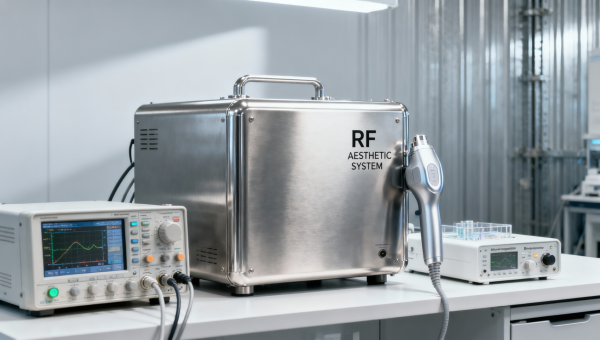
On May 24, 2026, the U.S. Food and Drug Administration (FDA) issued Revision K26-12 of its Premarket Notification (510(k)) Guidance for Electronic Aesthetic Devices, mandating new clinical safety evidence for radiofrequency (RF)-based cosmetic devices. The update directly affects manufacturers, OEMs, and exporters serving the U.S. aesthetic device market — particularly those whose products deliver RF energy for skin tightening, hair removal, or similar indications. The requirement stems from increased post-market safety signals and the FDA’s ongoing effort to strengthen premarket risk assessment for consumer-facing energy-based devices.
Event Overview
The FDA published Revision K26-12 of its 510(k) guidance on May 24, 2026. It requires that all new 510(k) submissions for electronic aesthetic devices incorporating radiofrequency (RF) energy — including but not limited to skin-tightening devices and laser-hair-removal systems — must include at least one clinical safety study conducted in accordance with ISO 14155:2020 (Clinical investigation of medical devices for human subjects — Good clinical practice). The guidance takes effect immediately upon issuance. No grandfathering applies to pending or previously cleared RF devices seeking new indications or significant modifications.
Industries Affected
Direct Trade Enterprises: Exporters and U.S.-based distributors marketing RF beauty devices under their own brand face extended registration timelines and higher upfront compliance costs. Clinical study requirements add 6–12 months to typical 510(k) preparation and increase submission-related expenses by an estimated 35–60%, depending on study scope and geography. Those relying on legacy clearances without updated clinical data may encounter delays or rejections during FDA review of modifications or label expansions.
Raw Material Procurement Enterprises: Suppliers of RF-generating components (e.g., RF generators, impedance-matching circuits, applicator handpieces) are indirectly impacted. While not subject to direct FDA submission obligations, demand is shifting toward components pre-validated for clinical-use environments. Buyers increasingly require traceable biocompatibility documentation and electromagnetic compatibility (EMC) test reports aligned with IEC 60601-2-22, raising qualification thresholds for component vendors.
Contract Manufacturing & OEM Enterprises: Skincare OEMs and contract manufacturers producing RF devices for private-label clients now bear greater technical responsibility. They must either support clients’ clinical study design or co-develop protocols compliant with ISO 14155. This elevates their role from hardware assembler to regulatory partner — increasing liability exposure and necessitating internal GCP training and quality system updates (e.g., design history file enhancements, clinical evaluation plan integration).
Supply Chain Service Providers: Regulatory consultancies, testing labs, and CROs specializing in aesthetic devices report rising demand for ISO 14155-compliant clinical trial management, especially in regions with established IRB infrastructure (e.g., EU, Canada, Australia). Logistics providers handling clinical device shipments must now verify storage conditions (e.g., temperature-controlled transport for reusable applicators), adding documentation layers to standard import/export workflows.
Key Considerations and Recommended Actions
Review existing 510(k) clearances for RF-related claims
Manufacturers should audit current clearances to identify devices making RF-specific performance or safety claims — even if originally cleared via predicate pathways without clinical data. Any planned labeling changes, software updates, or new patient populations may now trigger the revised clinical requirement.
Engage clinical research partners early — not just before submission
Given typical lead times for ethics approval, site activation, and subject recruitment, initiating clinical planning at the product concept stage — rather than during late-stage development — significantly reduces time-to-market risk. Prioritizing multi-center studies with harmonized protocols also supports future global submissions (e.g., MDR, Health Canada).
Update technical documentation to reflect clinical evaluation integration
ISO 14971:2019 risk management files must now explicitly reference clinical safety findings, and design verification protocols should incorporate clinical endpoints (e.g., incidence of transient erythema, pain scores, operator-reported adverse events). This bridges the gap between engineering validation and real-world use evidence.
Assess impact on pricing and commercial timelines
Companies should revise financial models to reflect added clinical investment, potential delays in U.S. launch schedules, and possible shifts in go-to-market strategy — such as prioritizing CE Mark or ANVISA pathways first, where clinical requirements remain less prescriptive for Class IIa/IIb RF devices.
Editorial Perspective / Industry Observation
Analysis shows this revision reflects a broader FDA pivot toward evidence-based oversight of low- to moderate-risk aesthetic technologies — especially those increasingly sold directly to consumers. Observably, the agency is treating RF devices less as ‘routine’ electronics and more as interventionally active tools requiring human-use confirmation. From an industry perspective, the move does not signal a retreat from innovation but rather a recalibration of evidentiary expectations in line with evolving usage patterns (e.g., home-use RF devices with longer duty cycles, combination modalities). Current more relevant concern is not whether clinical data will be required, but how rigorously FDA reviewers will assess study design validity — particularly for non-randomized, single-arm trials common in aesthetic device research.
Conclusion
This guidance marks a structural shift in U.S. market access for RF-based aesthetic devices — one that elevates clinical accountability without mandating full PMA-level evidence. For stakeholders, it reinforces that regulatory strategy must now be embedded earlier in product development, not layered on as a final step. The long-term implication is a more resilient, clinically grounded aesthetic device ecosystem — though near-term friction in cost, timeline, and capability gaps remains inevitable.
Source Attribution
U.S. FDA, Guidance for Industry and Food and Drug Administration Staff: Premarket Notification (510(k)) Submissions for Electronic Aesthetic Devices, Revision K26-12, issued May 24, 2026. Available at: https://www.fda.gov/media/XXXXX/download.
Note: FDA has indicated that future updates may address specific RF parameters (e.g., peak power, pulse duration, duty cycle thresholds) and clarify applicability to hybrid devices (e.g., RF + LED or RF + microcurrent). These elements remain under active review and are not yet codified in K26-12.
Related Intelligence
 Skincare OEMAug 16, 2026Amazon Enforces AI Human Metadata Rule for Beauty and Personal Care SellersAmazon now enforces AI human metadata rules for beauty sellers. Learn how to protect listings, traffic, and compliance in skincare, cosmetics, and beauty devices.
 Beauty DevicesAug 15, 2026China to Roll Out Nationwide Cross-Border Cash Pooling for MultinationalsChina to roll out nationwide cross-border cash pooling for multinationals from Sept. 14. Discover how this policy could improve treasury efficiency, liquidity management, and China-linked supply chains.
 Beauty DevicesAug 14, 2026China Imposes Temporary Export Ban on Helium, Affecting Cooling Supply ChainsChina's temporary helium export ban may disrupt cooling supply chains for beauty RF devices and laser systems. Learn what ODMs, buyers, and procurement teams should check now.
![]() Cosmetics & PkgAug 13, 2026PPWR becomes mandatory: Beauty and personal care packaging materials usher in new EPR and PFAS compliance requirementsPPWR takes effect for cosmetics packaging in the EU, bringing EPR registration and PFAS limits. Learn what brands, importers, and suppliers must do now.
Cosmetics & PkgAug 13, 2026PPWR becomes mandatory: Beauty and personal care packaging materials usher in new EPR and PFAS compliance requirementsPPWR takes effect for cosmetics packaging in the EU, bringing EPR registration and PFAS limits. Learn what brands, importers, and suppliers must do now. Cosmetics & PkgAug 12, 2026EU PPWR Now Enforced for Beauty Packaging ComplianceEU PPWR now enforced for beauty packaging compliance: learn how EPR, ERN, heavy metals and PFAS rules affect EU exports, customs clearance and platform sales.
 Cosmetics & PkgAug 11, 2026EU PPWR Rules Take Effect on Aug. 12 for Beauty PackagingEU PPWR rules for beauty packaging take effect on Aug. 12, 2026. Learn key compliance steps, EPR, labeling, PFAS limits, and how to avoid customs delays and fines.
 Smart Pet DevicesAug 10, 2026EU EPR Rules to Cover Smart Pet Devices on Aug. 15EU EPR Rules will cover smart pet devices from Aug. 15, 2026. Learn how smart collars, feeders, and monitoring devices can avoid delisting, customs delays, and compliance risks in the EU.
 Infant Feeding & CareAug 09, 2026CPSC Recalls Baby Sleep Sacks Over Undeclared TDCPPCPSC Recalls Baby Sleep Sacks Over Undeclared TDCPP: learn how this 2026 recall impacts CPC documents, third-party testing, and U.S. baby product compliance for exporters.
 Infant Feeding & CareAug 08, 2026ECHA Adds 5 SVHCs, Importer Notices Due From Oct 2026ECHA adds 5 SVHCs to the Candidate List, with importer notices due from October 2026. Learn how REACH affects exporters, supply chains, and documentation readiness.
 Baby Gear & StrollersAug 07, 2026CPSC Revises Crib Rail Standard for November 2026CPSC revises crib rail standard for November 2026, adding dynamic impact tests and mandatory third-party lab testing. Learn how the new rule affects U.S. market access, compliance, and shipments.
 Electronic & RC ToysAug 06, 2026EU to Require EN IEC 62115:2025 for Electronic ToysEU to Require EN IEC 62115:2025 for Electronic Toys from Oct 1, 2026. Learn scope, battery and AI safety updates, CE compliance risks, and how exporters can avoid customs delays.
 Baby Gear & StrollersAug 05, 2026US Stroller Stability Rule Takes Effect Aug. 15US Stroller Stability Rule Takes Effect Aug. 15: learn how new U.S. stroller compliance, ASTM F833-26a, and CPSC testing rules may affect imports, certification, and shipment readiness.
 Infant Feeding & CareAug 04, 2026ECHA Adds 5 SVHCs, Triggering Baby Care Export ReviewECHA adds 5 SVHCs, prompting an urgent baby care export review for EU-bound products. Learn the 0.1% threshold risks, compliance steps, and how to avoid customs delays and fines.












