EU Ends €150 Relief, Adds €3 Duty per Parcel
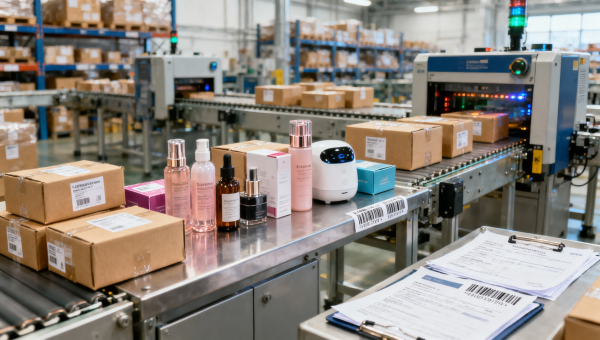
On July 1, 2026, the EU will move from a low-value parcel duty exemption to a flat €3 customs charge per parcel for cross-border shipments under €150. For skincare OEM suppliers, cosmetics and packaging exporters, and beauty device sellers using direct-to-consumer or B2B2C shipping through platforms such as Temu, SHEIN, and Amazon, this is not only a tariff adjustment but also a change that directly affects landed cost calculations, customs filing discipline, and delivery execution into the EU market.
What the confirmed rule change says
The confirmed information is that the Council of the European Union has decided to abolish the customs duty exemption for cross-border small parcels valued below €150 from July 1, 2026. In its place, a fixed customs duty of €3 per parcel will apply.
The event summary also makes clear that skincare OEM, cosmetics and packaging, and beauty device categories shipped directly into the EU through Temu, SHEIN, and Amazon will need to reassess costs under B2C and B2B2C models.
Another confirmed point is that IOSS VAT filing has become a standard requirement in this context, and shippers that are not registered for IOSS may face customs detention of their goods.
Where the pressure will show up first
Direct-shipping sellers will need to revisit per-order economics
From an industry perspective, businesses relying on low-value direct mail into the EU are likely to feel the impact most immediately because the new flat duty changes the cost structure at parcel level rather than only at product level. The affected business steps are likely to include pricing, promotion design, parcel splitting decisions, and order-fulfillment planning.
What deserves closer attention is whether current sales models still work once the fixed charge is applied to each shipment, especially for beauty and personal care categories that frequently move in small-ticket, high-frequency orders.
OEM and packaging suppliers may face new buyer demands
For skincare OEM manufacturers and cosmetics packaging suppliers, the impact may not stop at shipping cost. Analysis shows that overseas buyers and platform-facing traders may start pushing for adjustments in order batching, packaging combinations, or shipment structure in order to manage customs and tax exposure more carefully.
In practical terms, suppliers should pay attention to whether customers begin requesting different packing formats, revised delivery terms, or more complete customs-supporting documentation for direct EU fulfillment.
Beauty device shipments face a tighter compliance-delivery link
For beauty device exporters, the issue is not limited to the added €3 duty. Observably, the summary points to customs detention risk where IOSS registration is missing, which means tax compliance and delivery continuity are now more directly connected. This can affect shipment release, delivery timing, and after-sales commitments tied to cross-border orders.
Businesses in this segment should therefore watch not only customs cost changes but also whether their shipping arrangements, declared information, and platform fulfillment processes remain aligned with the new requirement environment.
Supply chain service providers will be drawn deeper into filing accuracy
Logistics coordinators, customs-facing service providers, and fulfillment partners may also come under pressure because the rule change shifts more operational importance onto filing readiness. Where IOSS registration is absent, detention risk becomes a concrete operational issue rather than a back-office matter.
For these participants, the critical areas are shipment data accuracy, document readiness, and coordination with shippers using direct-entry models into the EU.
What companies should review now
Check whether IOSS arrangements are actually in place
Analysis shows that one of the clearest practical issues in this update is not only the new duty itself but the customs risk attached to missing IOSS registration. Companies shipping into the EU should verify whether the relevant filing arrangement is already active and whether the responsible party in the transaction chain is clearly identified.
Recalculate parcel-based cost assumptions
Businesses using direct-shipping models should review whether their current margin logic still holds when each parcel carries a fixed additional customs charge. This is especially relevant for low-order-value beauty, skincare, and accessory shipments where parcel-level economics can shift more quickly than factory-side product cost.
Review document flow and shipment setup
What deserves closer attention is the alignment between order flow, customs data, and delivery execution. If shipment documents, declared values, or fulfillment responsibilities are not clearly organized, the operational effect of the rule change may show up through delays and customs holds rather than only through higher cost.
Watch for further execution language
The confirmed information establishes the policy direction and start date, but it does not provide all implementation details. It is therefore more appropriate to monitor how the rule is expressed in operational guidance, customs practice, platform requirements, and transaction documents before treating every commercial impact as fully settled.
Why this looks like a real execution signal
Observably, this update is more than a broad policy discussion because it combines a clear effective date, a defined replacement mechanism for the former exemption, and a direct compliance consequence for missing IOSS registration. That makes it more appropriate to understand this as an implemented rule change with immediate operational relevance for affected cross-border models.
At the same time, analysis shows that the market impact should still be assessed with caution. The summary confirms cost reassessment pressure and customs detention risk, but it does not yet answer every practical question about how different sellers, product mixes, and fulfillment structures will adapt in day-to-day execution.
How the market is more likely to read this update
For the beauty and personal care trade chain, this development is best understood as a compliance-and-delivery issue as much as a customs-cost issue. The immediate significance lies in the end of the under-€150 duty exemption, the move to a fixed per-parcel charge, and the explicit importance of IOSS readiness.
A neutral reading is that companies should not treat this as a temporary headline effect. It is more appropriate to see it as a concrete rule change that requires review of direct-shipping economics, customs preparation, and platform-linked fulfillment arrangements, while still keeping watch on how execution standards develop in practice.
Basis of this article and what still needs verification
This article is generated based on the user-provided news title, event date, and event summary. For developments of this kind, the source types usually relevant include official announcements, regulatory releases, customs or trade authority notices, industry association updates, standard-setting documents, and reporting by authoritative media.
No specific official source link was provided in the input, so the underlying official publication path still needs to be verified on an ongoing basis. Further observation should focus on detailed implementation wording, customs enforcement practice, platform-side compliance requirements, transaction document changes, and how affected companies execute the rule in actual shipments.
Related Intelligence
 Cosmetics & PkgOct 21, 2026BASF Plans Beauty Innovation Showcase at in-cosmetics Asia 2026Explore BASF’s planned beauty innovations at in-cosmetics Asia 2026 in Bangkok, with a focus on skin protection, repair and sustainable solutions for personal care formulators.
 Cosmetics & PkgOct 20, 2026Beauty Tops Amazon’s 2026 Prime Big Deal Days Shopping CategoriesBeauty tops Amazon’s 2026 Prime Big Deal Days at 32% of shoppers, according to Market Defense. Explore what the findings could mean for product selection, inventory and promotional planning.
 Infant Feeding & CareOct 14, 2026How Can Retailers Prevent Baby Clothing Color Bleeding Claims?How can retailers avoid color bleeding claims on baby clothing? Discover testing, supplier controls, and care-label strategies to reduce returns and protect customer trust.
 Infant Feeding & CareOct 14, 2026Which Baby Clothing Materials Are Easier to Source Compliantly?What materials make baby clothing easier to source compliantly? Compare cotton, blends, and certified options, with practical supplier checks to reduce risk and make smarter sourcing decisions.
 Baby Gear & StrollersOct 14, 2026Are Baby Carrier Buckle Failures a Common Reason for Returns?Are baby carrier buckle failures a common return issue? Explore defects, usability complaints, and safety checks to make informed sourcing decisions before your next order.
 Baby Gear & StrollersOct 14, 2026How Do You Compare Baby Carrier Suppliers on Safety and Cost?How do I compare baby carrier suppliers on safety and cost? Learn to verify safety evidence, assess factory controls, and compare total landed costs to make a confident sourcing decision.
 STEM & Educational ToysSep 20, 2026How Do I Verify Age Grading for Educational Toys?How do I verify educational toy age grading? Learn how to assess safety risks, test reports, packaging, and market compliance before buying or selling.
 Corporate & Seasonal GiftsSep 20, 2026Are Promotional Items Worth Ordering for Short Campaigns?Are promotional items worth ordering for short campaigns? Learn how pet brands can choose useful, compliant giveaways that drive measurable engagement, sales, and loyalty.
 STEM & Educational ToysSep 20, 2026What Safety Checks Should Wooden Toy Suppliers Pass?What safety checks should wooden toy suppliers pass? Explore essential compliance, material traceability, chemical testing, and quality controls to source safer toys with confidence.
 Infant Feeding & CareSep 20, 2026Which Teething Toy Materials Are Easiest to Clean?Which teething toy materials are easiest to clean? Discover why silicone and natural rubber lead for hygienic, easy-care pet chew toys.
 Infant Feeding & CareSep 20, 2026How Can Retailers Prevent Mold Complaints About Bath Toys?How can retailers prevent mold complaints about bath toys? Explore drainable designs, supplier controls, testing, and care guidance to reduce moisture risks.
 Camping & WaterSep 20, 2026Which Folding Chair Fabrics Last Longest Outdoors?Which folding chair fabrics last longest outdoors? Compare acrylic, PVC-coated polyester, UV-stabilized polyester, and mesh for durable, pet-friendly outdoor seating.
 Camping & WaterSep 20, 2026Are Folding Camping Chairs Tested for Weight Capacity?Are folding camping chairs tested for weight capacity? Learn what credible load testing, safety margins, and supplier documentation mean for confident outdoor product sourcing.