
FDA Updates Pre-Market Notification Guidance for RF Beauty Devices
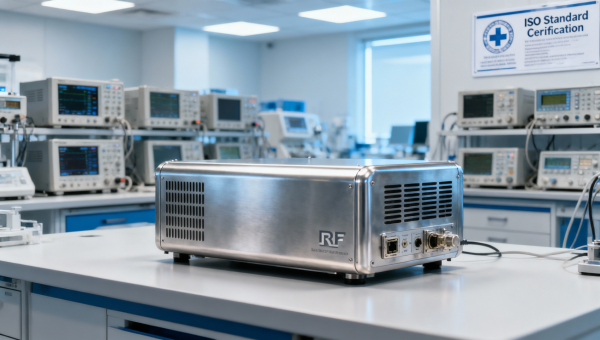
FDA has updated its 510(k) guidance for electronic aesthetic devices, requiring clinical safety data for RF, microcurrent, and LED-based products — effective with pre-review initiation on June 1, 2026. Skincare OEMs and beauty device manufacturers are directly impacted, with potential effects on Q3 delivery timelines.
Event Overview
On May 23, 2026, the U.S. Food and Drug Administration (FDA) issued Revision K26-017 of its 510(k) Premarket Notification Guidance for Electronic Aesthetic Devices>. The revision mandates that all devices incorporating radiofrequency (RF), electrical muscle stimulation (EMS), or LED phototherapy modules must submit at least one clinical safety study report compliant with ISO 10993-1 as part of their 510(k) application. The revised guidance enters pre-review phase on June 1, 2026. This applies to skincare original equipment manufacturers (OEMs) and beauty device manufacturers.
Industries Affected
Skincare OEMs
OEMs designing or contracting RF/EMS/LED devices for U.S. market distribution will face extended submission timelines due to the new clinical reporting requirement. Impact manifests primarily in delayed 510(k) clearance cycles and increased documentation burden during regulatory filing.
Beauty Device Manufacturers
Manufacturers holding or planning 510(k) submissions for RF-based facial or body devices must now integrate clinical safety evaluation into product development workflows. This affects internal R&D scheduling, third-party testing procurement, and pre-submission validation planning.
Regulatory Affairs & Compliance Service Providers
Third-party consultants and regulatory support firms assisting with FDA submissions will need to adjust service offerings to include ISO 10993-1-aligned clinical safety assessments. Demand may rise for providers with documented experience in aesthetic device clinical safety protocols.
Key Considerations and Recommended Actions
Monitor official FDA communications for implementation clarifications
The guidance is currently in pre-review status. Companies should track updates from the FDA’s Center for Devices and Radiological Health (CDRH), particularly any FAQs, stakeholder webinars, or draft responses to industry comments released ahead of formal enforcement.
Prioritize clinical safety assessment for RF-integrated products scheduled for U.S. submission in Q3 2026
Given the anticipated impact on Q3 delivery schedules, manufacturers should initiate ISO 10993-1-compliant clinical safety studies immediately for devices slated for 510(k) submission between July and September 2026 — especially those with novel RF parameters or combination modalities.
Distinguish between policy signal and operational readiness
This update reflects a tightening of evidentiary expectations, not a full reclassification. It does not require randomized controlled trials or post-market surveillance expansion at this stage. Companies should avoid over-scoping clinical efforts beyond what ISO 10993-1 mandates for biocompatibility and acute safety evaluation.
Align internal cross-functional teams on revised submission timelines and documentation requirements
R&D, quality assurance, regulatory affairs, and supply chain leads should jointly review current device portfolios to identify candidates affected by K26-017. Update internal SOPs and submission checklists to include ISO 10993-1 clinical safety report verification prior to 510(k) package finalization.
Editorial Perspective / Industry Observation
Observably, this revision signals FDA’s increasing emphasis on empirical safety evidence for energy-based aesthetic devices — particularly those delivering thermal or electrophysiological stimuli. Analysis shows the requirement targets risk mitigation rather than market restriction: ISO 10993-1 focuses on biocompatibility and short-term physiological response, not long-term efficacy or comparative effectiveness. From an industry perspective, it is best understood as a procedural escalation — not a classification shift — and more accurately reflects evolving regulatory expectations than an immediate barrier to entry. Continued monitoring is warranted as FDA may issue supplementary templates or acceptability criteria for clinical safety reports in the coming months.
Conclusion
This guidance update represents a targeted adjustment in FDA’s evidentiary threshold for certain electronic aesthetic devices — not a broad regulatory overhaul. Its practical significance lies in timing and preparation: affected companies must now integrate clinical safety reporting earlier in the development cycle. It is more appropriately understood as a process refinement aligned with international biocompatibility standards, rather than a fundamental change in device oversight scope.
Source Attribution
Main source: U.S. FDA Draft Guidance Document K26-017, issued May 23, 2026.
Points requiring ongoing observation: Official FDA confirmation of enforcement date, acceptance criteria for ISO 10993-1 reports, and potential issuance of supplemental Q&A or technical recommendations.
Related Intelligence
 Skincare OEMAug 16, 2026Amazon Enforces AI Human Metadata Rule for Beauty and Personal Care SellersAmazon now enforces AI human metadata rules for beauty sellers. Learn how to protect listings, traffic, and compliance in skincare, cosmetics, and beauty devices.
 Beauty DevicesAug 15, 2026China to Roll Out Nationwide Cross-Border Cash Pooling for MultinationalsChina to roll out nationwide cross-border cash pooling for multinationals from Sept. 14. Discover how this policy could improve treasury efficiency, liquidity management, and China-linked supply chains.
 Beauty DevicesAug 14, 2026China Imposes Temporary Export Ban on Helium, Affecting Cooling Supply ChainsChina's temporary helium export ban may disrupt cooling supply chains for beauty RF devices and laser systems. Learn what ODMs, buyers, and procurement teams should check now.
![]() Cosmetics & PkgAug 13, 2026PPWR becomes mandatory: Beauty and personal care packaging materials usher in new EPR and PFAS compliance requirementsPPWR takes effect for cosmetics packaging in the EU, bringing EPR registration and PFAS limits. Learn what brands, importers, and suppliers must do now.
Cosmetics & PkgAug 13, 2026PPWR becomes mandatory: Beauty and personal care packaging materials usher in new EPR and PFAS compliance requirementsPPWR takes effect for cosmetics packaging in the EU, bringing EPR registration and PFAS limits. Learn what brands, importers, and suppliers must do now. Cosmetics & PkgAug 12, 2026EU PPWR Now Enforced for Beauty Packaging ComplianceEU PPWR now enforced for beauty packaging compliance: learn how EPR, ERN, heavy metals and PFAS rules affect EU exports, customs clearance and platform sales.
 Cosmetics & PkgAug 11, 2026EU PPWR Rules Take Effect on Aug. 12 for Beauty PackagingEU PPWR rules for beauty packaging take effect on Aug. 12, 2026. Learn key compliance steps, EPR, labeling, PFAS limits, and how to avoid customs delays and fines.
 Smart Pet DevicesAug 10, 2026EU EPR Rules to Cover Smart Pet Devices on Aug. 15EU EPR Rules will cover smart pet devices from Aug. 15, 2026. Learn how smart collars, feeders, and monitoring devices can avoid delisting, customs delays, and compliance risks in the EU.
 Infant Feeding & CareAug 09, 2026CPSC Recalls Baby Sleep Sacks Over Undeclared TDCPPCPSC Recalls Baby Sleep Sacks Over Undeclared TDCPP: learn how this 2026 recall impacts CPC documents, third-party testing, and U.S. baby product compliance for exporters.
 Infant Feeding & CareAug 08, 2026ECHA Adds 5 SVHCs, Importer Notices Due From Oct 2026ECHA adds 5 SVHCs to the Candidate List, with importer notices due from October 2026. Learn how REACH affects exporters, supply chains, and documentation readiness.
 Baby Gear & StrollersAug 07, 2026CPSC Revises Crib Rail Standard for November 2026CPSC revises crib rail standard for November 2026, adding dynamic impact tests and mandatory third-party lab testing. Learn how the new rule affects U.S. market access, compliance, and shipments.
 Electronic & RC ToysAug 06, 2026EU to Require EN IEC 62115:2025 for Electronic ToysEU to Require EN IEC 62115:2025 for Electronic Toys from Oct 1, 2026. Learn scope, battery and AI safety updates, CE compliance risks, and how exporters can avoid customs delays.
 Baby Gear & StrollersAug 05, 2026US Stroller Stability Rule Takes Effect Aug. 15US Stroller Stability Rule Takes Effect Aug. 15: learn how new U.S. stroller compliance, ASTM F833-26a, and CPSC testing rules may affect imports, certification, and shipment readiness.
 Infant Feeding & CareAug 04, 2026ECHA Adds 5 SVHCs, Triggering Baby Care Export ReviewECHA adds 5 SVHCs, prompting an urgent baby care export review for EU-bound products. Learn the 0.1% threshold risks, compliance steps, and how to avoid customs delays and fines.












