
Private Label Beard Oil: Common MOQ and Margin Traps
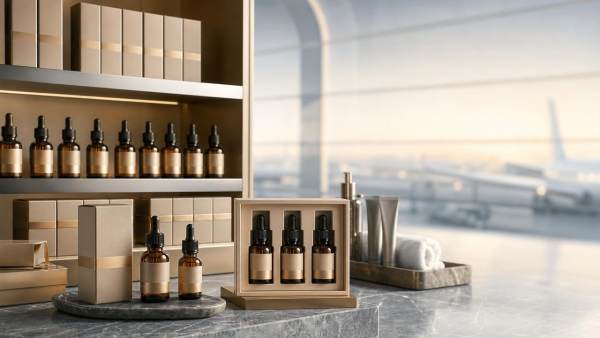
For travel retail programs, hotel amenities, airport gifting, and destination lifestyle stores, private label beard oil can seem like an easy margin play.
Yet many travel-service businesses discover that hidden MOQ rules, packaging thresholds, and weak pricing control quickly reduce profit.
This guide explains how private label beard oil sourcing works across tourism-driven sales scenarios, where margin traps appear, and how to build a more durable offer.
When private label beard oil fits travel service channels
Private label beard oil performs differently in travel service than in standard online retail.
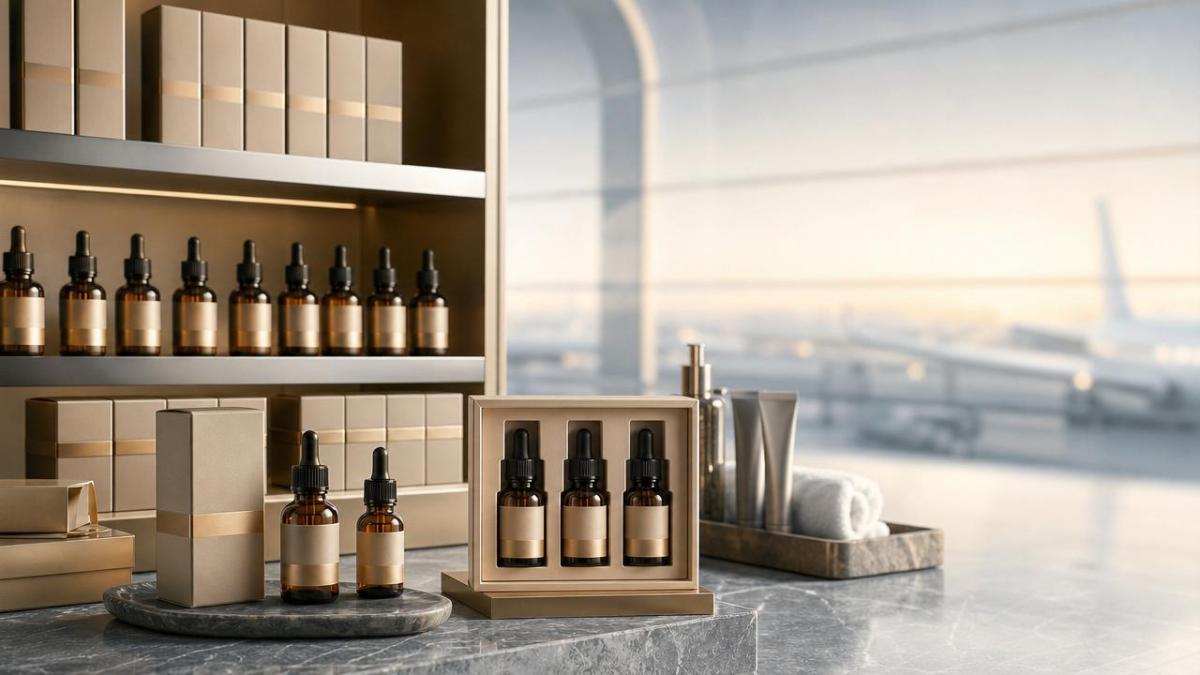
In tourism settings, customers often buy for convenience, gifting, memory, or personal care during a trip.
That changes acceptable pack size, fragrance style, price ceiling, and replenishment speed.
A supplier offering low unit cost may still be a poor fit if the private label beard oil program demands oversized MOQs.
Travel-linked channels also face seasonal demand, limited shelf space, and tighter compliance checks for liquids.
Why scenario judgment matters before supplier selection
The same private label beard oil formula may work in a souvenir boutique but fail in a hotel minibar format.
Without scenario planning, buyers often commit to the wrong bottle size, carton count, or fragrance assortment.
That is where MOQ and margin traps usually begin.
Scenario 1: Airport and transit retail need compact, fast-moving private label beard oil
Airport shops depend on quick decisions and visible value.
Here, private label beard oil must be portable, visually premium, and easy to understand within seconds.
Large MOQs become risky when passenger traffic shifts by season or route.
A common trap is accepting a low product MOQ while missing a much higher packaging MOQ for printed boxes.
Another trap is selecting glass bottles that look luxury-focused but raise breakage risk and freight cost.
Core checks for airport retail
- Ask for MOQ by formula, bottle, pump, label, and outer carton separately.
- Confirm liquid travel restrictions and leakage testing standards.
- Model sell-through using peak and off-peak passenger assumptions.
- Check whether refill orders can keep the same unit price.
Scenario 2: Hotels and resorts use private label beard oil as amenity or upsell
Hotels treat private label beard oil differently from retail shelves.
The item may support a premium grooming identity, spa menu, or in-room upsell bundle.
In this scenario, margin depends on repeat consumption and brand perception, not only landed unit cost.
A typical mistake is ordering full retail packaging for back-bar or amenity use.
That inflates packaging spend while adding little guest value.
Another issue is fragrance mismatch.
A heavy scent may test well online but feel unsuitable in luxury, wellness, or warm-climate travel settings.
What protects margin in hospitality use
- Separate amenity packaging from retail packaging.
- Use smaller pilot runs before committing to one fragrance profile.
- Measure cost per occupied room, not only cost per unit.
- Review label durability under humid bathroom conditions.
Scenario 3: Destination gift shops need story-led private label beard oil, not bulk sameness
Tourism gift channels sell memory as much as utility.
Private label beard oil works best when it connects to place identity, outdoor lifestyle, or local grooming culture.
The margin trap here is overcommitting to a generic formula with expensive custom decoration.
If sell-through slows, excess stock becomes difficult to redirect into other travel service channels.
Another problem appears when suppliers require one artwork MOQ per scent.
That can turn a simple assortment strategy into multiple fragmented inventory risks.
Best judgment points for destination stores
Choose flexible labeling methods and fewer scent variants at launch.
Use destination storytelling on sleeves or inserts if permanent printed bottles require high minimums.
This keeps private label beard oil more adaptable across locations.
How demand differs across travel service scenarios
Practical ways to avoid private label beard oil MOQ traps
Many suppliers advertise attractive MOQs, but the real commitment sits below the surface.
To assess a private label beard oil offer correctly, break every component into a separate threshold.
Ask for these MOQ layers in writing
- Bulk formula MOQ
- Bottle and dropper MOQ
- Printed label MOQ
- Gift box MOQ
- Master carton MOQ
- Fragrance-specific MOQ
- Reorder MOQ after first production
This approach reveals whether a low-MOQ private label beard oil proposal is truly flexible or only appears flexible on paper.
Where margin traps hide beyond the unit price
Landed margin in travel service depends on more than formula cost.
Private label beard oil margins are often weakened by small but cumulative losses.
Most ignored cost drivers
- Leakage claims and damaged packs during transport.
- Secondary packaging too large for shelf or room placement.
- Slow-moving scent variants occupying limited retail space.
- Regulatory relabeling costs for destination markets.
- Promotional discounts needed to clear seasonal excess stock.
A profitable private label beard oil line should be modeled by gross margin, contribution margin, and exit risk.
Scenario-based recommendations for a stronger private label beard oil strategy
Common misjudgments that weaken travel-channel performance
One common misjudgment is treating private label beard oil as a universal SKU.
Travel service channels are fragmented, and each one rewards different product decisions.
Another mistake is assuming customization automatically supports premium pricing.
In many tourism environments, ease of purchase and practical size matter more.
A third oversight is ignoring reorder economics.
If the first order works but the second order requires a higher cost base, margin stability disappears.
What to do next before launching a private label beard oil program
Start by defining the exact travel scenario, sales velocity target, and acceptable stock exposure.
Then request a fully itemized private label beard oil quotation with every MOQ layer separated.
Build a margin model that includes freight, compliance, shrinkage, and markdown assumptions.
Finally, test one format in one channel before expanding scent count or decorative complexity.
That disciplined process helps private label beard oil move from a promising travel-service idea to a sustainable commercial line.
Related Intelligence
 Skincare OEMAug 16, 2026Amazon Enforces AI Human Metadata Rule for Beauty and Personal Care SellersAmazon now enforces AI human metadata rules for beauty sellers. Learn how to protect listings, traffic, and compliance in skincare, cosmetics, and beauty devices.
 Beauty DevicesAug 15, 2026China to Roll Out Nationwide Cross-Border Cash Pooling for MultinationalsChina to roll out nationwide cross-border cash pooling for multinationals from Sept. 14. Discover how this policy could improve treasury efficiency, liquidity management, and China-linked supply chains.
 Beauty DevicesAug 14, 2026China Imposes Temporary Export Ban on Helium, Affecting Cooling Supply ChainsChina's temporary helium export ban may disrupt cooling supply chains for beauty RF devices and laser systems. Learn what ODMs, buyers, and procurement teams should check now.
![]() Cosmetics & PkgAug 13, 2026PPWR becomes mandatory: Beauty and personal care packaging materials usher in new EPR and PFAS compliance requirementsPPWR takes effect for cosmetics packaging in the EU, bringing EPR registration and PFAS limits. Learn what brands, importers, and suppliers must do now.
Cosmetics & PkgAug 13, 2026PPWR becomes mandatory: Beauty and personal care packaging materials usher in new EPR and PFAS compliance requirementsPPWR takes effect for cosmetics packaging in the EU, bringing EPR registration and PFAS limits. Learn what brands, importers, and suppliers must do now. Cosmetics & PkgAug 12, 2026EU PPWR Now Enforced for Beauty Packaging ComplianceEU PPWR now enforced for beauty packaging compliance: learn how EPR, ERN, heavy metals and PFAS rules affect EU exports, customs clearance and platform sales.
 Cosmetics & PkgAug 11, 2026EU PPWR Rules Take Effect on Aug. 12 for Beauty PackagingEU PPWR rules for beauty packaging take effect on Aug. 12, 2026. Learn key compliance steps, EPR, labeling, PFAS limits, and how to avoid customs delays and fines.
 Smart Pet DevicesAug 10, 2026EU EPR Rules to Cover Smart Pet Devices on Aug. 15EU EPR Rules will cover smart pet devices from Aug. 15, 2026. Learn how smart collars, feeders, and monitoring devices can avoid delisting, customs delays, and compliance risks in the EU.
 Infant Feeding & CareAug 09, 2026CPSC Recalls Baby Sleep Sacks Over Undeclared TDCPPCPSC Recalls Baby Sleep Sacks Over Undeclared TDCPP: learn how this 2026 recall impacts CPC documents, third-party testing, and U.S. baby product compliance for exporters.
 Infant Feeding & CareAug 08, 2026ECHA Adds 5 SVHCs, Importer Notices Due From Oct 2026ECHA adds 5 SVHCs to the Candidate List, with importer notices due from October 2026. Learn how REACH affects exporters, supply chains, and documentation readiness.
 Baby Gear & StrollersAug 07, 2026CPSC Revises Crib Rail Standard for November 2026CPSC revises crib rail standard for November 2026, adding dynamic impact tests and mandatory third-party lab testing. Learn how the new rule affects U.S. market access, compliance, and shipments.
 Electronic & RC ToysAug 06, 2026EU to Require EN IEC 62115:2025 for Electronic ToysEU to Require EN IEC 62115:2025 for Electronic Toys from Oct 1, 2026. Learn scope, battery and AI safety updates, CE compliance risks, and how exporters can avoid customs delays.
 Baby Gear & StrollersAug 05, 2026US Stroller Stability Rule Takes Effect Aug. 15US Stroller Stability Rule Takes Effect Aug. 15: learn how new U.S. stroller compliance, ASTM F833-26a, and CPSC testing rules may affect imports, certification, and shipment readiness.
 Infant Feeding & CareAug 04, 2026ECHA Adds 5 SVHCs, Triggering Baby Care Export ReviewECHA adds 5 SVHCs, prompting an urgent baby care export review for EU-bound products. Learn the 0.1% threshold risks, compliance steps, and how to avoid customs delays and fines.












