
TikTok Shop Opens Skincare & Personal Care in MENA
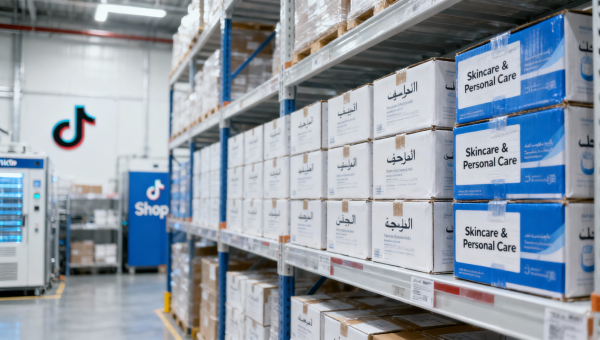
TikTok Shop officially launched its ‘Skincare & Personal Care’ category for the Middle East market — covering Saudi Arabia and the United Arab Emirates — on May 24, 2026. This marks a strategic expansion of its direct-to-consumer (DTC) infrastructure in a high-growth, digitally active region, with implications for Chinese OEMs, cross-border supply chains, and beauty brand exporters.
Event Overview
On May 24, 2026, TikTok Shop opened merchant recruitment for the ‘Skincare & Personal Care’ top-level category on its Middle East platform (Saudi Arabia + UAE). Eligible applicants must hold GMPC or ISO 22716 certification. The platform supports local warehouse fulfillment and Arabic-language live-stream commerce. Newly onboarded skincare OEMs from China receive three months of commission waiver and access to TikTok’s influencer matching service.
Industries Affected
Direct trade enterprises: Export-oriented beauty brands and cross-border e-commerce operators gain a new, low-friction DTC channel bypassing traditional distributors. Impact manifests in reduced time-to-market, tighter consumer feedback loops, and increased margin control — but also introduces new compliance, localization, and performance marketing demands.
Raw material procurement firms: Rising demand for certified, halal-compliant, and climate-stable ingredients (e.g., preservatives, emulsifiers, botanical extracts suitable for arid climates) may accelerate sourcing shifts. However, this impact remains indirect and contingent on OEMs scaling production — not an immediate procurement surge.
Contract manufacturing (OEM/ODM) enterprises: Certified Chinese skincare OEMs are now directly eligible for platform listing, turning them from B2B suppliers into quasi-B2C channel partners. This creates upside potential for revenue diversification and brand co-development, yet exposes them to platform policy volatility, Arabic content creation burdens, and inventory planning complexity tied to live-stream-driven demand spikes.
Supply chain service providers: Logistics firms offering MENA-local warehousing, customs clearance for cosmetics, and Arabic-language creative services (e.g., scriptwriting, talent casting, compliance review) stand to benefit from increased demand. However, current scale remains limited to early adopters — widespread uptake depends on sustained seller retention and GMV growth beyond the initial incentive period.
Key Considerations and Recommended Actions
Verify certification readiness before application
GMPC or ISO 22716 certification is mandatory — not optional. Applicants should confirm scope coverage (e.g., product types, facility locations) and validity in GCC markets. Third-party audit reports may be required during onboarding.
Prioritize Arabic-language content capability
Live-stream commerce is central to the channel’s model. Firms lacking in-house Arabic-speaking talent or vetted local creative partners should engage specialized agencies early — not as an afterthought, but as part of go-to-market planning.
Evaluate local warehousing economics carefully
While local fulfillment improves delivery speed and return rates, it increases working capital requirements and inventory risk. Companies should model break-even volumes and assess partnerships with licensed GCC logistics providers versus self-managed hubs.
Leverage the 3-month commission waiver strategically
This window is best used for testing product-market fit, refining Arabic ad creatives, and building initial influencer relationships — not merely discount-driven volume chasing. Performance data gathered here informs longer-term investment decisions.
Editorial Perspective / Industry Observation
Observably, TikTok Shop’s move reflects a broader platform-level shift: from aggregating third-party sellers to actively curating vertical-specific, certified supplier cohorts. This is less about ‘opening a category’ and more about building a controlled, quality-assured ecosystem — one that mirrors Amazon’s regulated beauty storefronts or Shopee’s Beauty Verified program. Analysis shows that regulatory alignment (via GMPC/ISO 22716) serves as both gatekeeper and trust signal, lowering perceived risk for regional consumers unfamiliar with Chinese OEM brands. Current evidence suggests this initiative is better understood as a pilot for deeper GCC market integration — not a broad-based open marketplace.
Conclusion
This development does not replace traditional export channels, nor does it guarantee commercial success. Rather, it adds a new, agile, and culturally adaptive option for select players — particularly certified OEMs seeking to test brand extension or diversify distribution. Its long-term significance hinges less on launch fanfare and more on TikTok Shop’s ability to sustain Arabic-language creator engagement, maintain consistent regulatory oversight, and demonstrate repeat purchase behavior among MENA beauty consumers.
Source Attribution
Official announcement via TikTok Shop Seller Center (May 24, 2026); supporting documentation includes the ‘MENA Skincare Onboarding Guide v1.2’ and ‘GCC Cosmetics Regulatory Compliance Checklist’ published on the TikTok Shop Partner Portal. Note: Platform fee structures post-incentive period, Arabic content moderation policies, and future expansion to other GCC markets (e.g., Kuwait, Qatar) remain unannounced and are subject to ongoing monitoring.
Related Intelligence
 Skincare OEMAug 16, 2026Amazon Enforces AI Human Metadata Rule for Beauty and Personal Care SellersAmazon now enforces AI human metadata rules for beauty sellers. Learn how to protect listings, traffic, and compliance in skincare, cosmetics, and beauty devices.
 Beauty DevicesAug 15, 2026China to Roll Out Nationwide Cross-Border Cash Pooling for MultinationalsChina to roll out nationwide cross-border cash pooling for multinationals from Sept. 14. Discover how this policy could improve treasury efficiency, liquidity management, and China-linked supply chains.
 Beauty DevicesAug 14, 2026China Imposes Temporary Export Ban on Helium, Affecting Cooling Supply ChainsChina's temporary helium export ban may disrupt cooling supply chains for beauty RF devices and laser systems. Learn what ODMs, buyers, and procurement teams should check now.
![]() Cosmetics & PkgAug 13, 2026PPWR becomes mandatory: Beauty and personal care packaging materials usher in new EPR and PFAS compliance requirementsPPWR takes effect for cosmetics packaging in the EU, bringing EPR registration and PFAS limits. Learn what brands, importers, and suppliers must do now.
Cosmetics & PkgAug 13, 2026PPWR becomes mandatory: Beauty and personal care packaging materials usher in new EPR and PFAS compliance requirementsPPWR takes effect for cosmetics packaging in the EU, bringing EPR registration and PFAS limits. Learn what brands, importers, and suppliers must do now. Cosmetics & PkgAug 12, 2026EU PPWR Now Enforced for Beauty Packaging ComplianceEU PPWR now enforced for beauty packaging compliance: learn how EPR, ERN, heavy metals and PFAS rules affect EU exports, customs clearance and platform sales.
 Cosmetics & PkgAug 11, 2026EU PPWR Rules Take Effect on Aug. 12 for Beauty PackagingEU PPWR rules for beauty packaging take effect on Aug. 12, 2026. Learn key compliance steps, EPR, labeling, PFAS limits, and how to avoid customs delays and fines.
 Smart Pet DevicesAug 10, 2026EU EPR Rules to Cover Smart Pet Devices on Aug. 15EU EPR Rules will cover smart pet devices from Aug. 15, 2026. Learn how smart collars, feeders, and monitoring devices can avoid delisting, customs delays, and compliance risks in the EU.
 Infant Feeding & CareAug 09, 2026CPSC Recalls Baby Sleep Sacks Over Undeclared TDCPPCPSC Recalls Baby Sleep Sacks Over Undeclared TDCPP: learn how this 2026 recall impacts CPC documents, third-party testing, and U.S. baby product compliance for exporters.
 Infant Feeding & CareAug 08, 2026ECHA Adds 5 SVHCs, Importer Notices Due From Oct 2026ECHA adds 5 SVHCs to the Candidate List, with importer notices due from October 2026. Learn how REACH affects exporters, supply chains, and documentation readiness.
 Baby Gear & StrollersAug 07, 2026CPSC Revises Crib Rail Standard for November 2026CPSC revises crib rail standard for November 2026, adding dynamic impact tests and mandatory third-party lab testing. Learn how the new rule affects U.S. market access, compliance, and shipments.
 Electronic & RC ToysAug 06, 2026EU to Require EN IEC 62115:2025 for Electronic ToysEU to Require EN IEC 62115:2025 for Electronic Toys from Oct 1, 2026. Learn scope, battery and AI safety updates, CE compliance risks, and how exporters can avoid customs delays.
 Baby Gear & StrollersAug 05, 2026US Stroller Stability Rule Takes Effect Aug. 15US Stroller Stability Rule Takes Effect Aug. 15: learn how new U.S. stroller compliance, ASTM F833-26a, and CPSC testing rules may affect imports, certification, and shipment readiness.
 Infant Feeding & CareAug 04, 2026ECHA Adds 5 SVHCs, Triggering Baby Care Export ReviewECHA adds 5 SVHCs, prompting an urgent baby care export review for EU-bound products. Learn the 0.1% threshold risks, compliance steps, and how to avoid customs delays and fines.












