Sublimation Blank Gifts Trends for Travel Souvenir Programs
Travel souvenir programs are moving toward faster, more local retail stories
Travel retail is changing from simple memorabilia sales to curated destination storytelling.
That shift is making sublimation blank gifts more relevant across museums, resorts, airports, heritage towns, and visitor centers.
The appeal is practical as much as creative.
Operators need merchandise that can be localized quickly, refreshed seasonally, and protected against overstock risk.
Sublimation blank gifts support that need by separating the base product from the final visual story.
For tourism services, this creates a more flexible bridge between destination branding and retail execution.
It also fits a wider sourcing reality tracked by Global Consumer Sourcing.
Across consumer goods, buyers now expect shorter development cycles, stronger compliance visibility, and more responsive supply networks.
In that environment, souvenir assortments are no longer minor side categories.
They are becoming part of brand experience, visitor monetization, and destination identity management.
What is changing in demand for sublimation blank gifts
The old souvenir model favored bulk orders with long shelf lives and generic designs.
Current demand points in another direction.
More destinations want smaller themed collections that reflect specific neighborhoods, events, routes, or cultural moments.
That is where sublimation blank gifts gain momentum.
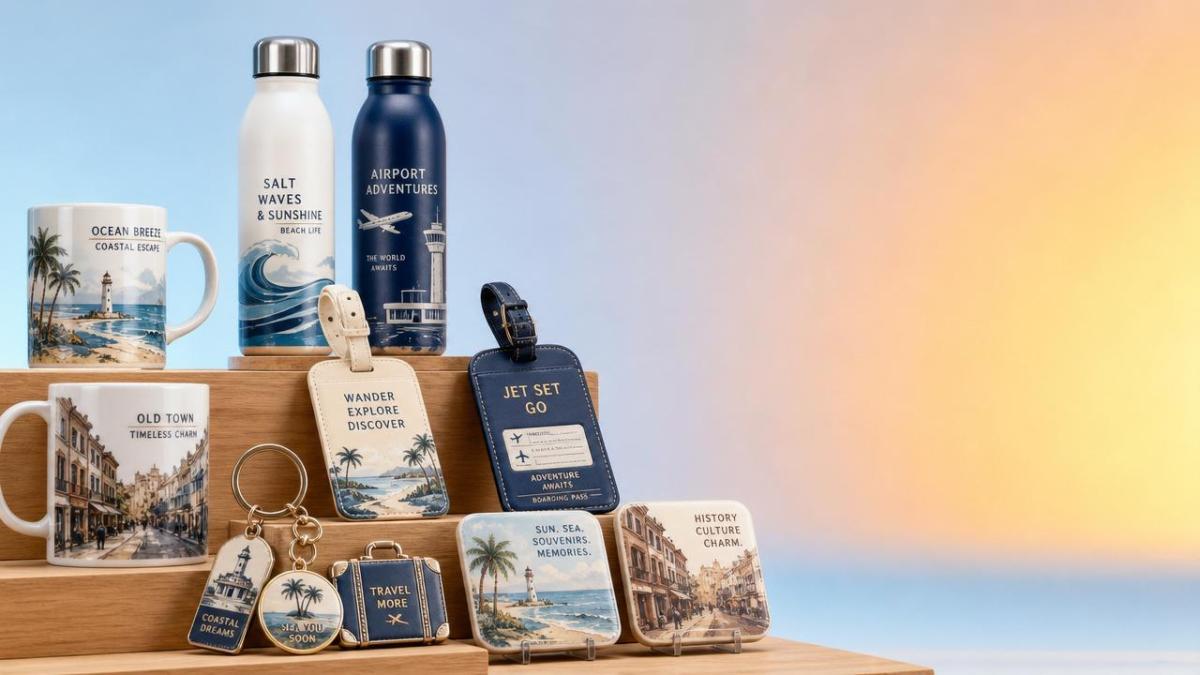
Products such as mugs, ornaments, keychains, coasters, luggage tags, compact drinkware, and textile accessories can be adapted without redesigning the core item.
From recent market behavior, three signals stand out.
- Visitors increasingly prefer souvenirs that feel place-specific rather than mass produced.
- Retail programs want more design turnover tied to festivals, limited runs, and partnership campaigns.
- Inventory teams are favoring product platforms that simplify replenishment across multiple locations.
This does not mean every product should be customized on site.
More often, the winning model is hybrid.
Standardized sublimation blank gifts are sourced at scale, while artwork and assortment decisions stay agile closer to the market.
Why this shift is becoming more visible now
Several forces are converging at once.
The first is the broader expectation for personalized consumption.
Travelers now compare souvenir shopping with the customization they already see in e-commerce and D2C retail.
The second is commercial pressure.
Gift shops need products that defend margin without relying only on premium price points.
Sublimation blank gifts can support that by enabling design differentiation on familiar, manageable base items.
The third is supply chain maturity.
Verified manufacturing partners are offering better coating consistency, print compatibility, and compliance transparency than in earlier cycles.
This is also why GCS-style intelligence matters more than before.
Product decisions now sit at the intersection of design trends, regulatory expectations, and sourcing resilience.
The impact goes beyond gift shops alone
One noticeable change is that souvenir planning is becoming more cross-functional.
Sublimation blank gifts affect merchandising, brand management, guest experience, and operational planning at the same time.
At destination level, they help unify visual identity across multiple sales points.
At venue level, they allow stores to test targeted collections without rebuilding the whole assortment.
For hospitality groups, they can also connect retail with event gifting, loyalty programs, and room-package upgrades.
The more interesting effect appears in assortment architecture.
Instead of buying unrelated souvenir items, many programs are building modular families around the same design language.
That creates stronger shelf coherence and easier campaign planning.
- Airport retail can use sublimation blank gifts for destination-exclusive travel accessories.
- Museums can rotate exhibition-linked products without changing core blank inventories.
- Resorts can align souvenir lines with seasonal events, weddings, or family travel packages.
- City tourism programs can coordinate collections across partner stores and visitor centers.
In practical terms, sublimation blank gifts are becoming part of destination merchandising systems, not just isolated retail items.
What stronger programs are watching before they scale
The opportunity is clear, but execution quality still decides results.
A common mistake is treating sublimation blank gifts as interchangeable commodities.
In reality, coating performance, substrate stability, print durability, and packaging consistency can vary sharply.
For travel programs, those details shape customer satisfaction and returns risk.
More mature retail teams are paying attention to a tighter set of filters.
- Material suitability for travel handling, including breakage risk, weight, and packability.
- Surface quality that preserves artwork sharpness across repeated production batches.
- Compliance readiness for categories involving food contact, children, or public venue retail.
- Sustainable packaging options that support destination values without adding excessive cost.
- Supplier communication speed when seasonal designs or localized SKUs need quick revision.
This is where credible intelligence platforms matter again.
GCS reflects a wider market reality.
Retail growth increasingly depends on suppliers that can prove responsiveness, certification discipline, and repeatable quality under shifting demand patterns.
The next wave is likely to favor smarter curation over bigger catalogs
Looking ahead, the strongest growth for sublimation blank gifts is unlikely to come from endless SKU expansion.
It is more likely to come from sharper curation.
Destination programs are learning that visitors respond better to compact ranges with clear design logic and emotional relevance.
That opens room for more disciplined planning around a few high-performing blank categories.
Another likely direction is the blending of retail and experience.
Sublimation blank gifts can support event-linked drops, region-specific collaborations, and limited-edition collections tied to cultural calendars.
As digital discovery influences physical purchases, visitors also expect souvenirs to be visually shareable.
That makes artwork execution, packaging design, and shelf presentation more commercially important than before.
The broader implication is strategic.
Sublimation blank gifts are no longer just a low-barrier product option.
They are becoming a useful operating model for destination retail that values flexibility, narrative control, and measured risk.
Where to focus next if souvenir strategies are being reassessed
The immediate task is not to add more products.
It is to clarify which souvenir categories can carry local identity most efficiently.
That usually starts with reviewing current assortments, visitor purchase behavior, and seasonal design opportunities.
From there, it helps to compare sublimation blank gifts by margin structure, compliance exposure, transport practicality, and creative refresh potential.
A phased pilot often works better than a full assortment reset.
Testing two or three coherent product families can reveal what visitors actually value.
It also creates a more reliable basis for supplier selection and long-term sourcing decisions.
For travel souvenir programs, the real advantage of sublimation blank gifts is not novelty alone.
It is the ability to align merchandise with faster market signals while keeping operational control.
That is the direction worth monitoring closely as destination retail becomes more experience-led, data-aware, and supply-chain sensitive.
Related Intelligence
 Infant Feeding & CareOct 24, 2026FDA Issues Draft Guidance on Cadmium Action Levels in Baby FoodsFDA draft guidance on cadmium action levels in baby foods proposes category-specific targets. Explore potential impacts on sourcing, testing and compliance planning—and how to prepare.
 STEM & Educational ToysOct 23, 20262026 China Toy Expo Gives AI Toys a Dedicated Hall as Practical Features Take Priority2026 China Toy Expo spotlights AI toys with a dedicated hall. Explore how practical features and everyday play experiences are reshaping manufacturers’ product priorities.
 STEM & Educational ToysOct 22, 2026Blokees Showcases Over 900 Products at the 2026 China International Toy FairBlokees showcases over 900 products at the 2026 China International Toy Fair. Explore Model Kits, BLOKEES WHEELS and key sourcing checks to guide your next purchase.
 Cosmetics & PkgOct 21, 2026BASF Plans Beauty Innovation Showcase at in-cosmetics Asia 2026Explore BASF’s planned beauty innovations at in-cosmetics Asia 2026 in Bangkok, with a focus on skin protection, repair and sustainable solutions for personal care formulators.
 Cosmetics & PkgOct 20, 2026Beauty Tops Amazon’s 2026 Prime Big Deal Days Shopping CategoriesBeauty tops Amazon’s 2026 Prime Big Deal Days at 32% of shoppers, according to Market Defense. Explore what the findings could mean for product selection, inventory and promotional planning.
 Corporate & Seasonal GiftsOct 14, 2026How Can Retailers Check Plush Toy Stuffing Quality?How do retailers check plush toy stuffing quality? Discover practical inspections, supplier checks, and testing tips to reduce defects and make smarter pet toy sourcing decisions.
 Corporate & Seasonal GiftsOct 14, 2026Are Embroidered Eyes Safer Than Plastic Eyes on Plush Toys?Are plush toys with embroidered eyes safer than plastic eyes? Discover key pet-toy risks, quality checks, and sourcing tips to make smarter buying decisions.
 Infant Feeding & CareOct 14, 2026What Documents Are Required to Import Baby Formula?What import documents are needed for baby formula? Explore shipment paperwork, health certificates, and market-specific requirements to avoid costly delays and prepare for compliant imports.
 Infant Feeding & CareOct 14, 2026Which Baby Formula Packaging Formats Reduce Shipping Damage?Which baby formula packaging formats reduce shipping damage? Compare metal cans, rigid tubs, and supported pouches to choose better protection and reduce costly transit losses.
 Baby Gear & StrollersOct 14, 2026How Long Does Custom Diaper Bag Production Usually Take?How long does custom diaper bag production usually take? Plan for 30–60 days after sample approval. Discover key lead-time factors and practical tips to avoid delays and launch on schedule.
 Baby Gear & StrollersOct 14, 2026Which Diaper Bag Features Justify a Higher Wholesale Price?What diaper bag features justify a higher wholesale price? Discover durability, comfort, and easy-clean upgrades worth paying for—and source smarter with practical buyer tips.
 Infant Feeding & CareOct 14, 2026How Can Retailers Prevent Baby Clothing Color Bleeding Claims?How can retailers avoid color bleeding claims on baby clothing? Discover testing, supplier controls, and care-label strategies to reduce returns and protect customer trust.
 Infant Feeding & CareOct 14, 2026Which Baby Clothing Materials Are Easier to Source Compliantly?What materials make baby clothing easier to source compliantly? Compare cotton, blends, and certified options, with practical supplier checks to reduce risk and make smarter sourcing decisions.