Mexico's New E-Toy Energy Efficiency Law Takes Effect June 1
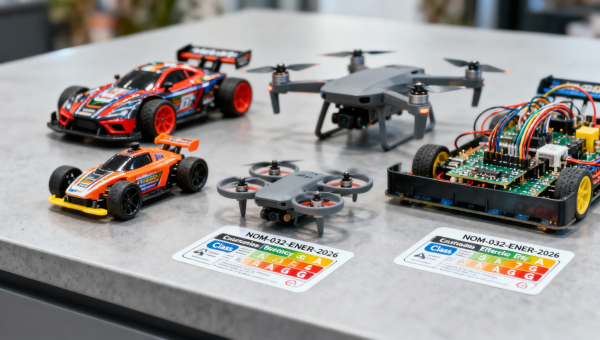
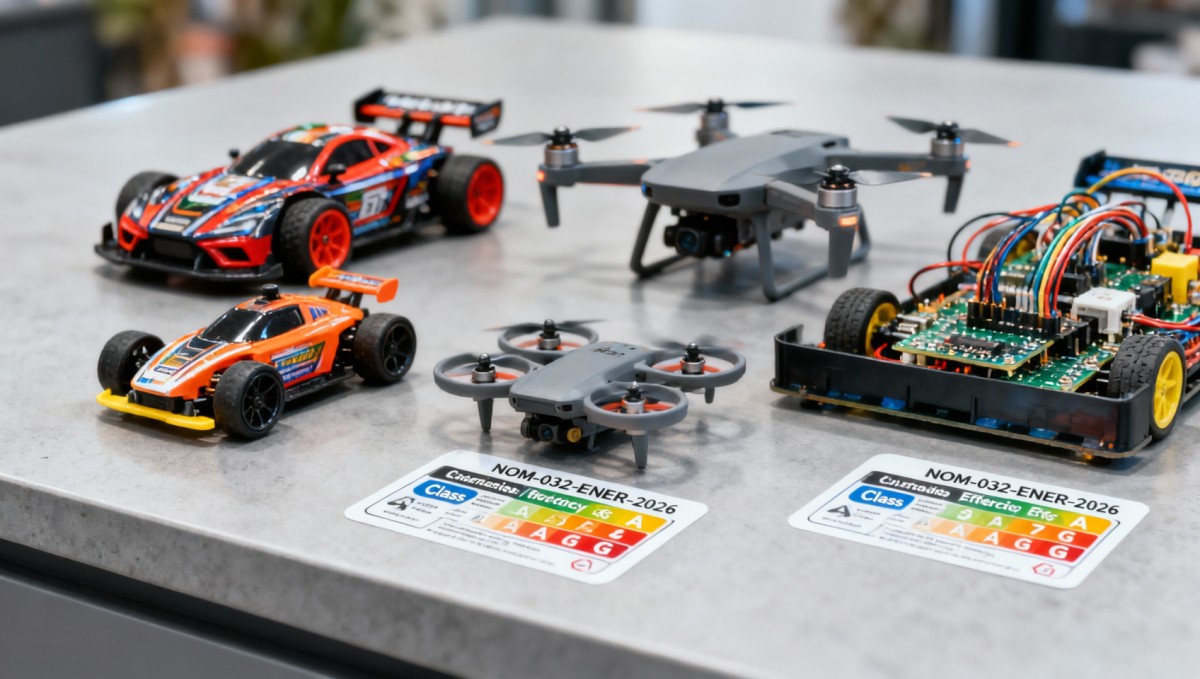
Effective 1 June 2026, Mexico’s revised NOM-032-ENER-2026 regulation imposes mandatory safety and energy labeling requirements on electronic and remote-controlled (RC) toys—including RC cars, toy drones, and programmable racing kits. The rule, published by the Ministry of Economy on 24 May 2026, marks Mexico’s first binding energy efficiency framework for this product category and signals a broader regulatory shift toward harmonized international safety standards and consumer transparency.
Event Overview
Mexico’s Ministry of Economy issued the official implementation guidelines for NOM-032-ENER-2026 on 24 May 2026. The standard mandates that, as of 1 June 2026, all electronic and RC toys imported into or sold in Mexico must: (1) comply with the latest edition of IEC 62368-1:2023 for electrical safety; and (2) bear a Spanish-language NOM-032 energy efficiency label rated from Class A (most efficient) to Class G (least efficient). Non-compliant products will be prohibited from importation and domestic sale.
Industries Affected
Direct trading enterprises — Exporters and importers of RC and electronic toys face immediate operational impact. Compliance requires updated technical documentation, third-party certification, and label redesign—each introducing lead-time delays and cost increases. Customs clearance may be suspended for shipments lacking valid NOM-032 certificates or misapplied labels, directly affecting cash flow and order fulfillment.
Raw material procurement enterprises — Suppliers of lithium-ion batteries, printed circuit boards, and wireless modules must now verify compatibility with IEC 62368-1:2023’s updated risk-based hazard analysis (e.g., thermal runaway mitigation, touch temperature limits). Procurement teams may need to requalify vendors or specify new performance thresholds—especially for battery management systems used in toy drones and high-speed RC vehicles.
Contract manufacturing enterprises — OEM/ODM factories producing electronic toys for global brands must adapt production lines to accommodate label placement requirements (size, legibility, language), integrate updated safety testing protocols, and maintain traceability records for each batch. Revalidation of production processes under the new standard may trigger temporary capacity constraints.
Supply chain service providers — Certification bodies, logistics firms offering compliance support, and bilingual labeling printers are seeing surges in demand for NOM-032-specific services. However, limited local accreditation for IEC 62368-1:2023 testing—and uneven recognition of foreign lab reports—creates bottlenecks, particularly for SMEs without in-house regulatory expertise.
Key Focus Areas & Recommended Actions
Verify certification scope and validity
Confirm that existing IEC 62368-1 certifications explicitly reference the 2023 edition—not earlier versions (e.g., 2018 or 2014). Certificates issued before May 2026 may require gap assessment or retesting, especially for products with rechargeable batteries or wireless transmitters operating above 1 W.
Localize and validate NOM-032 labeling
The energy label must be affixed physically (not just in manuals or packaging inserts), printed in Spanish, and conform to prescribed dimensions, color contrast, and font size per Annex 3 of NOM-032-ENER-2026. Labels must reflect actual test results—not generic class assumptions—and remain legible throughout the product’s expected lifetime.
Update technical documentation for Mexican authorities
Manufacturers must submit a Spanish-language Technical File—including test reports, circuit diagrams, user manuals, and label artwork—to an accredited Mexican certification body (Organismo de Certificación Acreditado) prior to market entry. Digital submissions via the Ministry’s Sistema de Gestión de Evaluación de la Conformidad (SGEC) are now required.
Editorial Perspective / Industry Observation
Analysis shows this regulation is less about incremental compliance and more a structural signal: Mexico is aligning its consumer electronics regulatory architecture with EU-style eco-design principles—even within niche categories like toys. Observably, the timing coincides with ongoing negotiations on updating the USMCA’s technical barriers chapter, suggesting potential future convergence across North American markets. From an industry perspective, NOM-032-ENER-2026 is better understood not as a standalone toy rule, but as the first application of a scalable energy labeling template likely to extend to smart home devices and low-power wearables by 2027.
Conclusion
This regulation underscores a maturing phase in Mexico’s product governance—where safety, energy use, and multilingual consumer information are treated as interdependent requirements. For global toy suppliers, it reinforces the need to embed regional regulatory intelligence early in R&D and sourcing decisions. The real test lies not in certification alone, but in whether supply chains can sustainably absorb iterative updates to international standards without compromising time-to-market or cost competitiveness.
Source Attribution
Official text: NOM-032-ENER-2026, published in the Diario Oficial de la Federación (DOF) on 24 May 2026. Implementation guidelines available via Mexico’s Ministry of Economy (economia.gob.mx).
IEC 62368-1:2023 referenced per Annex 1; NOM-032 labeling specifications detailed in Annex 3.
Note: Recognition status of foreign test labs and transitional provisions for inventory already in Mexican distribution channels remain under active clarification by the National Accreditation Entity (ENAC).
Related Intelligence
 Baby Gear & StrollersJul 09, 2026EN 14765:2026 Update Tightens Stroller Dynamic TestsEN 14765:2026 update tightens stroller dynamic tests for EU exports from Oct 1, 2026. Learn the new mandatory checks, 22-day testing timeline, and how to avoid launch delays.
 Beauty DevicesJul 09, 2026Ningbo Port Fees Rise 35% as Beauty Device Exports Face 7-10 Day DelaysNingbo Port fees rise 35% as beauty device exports face 7-10 day delays. Learn how lithium-battery OEMs, buyers, and shippers can reduce cost risk and protect delivery schedules.
 STEM & Educational ToysJul 09, 2026Amazon Japan Requires JIS T 0901:2026 Reports for STEM ToysAmazon Japan now requires JIS T 0901:2026 reports for STEM toys. Learn who is affected, what listings risk suppression, and how sellers can stay compliant fast.
 Infant Feeding & CareJul 09, 2026FDA Makes 2026 Silicone Extraction Test MandatoryFDA makes the 2026 silicone extraction test mandatory for infant feeding bottles shipped to the U.S. Learn the compliance impact, 14-day testing cycle, and export risks now.
 Smart Pet DevicesJul 09, 2026EU Battery Rules Take Effect for Smart Pet DevicesEU battery rules now affect smart pet devices exported to Europe. Learn how carbon footprint labels, EPD documents, and BOM cost changes may impact OEM shipments.
 Skincare OEMJul 09, 2026Solution Comparison Service Cost: Key Pricing FactorsSolution comparison service cost explained for travel services: discover key pricing factors, hidden fees, and how to choose a higher-value option with confidence.
 Corporate & Seasonal GiftsJul 09, 2026Brand Sourcing Intelligence Provider Comparison GuideBrand sourcing intelligence provider comparison guide for travel services. Learn how to compare data quality, compliance coverage, and actionable insights to choose partners with confidence.
 Fitness EquipmentJul 09, 2026Fitness Equipment Motor Power: How Much Is Enough?Fitness equipment motor power is key to quiet, reliable guest workouts in hotels, resorts, and cruise gyms. Learn how to choose the right output for traffic, comfort, and long-term value.
 STEM & Educational ToysJul 09, 2026CE Certified Toys Technical File: What Must Be IncludedCE certified toys technical file: learn what must be included, common compliance gaps, and how travel retail brands can avoid delays, recalls, and costly EU market risks.
 Camping & WaterJul 09, 2026Low Maintenance Analysis for Resort Transit GearLow maintenance analysis for resort transit gear: discover how to cut lifecycle costs, reduce downtime, and choose durable equipment that protects guest experience and sourcing efficiency.
 Smart Pet DevicesJul 08, 2026METI Starts PSE Pre-Screening for Smart Pet FeedersMETI starts PSE pre-screening for smart pet feeders ahead of Japan’s September 1, 2026 import deadline. Learn what importers and manufacturers must do now to avoid customs delays and keep shipments moving.
 STEM & Educational ToysJul 08, 2026Amazon Enforces FCC QR Rule for STEM Toy ListingsAmazon Enforces FCC QR Rule for STEM Toy Listings: learn how Amazon’s new FCC ID QR verification impacts STEM toy listings, takedown risks, and what sellers must do now to stay compliant.
 Camping & WaterJul 08, 2026Vietnam Halts New Camping Bottle Export PermitsVietnam Halts New Camping Bottle Export Permits as stricter EN1811:2026 nickel testing reshapes market access. Learn the customs, compliance, and shipment risks now.