
Germany Enacts AI Safety Rules for STEM Toys
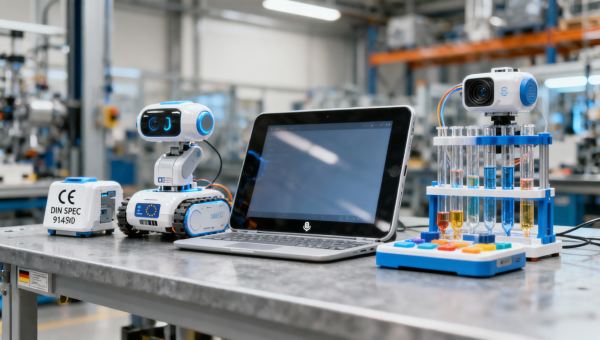
Germany has introduced new regulatory requirements targeting artificial intelligence (AI)-enabled educational toys, marking a significant shift in product safety oversight for the global children’s tech market. The amendment to the Product Safety Act (ProdSG), adopted by the German Bundestag on 2026-05-23, introduces mandatory conformity assessment under DIN SPEC 91490 for STEM and educational toys with AI-driven voice or visual interaction capabilities — effective 1 October 2026.
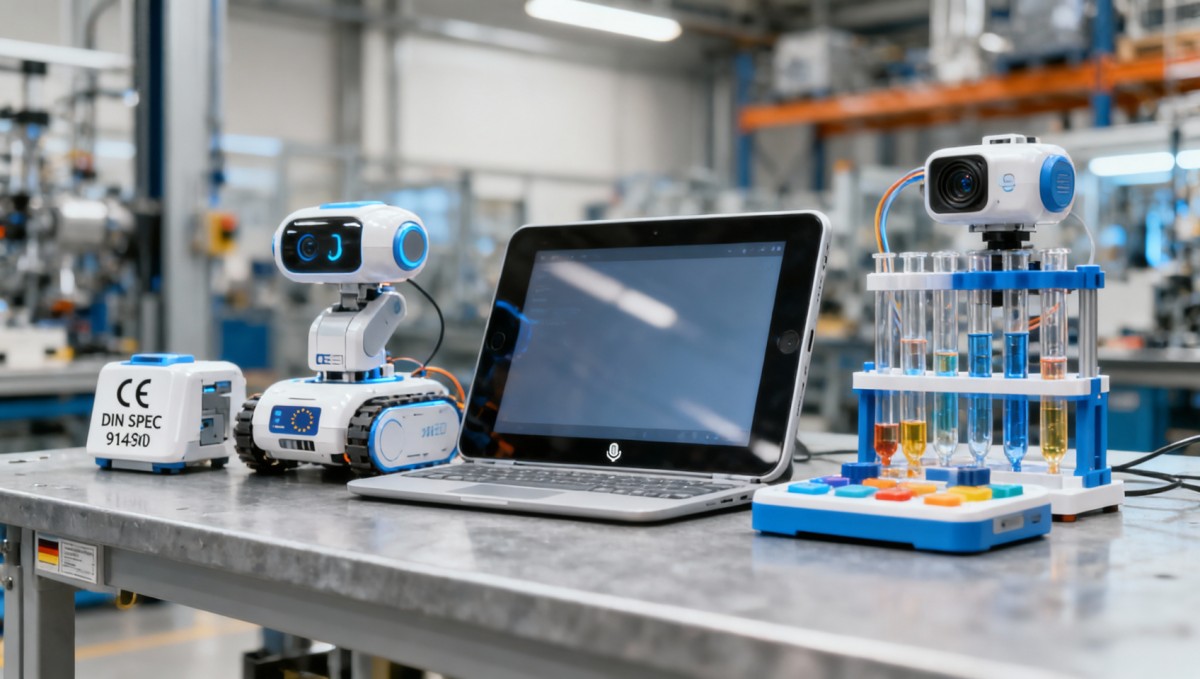
Event Overview
The German Bundestag passed the ProdSG Amendment on 23 May 2026. It mandates that all STEM and educational toys incorporating AI-based speech or vision interaction — including programmable robots and AI-powered early-learning devices — must obtain certification against DIN SPEC 91490 before being placed on the German market. The standard specifically evaluates three technical dimensions: boundaries of children’s voice data collection; risk of responding to misleading or harmful instructions; and capability of filtering content generated via unsupervised learning. Exporters from China are advised to allow a minimum of four months for the full certification process.
Industries Affected
Direct trading enterprises face immediate compliance pressure, as failure to present valid DIN SPEC 91490 certification will result in customs rejection or market withdrawal in Germany. Their exposure extends beyond documentation — they must now coordinate technical validation across suppliers, manage extended lead times, and absorb potential retesting costs if initial submissions fail.
Raw material procurement enterprises are indirectly impacted, particularly those sourcing microphones, voice-processing chips, or camera modules with embedded AI inference functions. While not directly certifiable, their component-level specifications (e.g., audio sampling resolution, on-device processing scope) must align with the data-handling constraints defined in DIN SPEC 91490 — requiring tighter technical alignment with downstream integrators.
Contract manufacturing enterprises bear primary responsibility for design-for-compliance. They must adapt firmware logic to enforce strict voice-data retention limits (e.g., automatic local deletion after session end), implement instruction-safety guardrails (e.g., refusal protocols for unsafe requests), and integrate pre-trained content filters compatible with offline operation. These changes may necessitate hardware revisions or firmware requalification.
Supply chain service enterprises, including testing labs, certification consultants, and logistics providers offering regulatory support, are seeing rising demand for DIN SPEC 91490-specific expertise. However, capacity remains limited: only six accredited labs globally currently offer full-scope assessment, and turnaround times exceed eight weeks for first-time applicants — creating bottlenecks in time-sensitive export windows.
Key Focus Areas and Recommended Actions
Verify product classification against the scope definition
Not all interactive toys fall under the mandate. Only those with real-time AI interpretation of child-initiated voice or image input — such as command-driven robots or responsive story-telling devices — require certification. Products using pre-recorded audio or static image recognition without adaptive learning do not qualify. Enterprises should conduct internal scoping reviews before initiating formal testing.
Initiate technical gap analysis by Q3 2026
Manufacturers should assess current firmware architecture against DIN SPEC 91490’s three core evaluation criteria. Priority gaps typically involve lack of auditable voice-data lifecycle logs, absence of instruction-safety decision trees, and reliance on cloud-based filtering incompatible with offline use. Early identification enables phased firmware updates rather than last-minute redesigns.
Engage certified labs early — even for pre-assessment
Given lab capacity constraints and four-month minimum timelines, companies exporting to Germany should contact accredited testing bodies by July 2026 to secure slots and request preliminary gap feedback. Some labs offer non-certified “readiness checks” — useful for validating test readiness before formal submission.
Review labeling and user documentation
DIN SPEC 91490 requires clear, age-appropriate disclosures on voice data usage — including whether recordings leave the device and how long they persist. Packaging and digital manuals must reflect this. Translations into German are mandatory; machine-translated content is explicitly excluded from compliance acceptance.
Editorial Perspective / Industry Observation
Analysis shows this regulation is less about banning AI in children’s products and more about institutionalizing accountability for behavioral AI systems operating without adult supervision. Observably, DIN SPEC 91490 does not prohibit unsupervised learning per se — it demands demonstrable containment of its outputs. From an industry perspective, this signals a broader trend: future toy safety frameworks will increasingly treat AI components not as features, but as safety-critical subsystems requiring traceable design rationale and runtime verification. Current more relevant concern is not technical feasibility, but harmonization — as no equivalent standard yet exists in the US CPSC or UK CA guidance, potentially fragmenting global compliance pathways.
Conclusion
This amendment represents a foundational step toward regulating AI-as-a-safety-component in consumer-facing children’s products. Rather than a temporary compliance hurdle, it reflects an emerging norm: AI interaction in contexts involving developmental vulnerability must be designed with provable safeguards — not just functional performance. For exporters, adapting to this expectation is not merely about meeting a deadline, but about embedding responsible AI practices into product development lifecycles.
Source Attribution
Official text: German Federal Ministry for Economic Affairs and Climate Action (BMWK), ProdSG Amendment Bill Drucksache 19/38721 (23 May 2026).
DIN SPEC 91490: Published by Deutsches Institut für Normung (DIN), Edition 2026-04.
Note: Implementation guidance documents and lab accreditation lists remain under revision; stakeholders are advised to monitor BMWK and DIN announcements through September 2026.
Related Intelligence
 Skincare OEMAug 16, 2026Amazon Enforces AI Human Metadata Rule for Beauty and Personal Care SellersAmazon now enforces AI human metadata rules for beauty sellers. Learn how to protect listings, traffic, and compliance in skincare, cosmetics, and beauty devices.
 Beauty DevicesAug 15, 2026China to Roll Out Nationwide Cross-Border Cash Pooling for MultinationalsChina to roll out nationwide cross-border cash pooling for multinationals from Sept. 14. Discover how this policy could improve treasury efficiency, liquidity management, and China-linked supply chains.
 Beauty DevicesAug 14, 2026China Imposes Temporary Export Ban on Helium, Affecting Cooling Supply ChainsChina's temporary helium export ban may disrupt cooling supply chains for beauty RF devices and laser systems. Learn what ODMs, buyers, and procurement teams should check now.
![]() Cosmetics & PkgAug 13, 2026PPWR becomes mandatory: Beauty and personal care packaging materials usher in new EPR and PFAS compliance requirementsPPWR takes effect for cosmetics packaging in the EU, bringing EPR registration and PFAS limits. Learn what brands, importers, and suppliers must do now.
Cosmetics & PkgAug 13, 2026PPWR becomes mandatory: Beauty and personal care packaging materials usher in new EPR and PFAS compliance requirementsPPWR takes effect for cosmetics packaging in the EU, bringing EPR registration and PFAS limits. Learn what brands, importers, and suppliers must do now. Cosmetics & PkgAug 12, 2026EU PPWR Now Enforced for Beauty Packaging ComplianceEU PPWR now enforced for beauty packaging compliance: learn how EPR, ERN, heavy metals and PFAS rules affect EU exports, customs clearance and platform sales.
 Cosmetics & PkgAug 11, 2026EU PPWR Rules Take Effect on Aug. 12 for Beauty PackagingEU PPWR rules for beauty packaging take effect on Aug. 12, 2026. Learn key compliance steps, EPR, labeling, PFAS limits, and how to avoid customs delays and fines.
 Smart Pet DevicesAug 10, 2026EU EPR Rules to Cover Smart Pet Devices on Aug. 15EU EPR Rules will cover smart pet devices from Aug. 15, 2026. Learn how smart collars, feeders, and monitoring devices can avoid delisting, customs delays, and compliance risks in the EU.
 Infant Feeding & CareAug 09, 2026CPSC Recalls Baby Sleep Sacks Over Undeclared TDCPPCPSC Recalls Baby Sleep Sacks Over Undeclared TDCPP: learn how this 2026 recall impacts CPC documents, third-party testing, and U.S. baby product compliance for exporters.
 Infant Feeding & CareAug 08, 2026ECHA Adds 5 SVHCs, Importer Notices Due From Oct 2026ECHA adds 5 SVHCs to the Candidate List, with importer notices due from October 2026. Learn how REACH affects exporters, supply chains, and documentation readiness.
 Baby Gear & StrollersAug 07, 2026CPSC Revises Crib Rail Standard for November 2026CPSC revises crib rail standard for November 2026, adding dynamic impact tests and mandatory third-party lab testing. Learn how the new rule affects U.S. market access, compliance, and shipments.
 Electronic & RC ToysAug 06, 2026EU to Require EN IEC 62115:2025 for Electronic ToysEU to Require EN IEC 62115:2025 for Electronic Toys from Oct 1, 2026. Learn scope, battery and AI safety updates, CE compliance risks, and how exporters can avoid customs delays.
 Baby Gear & StrollersAug 05, 2026US Stroller Stability Rule Takes Effect Aug. 15US Stroller Stability Rule Takes Effect Aug. 15: learn how new U.S. stroller compliance, ASTM F833-26a, and CPSC testing rules may affect imports, certification, and shipment readiness.
 Infant Feeding & CareAug 04, 2026ECHA Adds 5 SVHCs, Triggering Baby Care Export ReviewECHA adds 5 SVHCs, prompting an urgent baby care export review for EU-bound products. Learn the 0.1% threshold risks, compliance steps, and how to avoid customs delays and fines.












