Toy Certification Checklist for Travel Gift Compliance
Toy Certification Checklist for Travel Gift Compliance
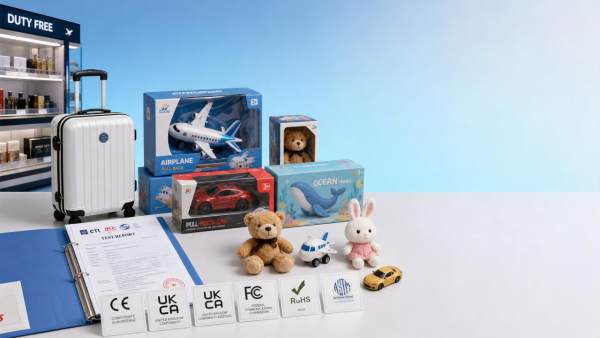
Travel retail moves fast, but toy certification cannot be rushed. A missing report, wrong age grading, or outdated declaration can stop a launch before products reach airport stores, cruise channels, or destination gift programs.
That is why a practical toy certification checklist matters. It helps reduce recall risk, protects brand reputation, and keeps cross-border shipments aligned with safety rules in different markets.
For travel gift assortments, the challenge is often more specific. Products are compact, seasonal, and sourced across multiple regions, so documentation must be easy to verify and consistent across SKUs.
In practice, the best toy certification process combines supplier screening, document review, testing control, and market-specific labeling checks. That approach is also consistent with the data-led compliance focus seen across Global Consumer Sourcing coverage.
What counts as toy certification for travel gift products?
Toy certification is not one universal certificate. It is a compliance package proving that a toy or toy-like gift meets the safety rules of the destination market.
A plush keychain sold in a hotel gift shop may look simple, yet it can still trigger toy certification requirements if it is marketed for children or reasonably used as a play item.
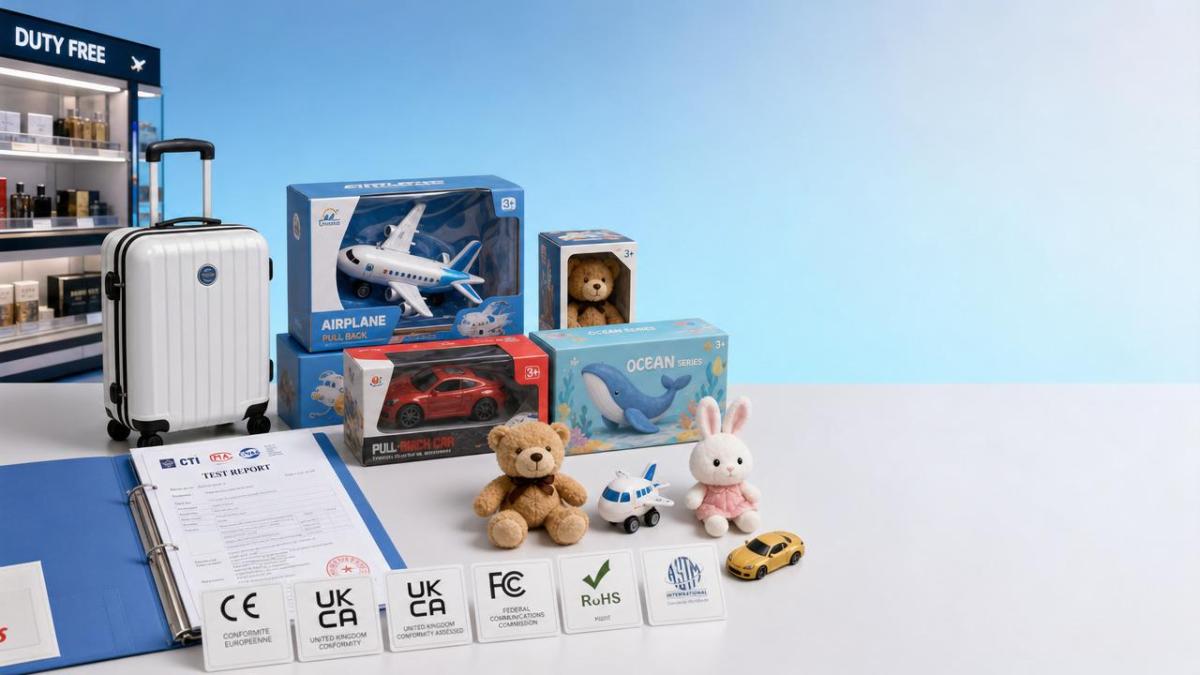
More common documents include test reports, product specifications, tracking labels, conformity declarations, and importer records. In the United States, a CPC is often central. In Europe, CE-related documentation is essential.
The key point is classification. If a souvenir item crosses into children’s play use, the toy certification checklist should begin before packaging artwork or booking production.
A quick way to judge borderline items
Ask how the product is presented, where it is sold, and who it is likely to attract. A travel gift aimed at families can fall under toy rules even when the original concept was promotional.
- Does the product invite play activity rather than display only?
- Is the packaging using child-focused language or imagery?
- Are there detachable small parts, strings, magnets, or batteries?
- Will it be sold in family travel channels or holiday gift bundles?
Which documents should be on a toy certification checklist before approval?
A useful toy certification checklist should help teams approve a product without chasing paperwork later. The goal is not paperwork volume. The goal is traceable proof.
For travel retail, short lead times make this even more important. Seasonal gift packs often combine several components, and one non-compliant accessory can delay the entire shipment.
This table works best as a gate, not a filing exercise. If one item does not match the sold version, the toy certification file is not ready.
Do airport, hotel, and cruise gift toys follow the same standards?
Not always. The sales channel may be similar, but toy certification depends mainly on the destination market and how the item is placed into commerce.
A toy sold in an airport duty-free location in Europe needs a different compliance path than a similar product prepared for US resort retail. The channel does not replace the law.
This is where market intelligence becomes valuable. GCS often emphasizes that sourcing decisions now depend on regional compliance detail, not only cost, speed, or visual appeal.
The standards usually checked first
- United States: ASTM F963, CPSIA, CPC, tracking label rules.
- European Union: EN 71 series, CE documentation, chemical restrictions.
- United Kingdom: UKCA may apply, depending on placement and timing.
- Other regions: local language labels and importer information often matter.
In real sourcing cycles, mixed-destination orders create the most mistakes. One packaging version is used for several markets, then the toy certification file no longer matches each destination requirement.
Where do travel gift programs usually fail compliance checks?
The biggest problems are rarely dramatic. They are usually small mismatches between the sample tested, the product shipped, and the label printed.
For example, a souvenir toy may pass testing in one fabric, then production changes the trim, zipper pull, or paint finish. That single change can invalidate parts of the toy certification record.
Another frequent issue is assuming that an old report can be reused forever. Test reports are not timeless if the factory, material source, design, or applicable regulation changes.
Common red flags worth catching early
- Test reports show another SKU or outdated product photos.
- Age grading does not match marketing language.
- Battery compartments or magnets were added after testing.
- Warnings are translated poorly or missing from retail packaging.
- Supplier declarations exist, but accredited lab support is missing.
The practical lesson is simple. Treat toy certification as a live control process tied to design and production, not as a last-minute document request before shipping.
How long does toy certification take, and what affects the cost?
Timing depends on complexity. A basic soft toy with stable materials may move faster than a multi-part travel gift set with lights, sound, or mixed materials.
The cost side is similar. Testing scope grows when products include chemicals, accessible small parts, cords, batteries, or decorative coatings. Multi-market launches also increase document work.
More importantly, rushed development usually costs more than testing itself. Late artwork changes, failed samples, and split shipments can quickly exceed the original toy certification budget.
What usually stretches the timeline?
- Unclear product classification at concept stage.
- Incomplete bill of materials from the supplier.
- Retesting after design or packaging changes.
- Different compliance files needed for each destination.
A better planning method is to lock the compliance-critical features early. That includes materials, warnings, age grade, accessories, and country-specific artwork.
What is the smartest next step when building a reliable toy certification routine?
Start with a working checklist that mirrors the real product journey. It should begin at concept review, continue through sample approval, and finish only when final packaging matches the tested item.
It also helps to group products by risk. A simple plush souvenir, a beach play set, and a battery toy should not move through the same review depth.
When sourcing across several regions, use one central record for standards, reports, declarations, and artwork versions. That creates the traceability needed for smoother travel retail launches.
This is where disciplined sourcing intelligence makes a difference. GCS reflects that broader shift in retail supply chains: compliance is no longer separate from product strategy, supplier selection, or market entry planning.
A dependable toy certification process does not need to be complicated. It needs to be current, market-aware, and linked to actual product changes.
The next practical move is to review your current travel gift assortment, identify which items may fall under toy rules, and compare each one against a destination-specific toy certification checklist before confirming production.
Related Intelligence
 STEM & Educational ToysSep 20, 2026How Do I Verify Age Grading for Educational Toys?How do I verify educational toy age grading? Learn how to assess safety risks, test reports, packaging, and market compliance before buying or selling.
 Corporate & Seasonal GiftsSep 20, 2026Are Promotional Items Worth Ordering for Short Campaigns?Are promotional items worth ordering for short campaigns? Learn how pet brands can choose useful, compliant giveaways that drive measurable engagement, sales, and loyalty.
 STEM & Educational ToysSep 20, 2026What Safety Checks Should Wooden Toy Suppliers Pass?What safety checks should wooden toy suppliers pass? Explore essential compliance, material traceability, chemical testing, and quality controls to source safer toys with confidence.
 Infant Feeding & CareSep 20, 2026Which Teething Toy Materials Are Easiest to Clean?Which teething toy materials are easiest to clean? Discover why silicone and natural rubber lead for hygienic, easy-care pet chew toys.
 Infant Feeding & CareSep 20, 2026How Can Retailers Prevent Mold Complaints About Bath Toys?How can retailers prevent mold complaints about bath toys? Explore drainable designs, supplier controls, testing, and care guidance to reduce moisture risks.
 Camping & WaterSep 20, 2026Which Folding Chair Fabrics Last Longest Outdoors?Which folding chair fabrics last longest outdoors? Compare acrylic, PVC-coated polyester, UV-stabilized polyester, and mesh for durable, pet-friendly outdoor seating.
 Camping & WaterSep 20, 2026Are Folding Camping Chairs Tested for Weight Capacity?Are folding camping chairs tested for weight capacity? Learn what credible load testing, safety margins, and supplier documentation mean for confident outdoor product sourcing.
 Corporate & Seasonal GiftsSep 20, 2026How Can Corporate Gift Buyers Avoid Missing Event Deadlines?How do corporate gift buyers avoid missed event deadlines? Discover proven sourcing, customization, compliance, and shipping strategies for pet-themed corporate gifts.
 Corporate & Seasonal GiftsSep 20, 2026What Should Be Approved Before Placing a Custom Gift Order?What should be approved before placing a custom gift order? Explore the essential checks for safe, compliant, retail-ready custom pet gifts.
 Corporate & Seasonal GiftsSep 20, 2026Which Custom Gift Materials Have the Lowest Defect Rates?Which custom gift materials have the lowest defect rate? Explore why silicone, stainless steel, polypropylene, and polyester help pet gift brands reduce rejects and improve quality.
 Skincare OEMAug 16, 2026Amazon Enforces AI Human Metadata Rule for Beauty and Personal Care SellersAmazon now enforces AI human metadata rules for beauty sellers. Learn how to protect listings, traffic, and compliance in skincare, cosmetics, and beauty devices.
 Beauty DevicesAug 15, 2026China to Roll Out Nationwide Cross-Border Cash Pooling for MultinationalsChina to roll out nationwide cross-border cash pooling for multinationals from Sept. 14. Discover how this policy could improve treasury efficiency, liquidity management, and China-linked supply chains.
 Beauty DevicesAug 14, 2026China Imposes Temporary Export Ban on Helium, Affecting Cooling Supply ChainsChina's temporary helium export ban may disrupt cooling supply chains for beauty RF devices and laser systems. Learn what ODMs, buyers, and procurement teams should check now.