
Vietnam Eliminates VAT on STEM Education Robot Imports
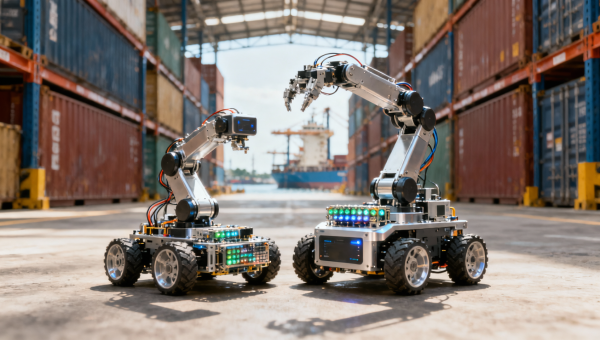
Vietnam officially removed the 10% import value-added tax (VAT) on STEM education robot units effective May 16, 2026 — a policy shift confirmed by the Ministry of Industry and Trade on May 18. This development directly affects exporters, distributors, and OEM manufacturers in the educational robotics supply chain, particularly those engaged with the Vietnamese market. With concurrent rollout of the e-CO electronic certificate of origin system, the change signals a tangible reduction in landed cost and regulatory friction for imported STEM hardware.
Event Overview
The Ministry of Industry and Trade of Vietnam confirmed on May 18, 2026 that the 10% import VAT on complete STEM education robot units was abolished effective May 16, 2026. The electronic Certificate of Origin (e-CO) system was activated simultaneously. No further details regarding product scope, HS code coverage, or transitional provisions were publicly released at time of confirmation.
Which Sub-Sectors Are Affected
Direct Exporters and OEM Manufacturers
Chinese OEMs producing STEM education robots for export to Vietnam face lower effective tax burdens on finished goods. Since the 10% VAT applied to CIF-value imports, its removal directly improves landed margin visibility for Vietnamese importers — enabling more competitive end pricing. For OEMs quoting in USD or EUR, stable RMB exchange rates further enhance relative pricing power.
Distributors and Channel Partners in Vietnam
Vietnamese distributors importing fully assembled STEM robots now bear no VAT at customs clearance. This reduces working capital requirements and shortens time-to-market for new SKUs. The e-CO rollout also streamlines documentation, though integration readiness across local logistics providers remains unconfirmed.
Supply Chain and Logistics Service Providers
Cargo agents, customs brokers, and bonded warehouse operators handling STEM robot shipments into Vietnam must adapt to updated tariff classification procedures and e-CO submission protocols. While the VAT line item is removed, accurate HS coding remains critical — especially given potential overlap between educational kits, robotic components, and consumer electronics categories.
What Relevant Companies or Practitioners Should Monitor and Do Now
Track official implementation guidance from Vietnam’s General Department of Vietnam Customs
The initial announcement confirms VAT removal but does not specify whether it applies only to specific HS codes (e.g., 9023.00 for educational instruments) or broader categories. Firms should verify eligibility via official tariff schedules and pending customs circulars.
Review current quotation structures for Vietnam-bound shipments
OEMs and exporters should reassess landed-cost models — especially those previously factoring in 10% VAT as a fixed cost. Adjustments may support revised commercial terms, faster contract cycles, or targeted Q3 promotional windows aligned with anticipated 20%+ order growth.
Distinguish between policy signal and operational readiness
While the VAT elimination is legally effective, actual customs processing speed and e-CO adoption rates across ports (e.g., Cat Lai, Cai Mep) may vary. Early adopters should pilot e-CO submissions with low-risk shipments before scaling.
Update documentation workflows and train frontline teams
Export documentation — including commercial invoices, packing lists, and origin declarations — must align with e-CO requirements. Internal training for sales, logistics, and compliance staff should emphasize revised VAT treatment and new digital certification steps.
Editorial Perspective / Industry Observation
Observably, this move reflects Vietnam’s prioritization of domestic STEM capacity building — particularly in K–12 and vocational technical education. Analysis shows the VAT removal is less about broad trade liberalization and more a targeted incentive to accelerate adoption of standardized, ready-to-deploy robotics platforms. It is better understood as an immediate cost-reduction mechanism than a structural market-opening reform. From an industry standpoint, the policy’s impact hinges on execution: sustained uptake depends on distributor inventory planning, school procurement cycles, and compatibility with Vietnam’s national STEM curriculum rollout timeline — all of which remain outside the scope of the current announcement.
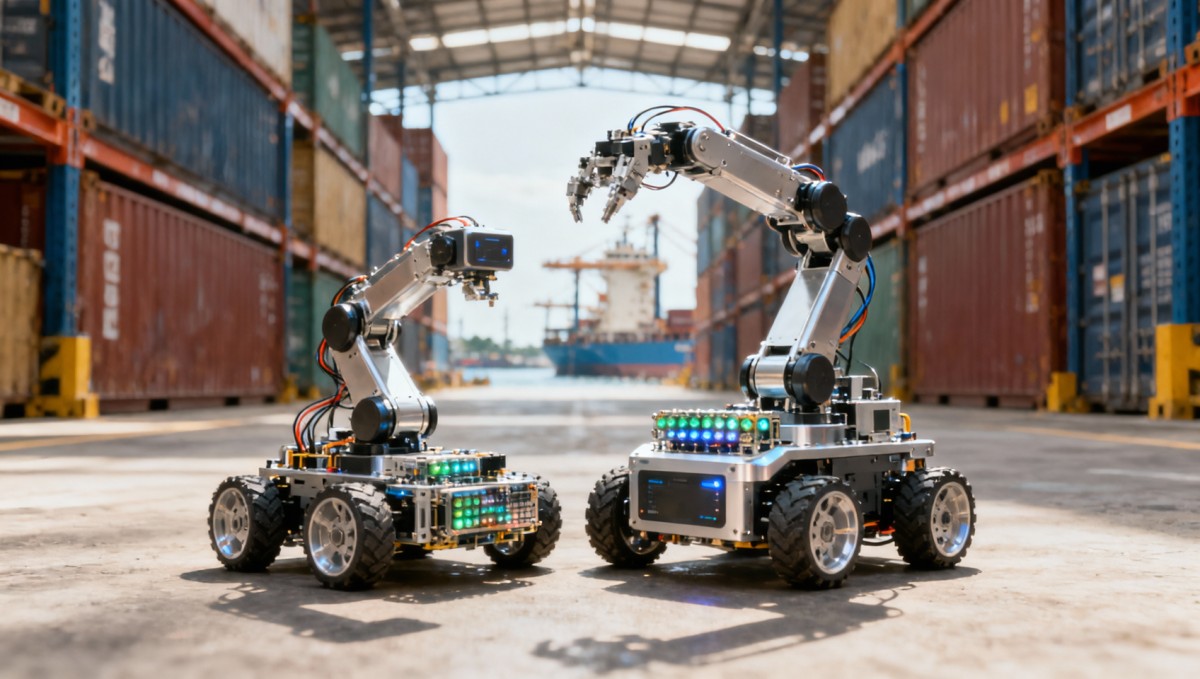
In summary, the VAT elimination marks a concrete, near-term improvement in cost efficiency for STEM robot exports to Vietnam — but its commercial effect will be realized incrementally, contingent on alignment across regulatory, logistical, and end-user procurement systems. It is best interpreted not as a market transformation, but as a calibrated adjustment lowering one layer of friction in an otherwise complex regional entry pathway.
Source: Ministry of Industry and Trade of Vietnam (announcement dated May 18, 2026).
Note: Implementation details — including HS code applicability, retroactivity, and e-CO enforcement timelines — remain subject to ongoing clarification and require monitoring.
Related Intelligence
 Skincare OEMAug 16, 2026Amazon Enforces AI Human Metadata Rule for Beauty and Personal Care SellersAmazon now enforces AI human metadata rules for beauty sellers. Learn how to protect listings, traffic, and compliance in skincare, cosmetics, and beauty devices.
 Beauty DevicesAug 15, 2026China to Roll Out Nationwide Cross-Border Cash Pooling for MultinationalsChina to roll out nationwide cross-border cash pooling for multinationals from Sept. 14. Discover how this policy could improve treasury efficiency, liquidity management, and China-linked supply chains.
 Beauty DevicesAug 14, 2026China Imposes Temporary Export Ban on Helium, Affecting Cooling Supply ChainsChina's temporary helium export ban may disrupt cooling supply chains for beauty RF devices and laser systems. Learn what ODMs, buyers, and procurement teams should check now.
![]() Cosmetics & PkgAug 13, 2026PPWR becomes mandatory: Beauty and personal care packaging materials usher in new EPR and PFAS compliance requirementsPPWR takes effect for cosmetics packaging in the EU, bringing EPR registration and PFAS limits. Learn what brands, importers, and suppliers must do now.
Cosmetics & PkgAug 13, 2026PPWR becomes mandatory: Beauty and personal care packaging materials usher in new EPR and PFAS compliance requirementsPPWR takes effect for cosmetics packaging in the EU, bringing EPR registration and PFAS limits. Learn what brands, importers, and suppliers must do now. Cosmetics & PkgAug 12, 2026EU PPWR Now Enforced for Beauty Packaging ComplianceEU PPWR now enforced for beauty packaging compliance: learn how EPR, ERN, heavy metals and PFAS rules affect EU exports, customs clearance and platform sales.
 Cosmetics & PkgAug 11, 2026EU PPWR Rules Take Effect on Aug. 12 for Beauty PackagingEU PPWR rules for beauty packaging take effect on Aug. 12, 2026. Learn key compliance steps, EPR, labeling, PFAS limits, and how to avoid customs delays and fines.
 Smart Pet DevicesAug 10, 2026EU EPR Rules to Cover Smart Pet Devices on Aug. 15EU EPR Rules will cover smart pet devices from Aug. 15, 2026. Learn how smart collars, feeders, and monitoring devices can avoid delisting, customs delays, and compliance risks in the EU.
 Infant Feeding & CareAug 09, 2026CPSC Recalls Baby Sleep Sacks Over Undeclared TDCPPCPSC Recalls Baby Sleep Sacks Over Undeclared TDCPP: learn how this 2026 recall impacts CPC documents, third-party testing, and U.S. baby product compliance for exporters.
 Infant Feeding & CareAug 08, 2026ECHA Adds 5 SVHCs, Importer Notices Due From Oct 2026ECHA adds 5 SVHCs to the Candidate List, with importer notices due from October 2026. Learn how REACH affects exporters, supply chains, and documentation readiness.
 Baby Gear & StrollersAug 07, 2026CPSC Revises Crib Rail Standard for November 2026CPSC revises crib rail standard for November 2026, adding dynamic impact tests and mandatory third-party lab testing. Learn how the new rule affects U.S. market access, compliance, and shipments.
 Electronic & RC ToysAug 06, 2026EU to Require EN IEC 62115:2025 for Electronic ToysEU to Require EN IEC 62115:2025 for Electronic Toys from Oct 1, 2026. Learn scope, battery and AI safety updates, CE compliance risks, and how exporters can avoid customs delays.
 Baby Gear & StrollersAug 05, 2026US Stroller Stability Rule Takes Effect Aug. 15US Stroller Stability Rule Takes Effect Aug. 15: learn how new U.S. stroller compliance, ASTM F833-26a, and CPSC testing rules may affect imports, certification, and shipment readiness.
 Infant Feeding & CareAug 04, 2026ECHA Adds 5 SVHCs, Triggering Baby Care Export ReviewECHA adds 5 SVHCs, prompting an urgent baby care export review for EU-bound products. Learn the 0.1% threshold risks, compliance steps, and how to avoid customs delays and fines.












