Are Baby Carrier Buckle Failures a Common Reason for Returns?
Are Baby Carrier Buckle Failures a Common Reason for Returns?
Are baby carrier buckle failures a common return issue? Without verified, product-level return data, there is no sound basis for calling them a leading cause across the market. “Buckle problem” can describe cracked hardware, an unexpected release, a strap that slips, or a fastening system someone finds difficult to use. Those complaints need different responses.
The useful question is not simply how often buyers mention buckles. It is whether the carrier fails to retain the child, whether users can reliably secure it, and whether complaints point to a repeatable production issue. A low return rate does not clear a safety concern; a high rate of fastening complaints does not automatically prove defective hardware.
For sourcing teams working across baby products and pet accessories, buckle construction may look familiar. But shared hardware categories do not mean shared safety requirements. Comparing the mechanisms can help procurement; treating the finished products as interchangeable cannot.
“The Buckle Failed” Is a Starting Point, Not a Diagnosis
Imagine a return message that says, “The clip would not stay closed.” The buckle might have fractured. Alternatively, one side may not have fully engaged, the mating parts may be mismatched, or tension from the strap may have exposed a retention problem. A photograph of an apparently intact buckle cannot settle that question.
The distinction matters commercially because the remedies differ. Better instructions cannot repair weak latch geometry. Replacing the buckle tooling may not resolve a fastening position that users cannot reach or inspect.
Do not close the investigation with “user error” simply because the buckle works on a desk. If foreseeable partial engagement looks or sounds secure, that is a design and usability concern worth reviewing. Equally, customer-service staff should not label every difficult release a structural failure.
What Return Data Can Actually Tell You
Return records measure what customers report within a particular sales process. They do not capture every incident, and their categories may be too broad for engineering decisions. “Defective,” “uncomfortable,” and “difficult to use” can conceal the same underlying complaint.
Keep the original customer wording alongside a reviewed classification. Useful fields include carrier model, production lot, buckle location, date of purchase, reported circumstances, visible damage, and whether the returned product was inspected. Record allegations of unexpected release separately from ordinary convenience complaints, even before the cause is confirmed.
The denominator matters. Buckle-related returns as a share of all returns answer a different question from buckle-related returns as a share of units sold. Neither establishes the probability of failure during use. Recent shipments also have less exposure time than older ones, so comparing their raw complaint totals can be misleading.
Look for clustering around a hardware change, supplier, mold cavity, assembly line, or production period. That can justify a targeted investigation without pretending that correlation proves the cause. Compare the suspect group with suitable retained samples and unaffected lots.
Public recall notices offer another evidence source. The U.S. Consumer Product Safety Commission recall database can help teams review documented hazards and corrective actions. It is not an industry return-rate database: recall counts lack a consistent sales denominator and cannot establish whether buckle failures are “common.”
Compare the Fastening System, Not Just the Buckle
A supplier may offer a familiar side-release buckle in several sizes, materials, and operating-force options. Choosing the largest version is not a complete safety strategy. Retention depends on the mating parts, webbing, routing, stitching, adjustment hardware, and position on the carrier.
An exposed waist fastening deserves different scrutiny from a chest connector used mainly to position shoulder straps. Map what happens if each fastening opens. Does another feature continue to provide support, or could the opening immediately compromise the carrying position? That consequence should shape the assessment.
A secondary retaining feature may reduce the consequences of release in some designs, but it adds another action for the user. If it is routinely missed or routed incorrectly, its intended protection may not be available. Assess the complete sequence of putting on, adjusting, checking, and removing the carrier.
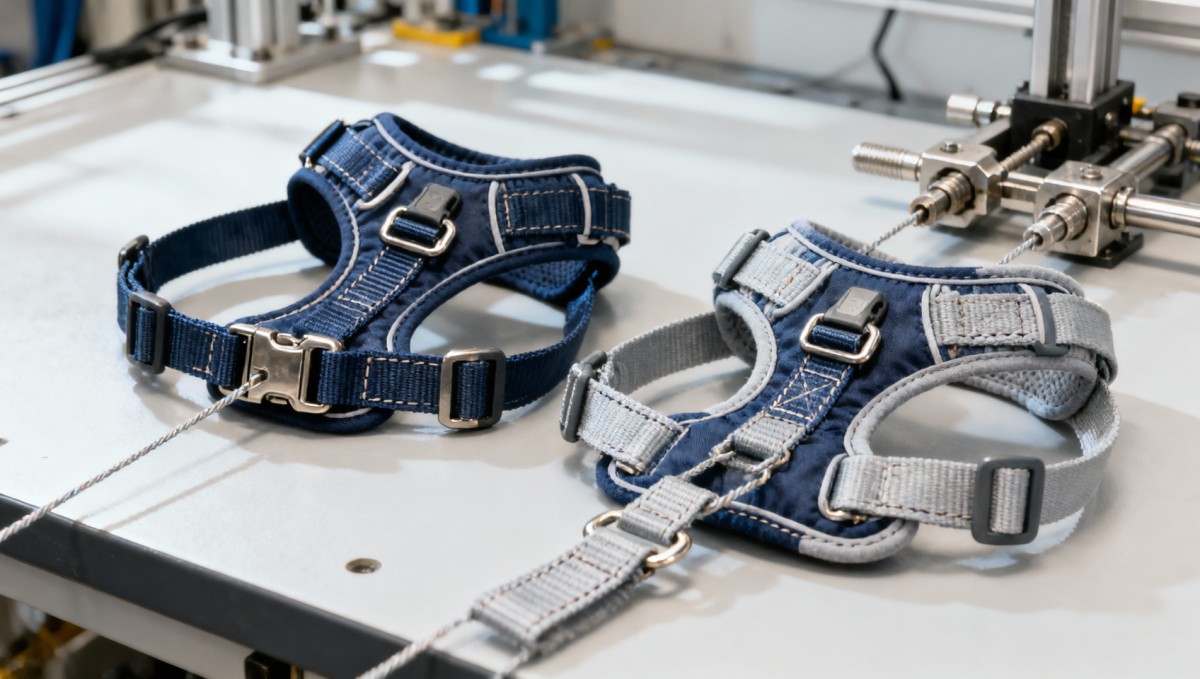
A useful visual comparison would show full and partial latch engagement, the webbing path through the adjuster, and any secondary retention feature. These details are more informative than a polished close-up of the buckle exterior.
There is also a genuine trade-off between resistance to unintended release and ease of operation. Simply increasing release force can make removal difficult for some caregivers. The goal is a mechanism that retains securely under the intended conditions and remains deliberately operable—not the stiffest buckle available.
What Transfers from Pet Accessories—and What Does Not
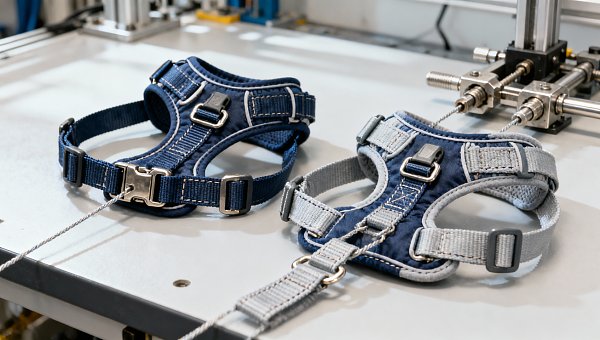
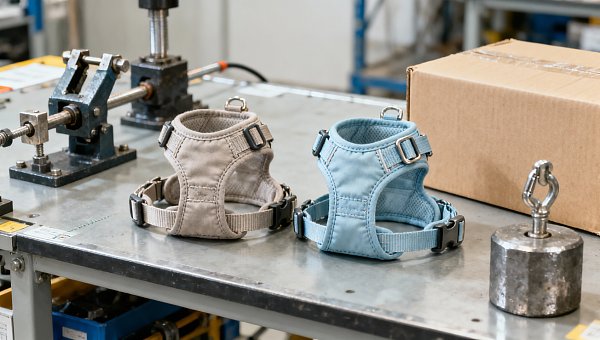
Pet harnesses, wearable pet carriers, and baby carriers can all involve molded buckles and adjustable webbing. Cross-category buyers can use similar supplier questions: Who controls the resin specification? Are mating components kept consistent? Can the factory trace hardware lots? Does a component change trigger review and testing?
The intended behavior of the fastening may be completely different, however. A breakaway cat collar is designed to release under specified circumstances. A load-bearing baby-carrier fastening is not selected on that basis. Nor does satisfactory performance on a dog harness demonstrate suitability for carrying an infant.
This is a useful distinction within Global Consumer Sourcing’s coverage of both Baby & Maternity and the Pet Economy: component knowledge can travel across categories, but product compliance and hazard assessments must remain specific. “We already supply this buckle for pet products” is background information, not qualification evidence.
Testing That Supports a Sourcing Decision
Start by establishing the product category and destination market. Soft infant and toddler carriers, sling carriers, and frame carriers are not interchangeable compliance categories. Applicable requirements should be confirmed against current rules and the actual design, rather than copied from a similar-looking product.
For U.S. sales, relevant children’s-product requirements can include testing by a CPSC-accepted third-party laboratory and a Children’s Product Certificate where required. A CPC is not a generic buckle approval. Likewise, a CE logo or an “FDA certified” sales claim should not be accepted as blanket evidence of baby-carrier compliance.
Beyond applicable mandatory testing, the engineering assessment should address the actual buckle-and-webbing assembly. Depending on the design, this may include repeated operation, retention under representative loading, strap slippage, environmental conditioning, and exposure to permitted cleaning methods. Test conditions and acceptance criteria need technical justification; arbitrary cycle counts are not a substitute.
- Confirm that reports identify the tested model and configuration, including safety-relevant hardware.
- Check whether samples represent production materials and tooling, rather than an earlier prototype.
- Require documented review before changes to resin, buckle source, webbing, or attachment construction.
- Include realistic fastening observations; a laboratory fixture does not assess whether users recognize incomplete engagement.
A destructive test of the buckle alone answers a limited question. It may not reveal slippage through an adjuster or failure at the stitched attachment. Whole-product evidence and component evidence should complement each other.
When a Complaint Should Change the Buying Decision
An allegation that a properly fastened buckle released while carrying a child calls for prompt safety review, not routine return processing alone. Preserve the returned unit and relevant records, establish traceability, and involve qualified product-safety personnel. Shipment holds, reporting duties, or corrective action depend on the facts and applicable jurisdiction.
Do not ask a caregiver to reproduce the event with a child in the carrier. Suspected safety-critical hardware should remain out of use pending appropriate guidance; improvised repairs or unapproved replacement clips can change the system’s behavior.
For procurement, supplier responsiveness is part of the comparison. A supplier that can retrieve batch records, explain changes, and support investigation is more assessable than one offering only replacement stock. Replacement stock may resolve a customer transaction while leaving the underlying risk unanswered.
The defensible conclusion is narrow: buckle complaints deserve their own classification, but available evidence does not justify declaring structural buckle failures a common return reason across baby carriers. Before approving a repeat order, separate confirmed defects from unresolved release reports and usability complaints. Then check whether each category has an evidence-based response—not merely a lower return total.
Related Intelligence
 Baby Gear & StrollersOct 14, 2026Are Baby Carrier Buckle Failures a Common Reason for Returns?Are baby carrier buckle failures a common return issue? Explore defects, usability complaints, and safety checks to make informed sourcing decisions before your next order.
 Baby Gear & StrollersOct 14, 2026How Do You Compare Baby Carrier Suppliers on Safety and Cost?How do I compare baby carrier suppliers on safety and cost? Learn to verify safety evidence, assess factory controls, and compare total landed costs to make a confident sourcing decision.
 STEM & Educational ToysSep 20, 2026How Do I Verify Age Grading for Educational Toys?How do I verify educational toy age grading? Learn how to assess safety risks, test reports, packaging, and market compliance before buying or selling.
 Corporate & Seasonal GiftsSep 20, 2026Are Promotional Items Worth Ordering for Short Campaigns?Are promotional items worth ordering for short campaigns? Learn how pet brands can choose useful, compliant giveaways that drive measurable engagement, sales, and loyalty.
 STEM & Educational ToysSep 20, 2026What Safety Checks Should Wooden Toy Suppliers Pass?What safety checks should wooden toy suppliers pass? Explore essential compliance, material traceability, chemical testing, and quality controls to source safer toys with confidence.
 Infant Feeding & CareSep 20, 2026Which Teething Toy Materials Are Easiest to Clean?Which teething toy materials are easiest to clean? Discover why silicone and natural rubber lead for hygienic, easy-care pet chew toys.
 Infant Feeding & CareSep 20, 2026How Can Retailers Prevent Mold Complaints About Bath Toys?How can retailers prevent mold complaints about bath toys? Explore drainable designs, supplier controls, testing, and care guidance to reduce moisture risks.
 Camping & WaterSep 20, 2026Which Folding Chair Fabrics Last Longest Outdoors?Which folding chair fabrics last longest outdoors? Compare acrylic, PVC-coated polyester, UV-stabilized polyester, and mesh for durable, pet-friendly outdoor seating.
 Camping & WaterSep 20, 2026Are Folding Camping Chairs Tested for Weight Capacity?Are folding camping chairs tested for weight capacity? Learn what credible load testing, safety margins, and supplier documentation mean for confident outdoor product sourcing.
 Corporate & Seasonal GiftsSep 20, 2026How Can Corporate Gift Buyers Avoid Missing Event Deadlines?How do corporate gift buyers avoid missed event deadlines? Discover proven sourcing, customization, compliance, and shipping strategies for pet-themed corporate gifts.
 Corporate & Seasonal GiftsSep 20, 2026What Should Be Approved Before Placing a Custom Gift Order?What should be approved before placing a custom gift order? Explore the essential checks for safe, compliant, retail-ready custom pet gifts.
 Corporate & Seasonal GiftsSep 20, 2026Which Custom Gift Materials Have the Lowest Defect Rates?Which custom gift materials have the lowest defect rate? Explore why silicone, stainless steel, polypropylene, and polyester help pet gift brands reduce rejects and improve quality.
 Skincare OEMAug 16, 2026Amazon Enforces AI Human Metadata Rule for Beauty and Personal Care SellersAmazon now enforces AI human metadata rules for beauty sellers. Learn how to protect listings, traffic, and compliance in skincare, cosmetics, and beauty devices.