
CPC Certified Car Seats: What to Check Before You Source
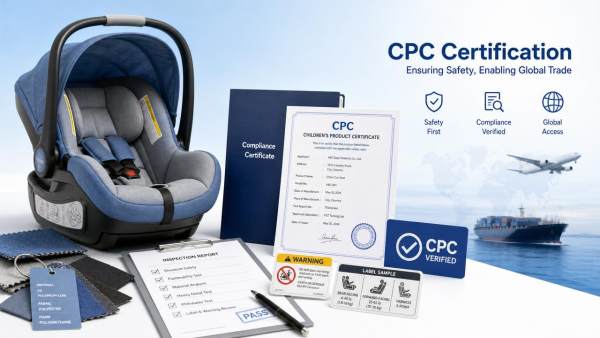
Before you source infant travel products, verifying CPC certified car seats should be a non-negotiable step for quality and safety teams. A valid Children’s Product Certificate is only the starting point.
For QC and safety managers, the real question is whether the certificate accurately matches the product, the testing scope, the production batch, and the supplier’s ongoing manufacturing controls.
If any of those elements are weak, a seemingly compliant car seat can still create recall exposure, customs delays, retailer rejection, and serious child safety risks.
This guide explains what to check before approving a supplier, what documents to request, and which warning signs deserve immediate escalation during sourcing.
What quality and safety teams should verify first
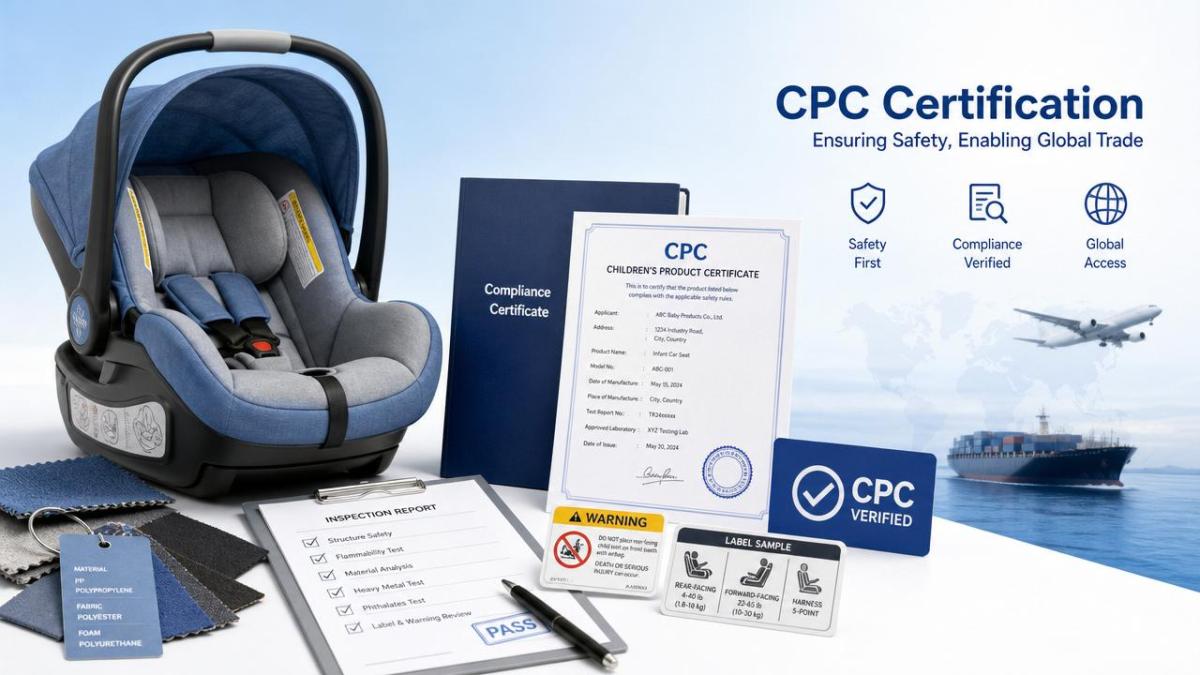
The core search intent behind “CPC certified car seats” is practical, not theoretical. Buyers want to know how to confirm that a supplier’s claims are real, complete, and usable for market entry.
For quality and compliance professionals, the priority is not simply obtaining a certificate file. It is confirming that the car seat can lawfully and consistently pass U.S. children’s product requirements.
That means checking five areas in sequence: certificate validity, test report coverage, regulatory labeling, material compliance, and factory consistency across repeated production runs.
If one of these areas fails, the product may still look commercially attractive on paper, but it becomes a sourcing risk rather than a sourcing opportunity.
Understand what a CPC actually proves
A Children’s Product Certificate is a legally required document for many children’s products sold in the United States. It states that the product complies with applicable children’s product safety rules.
However, a CPC is a declaration based on supporting evidence. It is not a substitute for the underlying test reports, technical file, or manufacturing controls that support the declaration.
When a supplier says a car seat is CPC certified, your team should interpret that as a claim requiring verification, not as final proof of compliance.
You need to confirm which standards were tested, who performed the testing, when the tests were completed, and whether the tested sample truly matches the product you plan to buy.
Check whether the certificate matches the exact product
One of the most common sourcing mistakes is accepting a CPC that belongs to a similar item rather than the exact car seat under negotiation.
Start by comparing the product name, model number, SKU reference, age grading, and product description on the certificate against the quotation, specification sheet, and packaging artwork.
Even small mismatches matter. A certificate for one harness configuration, fabric version, or structural variant may not cover another version sold under the same broad family name.
Your team should also verify importer details, manufacturer details, place of production, and contact information for the record keeper listed on the certificate.
If the supplier cannot explain a mismatch quickly and clearly, treat that as a red flag and pause the approval process until all records are aligned.
Review the full testing scope, not just the certificate title
A valid CPC should reference all applicable product safety rules, but the real compliance review happens in the laboratory reports behind it.
For car seats, your quality team should request complete test reports from a CPSC-accepted laboratory where required, including the report number, testing date, product photos, and sample identification.
Do not rely on a summary page alone. The detailed report helps you confirm what was tested, whether the sample represents your product, and whether all relevant sections passed.
Pay particular attention to mechanical performance, structural integrity, restraint system performance, flammability where applicable, and chemical restrictions for children’s products.
Also check whether testing covered accessories, inserts, buckles, labels, and detachable components. These smaller parts often trigger failures that suppliers overlook during early sampling.
Confirm lead, phthalates, and material safety compliance
For children’s products, chemical compliance is a major checkpoint. A car seat may pass structural tests and still fail due to restricted substances in accessible components.
Ask for material-level or component-level evidence covering lead content, surface coating limits, and phthalate restrictions where applicable under U.S. requirements.
This is especially important for straps, buckle covers, printed trims, plastic parts, foam elements, and decorative accessories that come into frequent contact with children.
Quality teams should not assume that passing one prior order means all future production is safe. Raw material substitutions are common when suppliers face cost pressure or material shortages.
To reduce this risk, require a material declaration matrix tied to approved suppliers, part numbers, and color variants. That creates traceability beyond a one-time lab report.
Inspect labeling, warnings, and tracking information carefully
A compliant product can still be rejected if its labels or warnings are incomplete, inaccurate, or inconsistent with the tested version.
Review all sewn labels, molded markings, warning statements, carton labels, and instruction manuals before mass production begins. They should match the applicable regulations and the certificate record.
Tracking label requirements are especially important for children’s products. The product and packaging should allow traceability back to production date, batch, and manufacturing source.
Safety managers should verify permanence, legibility, and placement. A label that fades, peels, or becomes unreadable during normal use can become a compliance problem later.
Also check that the user manual includes correct installation guidance, restraint instructions, age or size limitations, and warnings that reflect the actual product design.
Validate supplier consistency, not just sample compliance
The biggest sourcing gap in infant travel products is often the difference between a compliant pre-production sample and unstable mass production output.
That is why supplier evaluation should include process control, incoming material inspection, assembly verification, and final quality release standards, not just lab documents.
Ask the factory how it controls critical safety characteristics such as buckle strength, harness stitching, frame integrity, recline mechanisms, and foam or fabric substitution.
You should also review whether the supplier uses approved component lists, change control procedures, and lot traceability for parts coming from sub-suppliers.
If a factory cannot show disciplined production control, a clean compliance file may still hide a high probability of future defects, claim disputes, or retailer complaints.
Assess the age and relevance of the compliance file
Documents can be authentic and still be outdated. Testing completed years ago may not reflect current materials, revised product design, or updated regulations.
Check the issuance date of the CPC, the date of the underlying lab reports, and whether any design changes occurred after testing. Even packaging or labeling changes can matter.
Ask the supplier to disclose all revisions to structure, foam, textile, hardware, and accessories since the test date. Documented engineering changes should trigger a re-evaluation.
For repeat orders, build a review cycle into your sourcing SOP. Do not treat compliance as a one-time onboarding task that never needs to be revisited.
Watch for common red flags during supplier screening
Many avoidable sourcing failures begin with warning signs that buyers ignore because the quoted price or lead time looks attractive.
Be cautious if a supplier shares blurred reports, removes laboratory pages, refuses to provide sample photos from the report, or sends certificates with inconsistent company names.
Other red flags include test reports covering unrelated products, certificates lacking applicable rule references, and factories that cannot explain which parts are safety critical.
You should also question suppliers who promise instant compliance across many baby categories without a dedicated regulatory contact or documented testing workflow.
In practice, strong suppliers usually respond with organized technical files, clear revision histories, and confident explanations rather than vague sales-language assurances.
Build a pre-sourcing verification checklist for internal approval
For execution teams, a structured review checklist is the best way to prevent subjective approval decisions and last-minute compliance surprises.
Your checklist should include product identity matching, complete CPC review, laboratory accreditation review, report applicability confirmation, labeling verification, and material compliance assessment.
It should also cover document date validity, production site confirmation, change management records, traceability controls, and whether a golden sample is archived for comparison.
Where risk is higher, add a pre-shipment inspection focused on safety-critical features and random verification testing on production units rather than development samples only.
This process creates an auditable approval trail and helps quality, sourcing, and legal teams align before purchase orders are released.
Why this matters commercially, not just legally
For many organizations, compliance review is still treated as a paperwork function. In reality, it directly affects cost, brand risk, and supply chain stability.
Sourcing a non-compliant or weakly documented car seat can trigger testing delays, port holds, retailer chargebacks, product recalls, insurance exposure, and reputational damage.
By contrast, thoroughly vetted CPC certified products support faster onboarding, smoother retailer acceptance, and fewer emergency interventions after launch.
For procurement leaders, this means compliance discipline is not a drag on sourcing speed. It is a protection mechanism for margin, continuity, and customer trust.
Final takeaway for QC and safety managers
When sourcing infant travel products, do not stop at the phrase “CPC certified.” A certificate alone does not confirm that a car seat is fully verified for your order.
The safer approach is to check whether the CPC matches the exact product, whether the lab reports are complete, whether materials and labels comply, and whether the factory can repeat compliant production consistently.
If your team reviews those elements early, you can identify weak suppliers before commitment, reduce recall risk, and strengthen confidence in every sourcing decision.
In short, the right question is not whether a supplier has a CPC. It is whether the supplier can prove ongoing, traceable, product-specific compliance from sample stage to shipment.
Related Intelligence
 Skincare OEMAug 16, 2026Amazon Enforces AI Human Metadata Rule for Beauty and Personal Care SellersAmazon now enforces AI human metadata rules for beauty sellers. Learn how to protect listings, traffic, and compliance in skincare, cosmetics, and beauty devices.
 Beauty DevicesAug 15, 2026China to Roll Out Nationwide Cross-Border Cash Pooling for MultinationalsChina to roll out nationwide cross-border cash pooling for multinationals from Sept. 14. Discover how this policy could improve treasury efficiency, liquidity management, and China-linked supply chains.
 Beauty DevicesAug 14, 2026China Imposes Temporary Export Ban on Helium, Affecting Cooling Supply ChainsChina's temporary helium export ban may disrupt cooling supply chains for beauty RF devices and laser systems. Learn what ODMs, buyers, and procurement teams should check now.
![]() Cosmetics & PkgAug 13, 2026PPWR becomes mandatory: Beauty and personal care packaging materials usher in new EPR and PFAS compliance requirementsPPWR takes effect for cosmetics packaging in the EU, bringing EPR registration and PFAS limits. Learn what brands, importers, and suppliers must do now.
Cosmetics & PkgAug 13, 2026PPWR becomes mandatory: Beauty and personal care packaging materials usher in new EPR and PFAS compliance requirementsPPWR takes effect for cosmetics packaging in the EU, bringing EPR registration and PFAS limits. Learn what brands, importers, and suppliers must do now. Cosmetics & PkgAug 12, 2026EU PPWR Now Enforced for Beauty Packaging ComplianceEU PPWR now enforced for beauty packaging compliance: learn how EPR, ERN, heavy metals and PFAS rules affect EU exports, customs clearance and platform sales.
 Cosmetics & PkgAug 11, 2026EU PPWR Rules Take Effect on Aug. 12 for Beauty PackagingEU PPWR rules for beauty packaging take effect on Aug. 12, 2026. Learn key compliance steps, EPR, labeling, PFAS limits, and how to avoid customs delays and fines.
 Smart Pet DevicesAug 10, 2026EU EPR Rules to Cover Smart Pet Devices on Aug. 15EU EPR Rules will cover smart pet devices from Aug. 15, 2026. Learn how smart collars, feeders, and monitoring devices can avoid delisting, customs delays, and compliance risks in the EU.
 Infant Feeding & CareAug 09, 2026CPSC Recalls Baby Sleep Sacks Over Undeclared TDCPPCPSC Recalls Baby Sleep Sacks Over Undeclared TDCPP: learn how this 2026 recall impacts CPC documents, third-party testing, and U.S. baby product compliance for exporters.
 Infant Feeding & CareAug 08, 2026ECHA Adds 5 SVHCs, Importer Notices Due From Oct 2026ECHA adds 5 SVHCs to the Candidate List, with importer notices due from October 2026. Learn how REACH affects exporters, supply chains, and documentation readiness.
 Baby Gear & StrollersAug 07, 2026CPSC Revises Crib Rail Standard for November 2026CPSC revises crib rail standard for November 2026, adding dynamic impact tests and mandatory third-party lab testing. Learn how the new rule affects U.S. market access, compliance, and shipments.
 Electronic & RC ToysAug 06, 2026EU to Require EN IEC 62115:2025 for Electronic ToysEU to Require EN IEC 62115:2025 for Electronic Toys from Oct 1, 2026. Learn scope, battery and AI safety updates, CE compliance risks, and how exporters can avoid customs delays.
 Baby Gear & StrollersAug 05, 2026US Stroller Stability Rule Takes Effect Aug. 15US Stroller Stability Rule Takes Effect Aug. 15: learn how new U.S. stroller compliance, ASTM F833-26a, and CPSC testing rules may affect imports, certification, and shipment readiness.
 Infant Feeding & CareAug 04, 2026ECHA Adds 5 SVHCs, Triggering Baby Care Export ReviewECHA adds 5 SVHCs, prompting an urgent baby care export review for EU-bound products. Learn the 0.1% threshold risks, compliance steps, and how to avoid customs delays and fines.












