Customs Expands June Checks on Baby Product Exports

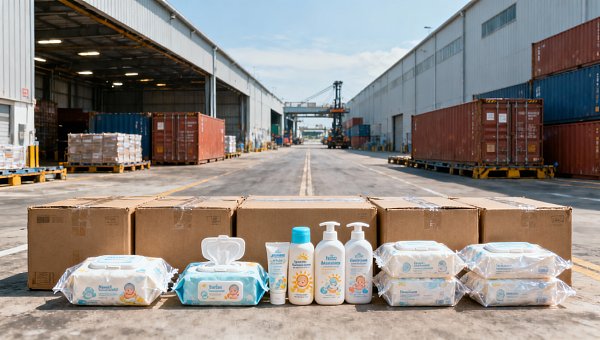
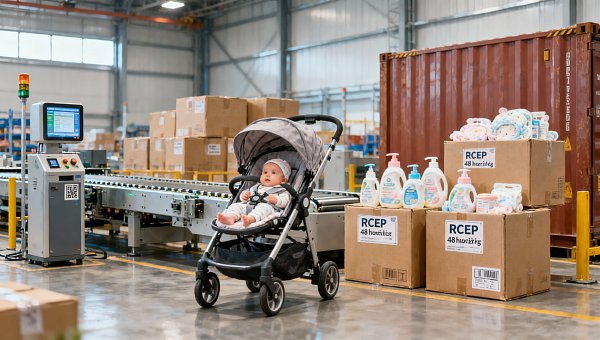
Starting on 2026-06-01, China Customs will tighten quality oversight for exported baby strollers, infant feeding items, and care products by widening inspection coverage to every declared batch tied to OEM factories already on customs record. For exporters, OEM manufacturers, importers, and compliance teams, this matters not only as a product control update but also as a change that can affect document readiness, inspection response speed, and shipment scheduling across the export chain.

What the June rule change clearly covers
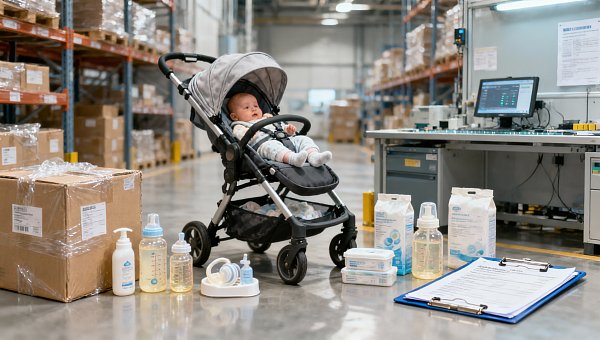
The confirmed information indicates that the strengthened supervision applies to exports of baby strollers, infant feeding utensils, and care products. From 2026-06-01, the inspection scope is expanded to all customs declaration batches associated with OEM factories that have already been filed with customs. The new requirement also calls on companies to keep certification and compliance documents available for review, including CPC, EN1466, and FDA 21 CFR Part 1010 materials.
The same confirmed information also states that the measure is expected to affect delivery timing and inspection response speed. In parallel, overseas importers are being prompted to coordinate with suppliers in advance so that compliance packages can be prepared earlier and expedited testing windows can be reserved where needed.
Where the pressure is likely to appear in day-to-day export operations
Shipment planning may become less flexible for exporters
From an industry perspective, exporters are likely to feel the change first at the declaration and shipment stage. Because inspection now covers all recorded OEM factory batches within the stated scope, the ability to rely on last-minute file collection or delayed document assembly becomes weaker. What deserves closer attention is whether internal export teams can match each shipment with the relevant compliance package before customs review is triggered.
OEM factories face tighter document-to-batch linkage
For OEM manufacturers, the key issue is not only product production but also whether factory filing records, batch declarations, and supporting certifications stay aligned. Analysis shows that the operational burden may shift toward document traceability, version control, and faster retrieval of CPC, EN1466, and FDA 21 CFR Part 1010 records when a batch is checked.
Importers and buyers may need earlier supplier coordination
Overseas importers and procurement teams are also exposed because the summary points directly to possible effects on lead times and inspection response. Observably, buyers may need suppliers to provide a more complete compliance package earlier in the purchasing cycle, especially when shipment timing depends on quick customs clearance and rapid response to document review requests.
Testing and compliance support providers may see tighter response expectations
For testing service providers and compliance support teams, the immediate relevance lies in timing. The event summary indicates that importers should reserve expedited testing windows in advance. It is more appropriate to understand this as a practical signal that reaction time around testing documents, supporting files, and review preparation may become more compressed for the affected product categories.
What companies should review now
Check whether compliance files are ready for batch-level review
Companies involved in the affected exports should review whether CPC, EN1466, and FDA 21 CFR Part 1010 documents can be retrieved quickly and matched to declared shipments. If documentation exists but is not organized at batch level, the operational risk may arise at the moment of customs review rather than at the time of production.
Revisit lead-time assumptions in contracts and booking plans
Analysis shows that a rule change affecting inspection scope can alter delivery assumptions even without any change in product demand. Exporters, suppliers, and buyers should therefore pay closer attention to whether current booking windows, promised shipment dates, and handover timing still leave enough room for inspection response and possible expedited testing.
Clarify supplier responsibilities before cargo is declared
What deserves closer attention is the division of responsibility between brand owners, traders, OEM factories, and importers. The event summary points to a need for earlier coordination on compliance packages, so companies may need to confirm in advance who prepares certification files, who maintains the latest version, and who responds when customs requests supporting materials.
Keep watching for more specific execution language
The available information confirms the direction of tighter enforcement, but it does not provide fuller execution detail. For that reason, companies should continue monitoring for later clarification on review practice, document format expectations, and any more specific compliance wording that may affect how the rule is applied in daily export operations.
Why this reads as an enforcement signal rather than a standalone paperwork update
Analysis shows that the most important feature of this development is the expansion of inspection coverage to all filed OEM batches within the stated scope. That makes the change more meaningful than a routine document reminder, because it links product oversight, declaration workflow, and compliance preparedness more directly. At the same time, it is still necessary to observe how consistently the requirement is implemented in practice and whether market participants adjust their document and testing timelines accordingly.
How the market may need to interpret this development
At this stage, it is more appropriate to understand the update as a landed compliance and enforcement signal for baby product exports rather than as a fully detailed operating framework. The confirmed facts already point to tangible effects on shipment preparation, document readiness, and inspection timing, but the full business impact will still depend on follow-up execution details, industry response speed, and how companies adapt their batch-level compliance management.
Basis of this article and what still needs verification
This article is generated from the user-provided news title, event date, and event summary. For developments of this kind, relevant source types typically include official notices, releases from regulatory authorities, customs or trade administration updates, industry association information, standard-setting documents, and reporting by authoritative media. A specific official source link was not provided in the input, so further verification remains necessary.
Observably, the points that still merit ongoing review include any later policy detail, the exact compliance interpretation for certification files, changes in buyer or tender document requirements, industry feedback on inspection timing, and how affected companies implement the rule in practice.
Related Intelligence
 STEM & Educational ToysJun 15, 2026Zero-Tariff Start Lifts South Africa Nutrition Imports 132%Zero-Tariff Start Lifts South Africa Nutrition Imports 132%, signaling fast growth in health-focused trade. See what it means for importers, manufacturers, and supply-chain players.
 Skincare OEMJun 15, 2026Philippines Trade Gap Widens as Baby Care Import Curbs LoomPhilippines trade gap widens as baby care import curbs loom. Learn how proposed HS 3307 and 3401 quota controls may affect importers, customs clearance, distributors, and regional supply chains.
 Infant Feeding & CareJun 15, 2026RCEP Fast-Tracks Baby Goods Clearance to 48 HoursRCEP fast-tracks baby goods clearance to 48 hours, helping baby gear, strollers, and infant care shipments move faster. See how compliant brands can improve replenishment and delivery response.
 Baby Gear & StrollersJun 15, 2026Customs Expands June Checks on Baby Product ExportsCustoms expands June checks on baby product exports, tightening inspections for OEM batches. Learn how exporters can prepare documents, avoid delays, and protect shipment schedules.
 Beauty DevicesJun 15, 2026EU PPWR Rule Takes Effect Aug 12 for Packaged DevicesEU PPWR rule takes effect Aug 12, 2026. Learn how EPR registration and a valid EPR number affect EU listings, customs clearance, and launch timing for packaged devices.
 Corporate & Seasonal GiftsJun 15, 2026Promotional Items for Trade Shows That Drive Booth TrafficPromotional items for trade shows can boost travel booth traffic when matched to real traveler needs. Discover practical giveaway ideas that spark conversations, build trust, and drive better leads.
 Corporate & Seasonal GiftsJun 15, 2026Brand Procurement Checklist for Consistent Travel Merch QualityBrand procurement made practical for travel brands: learn a proven checklist to improve merch quality, control compliance risks, cut hidden costs, and choose suppliers with confidence.
 STEM & Educational ToysJun 15, 2026Toy Packaging Mistakes That Raise Damage and Return CostsToy packaging mistakes can quietly drive damage, returns, and lost trust in travel retail. Learn the most costly errors and smart fixes to protect sales and improve customer satisfaction.
 Camping & WaterJun 15, 2026How to Compare Wholesale Aquarium Tanks for Resort Retail MarginsWholesale aquarium tanks for resort retail: compare freight, durability, compliance, and shelf appeal to protect margins, reduce damage risk, and choose products guests are more likely to buy.
 Corporate & Seasonal GiftsJun 15, 2026Consumer Intelligence Trends Shaping Travel Gift Programs in 2026Consumer intelligence is redefining travel gift programs in 2026 with smarter personalization, compliant sourcing, and higher loyalty impact. See the trends shaping profitable travel gifting.
 Infant Feeding & CareJun 14, 2026Zero-Tariff Month One Reshapes Africa ImportsZero-Tariff Month One Reshapes Africa Imports: see how China’s 0% tariff policy is accelerating Africa-origin sourcing, faster customs clearance, and new OEM opportunities.
 Baby Gear & StrollersJun 14, 2026Customs Expands June Checks on Baby Product ExportsCustoms expands June checks on baby product exports, adding OEM batch sampling and stricter compliance pressure. See what exporters, brands, and factories must prepare now.
 Infant Feeding & CareJun 14, 2026Philippines Trade Gap Jumps as Baby Care Import Curbs LoomPhilippines trade gap jumps as baby care import curbs loom. See how April 2026 deficit data and possible July quota rules could affect baby care, skincare, OEM exports, and shipment planning.