How Do You Compare Baby Carrier Suppliers on Safety and Cost?
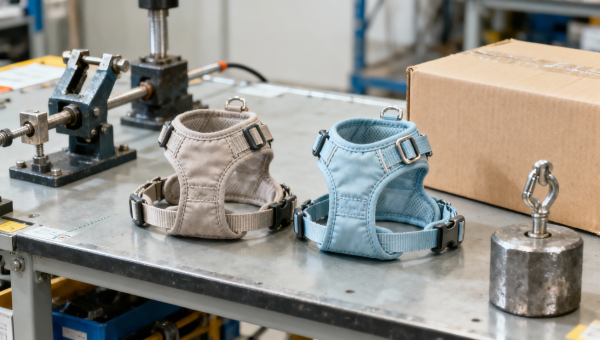
Two baby carrier suppliers may quote similar-looking products at very different prices, yet the cheaper offer can become more expensive once testing, inspection, freight, and rejected stock are included. For a retail buyer or private-label brand asking, “How do I compare baby carrier suppliers on safety and cost?” the answer is to apply a safety qualification gate first, then compare the total cost of suppliers that pass it.
Start with the exact carrier design, intended age and weight range, and destination market. Verify that each supplier’s evidence applies to that product, inspect its production controls, and put every quotation on the same commercial basis. Missing safety evidence is not a weakness to offset with a lower price: it is a reason to pause qualification until the gap is resolved.
Define the product before comparing the factories
A soft structured carrier, a wrap, a sling, and a framed backpack carrier should not share one generic sourcing specification. Their construction, foreseeable misuse, test methods, and regulatory classification can differ. Even within one category, an infant insert, detachable seat, or additional carrying position can change what needs evaluation.
Send all candidates the same product brief. Include the intended sales markets, supported carrying positions, age and weight limits, materials, accessories, packaging, and proposed care instructions. Identify whether you want an existing design with your branding or a substantially modified product. A quotation for a stock model is not directly comparable with one that includes development and validation.
- Fix the safety-critical construction: buckle type, webbing dimensions, load-bearing seams, adjustment mechanisms, and any required infant support.
- Separate mandatory requirements from preferences: destination-market compliance comes before optional fabrics, decorative finishes, or premium packaging.
- Specify the approval process: substitutions and design changes require written review, with further testing where appropriate.
Ask suppliers to list exceptions rather than simply answering “yes” to the brief. An explicit limitation is easier to manage than a quotation that silently assumes a different fabric, weight range, or accessory set.
Check whether the safety evidence actually covers your order
A folder of certificates can look reassuring while proving very little about the proposed carrier. The key comparison is between the tested sample and the product you will receive. Request complete reports, including sample identification, photographs, test methods, results, laboratory details, and any exclusions—not just a cover page or certificate image.
For the United States, determine which CPSC requirements apply to the specific carrier category. Soft infant and toddler carriers and sling carriers have distinct mandatory requirements. Applicable children’s product rules may also address lead, certain phthalates, tracking labels, and certification. Where third-party testing is required, confirm the laboratory’s CPSC acceptance for the relevant testing scope. A Children’s Product Certificate is issued by the responsible manufacturer or importer based on supporting evidence; it is not a government-issued approval.
For European sales, establish the applicable product safety obligations and relevant standards for the design. EN 13209-2 is relevant to soft carriers, but its applicability and current edition should be confirmed. Do not assume that a CE logo proves ordinary baby carrier compliance, or that every carrier requires CE marking. Additional product features may bring separate requirements into scope.
Use a compliance specialist or qualified laboratory to resolve classification, market-specific obligations, or uncertain test coverage before committing to production. This is especially important when one design will be sold across several markets.
A report date alone does not establish whether evidence remains suitable. Changes to the product, applicable requirements, or required testing arrangements may affect its usefulness. Ask the supplier to explain how existing evidence supports the current specification and what additional work your private-label version requires.
Inspect the parts that carry the load
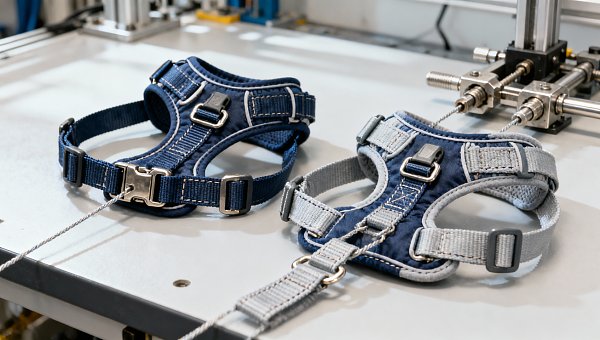
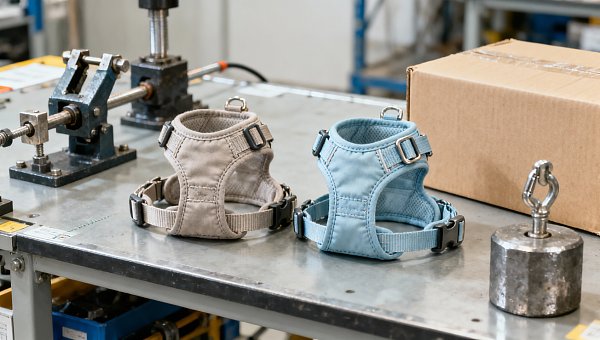
Once documentation passes an initial review, compare physical samples against the written specification. Attractive fabric and neat packaging cannot compensate for weak attachment points or an adjustment system that slips. Focus on the complete load path: where the child’s weight is supported, how that force reaches the adult’s body, and which components keep the carrier secured.
Examine load-bearing seams, webbing anchors, buckle engagement, adjustment retention, and detachable parts. Compare the samples with report photographs and the bill of materials. Record differences rather than accepting an explanation that the production version will be “better.”
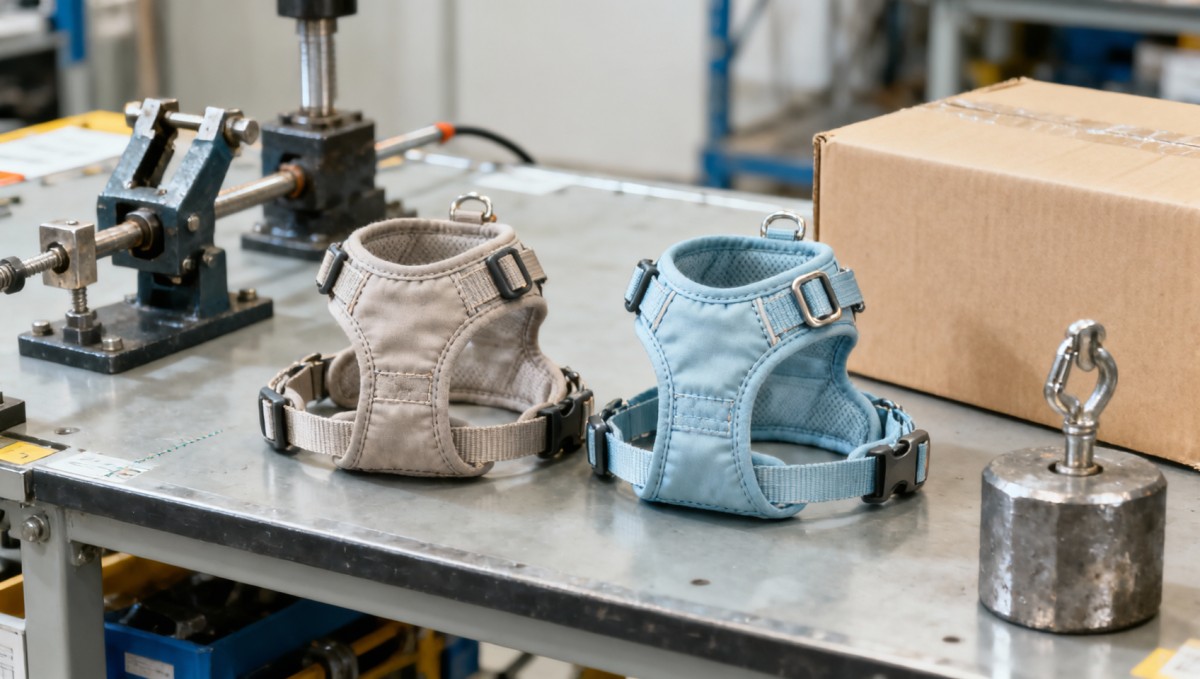
Fit and instructions also deserve comparison. A carrier may have strong seams yet allow positioning that obstructs an infant’s airway or provides inadequate support. Review the intended age range, required inserts, carrying positions, warnings, and whether adjustments are understandable. Do not use an infant for informal testing of an unvalidated sample; use suitable fixtures or mannequins and qualified assessment where needed.
Sample handling is a screening activity, not a substitute for formal testing. Its value is in identifying inconsistencies early: a buckle that differs from the report, an unclear instruction step, or a seat adjustment that the supplier cannot explain.
Compare production control, not just the approved sample
A carefully prepared sample shows what a factory can make once. Your purchasing risk depends on whether it can reproduce that construction throughout the order. Ask who manufactures the carrier, which processes are subcontracted, and how critical components are controlled. A trading company is not automatically unsuitable, but accountability and access to manufacturing records must be clear.
Request evidence of incoming component checks, sewing controls, in-process inspection, finished-product checks, and batch traceability. The useful question is not “Do you have quality control?” but “How do you prevent the wrong buckle or an incomplete reinforcement seam from reaching shipment?”
- Component control: approved references for buckles, webbing, fabric, and other critical materials, with procedures for substitutions.
- Workmanship control: defined stitch patterns, seam locations, and inspection criteria for load-bearing areas.
- Traceability: links between finished batches, component lots, production records, and shipment destinations.
- Corrective action: a documented response when defects recur, including containment and verification of the fix.
Agree on defect classifications and inspection arrangements before ordering. Statistical sampling can help assess a shipment, but an acceptable quality limit does not authorize known unsafe products. Safety-critical defects need explicit rejection and containment rules. A final visual inspection also cannot detect every structural or chemical issue, so it must complement other controls.
Turn each quote into a comparable landed cost
Ask for quotations at the same quantity, specification, packaging level, currency, Incoterm, and named location. Otherwise, a lower figure may simply exclude freight, development, or the packaging another supplier has included. Separate one-time setup costs from recurring costs and identify who pays when the product needs retesting or rework.
A practical comparison is: landed cost per saleable unit = total attributable order cost divided by the number of units available for sale.
The numerator can include product cost, development, tooling, testing, inspection, packaging, freight, insurance, duties, brokerage, and handling. Include taxes only where they are a nonrecoverable cost for your business. Avoid counting expenses twice when the quoted delivery term already includes them.
Compare both the launch order and replenishment orders. A supplier with higher setup costs may become competitive on repeat purchases; another may offer a low price only at volumes beyond realistic demand. Obtain separate lead times for development, sample approval, production, and transport rather than relying on one headline delivery estimate.
Keep risk visible without inventing a recall probability
Returns, production delays, and recalls can overwhelm a modest purchase-price saving, but assigning unsupported probabilities creates false precision. Keep the verified landed-cost calculation separate from risk scenarios. Then test how each offer behaves under plausible disruption.
- Normal delivery: use the quoted terms, approved specification, and planned shipment method.
- Quality disruption: add sorting, replacement, reinspection, and delay costs using available quotations or clearly labeled assumptions.
- Safety incident: examine batch identification, stock quarantine, consumer communication, and the supplier’s investigation support.
A supplier unable to identify affected batches may force a broader response than one with reliable traceability. Product liability insurance and contractual indemnities are worth reviewing, but neither replaces preventive controls. Confirm coverage and enforceability rather than treating a policy document or contract clause as guaranteed reimbursement.
Make the award conditional on verified performance
Use a two-stage decision. First, exclude or hold suppliers with unresolved safety, authenticity, or traceability gaps. Then score qualified candidates on landed cost, production consistency, lead time, communication, and commercial terms. Set priorities before reviewing final prices so a discount does not quietly weaken the qualification standard.
Distinguish evidence status in the comparison sheet: verified, incomplete, or unsupported. A supplier with missing documentation is not equivalent to one with an actual test failure, but neither should receive full approval until the relevant issue is resolved.
The strongest candidate is the one whose approved product, evidence, manufacturing controls, and commercial offer align. A low-cost factory may be suitable when its construction and records withstand verification. A higher-priced supplier earns the premium only through demonstrated control or a lower total operating burden—not through claims of “premium quality.”
Before releasing the main order, document the approved sample, locked bill of materials, labeling, inspection plan, change-control rules, defect remedies, and shipment-release conditions. A controlled initial production run can expose process inconsistencies, but it does not waive compliance requirements. If the supplier cannot reproduce the approved carrier or explain a critical change, pause the award rather than negotiate around the safety gap.
Related Intelligence
 Baby Gear & StrollersOct 14, 2026Are Baby Carrier Buckle Failures a Common Reason for Returns?Are baby carrier buckle failures a common return issue? Explore defects, usability complaints, and safety checks to make informed sourcing decisions before your next order.
 Baby Gear & StrollersOct 14, 2026How Do You Compare Baby Carrier Suppliers on Safety and Cost?How do I compare baby carrier suppliers on safety and cost? Learn to verify safety evidence, assess factory controls, and compare total landed costs to make a confident sourcing decision.
 STEM & Educational ToysSep 20, 2026How Do I Verify Age Grading for Educational Toys?How do I verify educational toy age grading? Learn how to assess safety risks, test reports, packaging, and market compliance before buying or selling.
 Corporate & Seasonal GiftsSep 20, 2026Are Promotional Items Worth Ordering for Short Campaigns?Are promotional items worth ordering for short campaigns? Learn how pet brands can choose useful, compliant giveaways that drive measurable engagement, sales, and loyalty.
 STEM & Educational ToysSep 20, 2026What Safety Checks Should Wooden Toy Suppliers Pass?What safety checks should wooden toy suppliers pass? Explore essential compliance, material traceability, chemical testing, and quality controls to source safer toys with confidence.
 Infant Feeding & CareSep 20, 2026Which Teething Toy Materials Are Easiest to Clean?Which teething toy materials are easiest to clean? Discover why silicone and natural rubber lead for hygienic, easy-care pet chew toys.
 Infant Feeding & CareSep 20, 2026How Can Retailers Prevent Mold Complaints About Bath Toys?How can retailers prevent mold complaints about bath toys? Explore drainable designs, supplier controls, testing, and care guidance to reduce moisture risks.
 Camping & WaterSep 20, 2026Which Folding Chair Fabrics Last Longest Outdoors?Which folding chair fabrics last longest outdoors? Compare acrylic, PVC-coated polyester, UV-stabilized polyester, and mesh for durable, pet-friendly outdoor seating.
 Camping & WaterSep 20, 2026Are Folding Camping Chairs Tested for Weight Capacity?Are folding camping chairs tested for weight capacity? Learn what credible load testing, safety margins, and supplier documentation mean for confident outdoor product sourcing.
 Corporate & Seasonal GiftsSep 20, 2026How Can Corporate Gift Buyers Avoid Missing Event Deadlines?How do corporate gift buyers avoid missed event deadlines? Discover proven sourcing, customization, compliance, and shipping strategies for pet-themed corporate gifts.
 Corporate & Seasonal GiftsSep 20, 2026What Should Be Approved Before Placing a Custom Gift Order?What should be approved before placing a custom gift order? Explore the essential checks for safe, compliant, retail-ready custom pet gifts.
 Corporate & Seasonal GiftsSep 20, 2026Which Custom Gift Materials Have the Lowest Defect Rates?Which custom gift materials have the lowest defect rate? Explore why silicone, stainless steel, polypropylene, and polyester help pet gift brands reduce rejects and improve quality.
 Skincare OEMAug 16, 2026Amazon Enforces AI Human Metadata Rule for Beauty and Personal Care SellersAmazon now enforces AI human metadata rules for beauty sellers. Learn how to protect listings, traffic, and compliance in skincare, cosmetics, and beauty devices.